Coloring tips: How to color Volcano Eruption Sky Show coloring page well?
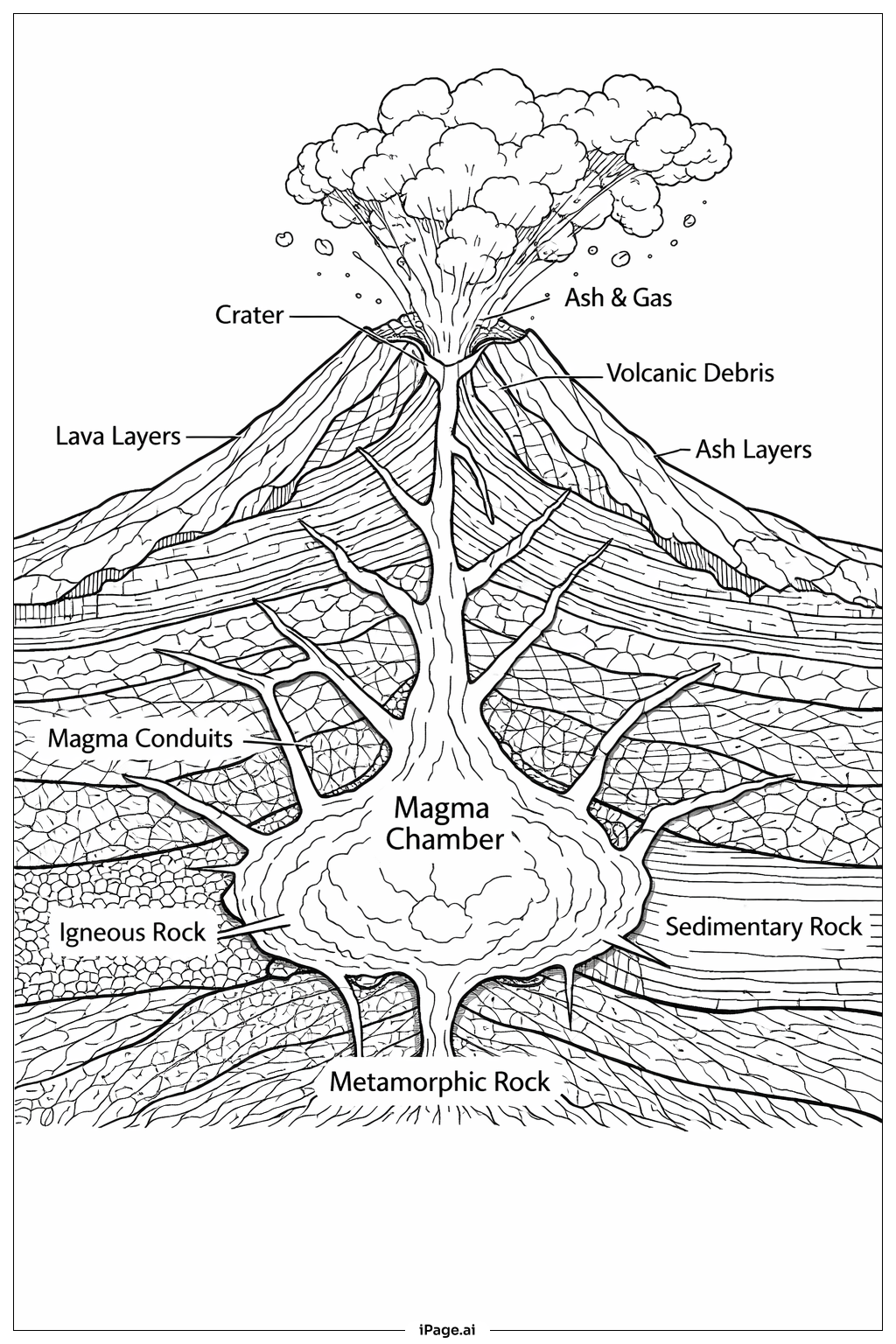
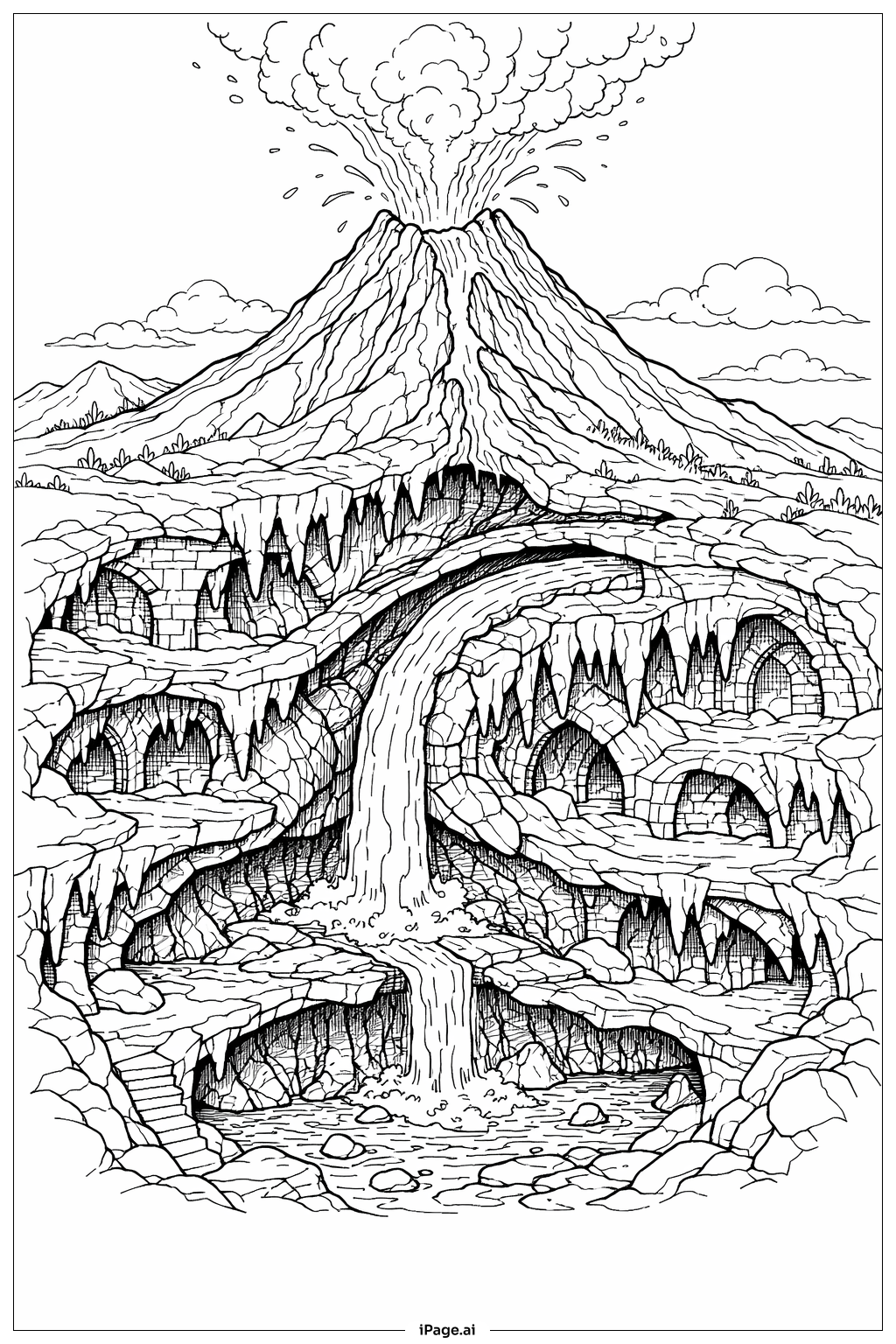
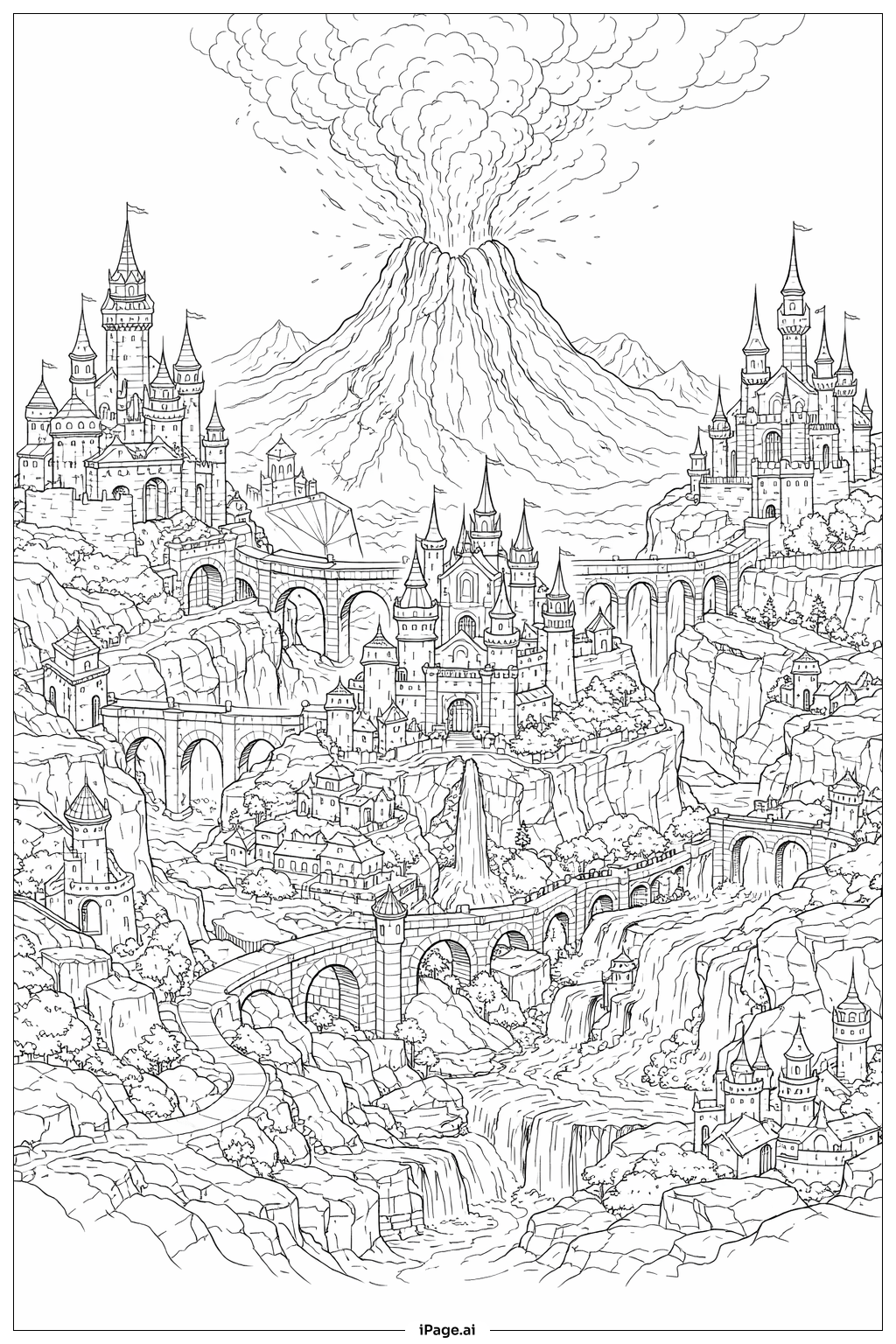
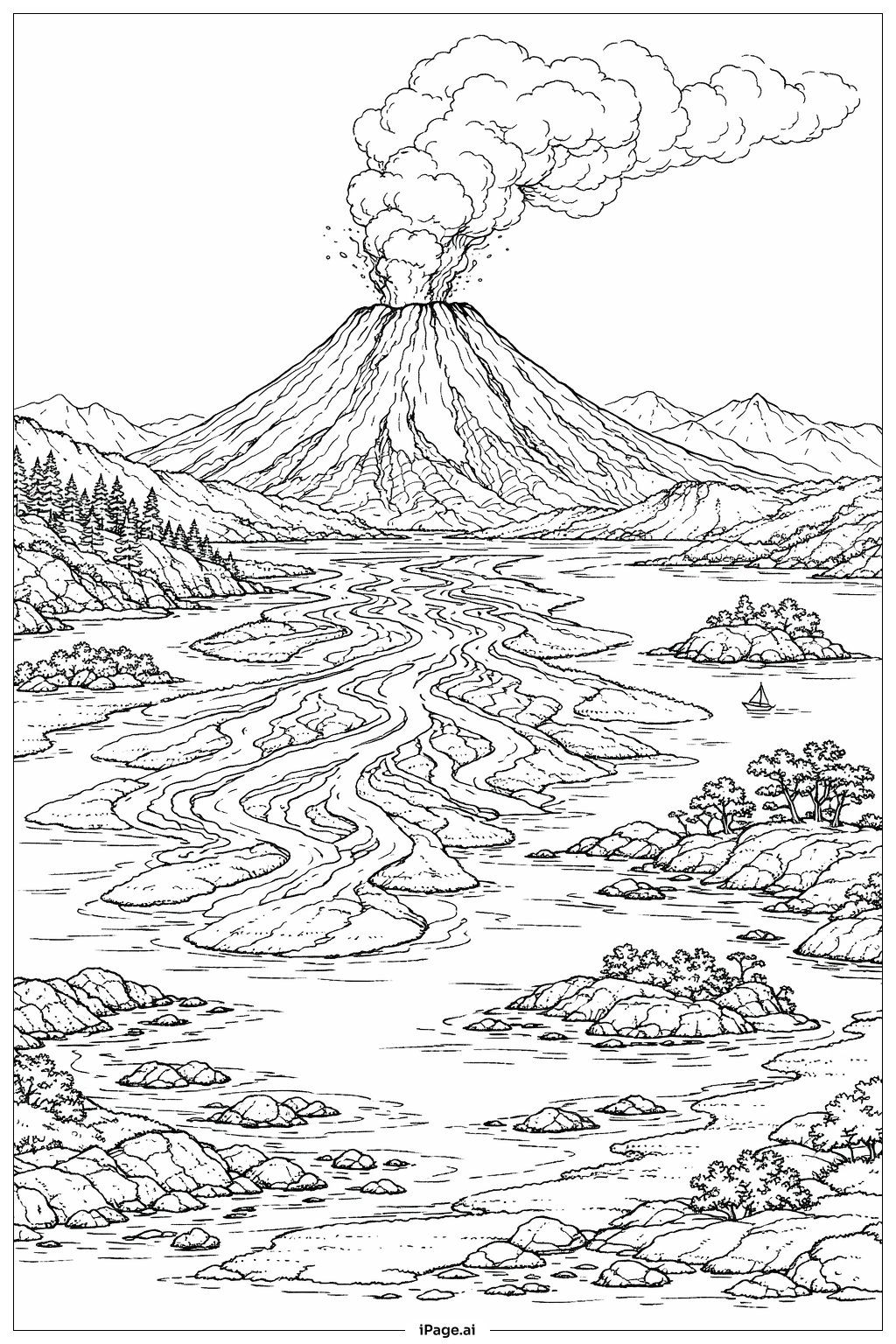
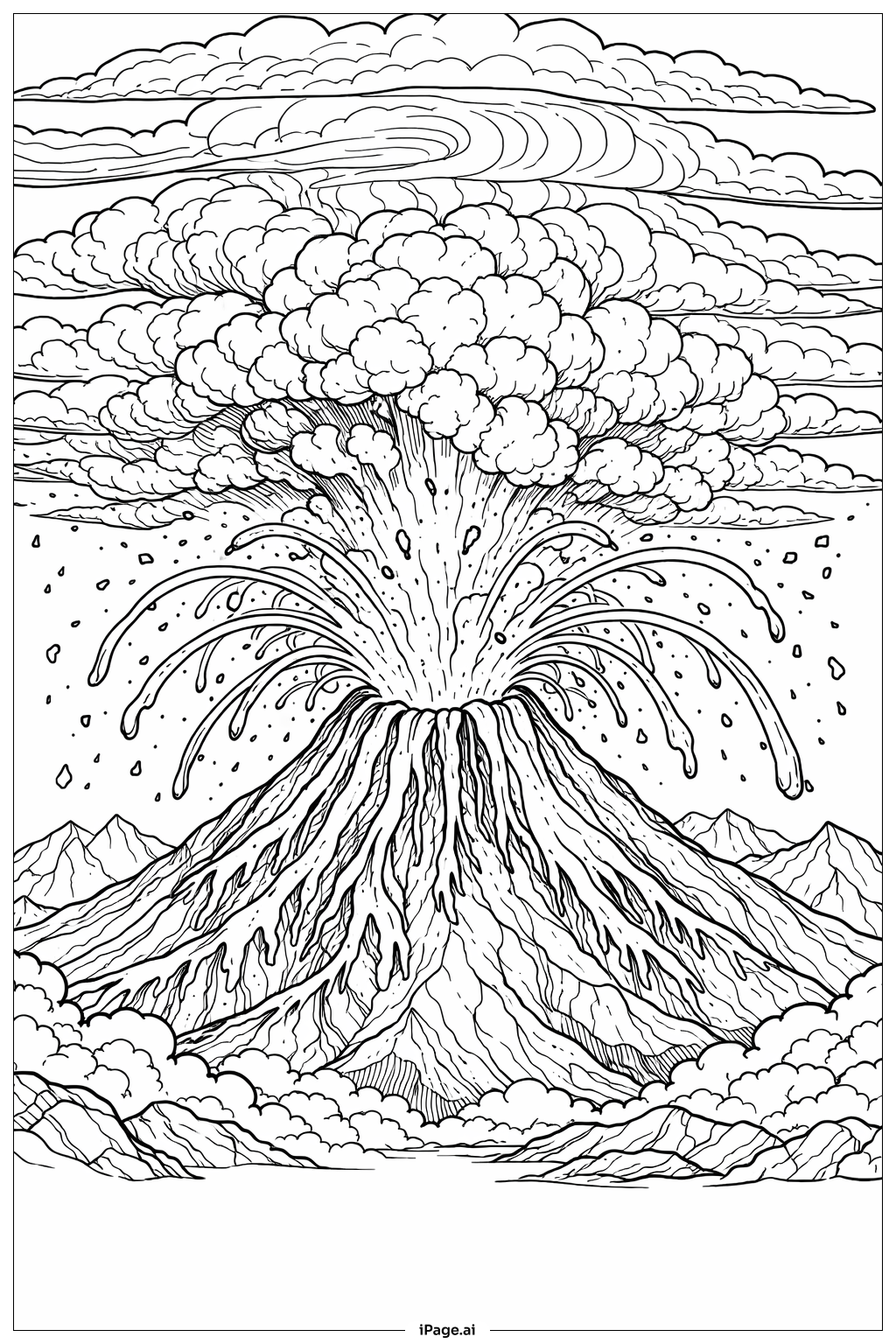
Start with the volcano itself. Use dark browns and grays for the rocky mountain body. Add deep shadows in the crevices to give it a rough, three-dimensional look. For the lava flows, use bright oranges and reds near the center, fading to darker reds and browns at the edges where the lava cools. The eruption plume looks great with layered grays, dark charcoals, and hints of brown for the ash clouds. Add pops of bright yellow and orange around the crater opening to show the heat and glow. For the flying rocks and debris, use dark grays and blacks with small orange highlights. The sky can be colored in deep purples, dark blues, or fiery oranges and reds to capture the dramatic, glowing atmosphere of an eruption. Keep the foreground terrain in earthy tones — browns, tans, and mossy greens — to contrast with the fiery action above.
Coloring challenges: Which parts are difficult to color and need attention for Volcano Eruption Sky Show coloring page?
• Lava Flow Gradients: The lava streams require smooth color transitions from bright yellow-orange at the hottest points to deep red and dark brown as the lava cools. Blending these gradients smoothly without hard lines can be tricky, especially in narrow flow channels running down the volcano's slopes. Take your time layering colors gradually.
• Ash Cloud Shading: The large billowing smoke and ash clouds demand careful shading to look three-dimensional and full. Using multiple shades of gray — from light silver to near-black — is key. Knowing where to place light and shadow within round, puffy cloud shapes takes patience and a gentle hand.
• Eruption Debris Details: Small flying rocks, sparks, and embers scattered across the sky are tiny and numerous. Coloring each piece individually while keeping a consistent fiery glow effect around them requires steady control of your coloring tool. Rushing this area can make the sky look flat and unexciting.
• Rocky Volcano Texture: The volcano's surface is rough and uneven, filled with cracks, ridges, and jagged edges. Capturing this rocky texture using cross-hatching or layered strokes of different dark tones — without making the whole mountain look muddy or uniform — is one of the most challenging parts of this page.
• Sky Atmosphere and Glow: Balancing the dramatic sky colors around the eruption is difficult. The sky needs to feel lit from below by the eruption's glow, shifting from warm fiery tones near the volcano to cooler, darker tones further away. Achieving this natural-looking atmospheric effect takes careful planning before you begin coloring.
Benefits of coloring books: Advantages of drawing Volcano Eruption Sky Show coloring page
Coloring this volcano eruption scene offers a wide range of fun and meaningful benefits for kids and young learners. First, working with bold lava colors and dramatic cloud shapes helps children practice color blending and gradient techniques in a natural, exciting context. They learn how colors interact — how orange fades into red, or how dark gray creates a sense of depth in smoke clouds. This builds real artistic skill in an enjoyable way. Second, the variety of textures in this image — rough rock, flowing lava, billowing ash — encourages children to experiment with different coloring strokes and pressures, developing better fine motor control. Third, this scene sparks curiosity about the natural world. As kids color the eruption, they naturally start wondering how volcanoes work, what lava is made of, and why eruptions happen. This makes the coloring page a great starting point for science conversations and learning. Fourth, focusing on a complex, detailed image like this builds concentration and patience — skills that help in school and everyday life. Finally, completing a stunning, colorful volcano scene gives children a strong sense of accomplishment and pride in their creative work, boosting confidence and a love of art.