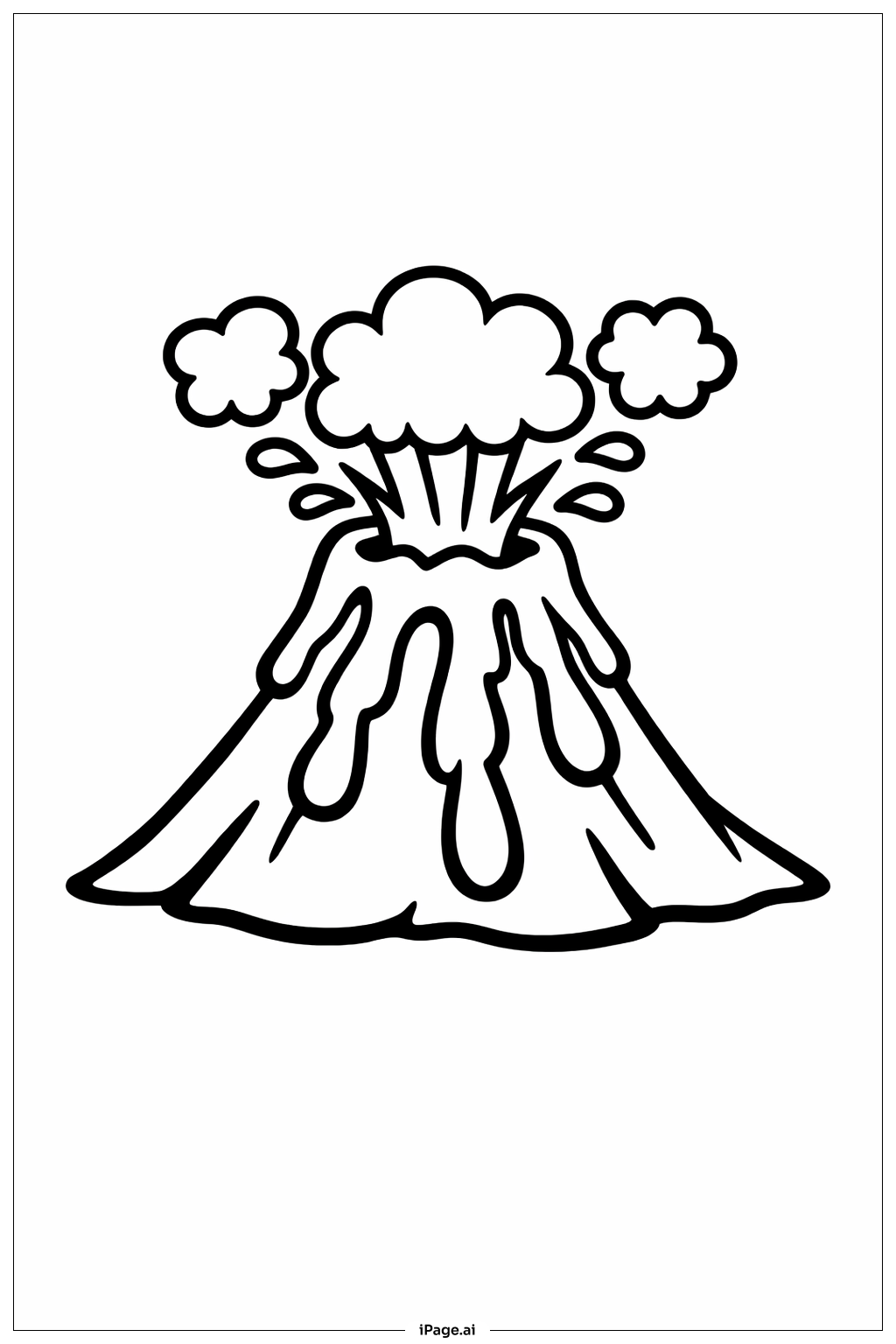
Coloring tips: How to color Volcano Eruption Simple Cone coloring page well?
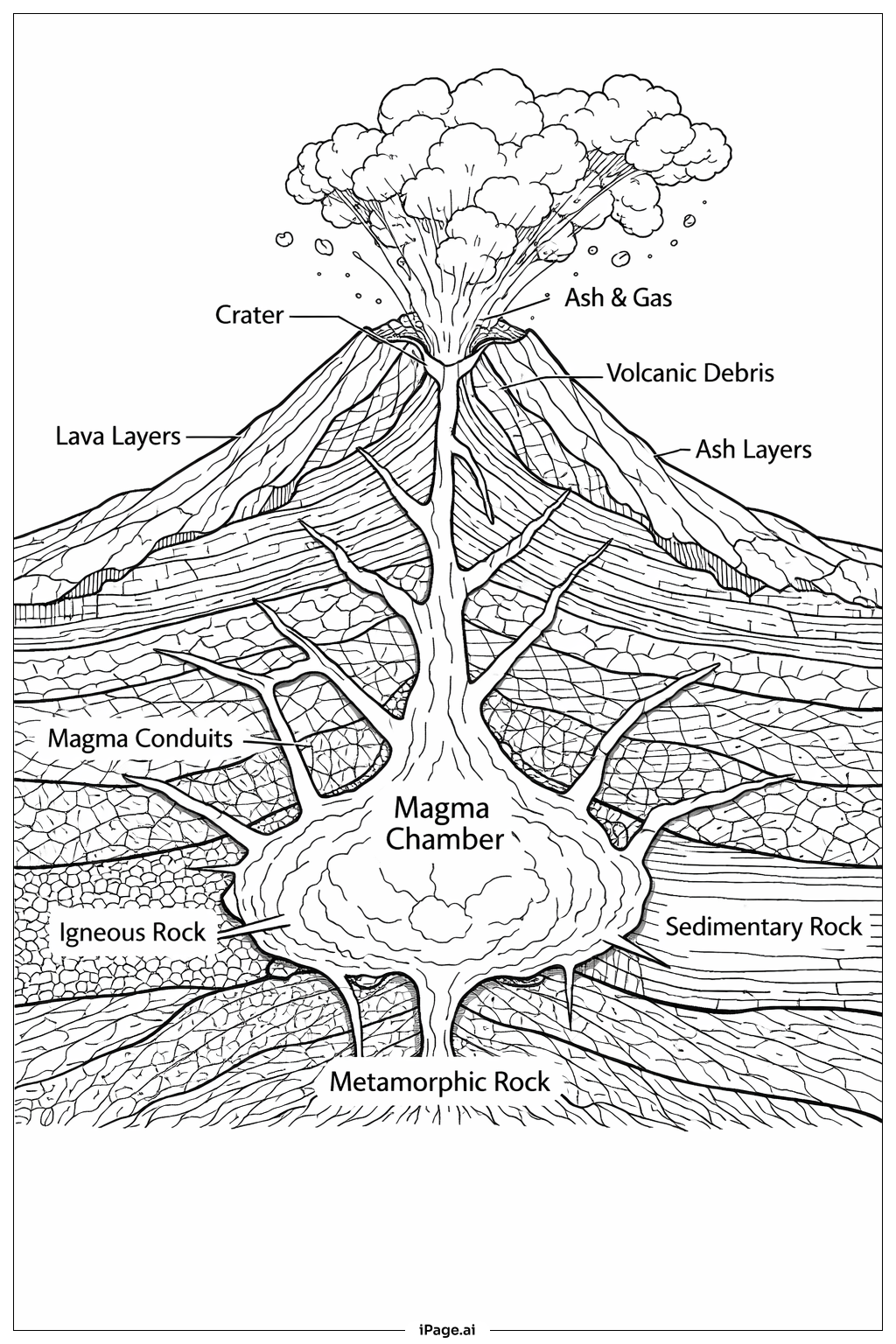
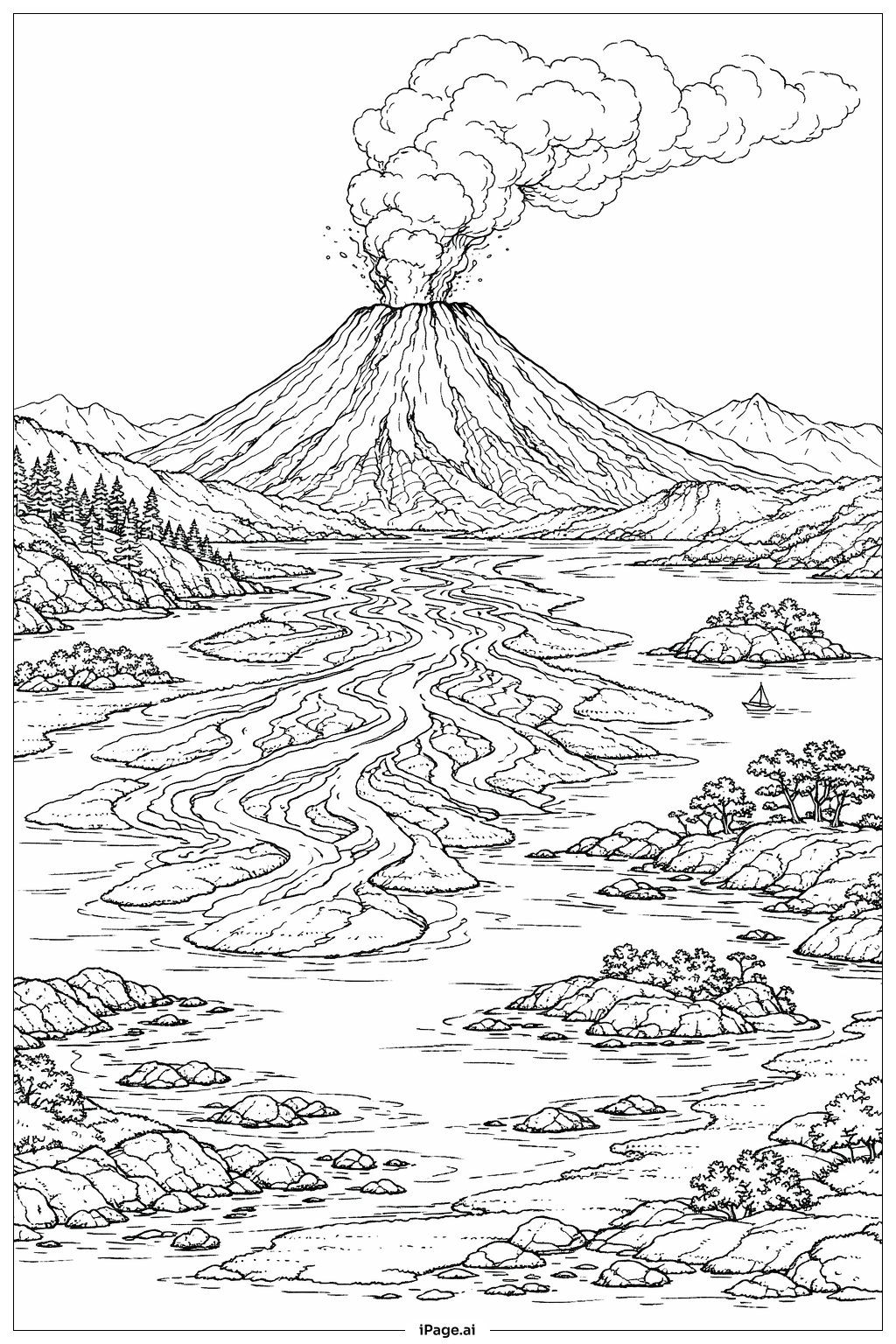
Start with the volcano cone itself. Use dark brown or gray for the rocky mountain body. You can add lighter shades of the same color to show the slopes. For the lava flows, use bright red at the top where the lava is hottest, then blend into orange and yellow as it flows down. The eruption cloud at the top can be colored in dark gray and light gray, with touches of orange and red near the crater to show the heat and glow. Use yellow or white for the flying sparks and lava bombs in the air. The sky works well in light blue or a dramatic orange-red to match the intensity of the eruption. Color the ground around the base in brown or dark green. Try using a red or orange crayon lightly over the whole lava area to tie the colors together. Have fun making your volcano look powerful and exciting!
Coloring challenges: Which parts are difficult to color and need attention for Volcano Eruption Simple Cone coloring page?
• Lava Flow Gradients: The lava flowing down the sides of the volcano should shift from deep red near the top to orange and then yellow at the edges. Achieving a smooth color transition without hard lines can be tricky, especially for younger colorists. Take your time blending and work in light, overlapping strokes.
• Eruption Cloud Shading: The large smoke and ash cloud at the crater needs both dark and light areas to look three-dimensional. Using only one shade of gray will make it look flat. Try layering a darker gray on the inner and lower parts of the cloud, then leaving lighter areas near the edges and top to suggest billowing movement.
• Rocky Volcano Texture: The cone of the volcano should not look like a flat triangle. Adding streaks of darker and lighter brown or gray helps suggest the rough, rocky surface of the mountain. This kind of texture shading takes patience and a steady hand, especially along the curved slopes.
• Small Flying Debris: The tiny rocks and lava bombs shooting out of the crater are small and scattered. Coloring them neatly without accidentally going outside their outlines requires careful control of your coloring tool. A fine-tipped marker or a sharpened colored pencil works best for these details.
• Background and Sky Balance: The sky and background need colors that complement the bright lava without making the whole image look too dark or too busy. Choosing colors that contrast well with the orange and red of the eruption while still looking natural is a real creative challenge.
Benefits of coloring books: Advantages of drawing Volcano Eruption Simple Cone coloring page
Coloring this volcano eruption page offers a wide range of benefits for kids of all ages. First, it builds fine motor skills. Carefully staying inside the lines of the lava flows, the rocky cone, and the eruption cloud helps strengthen hand and finger control. This is great practice for writing and drawing. Second, it sparks curiosity about Earth science. As kids color the image, they naturally start to wonder how real volcanoes work, making this a fun starting point for learning about geology and natural forces. Third, it encourages creative thinking. There is no single right way to color a volcano, so kids get to experiment with color combinations and make their own artistic choices. This builds confidence and imagination. Fourth, it promotes focus and patience. The different sections of the image, from the detailed debris in the sky to the flowing lava and the billowing smoke, require careful attention. Sitting with a task from start to finish helps kids practice concentration. Finally, finishing a colorful and dramatic volcano page gives a strong sense of accomplishment, which boosts self-esteem and motivates kids to keep creating.