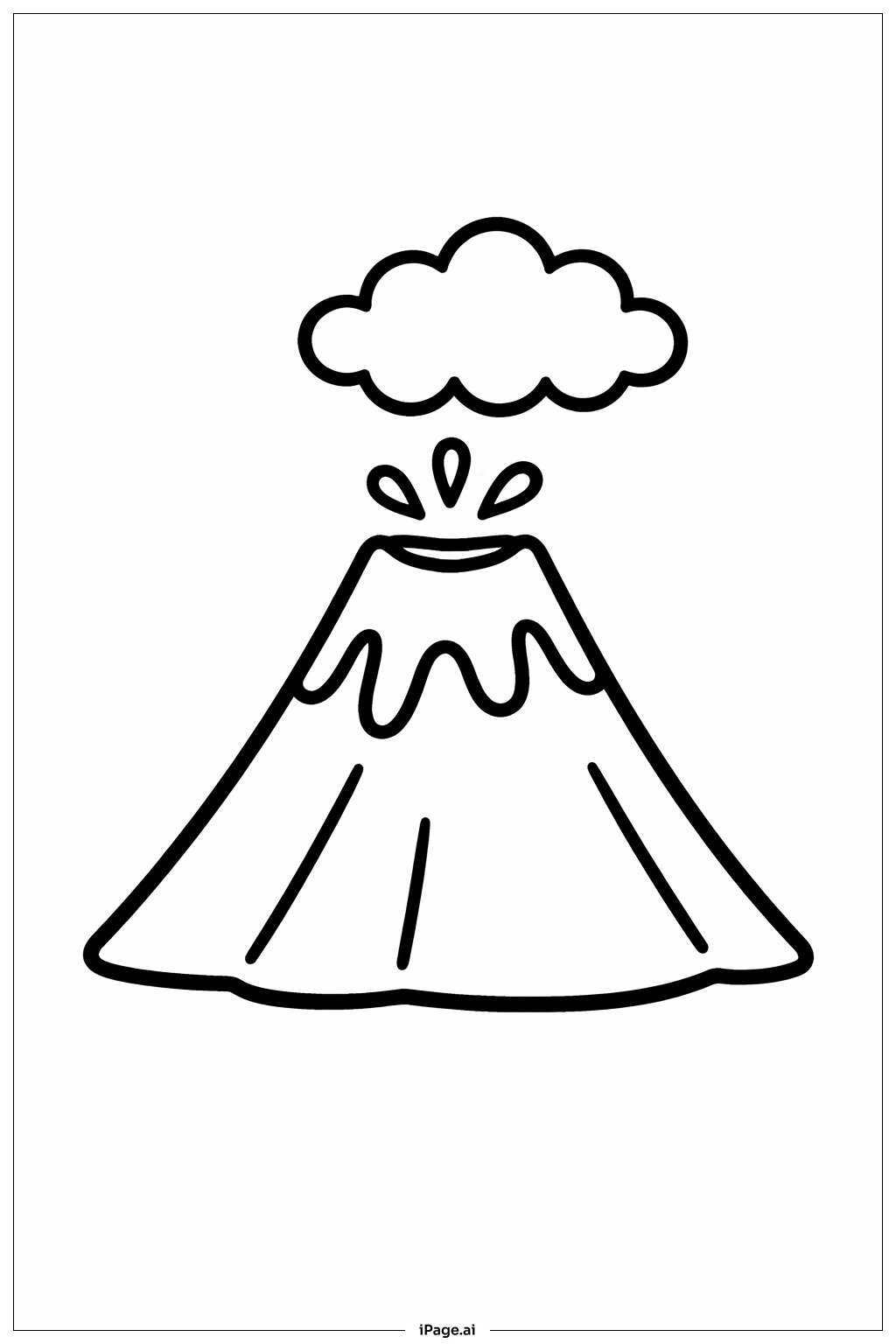
Coloring tips: How to color Volcano and Single Cloud coloring page well?
For the volcano, consider using warm earth tones like browns, grays, or dark purples for the rocky mountain surface. The lava flows offer exciting opportunities for bright, fiery colors. Use vibrant reds, oranges, and yellows to create glowing lava that appears hot and molten. You can blend these colors together to show how lava transitions from bright yellow at the hottest parts to deep red as it cools. The single cloud can be colored with light blues, grays, or left white with subtle shading to give it dimension and a fluffy appearance. For the sky background, soft blues work beautifully, or try sunset colors like pink and orange for a dramatic effect. Adding darker shading to one side of the volcano creates depth and makes it look three-dimensional.
Coloring challenges: Which parts are difficult to color and need attention for Volcano and Single Cloud coloring page?
• Lava Flow Blending: The multiple lava streams require careful color transitions to create a realistic molten appearance. Achieving smooth gradients from bright yellow to orange to red can be challenging, especially when working within the wavy, flowing patterns. Young colorists may find it difficult to blend colors seamlessly without creating harsh lines or muddy mixtures.
• Texture and Dimension: Creating a three-dimensional appearance for the volcano requires understanding of light and shadow. Deciding where to place darker shades to suggest depth and where to leave lighter areas to indicate raised surfaces demands spatial awareness. The rocky texture of the volcano presents additional complexity in determining how to vary colors and tones to suggest rough, uneven surfaces.
• Color Selection and Contrast: Balancing the dramatic, warm colors of the active volcano with the peaceful, cool tones of the cloud and sky requires thoughtful planning. Colorists must choose a palette that makes each element stand out while maintaining visual harmony. The contrast between the fiery lava and the cooler mountain rock needs careful attention to prevent the image from appearing flat or monotonous.
• Detail Management: The various elements including the crater rim, multiple lava flows, cloud details, and background require different coloring approaches. Managing these distinct areas while maintaining consistent quality throughout the entire image can be demanding, particularly for younger children who may struggle with sustained focus and fine motor control.
Benefits of coloring books: Advantages of drawing Volcano and Single Cloud coloring page
Coloring this volcanic scene provides wonderful educational benefits while developing artistic skills. Children learn about natural phenomena and earth science concepts as they color the volcano and its flowing lava, sparking curiosity about how volcanoes work and why they erupt. The image promotes understanding of warm and cool colors, as kids experiment with fiery reds and oranges for lava contrasted against cooler blues and grays for the sky and cloud. Fine motor skills improve through careful coloring within the lines of the lava flows and detailed volcanic features. The project encourages patience and focus as children work through the various elements of the composition. Deciding on color schemes and blending techniques nurtures creative decision-making and artistic expression. The dramatic nature of the subject matter captivates interest and makes the coloring experience exciting and engaging, building confidence as children complete this striking natural scene.





