Coloring tips: How to color Volcano and River Below coloring page well?
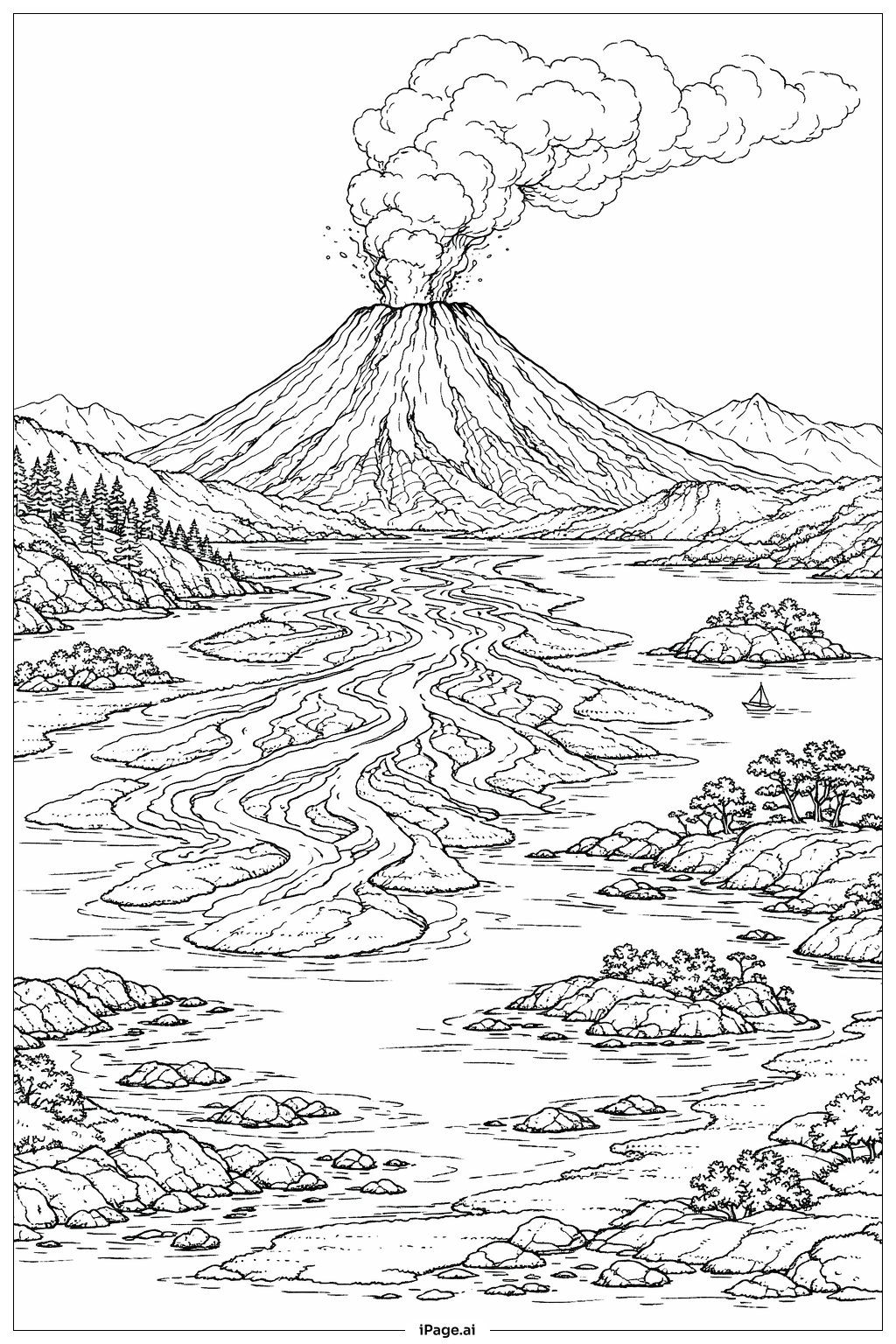
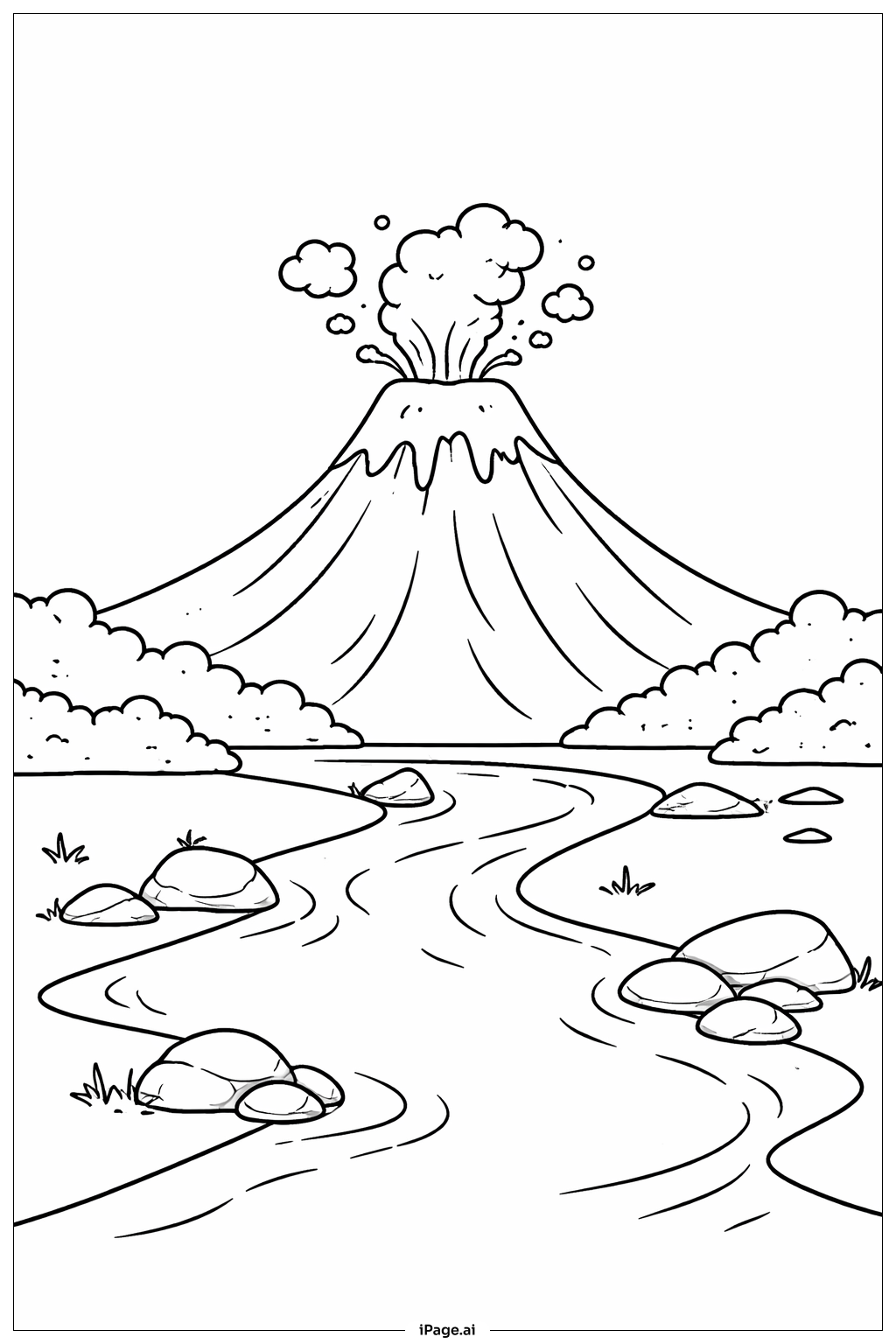
Start with the volcano's peak. Use bright reds, oranges, and yellows for the erupting lava and fiery glow at the top. Shade the rocky slopes with dark grays and browns to show rough, hardened rock. Add lighter gray highlights to give the rocks texture and depth. For the smoke and ash clouds, use soft grays and whites with light purple shading around the edges. The river below can be colored in deep blues and greens, with white streaks to show movement and flow. Use earthy tones like tan and brown for the riverbanks. Color the surrounding trees with different shades of green to add life to the scene. Try using yellow or orange near the river where the lava light reflects off the water. Blend warm and cool colors to create contrast between the fiery volcano and the calm river below. Take your time with each section and enjoy bringing this amazing natural scene to life!
Coloring challenges: Which parts are difficult to color and need attention for Volcano and River Below coloring page?
• Lava Flow Gradients: The lava streams require smooth color transitions from bright yellow at the hottest points, moving through orange, and settling into deep red as the lava cools. Blending these colors naturally without harsh lines can be tricky, especially for younger colorists. Take it slow and layer the colors gently for best results.
• Rocky Texture on the Volcano Slopes: The jagged, uneven surface of the volcano is filled with many small shapes and irregular lines. Coloring each section individually while maintaining a consistent dark, stony look takes patience. Using different shades of gray and brown and adding small highlights can help the rocks look three-dimensional.
• Smoke and Ash Cloud Shading: The eruption clouds at the top of the volcano have soft, rounded edges that benefit from subtle shading. Getting the clouds to look fluffy and billowing rather than flat requires careful blending of light and dark grays. This is one of the more challenging areas for beginners.
• River Water Reflections: The flowing river below reflects the warm glow of the eruption above. Capturing both the natural blue-green color of water and the orange-red reflections from the lava takes skill. Layering cool blues with warm highlight tones can create a realistic and striking effect.
• Background Depth and Distance: Balancing the foreground details like rocks and riverbanks against the background sky and distant terrain requires thoughtful color choices. Lighter, cooler tones in the background help push it farther away, while darker, richer tones in the foreground bring elements forward and add visual depth to the entire scene.
Benefits of coloring books: Advantages of drawing Volcano and River Below coloring page
Coloring this volcano and river scene offers a wide range of benefits for children and adults alike. The detailed image encourages focus and patience, as colorists must carefully work through many different textures and shapes. This kind of concentrated activity helps improve attention span and fine motor skills, especially when working on small areas like rocks and flowing water.
The scene also sparks curiosity about the natural world. Children may feel inspired to learn more about volcanoes, rivers, and how landscapes are formed. Connecting art with science makes learning feel fun and exciting.
Working through the color choices for lava, smoke, water, and rock helps develop a strong sense of color theory. Colorists practice blending warm and cool tones, understanding contrast, and creating depth — all valuable creative skills.
The act of coloring itself is calming and meditative. It gives children a healthy way to unwind after school and helps reduce stress. Adults also benefit from the mindful focus that detailed coloring requires.
Finally, completing a complex and dramatic image like this builds confidence. Seeing the finished result — a vivid, powerful volcanic landscape — gives colorists a real sense of accomplishment and pride in their creative work.