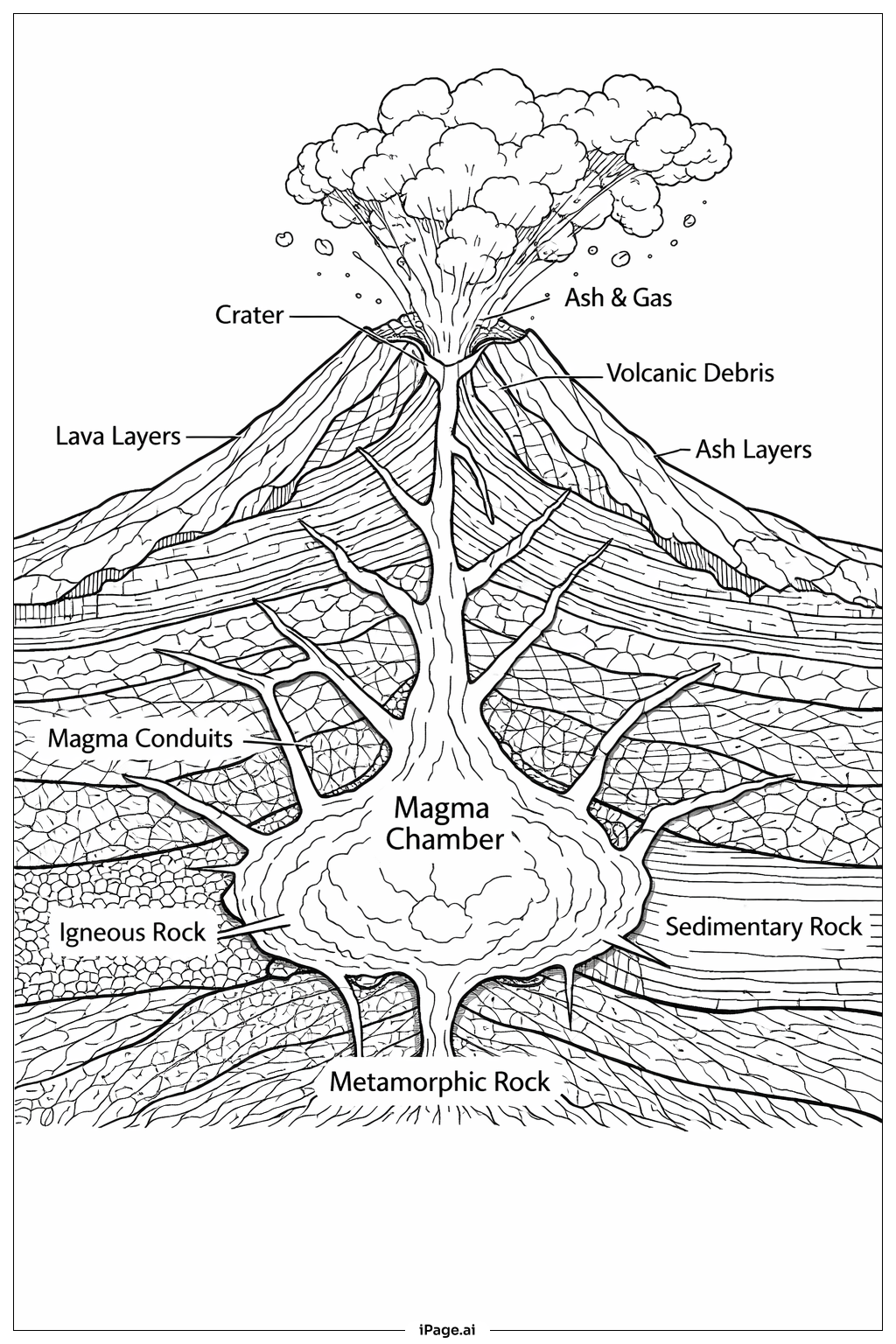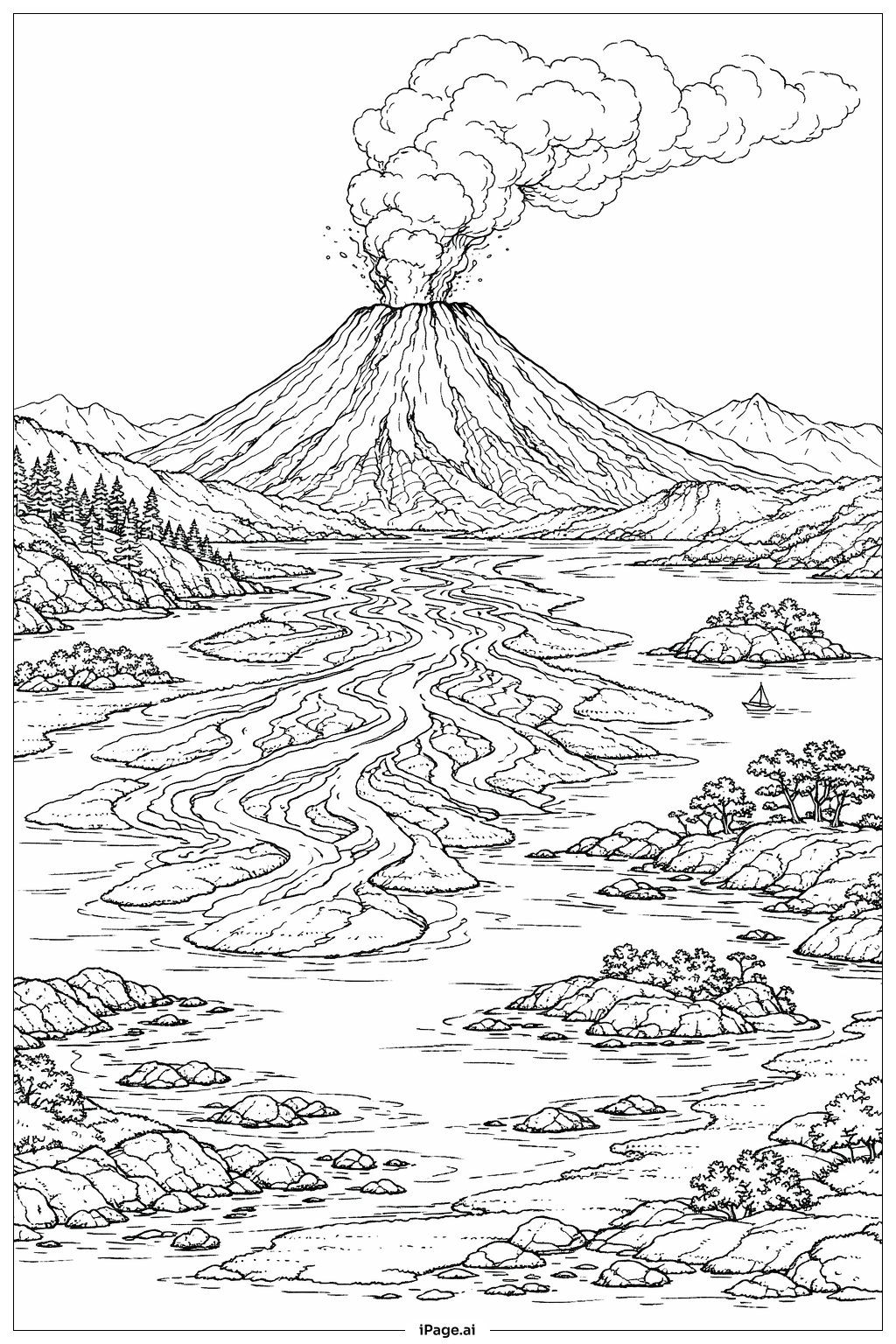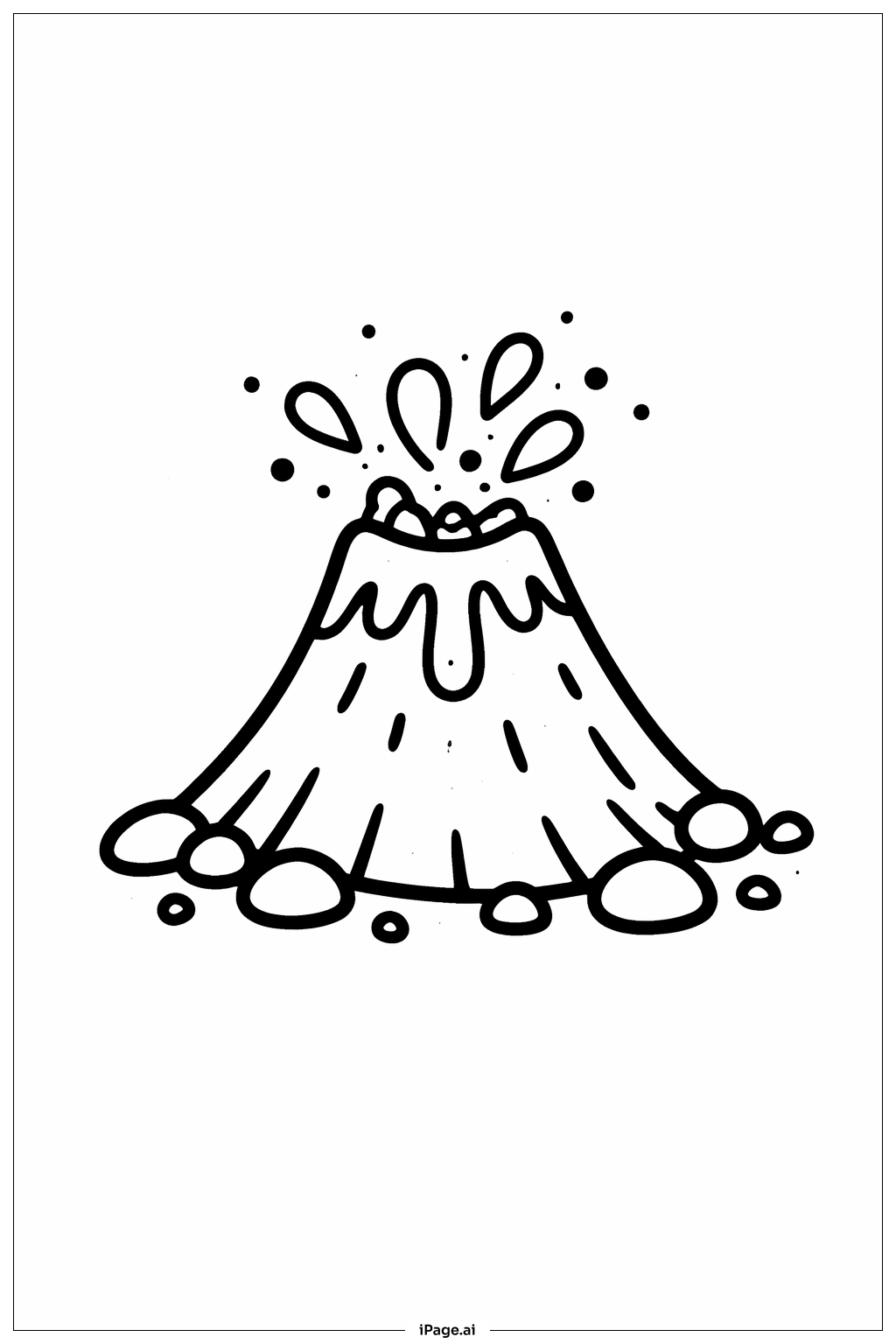
Coloring tips: How to color Tiny Volcano and Pebbles coloring page well?
Use bright colors like red, orange, and yellow for the lava to show heat and eruption. For the volcano's body, earthy colors like brown and gray work well. The pebbles around the volcano can be in shades of gray, black, or even light brown. You can add shading to the lava to give it a shiny look. Use different colors for the small drops and dots to make the eruption more lively. Feel free to add a blue sky or green grass in the background for extra color.
Coloring challenges: Which parts are difficult to color and need attention for Tiny Volcano and Pebbles coloring page?
1. Coloring the small drops and dots: These tiny shapes can be hard to color accurately, needing careful hand control.
2. Lava flow shading: Making the lava appear bright and shiny may be tricky for beginners.
3. Pebble variety: Coloring pebbles with different shades to show roundness and depth requires some skill.
4. Keeping colors inside the lines: The close placement of small shapes and lava flow lines can be challenging.
5. Choosing colors that stand out: Using colors that contrast well will make the image more interesting but can be hard to plan.
Benefits of coloring books: Advantages of drawing Tiny Volcano and Pebbles coloring page
Coloring this tiny volcano helps kids practice fine motor skills and hand-eye coordination by filling small areas like drops and pebbles. It also encourages creativity in choosing colors to show fire, rock, and nature. By shading the lava and the pebbles, children learn how to create effects of light and shadow. Coloring this image can also increase knowledge and interest in natural events like volcanoes, making learning fun and active.