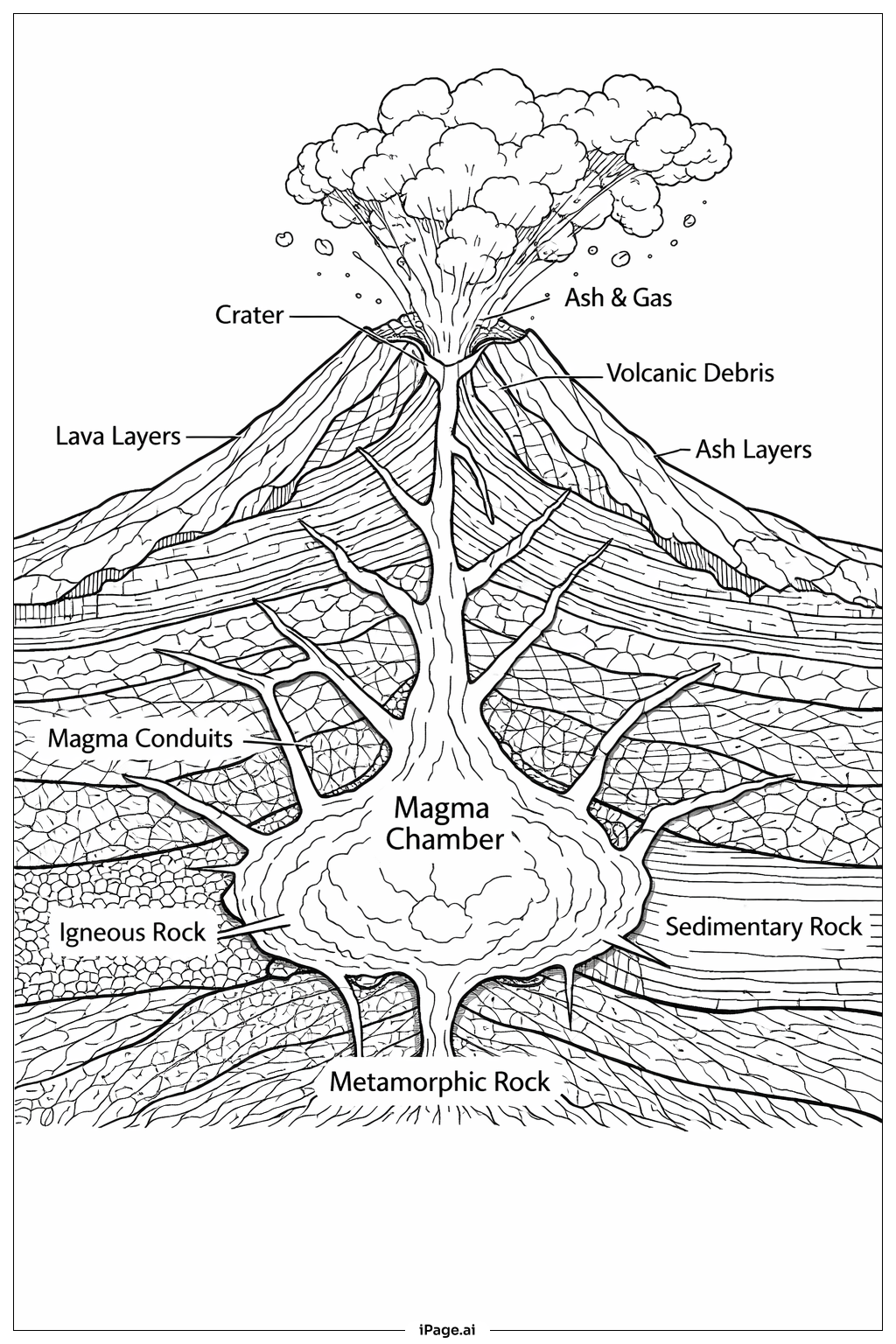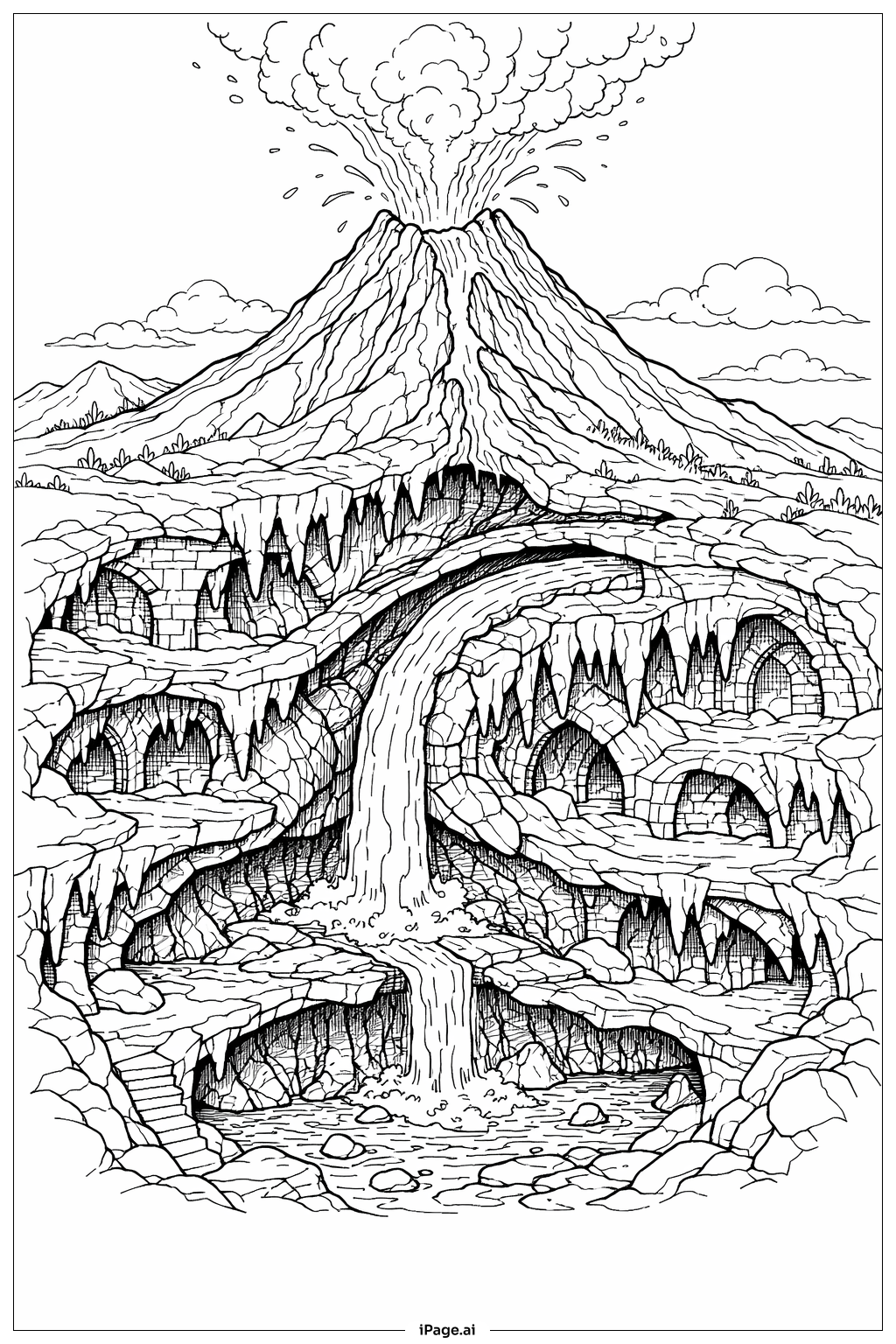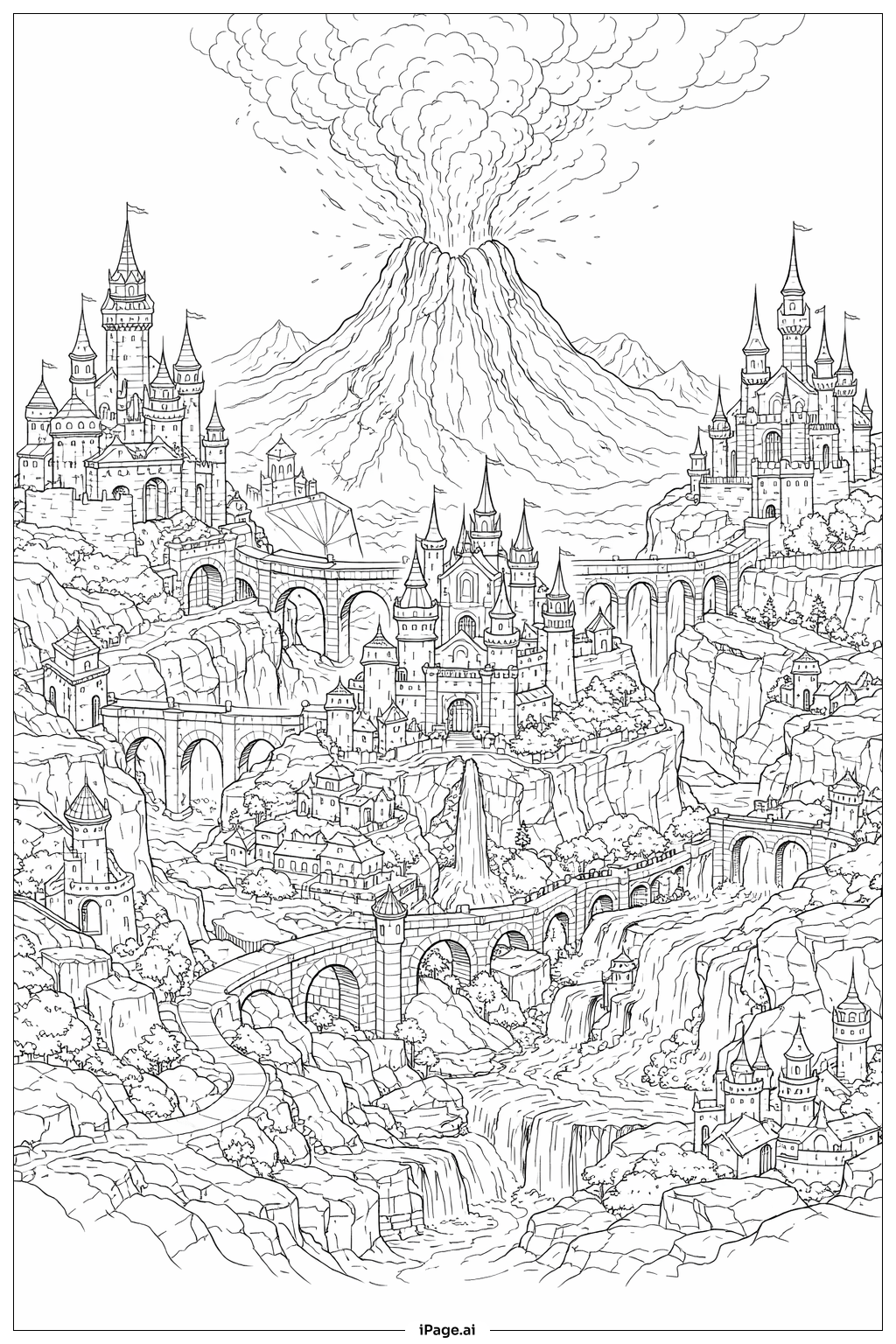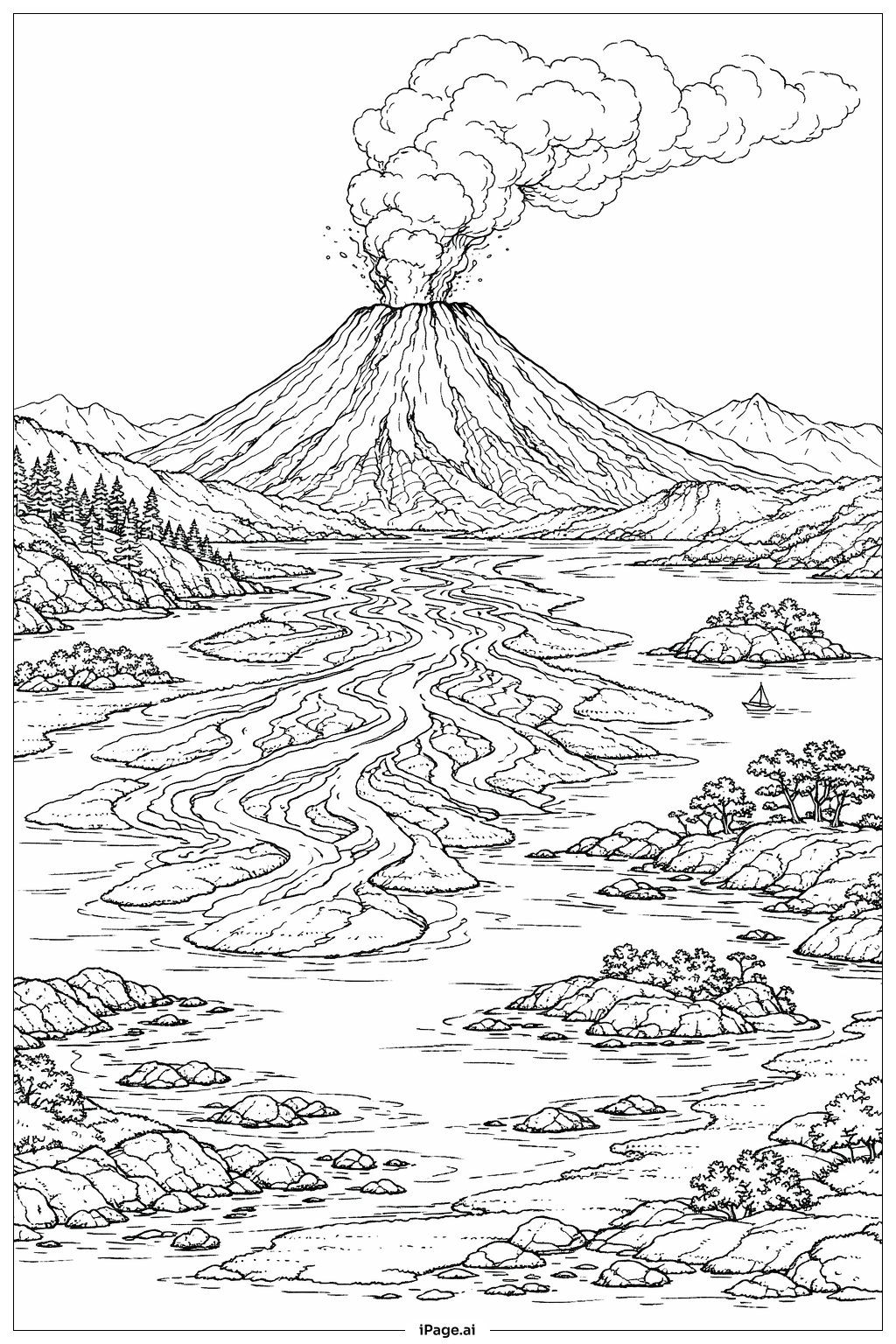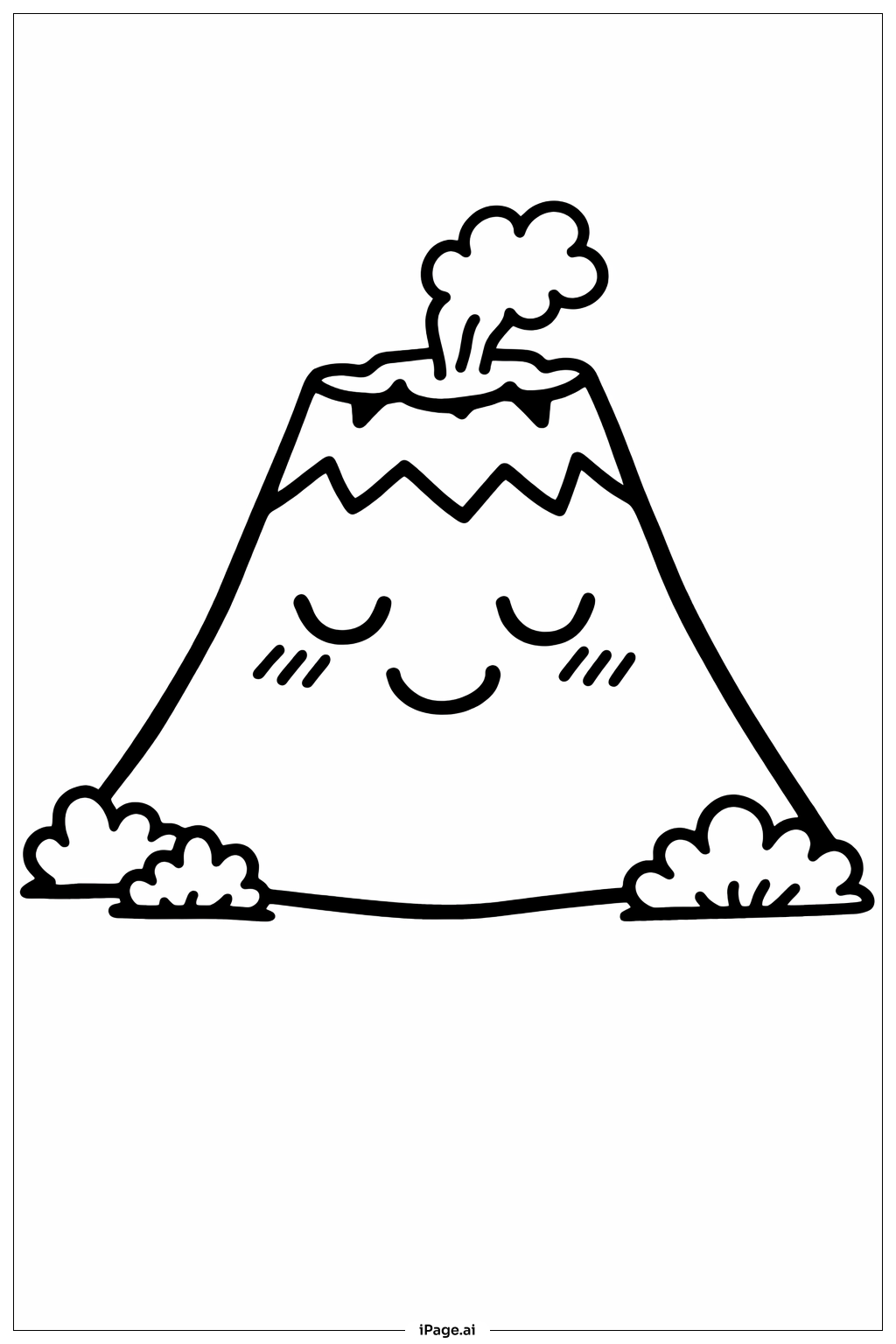
Coloring tips: How to color Sleeping Volcano Hill coloring page well?
Use warm colors like red, orange, and yellow to color the volcano’s top part to show that it is still a volcano. You can use brown or dark gray for the rocky edges and sides. The smoke at the top can be colored with light gray or white to keep it soft and gentle. For the bushes around the volcano, choose different shades of green to make them look lively. The face of the volcano can be colored in soft colors like light pink or peach for the cheeks and simple black for the eyes and mouth. Feel free to add a light blue or sky color in the background to finish the picture.
Coloring challenges: Which parts are difficult to color and need attention for Sleeping Volcano Hill coloring page?
1. Staying Inside the Lines: The volcano's face and the smoke are made up of small, curved lines. It might be tricky to color inside these narrow areas without going outside the lines.
2. Color Choice Balance: Choosing colors that make the volcano look natural but still fun can be hard. Using too many bright colors may make it too loud, and too dull colors might lose the fun feel.
3. Shading the Zigzag Edges: The jagged edges of the volcano need careful coloring to show the rocky texture. It might be difficult for younger kids to color these areas evenly.
4. Coloring the Smoke: The smoke is light and fluffy, so coloring it without making it look too dark or heavy can be challenging.
5. Adding Details to Bushes: The bushes have small sections that need careful attention to avoid coloring outside the lines or missing spots.
Benefits of coloring books: Advantages of drawing Sleeping Volcano Hill coloring page
Coloring this sleeping volcano helps children learn about nature and geology in a fun way. It improves their hand-eye coordination as they try to stay within the lines. The simple face on the volcano makes it friendly and helps kids use their creativity to bring emotions to inanimate objects. It also helps develop focus and patience while coloring small details. Finally, children can practice color recognition and learn how to mix and match colors to create a lively scene.