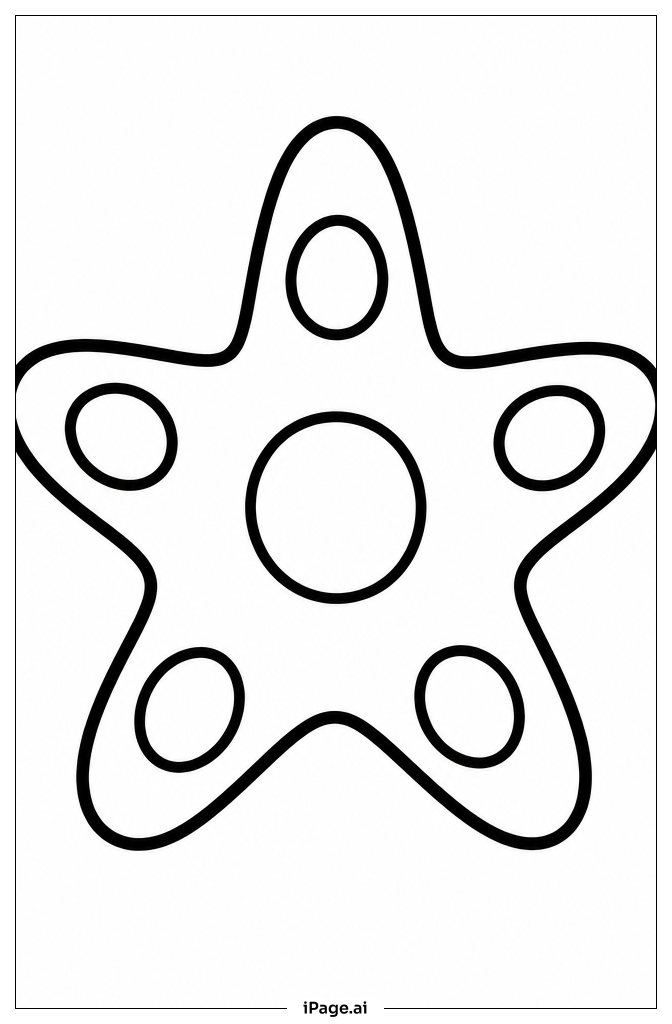
Coloring tips: How to color Tiny Starfish Portrait coloring page well?
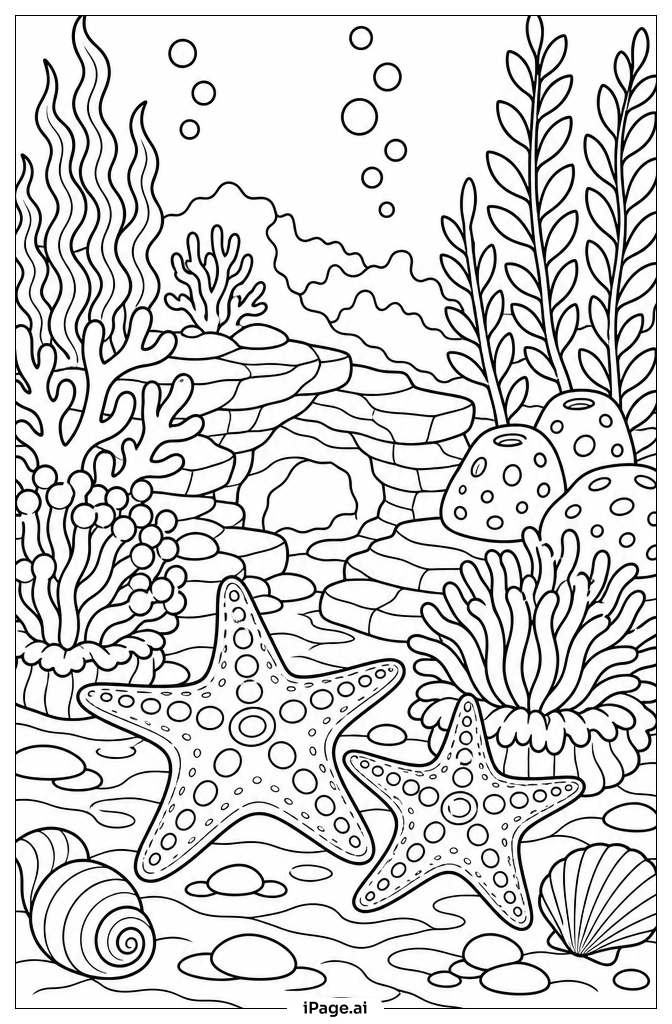
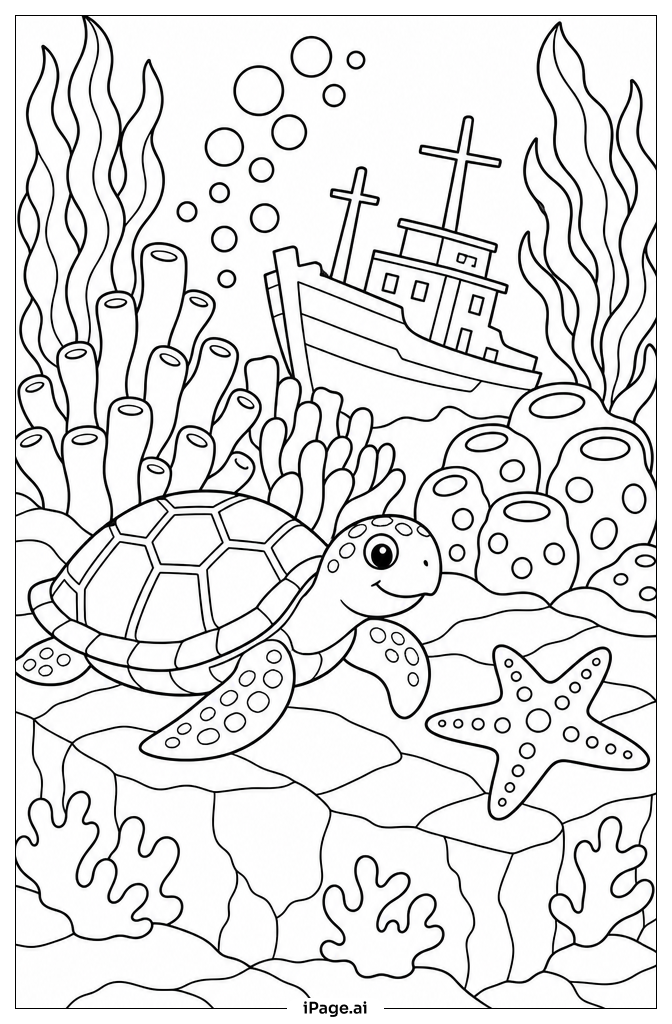
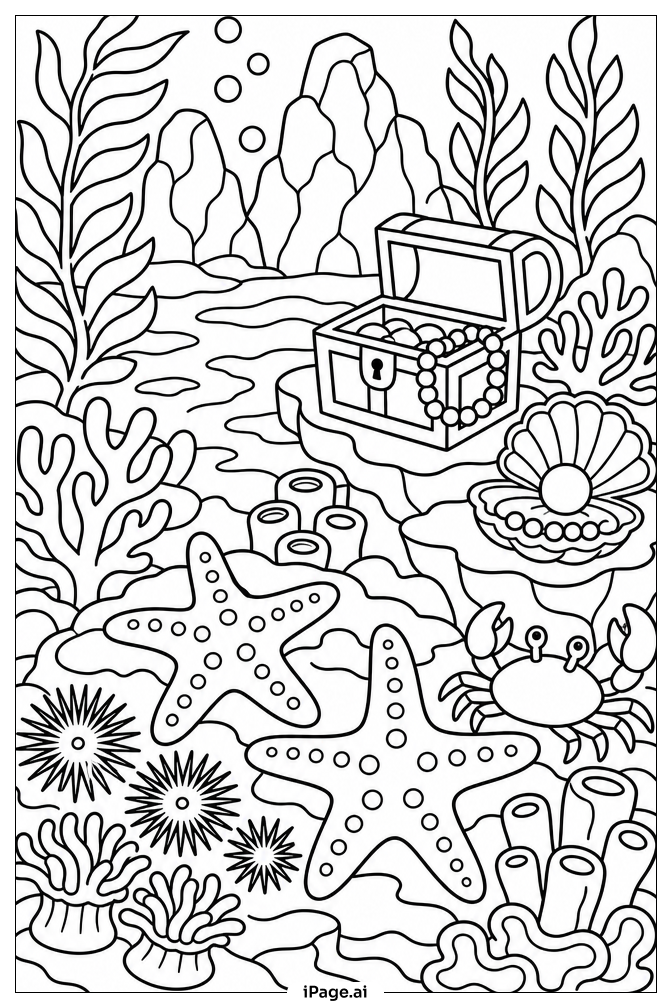
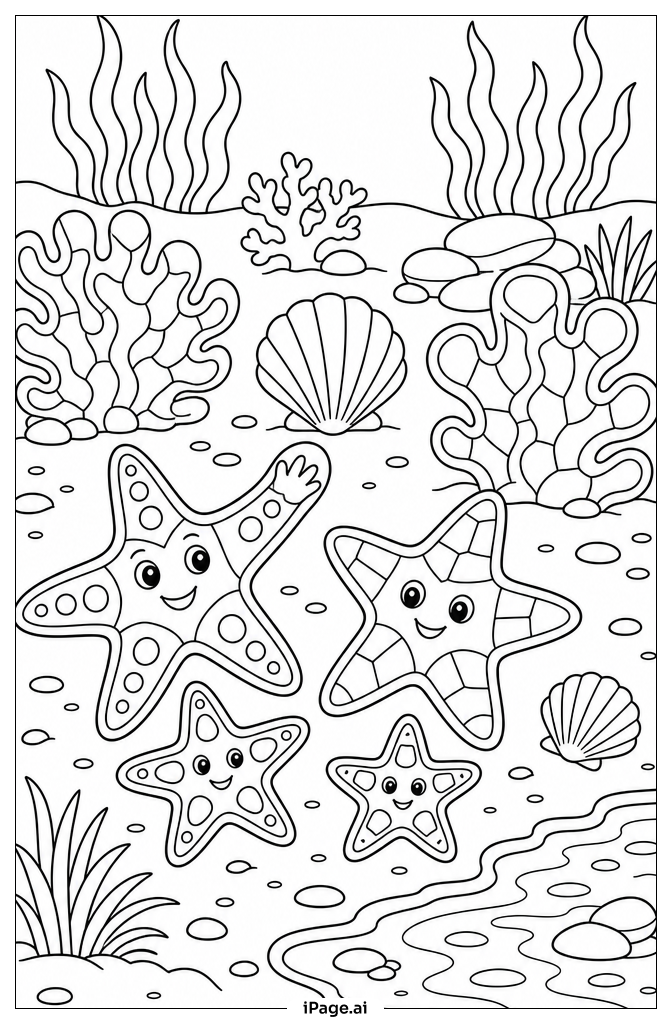
Start by choosing a base color for the starfish body. Real starfish come in many colors — orange, red, purple, yellow, or even blue — so feel free to get creative! Use a bright orange or sunny yellow for a classic ocean look. Color the central body slightly darker than the arms to add depth. For the bumps and ridges, try a lighter shade of your base color or a contrasting color like white or cream to make the texture pop. Use light blue or aqua for any water or bubble elements in the background. Blend soft gradients along the arms from tip to center for a natural feel. Don't be afraid to use multiple shades of the same color — it makes the starfish look more lifelike and beautiful!
Coloring challenges: Which parts are difficult to color and need attention for Tiny Starfish Portrait coloring page?
• **Intricate Surface Textures:** The starfish is covered in tiny bumps, dots, and ridges along its arms and body. Staying inside these small details without smudging or going outside the lines can be tricky, especially for younger children. Using a fine-tipped coloring pencil or a thin marker will help with precision in these areas.
• **Consistent Arm Coloring:** The five arms of the starfish are symmetrical, which means keeping the color consistent across all arms is a challenge. If you want a gradient or shading effect, you need to repeat the same technique on each arm — this requires patience and a steady hand.
• **Creating Depth and Dimension:** A flat single-color starfish can look plain. Adding shading to the underside of the arms or darkening the edges to create a rounded, three-dimensional look takes skill and color blending practice, which may be challenging for beginners.
• **Background Water Elements:** If bubbles, waves, or water lines are present around the starfish, keeping those elements neatly separated from the starfish's own coloring requires careful attention. Accidentally bleeding colors into one another can make the image look muddy.
• **Color Harmony:** Choosing colors that work well together — for the starfish body, texture highlights, and background — requires some thought. Picking too many contrasting colors can make the image feel chaotic, while too few can make it look dull. Finding the right balance is a fun but real challenge.
Benefits of coloring books: Advantages of drawing Tiny Starfish Portrait coloring page
Coloring this tiny starfish portrait offers many wonderful benefits for kids and beginners. First, it helps improve fine motor skills. Carefully coloring the small bumps and detailed textures on the starfish trains little hands to move with control and precision — a great skill for writing and drawing too. Second, it encourages creativity. Since starfish come in so many real-life colors, children can freely choose their own color palette, building confidence in their artistic choices. Third, it teaches focus and patience. Staying within the lines and completing each arm of the starfish one step at a time helps children practice concentration. Fourth, it introduces ocean science in a fun way. As children color, parents and teachers can talk about real starfish, ocean habitats, and marine life — making learning feel like play. Finally, finishing this coloring page gives kids a sense of accomplishment and pride in their own artwork, boosting self-esteem and a love for creative activities.