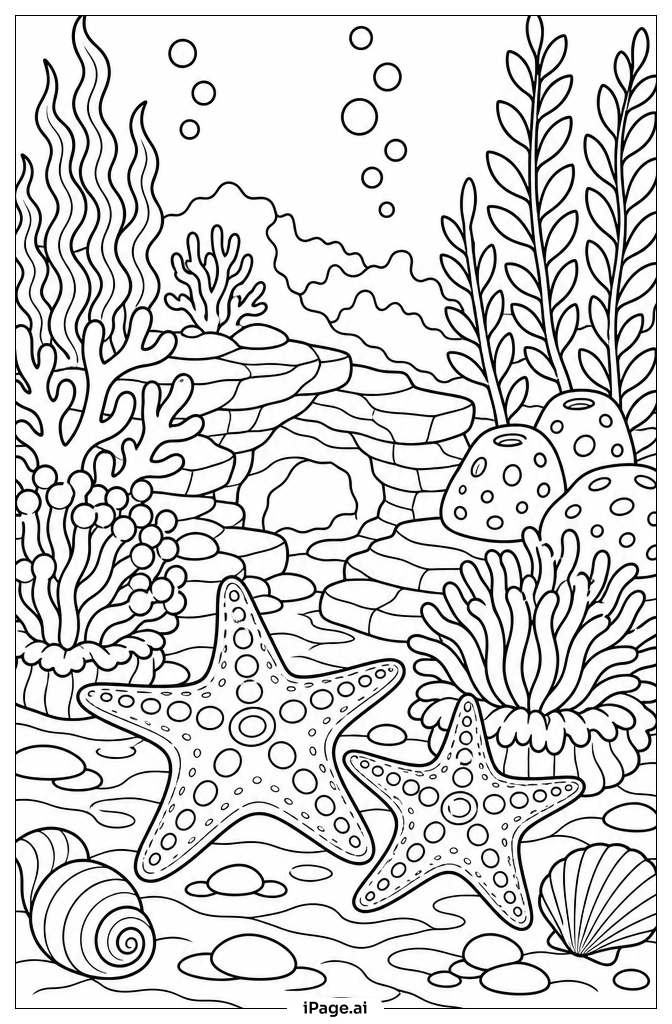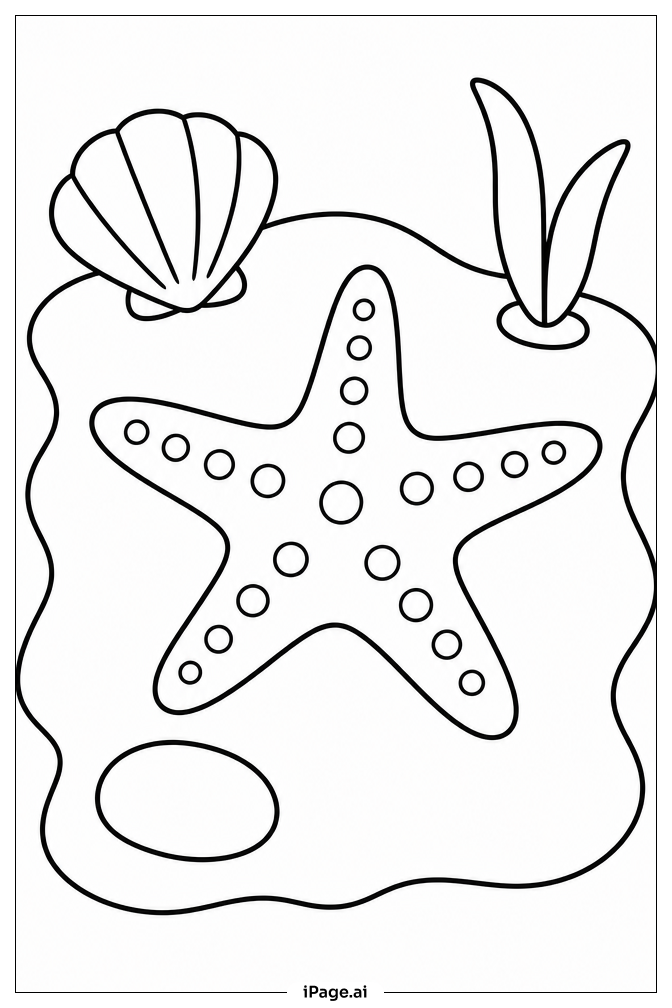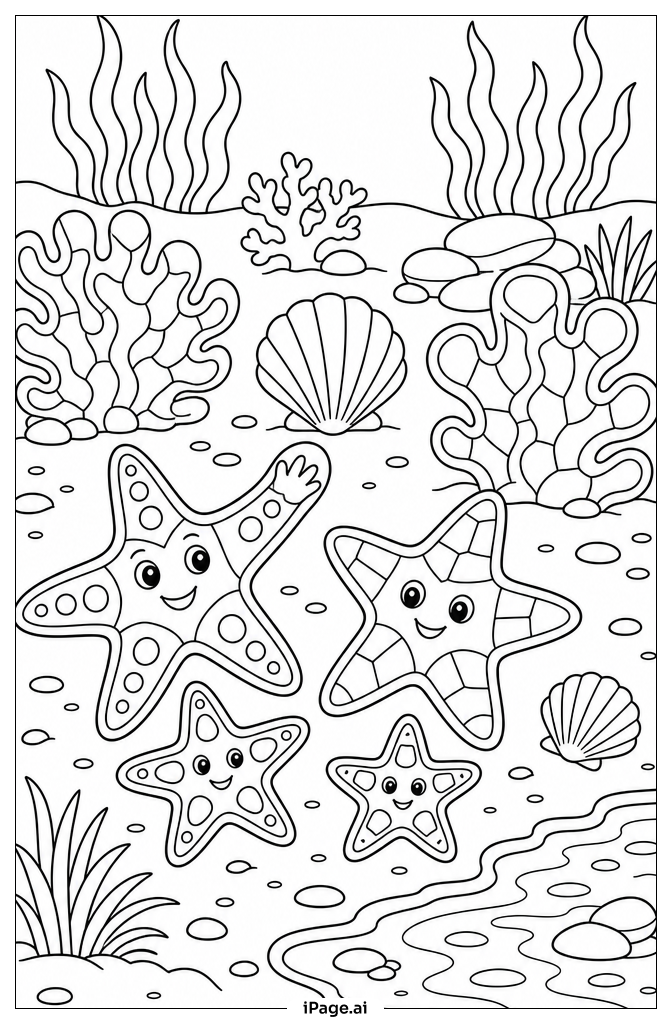
Coloring tips: How to color Starfish Family Gathering coloring page well?
Start with the starfish themselves. Starfish come in many real-life colors, so feel free to be creative! Try bright orange, deep red, sunny yellow, or even purple for each family member. Use different shades for the parent starfish and smaller ones to help them stand out from each other.
For the ocean floor, use tan or light brown for the sandy base. Color the pebbles in soft grays and whites. The seaweed can be various shades of green, from bright lime to deep forest green. Give the coral warm pinks, oranges, or reds to make them pop.
Seashells look great in cream, peach, or pale pink tones. Add light blue or soft aqua to suggest the surrounding water. Bubbles can be left white or given a very light blue outline.
Try using lighter colors first and then layer darker shades on top to add depth and texture to the starfish skin bumps. This gives your artwork a more three-dimensional feel. Most importantly, have fun and make it your own!
Coloring challenges: Which parts are difficult to color and need attention for Starfish Family Gathering coloring page?
Coloring this image is a delightful challenge, but there are a few tricky areas to watch out for:
• **Starfish Skin Texture:** Each starfish is covered in small bumps, ridges, and patterns. Carefully coloring around these tiny details without going outside the lines takes patience and a fine-tipped colored pencil or marker. Shading around the bumps can add a realistic, three-dimensional look, but it requires a steady hand and careful blending.
• **Overlapping Family Members:** Because the starfish are grouped closely together as a family, their arms may overlap or touch. Keeping each individual starfish a distinct color while staying within the correct outlines can be confusing. Planning your color choices before you begin will help you avoid mixing up which arm belongs to which starfish.
• **Intricate Background Details:** The ocean floor is filled with small elements — pebbles, seashells, coral branches, and seaweed fronds. These tiny shapes sit close together, making it easy to accidentally color outside a border or miss a small section. Using fine-tipped tools for these areas will give you much better control.
• **Achieving Depth and Dimension:** The scene has a foreground (the starfish and nearby shells) and a background (distant coral and seaweed). Creating a sense of depth by using lighter, cooler tones in the background and bolder, warmer colors in the foreground is a rewarding technique, but requires thoughtful color planning.
• **Consistent Water Atmosphere:** Suggesting the feel of being underwater without overpowering the other colors is a subtle challenge. A soft, even wash of pale blue or aqua over certain areas can create that underwater glow, but it must be applied gently so it does not muddy the brighter colors of the starfish and coral.
Benefits of coloring books: Advantages of drawing Starfish Family Gathering coloring page
Coloring this Starfish Family Gathering image offers many wonderful benefits for children and young artists.
First, it builds **fine motor skills**. Carefully coloring the bumpy textures on each starfish and the tiny background details like shells and pebbles helps strengthen hand muscles and improve pencil control — skills that support writing and everyday tasks.
Second, it encourages **creativity and self-expression**. Since there is no single "right" way to color this scene, children are free to choose their own color combinations. This builds confidence and lets their imagination shine.
Third, it sparks **curiosity about nature**. The underwater setting introduces children to ocean life — starfish, coral, seaweed, and shells — in a fun and engaging way. It can inspire questions about the sea and a love for the natural world.
Fourth, it promotes **focus and patience**. The detailed design invites children to slow down, concentrate, and work through the image step by step — a great mindfulness exercise that can reduce stress and improve attention span.
Finally, it celebrates **family and togetherness**. The theme of a family gathering gives children a chance to talk about their own families, creating a warm emotional connection to the artwork they are making.