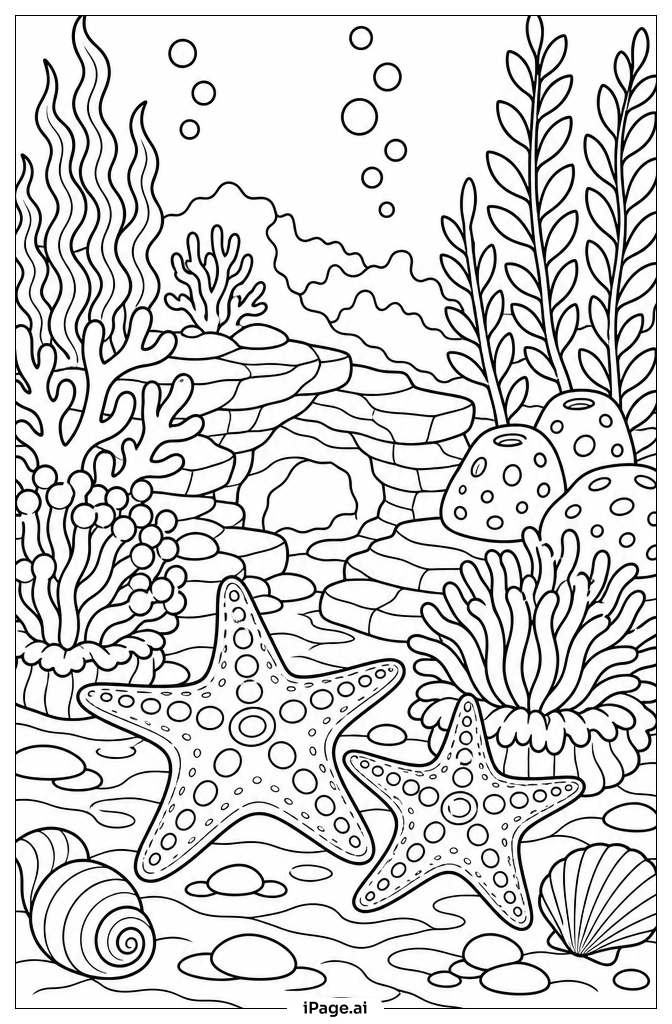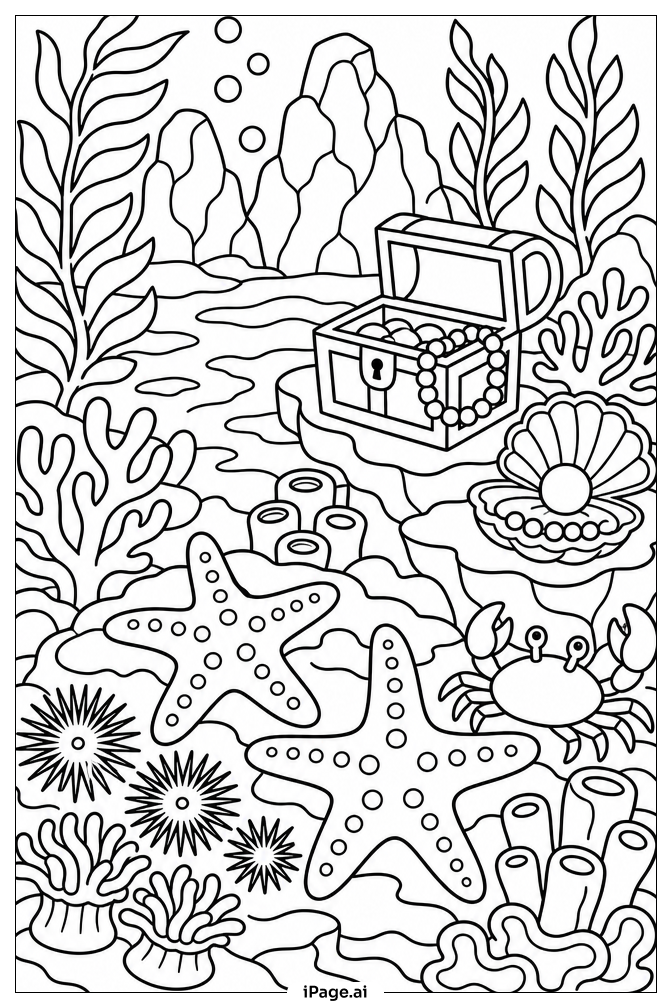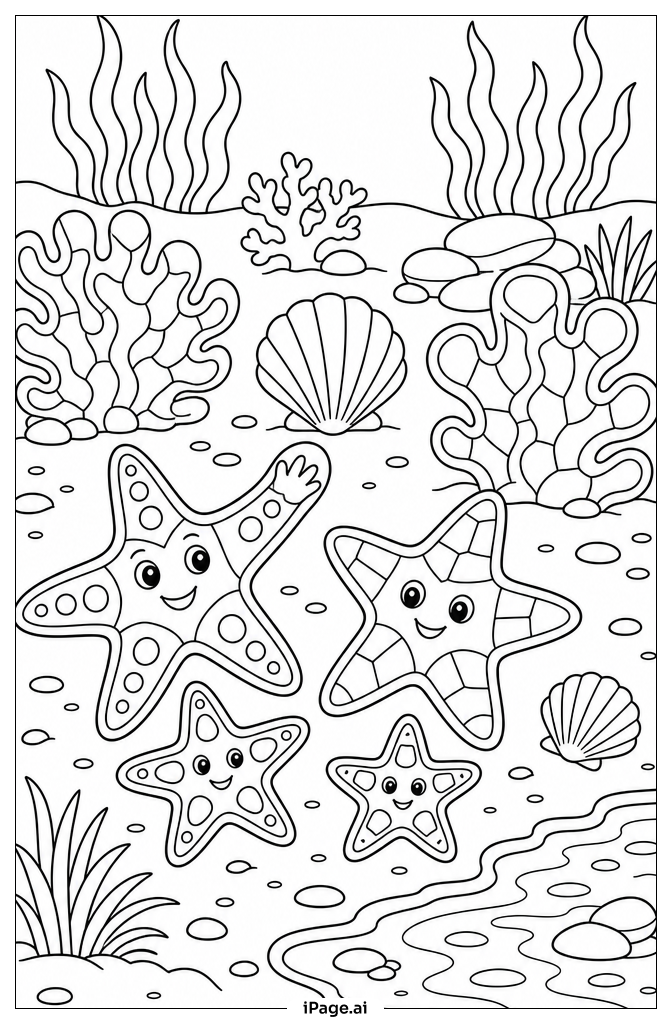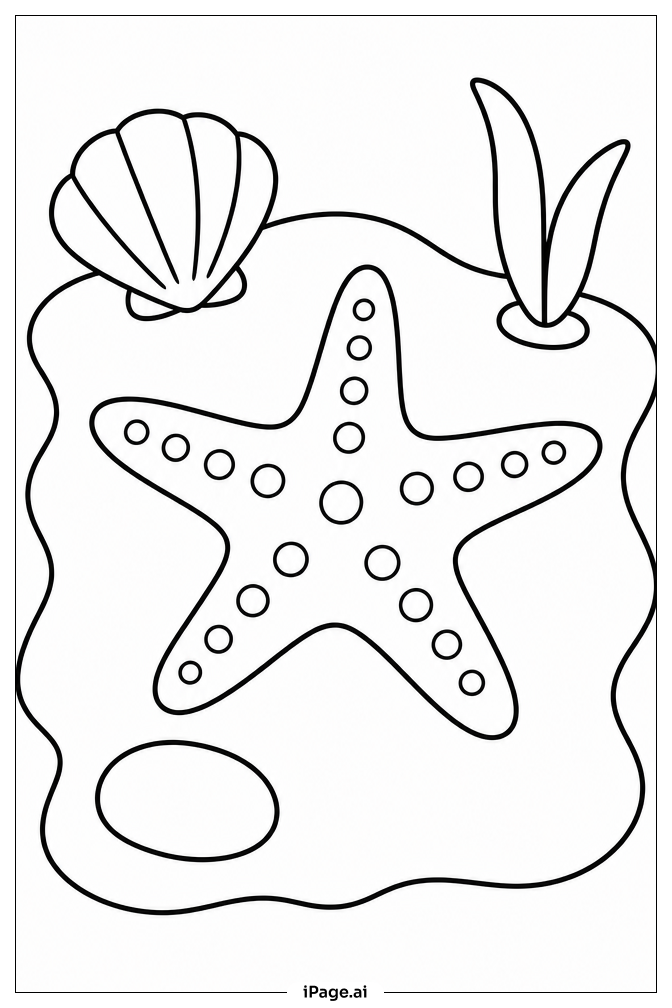
Coloring tips: How to color Starfish And Sea Turtle coloring page well?
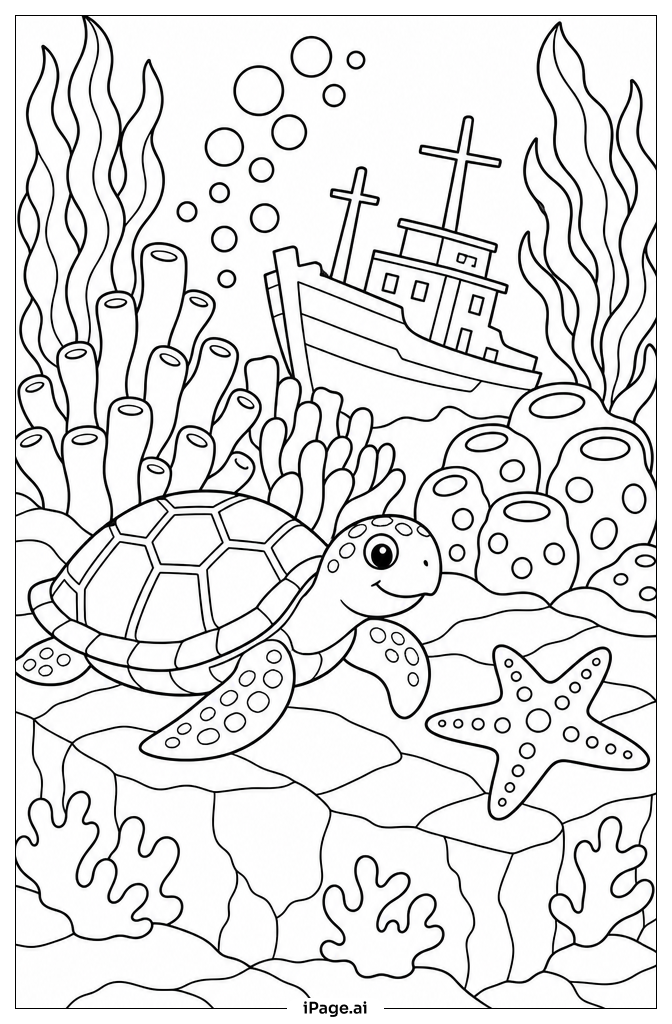
For coloring this image, consider using bright and natural colors to bring the creatures to life. The Starfish can be colored in shades of orange, red, or even pink, as these are common starfish colors in nature. The Sea Turtle's shell can be shaded with greens and browns to reflect its textured protective layers. Use lighter greens or blues for the turtle's flippers and head to add contrast. The water background can be colored in various blue tones, from deep blue to lighter aqua shades, to create an underwater feel. Adding gentle bubbles with soft gray or white will help give dimension. Feel free to experiment with patterns and shading to make the creatures stand out vividly on the page.
Coloring challenges: Which parts are difficult to color and need attention for Starfish And Sea Turtle coloring page?
• Surface Texture Details: The bumps and small patterns on the Starfish require careful attention to detail and fine coloring strokes.
• Shell Patterns: The Sea Turtle’s shell has complex and irregular shapes that need patience to color neatly without going outside the lines.
• Blending Colors: Creating realistic shading on the turtle’s flippers and shell means blending multiple shades of green and brown smoothly.
• Small Spaces: Some areas between the turtle’s limbs and the Starfish's arms are narrow and require precision.
• Water Effects: Filling the background water and bubbles evenly can be a challenge to keep it looking smooth and less patchy when coloring large spaces.
Benefits of coloring books: Advantages of drawing Starfish And Sea Turtle coloring page
Coloring this image helps children practice fine motor skills as they carefully fill in small details on the Starfish and Sea Turtle. It encourages focus and patience because of the textured surfaces and patterns. Choosing colors and shading promotes creativity, allowing young artists to explore how natural underwater animals look or play with imaginative palettes. Coloring the watery background supports understanding of blending and layering colors. Finally, bringing this underwater scene to life teaches children about marine life in a fun and interactive way, connecting art with nature.