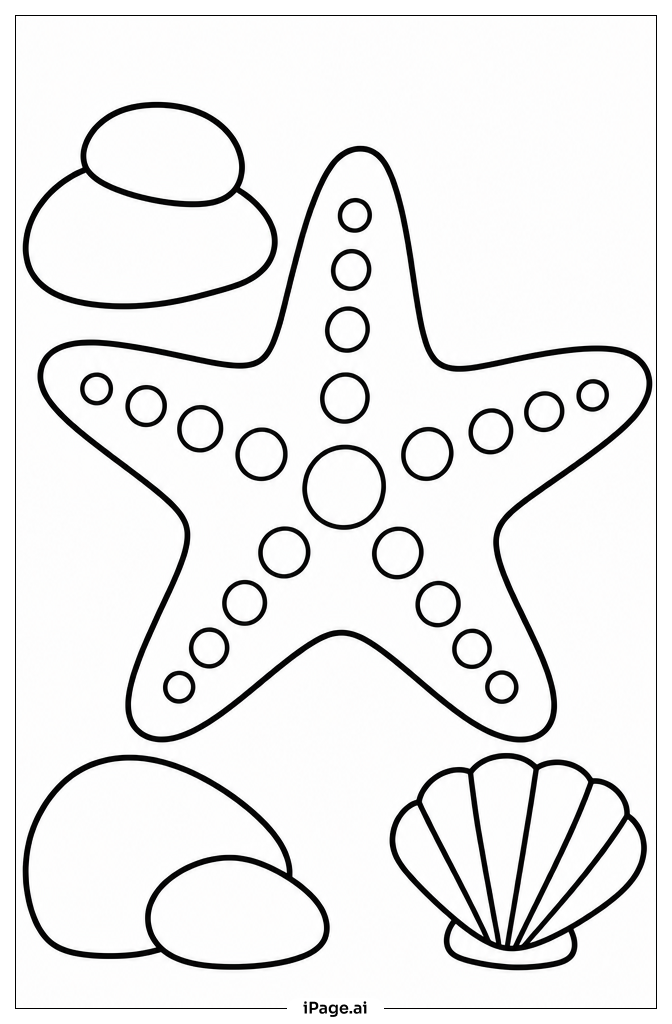
Coloring tips: How to color Starfish With Tiny Rock Garden coloring page well?
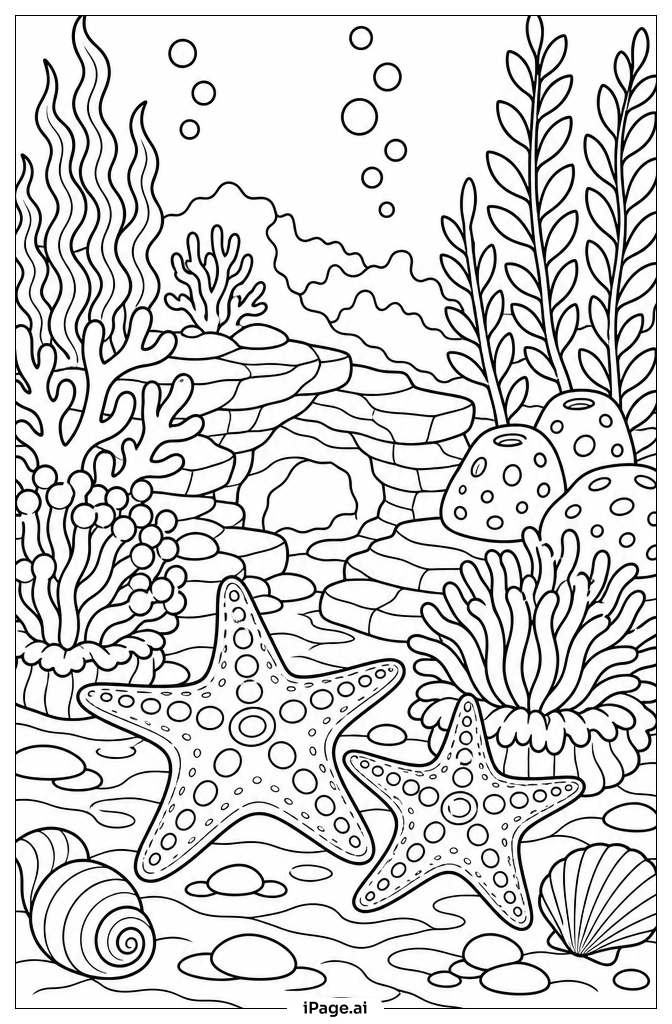
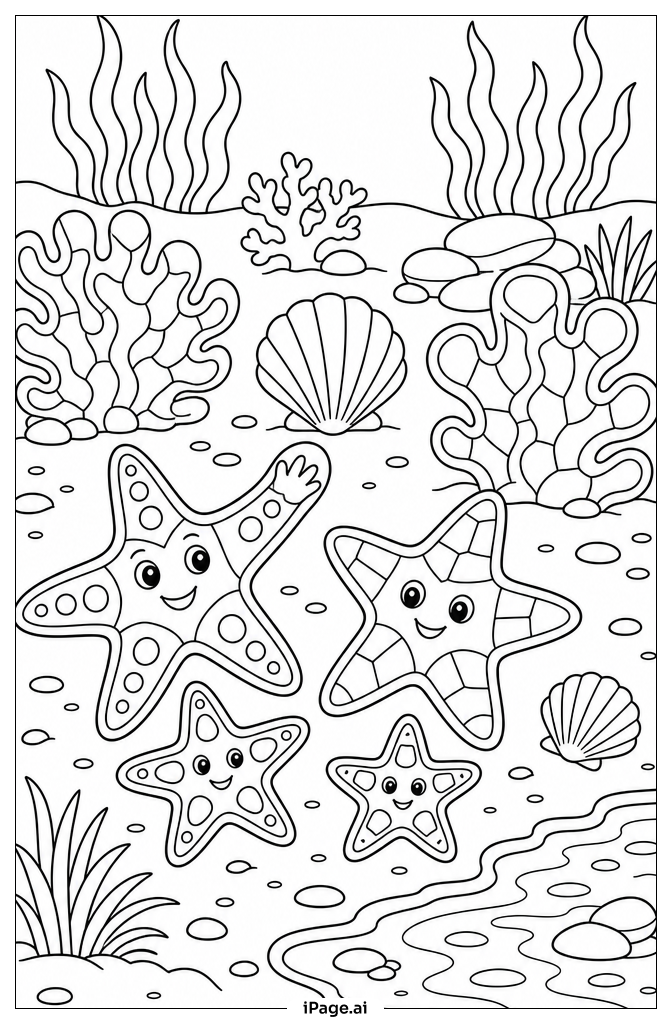
Start with the starfish using warm, sunny colors like orange, coral, or golden yellow. You can add darker shading along the edges of each arm to give it a rounded, three-dimensional look. For the rocks, try using shades of gray, tan, beige, or light brown. Mix a few darker and lighter tones on the same rock to make them look real and solid. The small shells can be colored in soft cream, pink, or peach. Seaweed and coral pieces look great in green, teal, or soft red. Use a light blue or sandy tan for the background to suggest a beach or shallow tide pool setting. Take your time filling in the tiny details — the little bumps on the starfish arms and the cracks between rocks are fun areas to add extra color and personality.
Coloring challenges: Which parts are difficult to color and need attention for Starfish With Tiny Rock Garden coloring page?
Coloring this image comes with a few fun challenges to keep in mind:
• **Small, detailed textures on the starfish:** The starfish arms are covered with tiny bumps and dot patterns. Staying within these small shapes requires a sharp colored pencil or a fine-tipped marker. Young colorists may find it tricky to fill each bump neatly without going outside the lines.
• **Variety of rock shapes and sizes:** The rock garden includes many stones of different shapes packed close together. Each rock needs its own color variation to look realistic. Blending two or three tones on a single rock — light on top, darker on the sides — takes practice and patience, especially for beginners.
• **Layering colors for depth:** To make the whole scene feel three-dimensional, colorists need to think about light and shadow. Deciding where the light comes from and applying darker shades consistently across rocks, the starfish, and background elements can be a challenge, particularly for younger children.
• **Tiny accent elements:** The small shells, coral fragments, and seaweed pieces are scattered throughout the composition. These tiny objects have fine outlines and require careful attention to color neatly. Skipping them makes the scene feel incomplete, but coloring them well rewards the effort with a richly detailed result.
• **Color harmony across the whole scene:** Balancing warm tones on the starfish with the neutral tones of the rocks and the cooler tones of seaweed or water elements takes some planning. Choosing a color palette before starting helps keep the finished piece looking cohesive and visually pleasing.
Benefits of coloring books: Advantages of drawing Starfish With Tiny Rock Garden coloring page
Coloring this starfish and rock garden scene offers many wonderful benefits for kids and beginners alike.
Working on the small textures of the starfish arms and the many rocks helps build **fine motor skills** and hand-eye coordination. Guiding a pencil or marker carefully through tight spaces strengthens the small muscles in the hands, which also supports handwriting skills.
Choosing colors for rocks, shells, and the starfish encourages **creative thinking**. There is no single right answer — kids are free to imagine a sunset beach, a tropical tide pool, or even a fantasy ocean world. This kind of open-ended creative choice builds confidence and self-expression.
The peaceful, nature-themed subject matter makes this image especially good for **relaxation and focus**. Spending quiet time with a calming scene like a rock garden helps reduce stress and supports mindfulness, even for young colorists.
Learning to mix light and dark shades on the rocks introduces beginners to basic **color theory**, making the activity educational as well as fun. Kids naturally start to understand concepts like shading, contrast, and tone without even realizing they are learning.
Overall, this image is a great way to spend creative time while building real artistic skills.