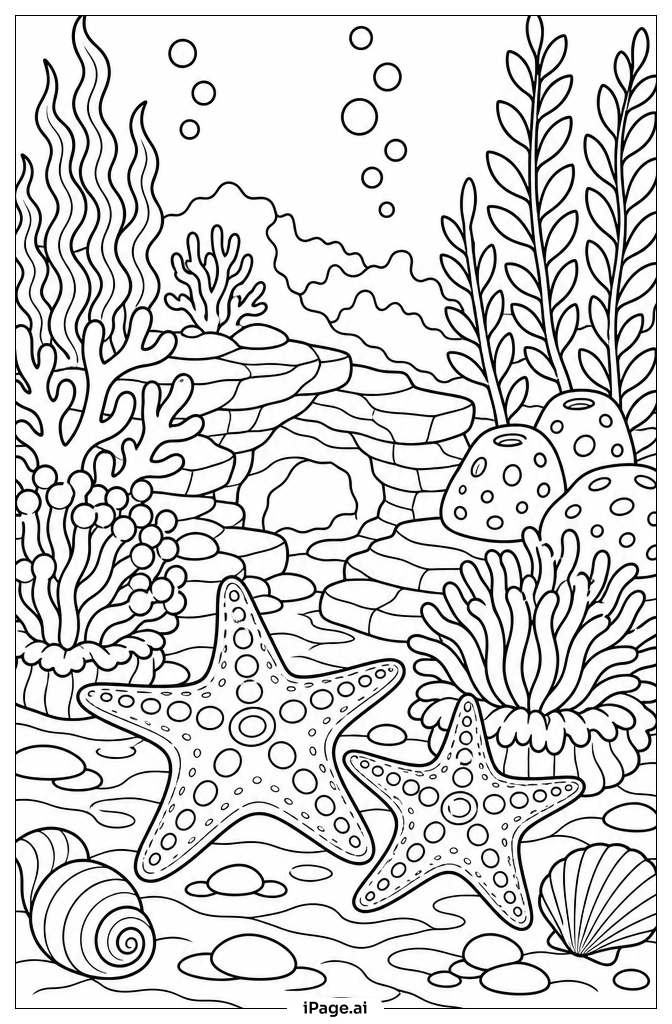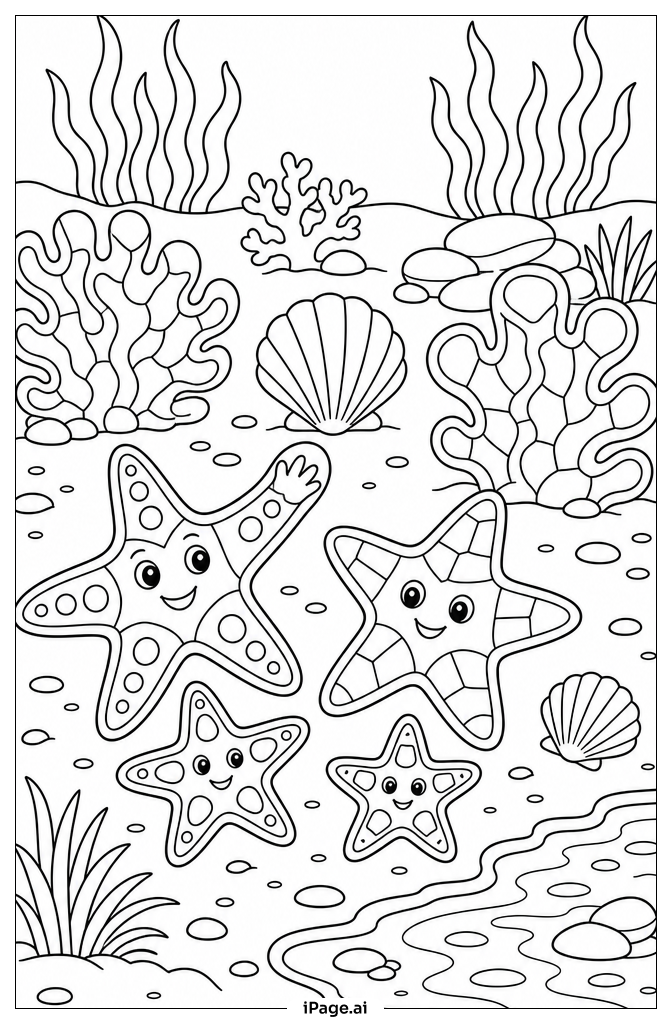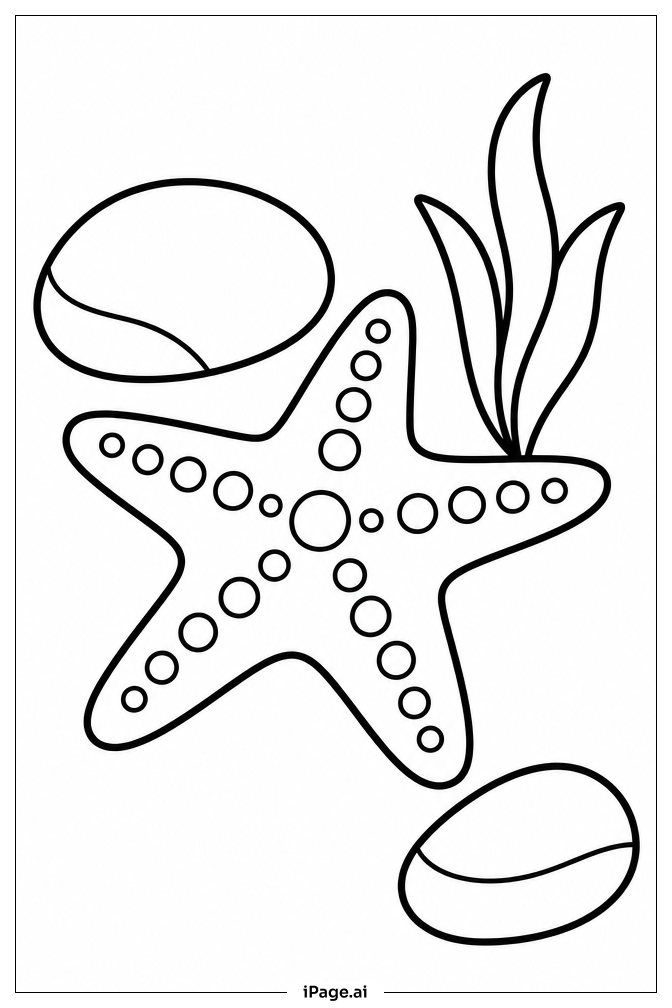
Coloring tips: How to color Starfish With Pebbles coloring page well?
Start with the starfish and pick a warm color like orange, coral, red, or yellow — these are classic starfish colors that look bright and fun. Use a slightly darker shade of the same color to add shading along the edges of each arm. For the bumps on the starfish, try a light tan or cream to make them stand out. The pebbles can be colored in natural earthy tones like gray, beige, brown, or soft blue. Mix different shades so each pebble looks unique. To make the scene feel like an ocean floor, you could add a light blue or soft teal background. Use colored pencils for smooth blending on the pebbles, and crayons or markers for bold color on the starfish. Don't be afraid to get creative — spotted pebbles or a rainbow starfish look amazing too!
Coloring challenges: Which parts are difficult to color and need attention for Starfish With Pebbles coloring page?
Coloring this image is enjoyable, but there are a few tricky parts to watch out for:
• **Texturing the starfish surface:** The starfish has many small bumps and detailed patterns across its five arms. Coloring these tiny raised dots without going outside the lines takes patience and a sharp pencil or fine-tip marker. Trying to add light and shadow around each bump makes it even more challenging but very rewarding.
• **Keeping pebble colors varied and natural:** There are many pebbles of different sizes scattered around the starfish. The challenge is making each pebble look distinct while still keeping the overall scene feeling natural and cohesive. Using too many bright colors can make the pebbles look unrealistic, while sticking to only one shade makes them look flat and boring.
• **Blending and shading on rounded shapes:** Both the starfish arms and the pebbles are curved and three-dimensional. Creating a convincing sense of roundness requires blending from light to dark smoothly, which can be difficult — especially for younger colorists using crayons.
• **Managing small spaces:** Some areas between the pebbles and the starfish arms are narrow and tight. Coloring precisely in these small gaps without accidentally bleeding into neighboring sections requires a fine-tipped tool and a steady hand.
• **Balancing the overall composition:** Because the pebbles vary in size and are spread across the page, deciding which colors go where — so the whole image looks balanced and visually pleasing — takes some planning before you start coloring.
Benefits of coloring books: Advantages of drawing Starfish With Pebbles coloring page
Coloring this starfish and pebbles scene offers many wonderful benefits for kids and adults alike. For younger children, carefully coloring the small bumps on the starfish and the many pebbles helps build fine motor skills and strengthens hand-eye coordination. Choosing colors for each pebble encourages creative thinking and color awareness. For older kids and teens, blending shades and adding texture to the starfish and rocks develops artistic technique and patience. The repetitive, gentle motion of coloring the pebbles one by one is naturally calming and can help reduce stress and anxiety. Focusing on a detailed image like this also improves concentration and mindfulness, helping colorists stay present in the moment. Learning about starfish and ocean life through coloring also sparks curiosity about nature and the sea. Whether you're five or fifty, finishing this page gives a real sense of accomplishment and pride. It's a relaxing, screen-free activity that brings joy and creativity to anyone who picks up a crayon or colored pencil.