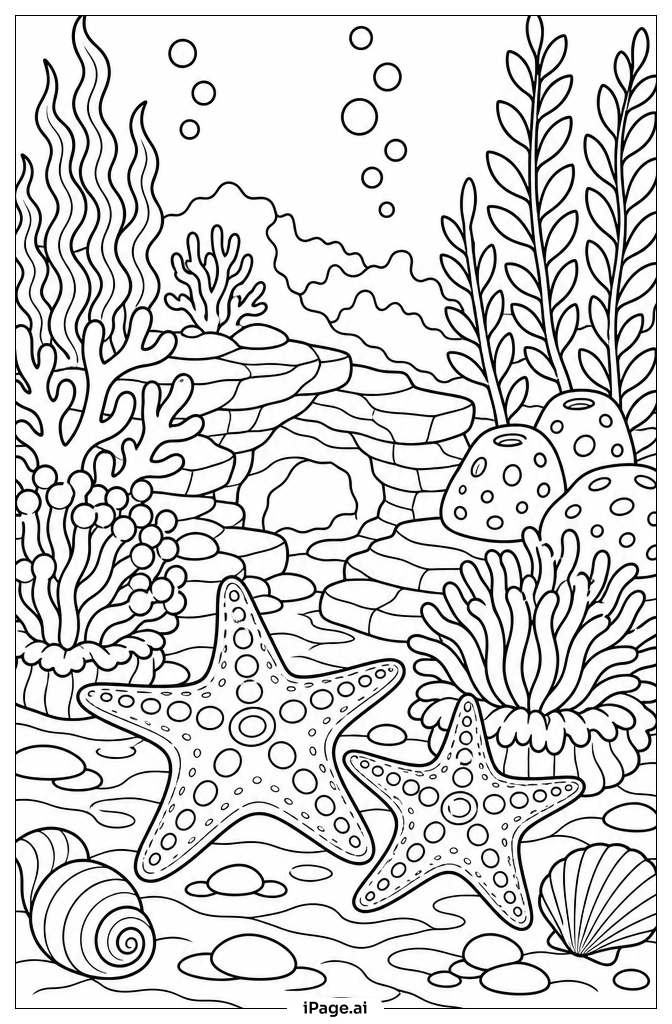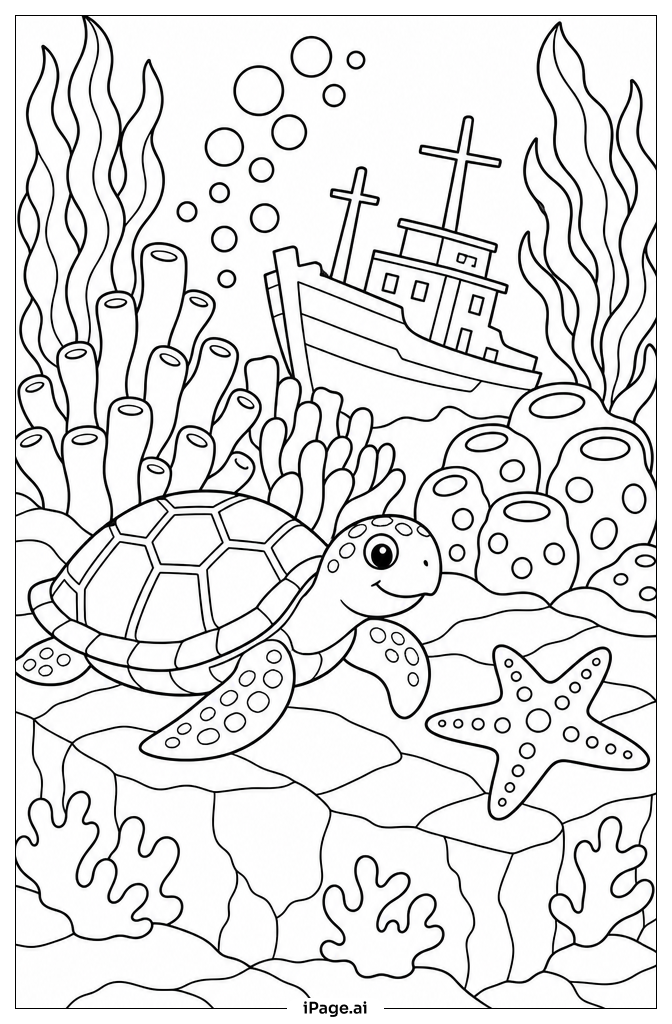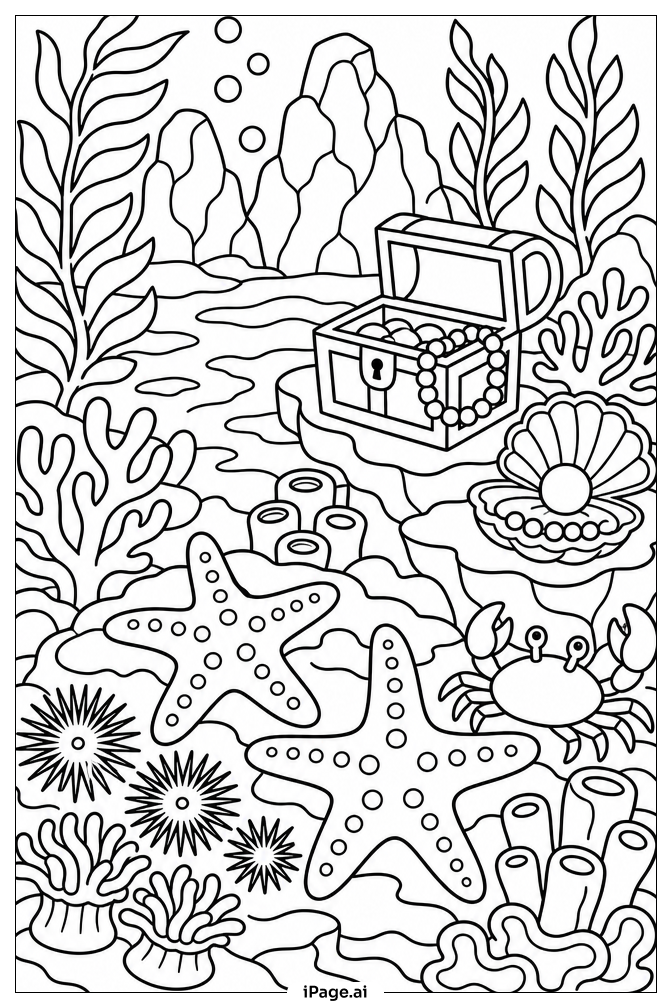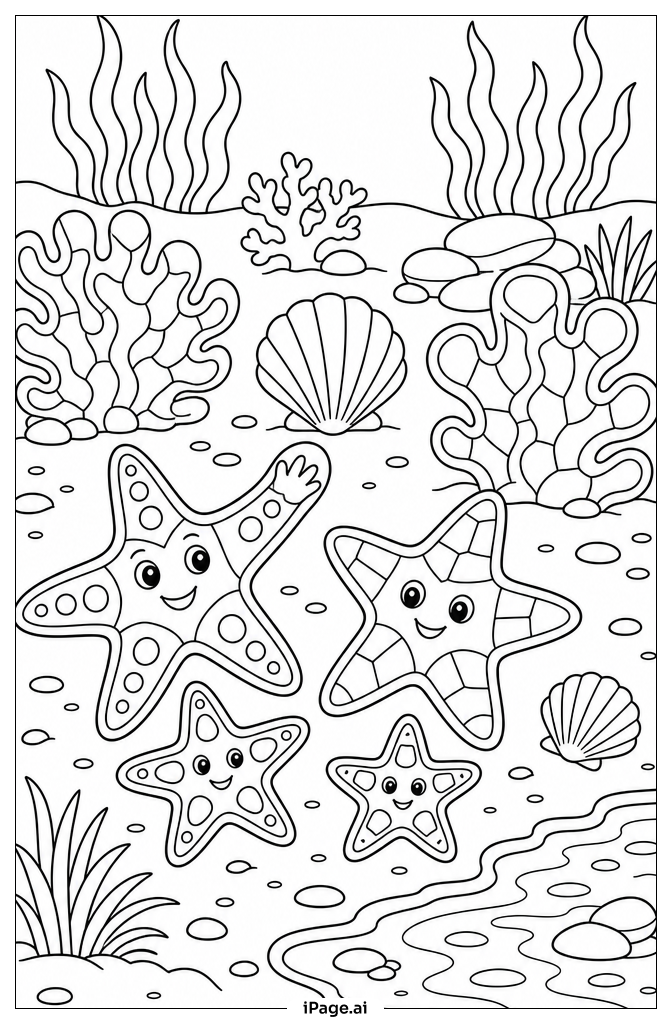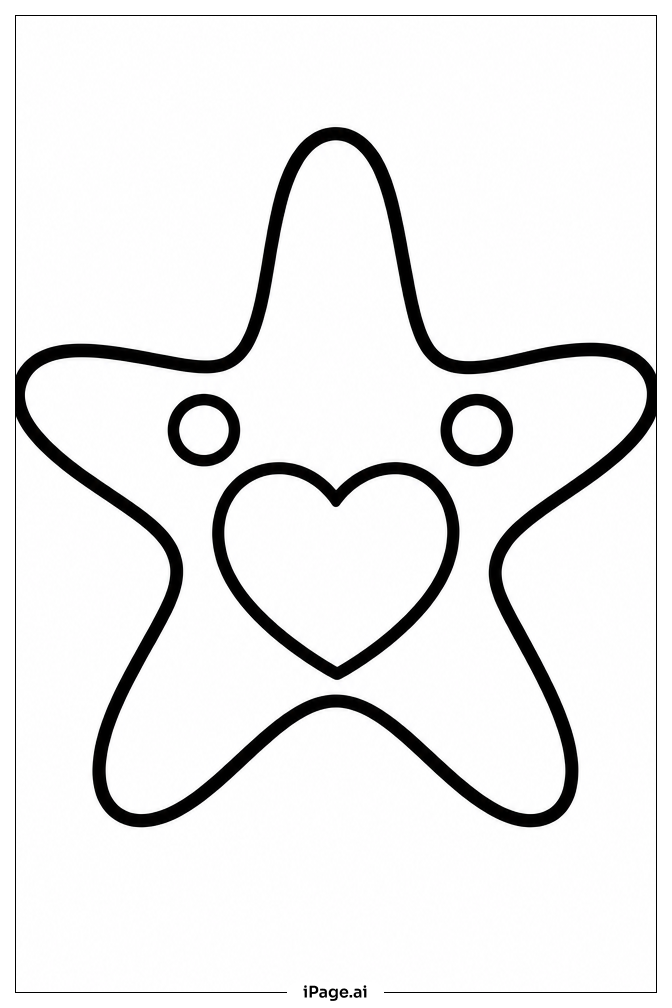
Coloring tips: How to color Starfish With Heart coloring page well?
Start by choosing a warm, ocean-inspired color palette. Shades of orange, coral, red, or golden yellow work beautifully for the starfish body — these are the natural colors you might find on a real sea star! Use a slightly darker shade of the same color along the edges of each arm to add depth and dimension.
For the heart in the center, try a bright, cheerful color like red, pink, or magenta to make it pop. You can also use a gradient, going from deep pink in the middle to soft lavender on the edges.
The decorative dots and swirls on the arms can be colored in contrasting or complementary colors — like white, yellow, or light peach — to make the patterns stand out.
For the background bubbles and waves, use soft blues and teals to suggest a calm ocean setting. Light sky blue or seafoam green creates a soothing underwater feel.
Feel free to get creative — there are no rules! Try mixing unexpected colors like purple or turquoise for a fantasy ocean vibe. Use colored pencils for fine details and crayons or markers for filling in larger areas.
Coloring challenges: Which parts are difficult to color and need attention for Starfish With Heart coloring page?
Coloring this starfish with heart image is a fun challenge, but there are a few tricky spots to watch out for:
• **Intricate surface patterns:** The starfish arms are covered with small dots, swirls, and textured details. These tiny elements require steady hands and fine-tipped coloring tools. Rushing through them may cause colors to bleed into neighboring areas, so take your time and use sharp pencils or fine-liner markers for the best results.
• **Coloring the central heart:** The heart sits right in the middle of the starfish body, surrounded by detailed textures. Keeping the heart's color clean and separate from the starfish's body color can be tricky. Use a light pencil outline as a guide before filling it in, and consider leaving a thin uncolored border between the heart and the surrounding starfish texture.
• **Maintaining consistent shading across five arms:** Each of the five arms needs to look balanced and even. Applying consistent shading — darker at the edges, lighter toward the center — across all five arms without making one look heavier than the others takes practice and patience.
• **Background details without overwhelming the main subject:** The bubbles and wavy lines in the background are small and close together. Coloring them too darkly can make the background compete with the starfish. Use lighter, more transparent colors or gentle strokes so the starfish remains the clear focal point.
• **Color transitions and blending:** If you want a gradient effect on the arms or the heart, blending smoothly from one color to another in small spaces can be challenging. Layering colored pencils gradually in circular motions helps achieve a smooth, professional-looking blend.
Benefits of coloring books: Advantages of drawing Starfish With Heart coloring page
Coloring this Starfish With Heart page offers a wonderful range of benefits for kids and young learners:
**Builds focus and patience.** The detailed patterns on the starfish arms encourage children to slow down, concentrate, and work carefully — skills that carry over into reading, writing, and problem-solving.
**Boosts creativity.** Choosing colors for the starfish, heart, and background sparks imaginative thinking. Kids learn that there is no single "right" answer, which builds confidence in their own creative choices.
**Develops fine motor skills.** Staying within the lines of small dots, swirls, and the heart shape strengthens the hand muscles and pencil control that children need for handwriting and other detailed tasks.
**Teaches color theory.** Experimenting with warm and cool colors, complementary pairs, and shading introduces young artists to basic art concepts in a hands-on, enjoyable way.
**Encourages emotional expression.** The heart motif makes this page especially meaningful — children can connect with themes of love, kindness, and care while they color, making the activity both artistic and emotionally enriching.
**Promotes relaxation.** The rhythmic, repetitive motion of coloring helps reduce stress and anxiety, creating a calm and joyful experience for children of all ages.