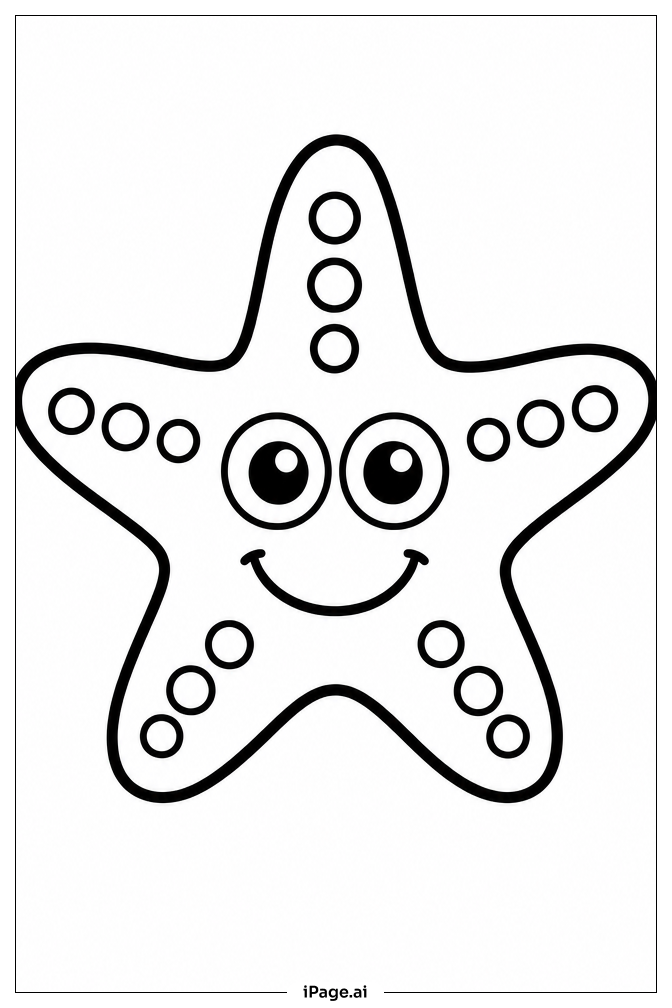
Coloring tips: How to color Starfish With Big Eyes coloring page well?
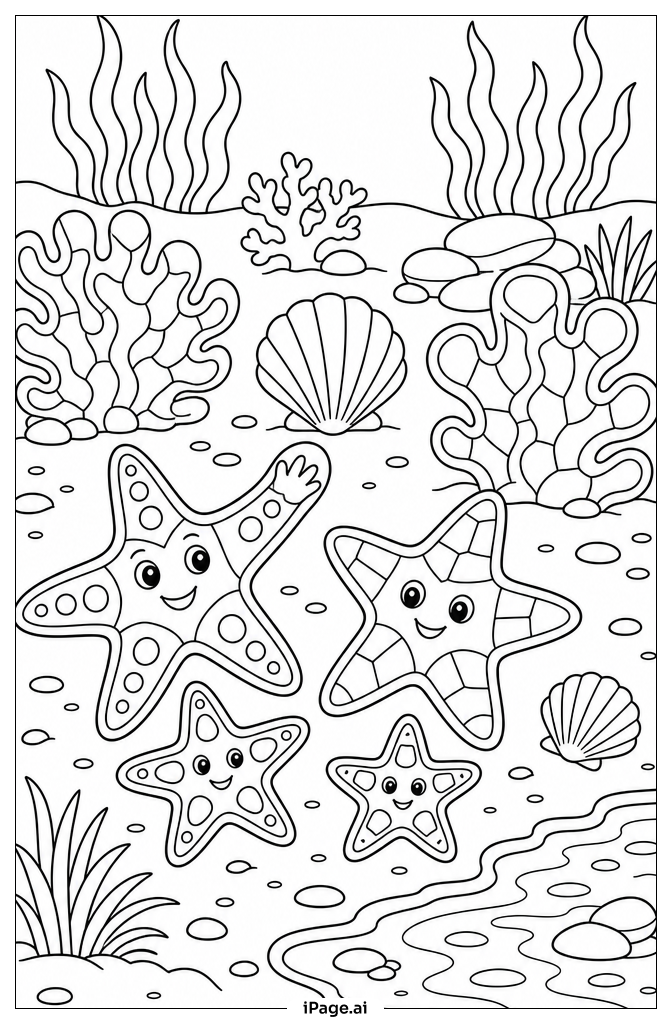
Start with the starfish body using warm, bright colors like orange, coral, or golden yellow — these are the most natural and eye-catching choices. You can also try a fun twist with pink, purple, or red for a more imaginative look. Use a slightly darker shade of the same color to add shading along the edges of each arm, giving the starfish a rounded, three-dimensional feel. For the big eyes, color the irises in deep blue, green, or brown, and leave a small white circle in each eye to create a shiny, lively sparkle. Color the pupils dark. The bumps and texture dots on the body can be highlighted with a slightly lighter or darker tone to make them stand out. For the background bubbles and water swirls, soft blues, aquas, and light purples work beautifully. Younger kids can keep it simple with just two or three colors, while older kids can explore blending and shading for a more polished result.
Coloring challenges: Which parts are difficult to color and need attention for Starfish With Big Eyes coloring page?
• Coloring the Large Eyes Accurately: The oversized eyes are the focal point of this image and require careful attention. The irises, pupils, and white highlight spots are all close together within a small area. Staying within the bold outlines without bleeding into neighboring sections can be tricky, especially for younger children. Using fine-tipped markers or colored pencils works best here.
• Textured Bumps on the Starfish Body: The small bumps and dotted patterns scattered across the starfish's arms and body add visual interest but also create a coloring challenge. Each bump sits closely to the others, making it easy to accidentally color over the lines. Patience and a sharp pencil tip are helpful when working through these detailed areas.
• Shading Along the Curved Arms: Each of the five arms has a gentle curve and rounded shape. Applying shading to suggest depth along the edges of each arm requires some color-blending skill. Beginners may find it hard to smoothly transition from a lighter center tone to a darker edge without creating harsh lines.
• Background Water Elements: The bubbles and wavy lines surrounding the starfish are small and closely spaced. Filling them in with consistent color without smudging nearby areas takes steady hands and control. Choosing colors that complement the starfish without overpowering it also requires some planning.
• Keeping the Overall Color Balanced: With so many small details — eyes, bumps, arms, and background — it can be difficult to keep the entire image visually balanced. Picking a limited color palette in advance and planning which areas get which colors before starting helps avoid a cluttered or overwhelming result.
Benefits of coloring books: Advantages of drawing Starfish With Big Eyes coloring page
Coloring this fun starfish image offers a wide range of benefits for children of all ages. The detailed patterns and textures help develop fine motor skills and strengthen hand-eye coordination as kids carefully trace within the lines. Choosing colors for the starfish body, eyes, and background encourages creative thinking and gives children the freedom to express themselves in a low-pressure, enjoyable way. For younger children aged 4 to 7, the bold outlines and simple shapes make it easy to get started and build confidence. Older kids aged 8 to 16 can challenge themselves with shading and color blending, developing more advanced artistic techniques. The underwater theme also sparks curiosity about ocean life and marine animals, making it a great conversation starter about the natural world. Sitting down to color promotes focus and patience, helping children practice sustained attention in a screen-free activity. It also has a calming effect, making it a great way to unwind after school. Whether done alone or with friends and family, coloring this cheerful starfish brings joy, creativity, and a sense of accomplishment when the page is complete.