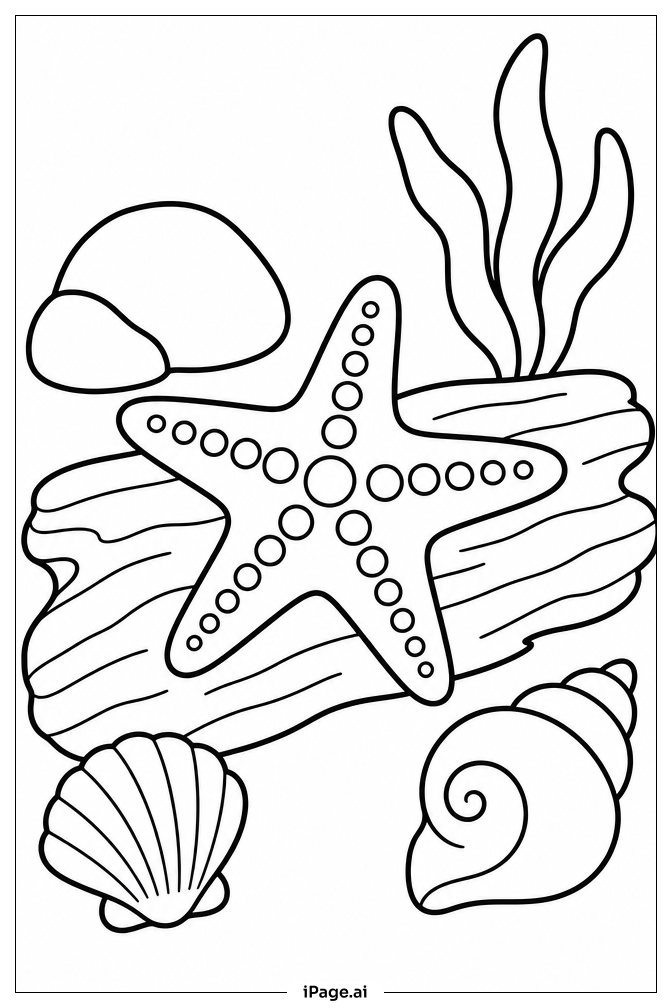
Coloring tips: How to color Starfish On Driftwood coloring page well?
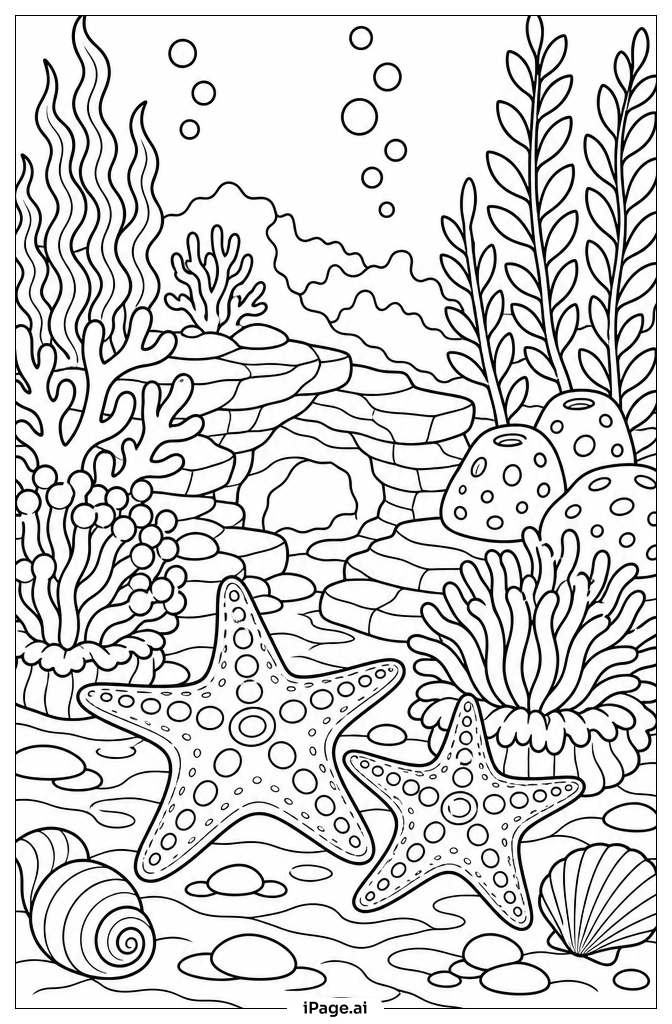
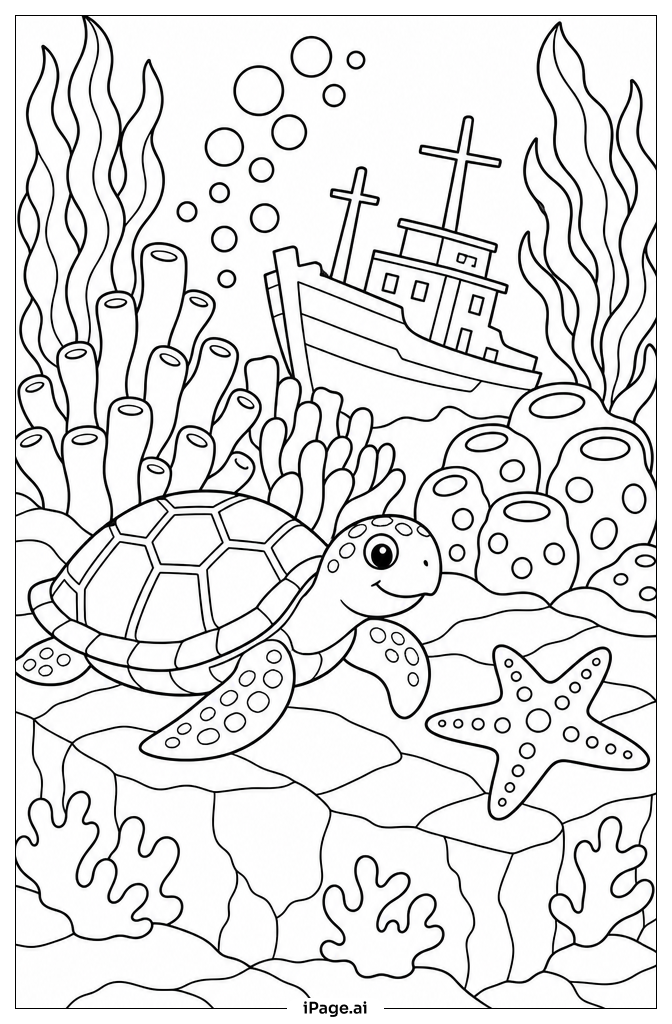
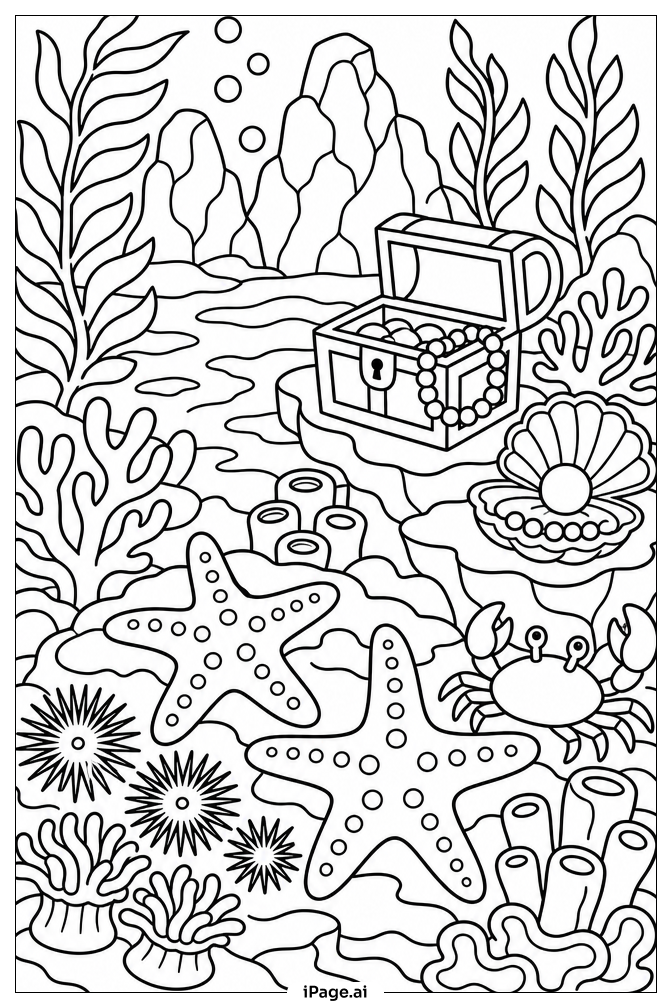
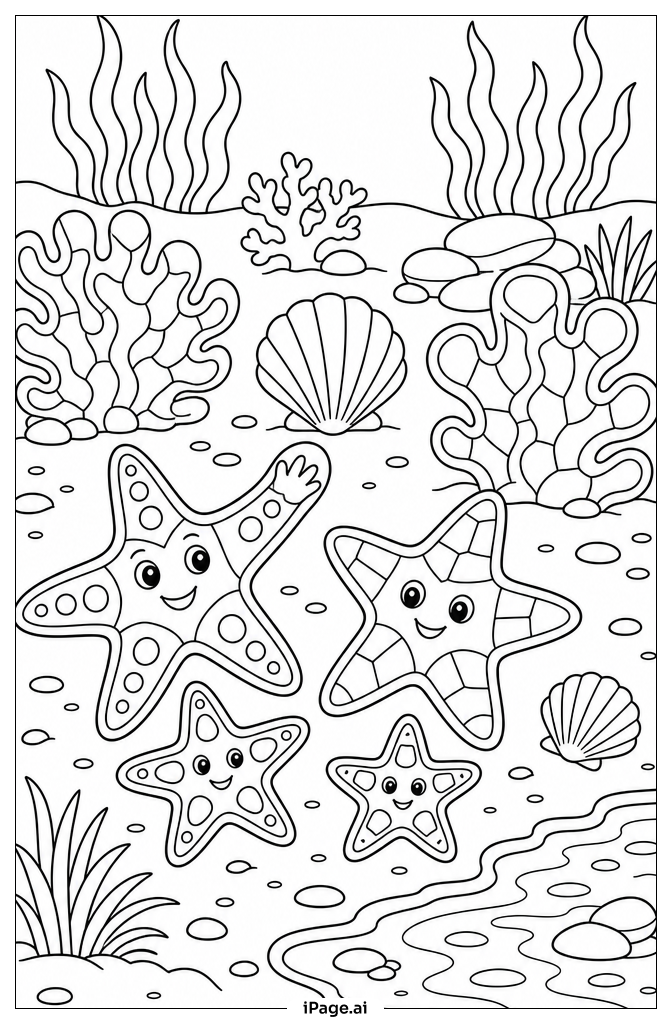
For the starfish, consider warm colors like orange, red, or pink to create a vibrant look, or try purples and blues for a more unusual appearance. Add darker shades along the edges of each arm to create dimension and depth. The textured bumps can be colored in slightly lighter or darker tones than the base color to make them stand out. For the driftwood, use various shades of brown and gray to show the weathered, sun-bleached effect. Lighter tans and whites can highlight areas exposed to sun and salt, while darker browns emphasize the wood grain and crevices. Consider adding hints of green or blue-gray to suggest algae or ocean staining. The background could remain white for a clean look, or add soft blues and sandy yellows to suggest a beach setting.
Coloring challenges: Which parts are difficult to color and need attention for Starfish On Driftwood coloring page?
• Starfish Texture Details: The bumpy surface of the starfish presents a challenge with its numerous small circular patterns covering all five arms. Coloring each bump consistently while maintaining the overall color scheme requires patience and careful attention. Young children may find it tedious to color each small detail, while older colorists can use this opportunity to practice shading techniques by making each bump slightly different in tone to create realistic dimension.
• Wood Grain Patterns: The driftwood features curved lines and natural grain patterns that flow in different directions across the surface. Following these lines with colored pencils or markers while keeping colors within the boundaries requires steady hand control. The challenge increases when trying to create the weathered, multi-toned appearance of real driftwood by blending several shades of brown, gray, and tan smoothly together.
• Creating Depth and Dimension: Making the starfish appear three-dimensional on a flat page requires understanding of light and shadow placement. Deciding where to place darker shades to show the arms curving over the driftwood, and where to add highlights to show raised textures, challenges spatial reasoning skills. The overlapping elements where the starfish meets the wood require careful color transitions.
• Fine Motor Control: The precise edges around the starfish arms and the detailed wood features demand steady coloring to avoid crossing lines. Smaller hands may struggle with the intricate areas, particularly around the starfish tips and the narrow gaps between design elements.
Benefits of coloring books: Advantages of drawing Starfish On Driftwood coloring page
Coloring this starfish and driftwood scene offers wonderful educational and developmental benefits. Children learn about ocean ecosystems and beach environments while exploring the natural textures and patterns found in marine life. The detailed starfish surface helps develop fine motor skills and hand-eye coordination as young artists carefully fill in small spaces. Practicing color blending on the weathered driftwood teaches about natural aging processes and encourages experimentation with earth tones. The calming ocean theme promotes relaxation and stress relief, making it perfect for quiet time activities. This image also sparks curiosity about marine biology and coastal habitats, potentially inspiring interest in environmental science. The combination of organic shapes helps children understand natural forms versus geometric patterns, supporting cognitive development and observation skills.