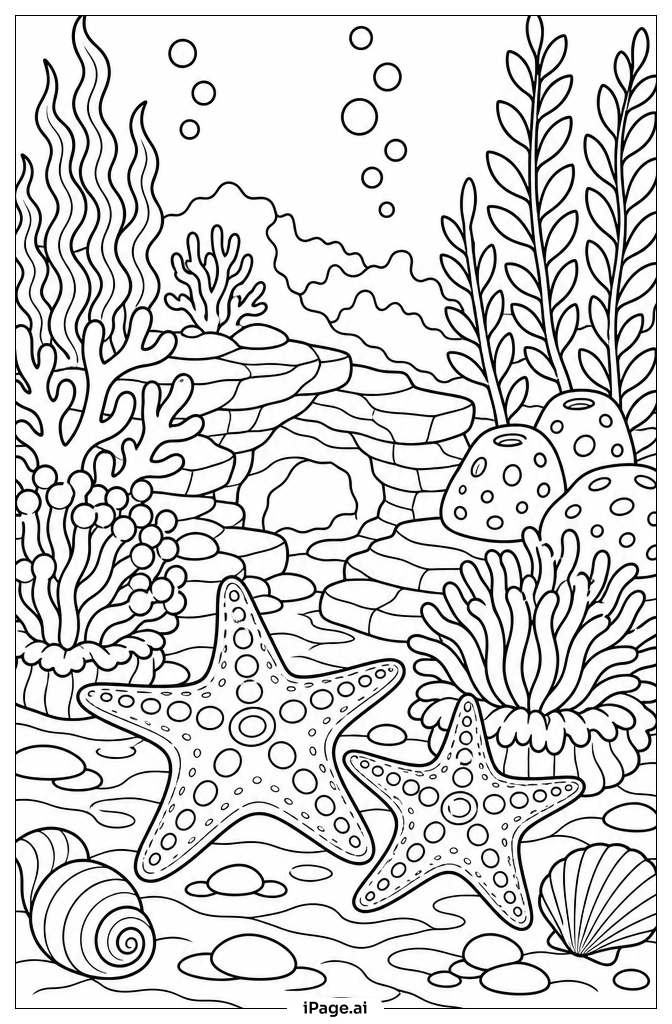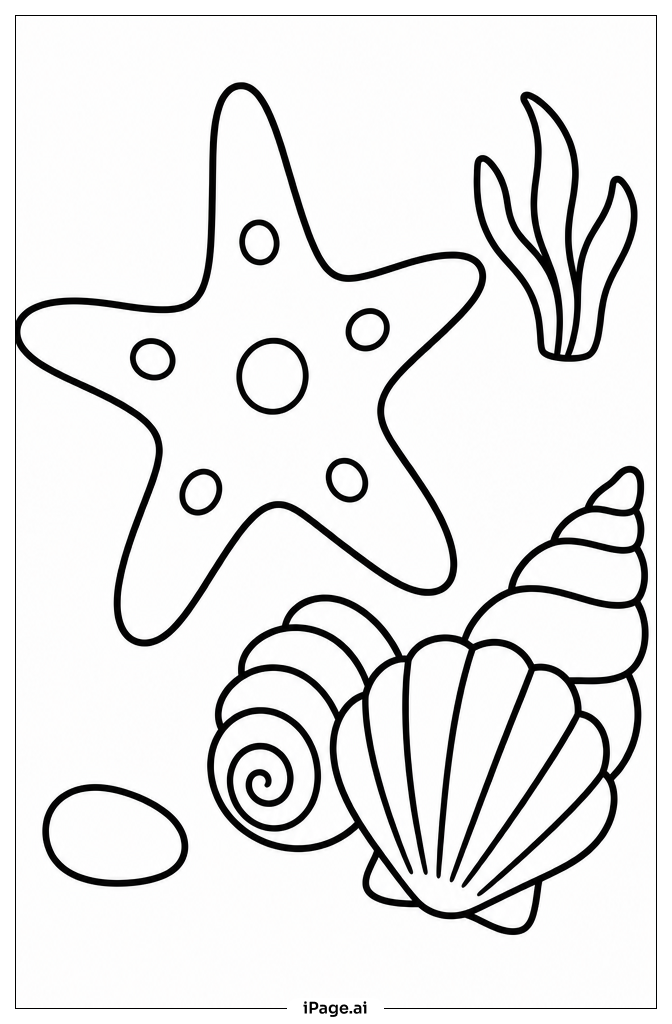
Coloring tips: How to color Starfish Near Seashell Cluster coloring page well?
Start with the starfish using warm shades like orange, coral, or red-brown. Add lighter tones on the raised bumps to create a 3D effect. For the seashells, use a mix of creamy whites, soft pinks, sandy beiges, and peach tones. You can add stripes or swirls on the spiral shells to make them look more realistic. Use dark brown or gray for the deep grooves and ridges on each shell to add depth. For the background, try a soft sandy yellow or a gentle blue-green to suggest the ocean floor or a tide pool. Blending two shades together makes the scene look more natural and alive. Feel free to get creative — seashells in nature come in all kinds of colors!
Coloring challenges: Which parts are difficult to color and need attention for Starfish Near Seashell Cluster coloring page?
Coloring this image comes with a few fun challenges to work through:\n\n• **Starfish texture details:** The starfish surface is filled with small bumps, dots, and raised patterns. Coloring each tiny detail carefully takes patience. Using a sharp colored pencil or a fine-tipped marker helps you stay within the small shapes without smearing color across the lines.\n\n• **Seashell variety and patterns:** Each shell in the cluster has a different shape — spirals, ridges, fans, and curves. Keeping the patterns consistent on each shell, like following the natural flow of a spiral or the even lines on a scallop, requires steady hands and focused attention. Mixing up the colors between shells also takes planning so they don't all blend together.\n\n• **Creating depth and dimension:** Flat coloring can make the image look one-dimensional. Adding shading — darker tones in the crevices and lighter tones on raised surfaces — helps the starfish and shells look round and three-dimensional. This technique, called shading or contouring, can be tricky for younger colorists but is very rewarding.\n\n• **Background balance:** Choosing a background color that complements but doesn't overpower the main subjects is a subtle challenge. If the background is too dark or too bright, it can distract from the starfish and shells. Light, cool tones usually work best for an ocean-themed scene.\n\n• **Staying inside fine lines:** The detailed linework in this image includes many small, closely spaced lines. Younger children may find it difficult to color neatly inside very narrow sections. Using thinner tools or crayons with fine tips makes this easier to manage.
Benefits of coloring books: Advantages of drawing Starfish Near Seashell Cluster coloring page
Coloring this Starfish Near Seashell Cluster page offers a wide range of benefits for kids and adults alike. For young children, carefully filling in the starfish's bumpy texture and the shells' detailed ridges helps build fine motor skills and strengthen hand-eye coordination. Choosing which colors to use for each shell encourages creative thinking and decision-making. For older kids and teens, working with shading and blending to create depth is a great introduction to basic art techniques that carry over into drawing and painting. Adults benefit from the focused, repetitive nature of coloring — it promotes mindfulness and helps reduce stress after a busy day. The ocean theme also sparks curiosity about marine life, making it a natural conversation starter about sea creatures, tide pools, and coastal ecosystems. Whether you color it quickly for fun or take your time perfecting every detail, this page is a calming and satisfying creative activity. It's a great choice for solo relaxation or as a shared project between parents and children.