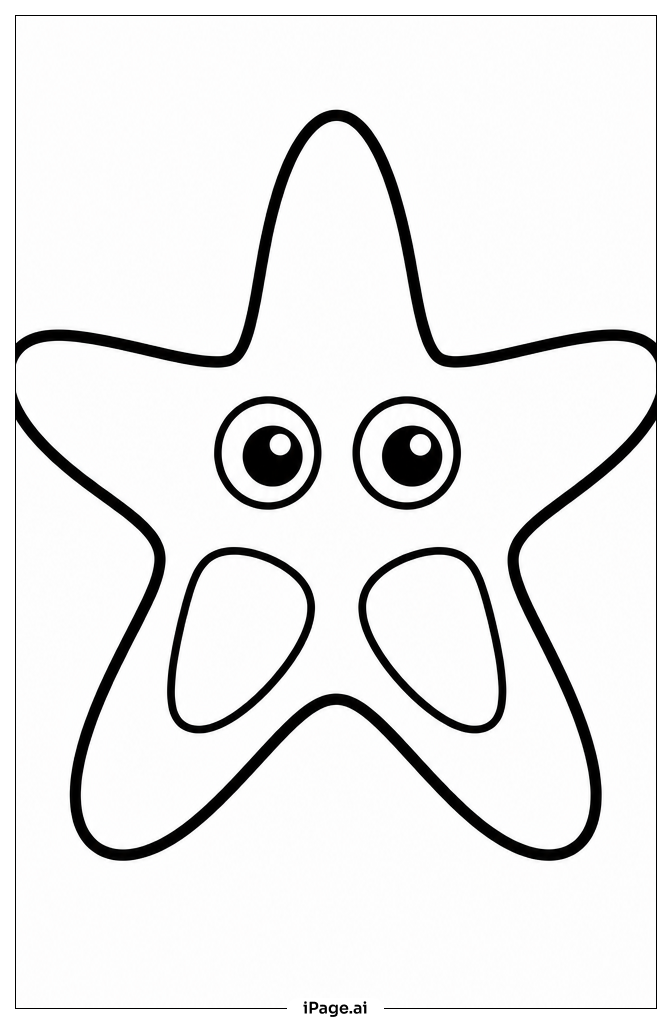
Coloring tips: How to color Starfish Facing Forward coloring page well?
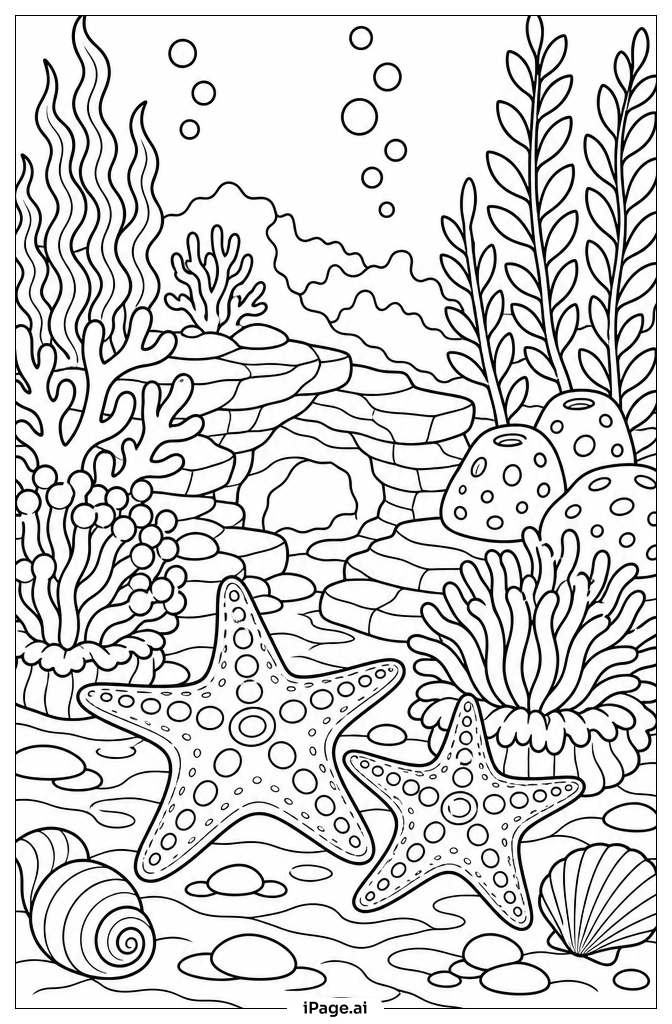
Start by choosing a base color for the entire starfish. Real starfish come in many colors — orange, red, purple, yellow, or brown are all great choices. Apply your base color lightly and evenly across all five arms and the center body. Next, use a slightly darker shade of the same color to add shadows along the edges of each arm and around the bumps. This gives the starfish a rounded, three-dimensional look. Use a light cream or white to highlight the raised bumps and ridges, making the texture pop. For the background, try a soft ocean blue or teal to create an underwater feel. You can also add sandy tan tones near the bottom to suggest a seafloor setting. Younger kids can keep it simple with just two or three colors, while older kids can experiment with blending and shading for a more realistic result.
Coloring challenges: Which parts are difficult to color and need attention for Starfish Facing Forward coloring page?
Coloring this starfish image comes with a few fun challenges worth knowing before you begin:
• **Symmetrical Consistency:** The starfish has five arms that are nearly identical in shape and texture. Keeping the colors and shading consistent across all five arms can be tricky. If you shade one arm darker on the left side, try to repeat that pattern on all the others so the finished image looks balanced and natural.
• **Small Textured Details:** Each arm is covered with rows of tiny bumps and dotted patterns. Coloring inside these small shapes requires a sharp pencil or a fine-tipped marker. Using a tool that is too thick can cause colors to bleed outside the lines and muddy the detail. Take your time and work slowly through these sections.
• **Smooth Color Blending:** To make the starfish look three-dimensional, you need to blend from a lighter tone at the center of each arm to a darker tone at the edges. Achieving a smooth gradient without harsh lines takes practice, especially with colored pencils. Layering colors gently in the same direction helps create a softer transition.
• **Avoiding Color Overload:** With so many small details packed into the design, it is easy to use too many colors and make the image look busy. Sticking to two or three tones within the same color family creates a cleaner, more realistic result and lets the textured details stand out clearly.
Benefits of coloring books: Advantages of drawing Starfish Facing Forward coloring page
Coloring this starfish page offers a wide range of benefits for kids and beginners alike. The clear, bold outline of the starfish makes it easy to follow, which helps build confidence in younger colorists just getting started. Working on the five symmetrical arms encourages an early understanding of pattern and balance, which supports spatial thinking skills. Filling in the tiny bumps and ridge details along each arm is excellent practice for fine motor control, training small hand muscles and improving pencil grip — skills that directly support writing and drawing. The repetitive nature of coloring the textured details can also be calming and meditative, helping children focus and relax. Choosing colors for the starfish sparks creativity and imagination, since starfish exist in so many beautiful shades in nature. Kids also pick up basic facts about ocean life simply by engaging with the image, making this a gentle, fun introduction to marine biology. Overall, this page blends artistic expression with skill-building in a relaxed, enjoyable way.