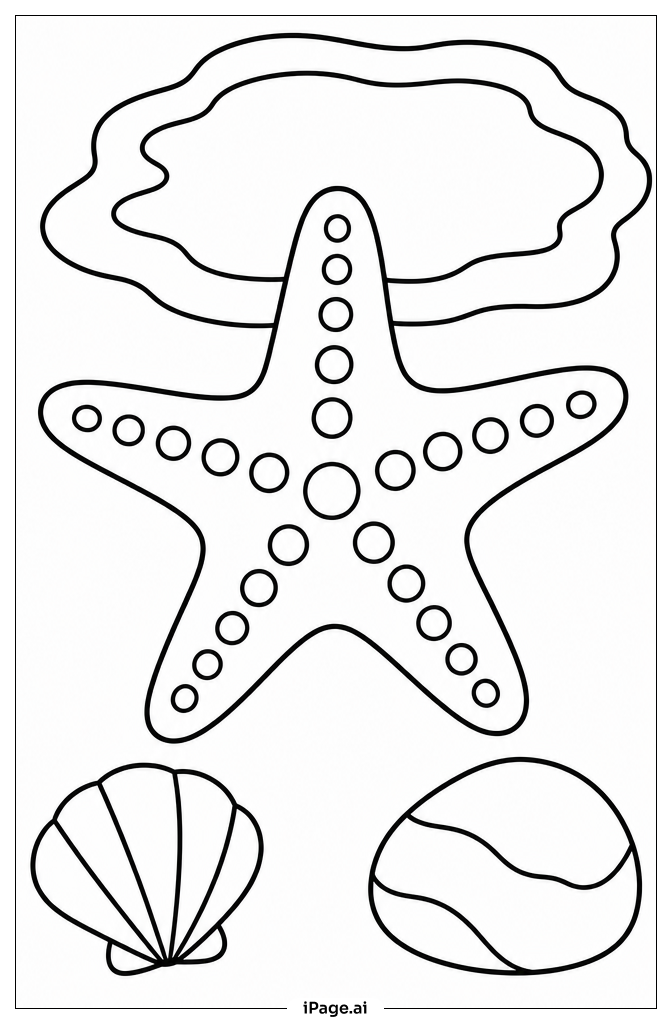
Coloring tips: How to color Starfish At Low Tide coloring page well?
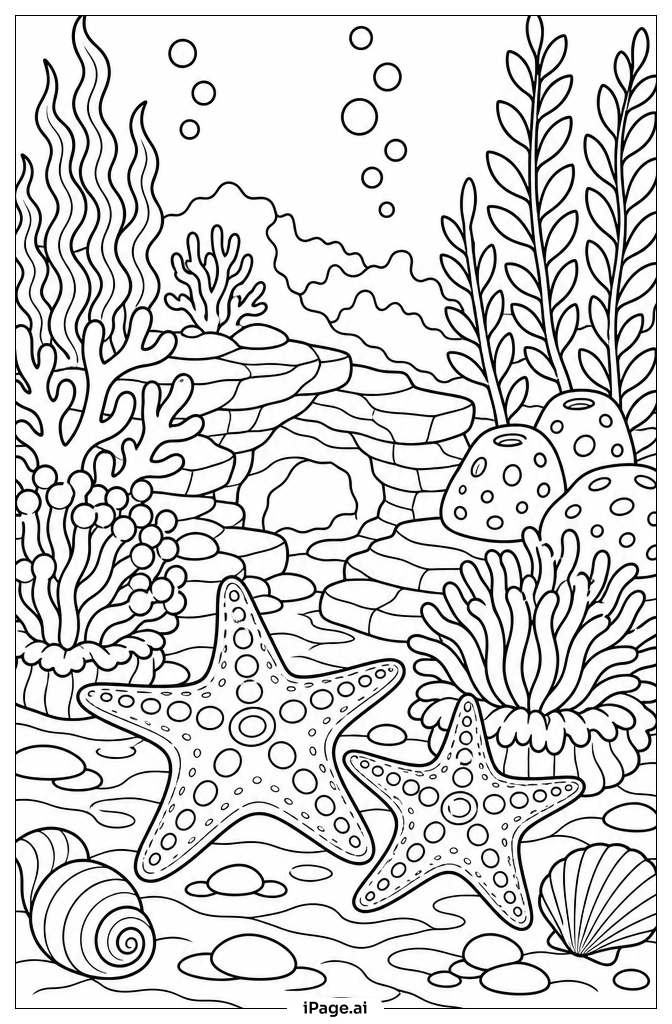
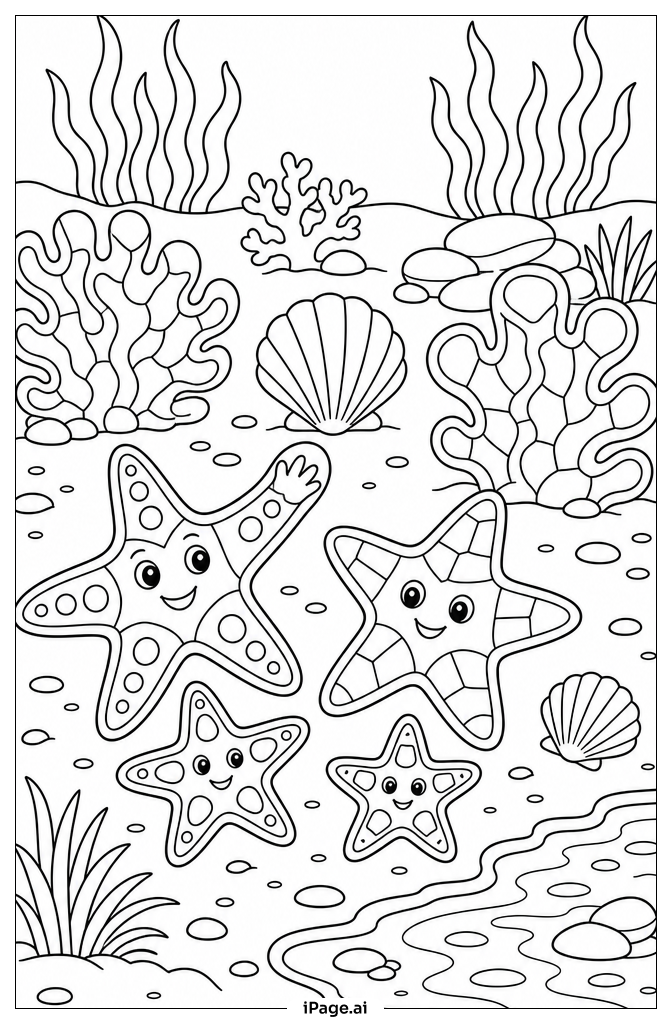
Start with the starfish itself. Use warm shades like orange, red, or sandy brown to bring it to life. Add darker tones along the edges of its arms to create depth and shadow. The bumpy texture on its surface looks great with small dots of lighter color on top.
For the rocks, try grays, tans, and soft purples. Mix light and dark shades to make them look rough and real. The tide pools can be colored in soft blues and teals to show shallow, clear water.
Seaweed and sea plants look best in greens — try combining bright green with darker olive tones. Seashells can be pink, cream, white, or even striped with multiple colors.
The wet sand around the rocks can be a warm beige or golden yellow. Add a little blue-gray near the waterline to show where the water has just pulled back.
Keep the sky and horizon light — pale blue or soft peach works well for a calm, sunny beach day. Have fun layering colors to make the whole scene feel alive!
Coloring challenges: Which parts are difficult to color and need attention for Starfish At Low Tide coloring page?
Coloring this scene comes with several challenges that require patience and attention to detail:
• **Starfish texture details:** The starfish is covered in small bumps and surface patterns that are tricky to color neatly. Each bump needs careful shading to look raised and three-dimensional. Using a fine-tip colored pencil or a small brush works best here. Rushing through this area can make the texture look flat and uninteresting.
• **Blending rock surfaces:** Rocks in a tide pool scene are rarely one single color. They have layers of minerals, moisture, and shadow. Blending two or three shades together smoothly — without harsh lines — takes practice. Younger colorists may find this especially difficult and may need guidance on how to layer colors gradually.
• **Tide pool water reflections:** The shallow water in the tide pools should look clear and reflective, not muddy. Achieving a transparent water effect while still showing depth requires careful use of light blues, whites, and subtle shadows underneath. This balance can be hard to get right.
• **Small background details:** Tiny elements like snail shells, pebbles, and seaweed strands are packed into the scene. Coloring these small shapes neatly without going outside the lines demands steady hands and focused concentration — a real challenge for younger children.
• **Consistent light source:** The whole scene should look like sunlight is coming from one direction. Keeping highlights and shadows consistent across the starfish, rocks, and water at the same time is a skill that even experienced colorists find demanding.
Benefits of coloring books: Advantages of drawing Starfish At Low Tide coloring page
Coloring this starfish tide pool scene offers many wonderful benefits for kids and adults alike.
For children, tracing and filling in the detailed shapes of rocks, shells, and the starfish helps build fine motor skills and hand-eye coordination. Choosing which colors to use for the ocean, sand, and sea creatures encourages creative thinking and imagination.
Learning about coastal environments through art is also a gentle introduction to nature and science. Kids can discover what a tide pool looks like, what lives in one, and why starfish are such fascinating animals — all while having fun.
For older children and adults, focusing on a complex scene like this is a great way to practice mindfulness. Coloring requires steady attention and calm focus, which helps reduce stress and quiet a busy mind. It gives you something positive and productive to concentrate on.
Completing the full scene — from the textured starfish to the distant ocean horizon — also builds a real sense of accomplishment. Finishing a detailed piece of art feels rewarding and boosts confidence at any age.
Overall, this coloring page combines creativity, learning, and relaxation into one enjoyable activity perfect for the whole family.