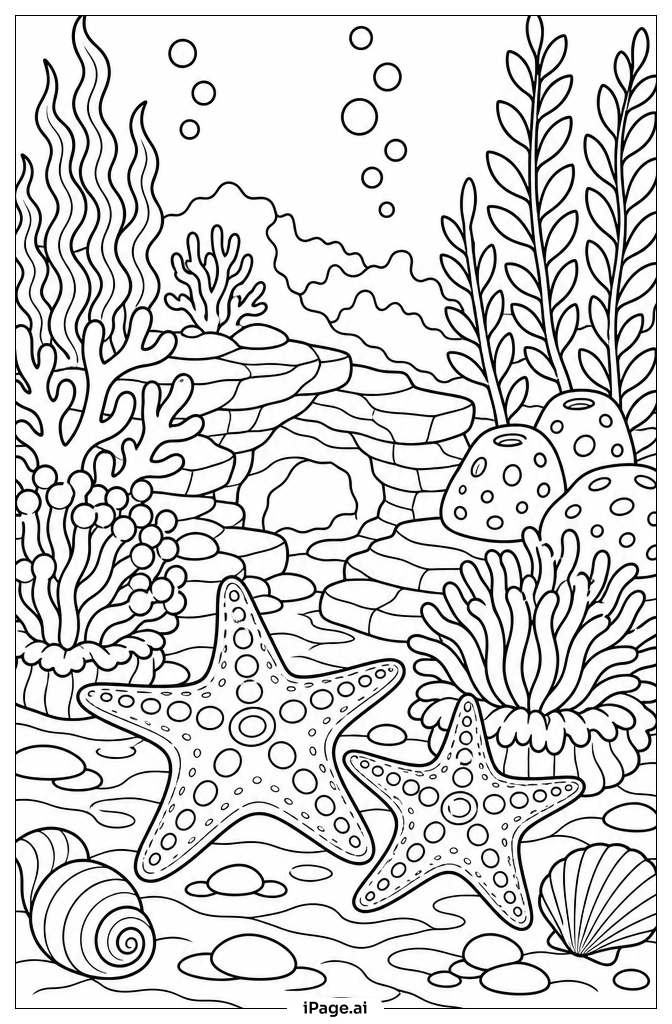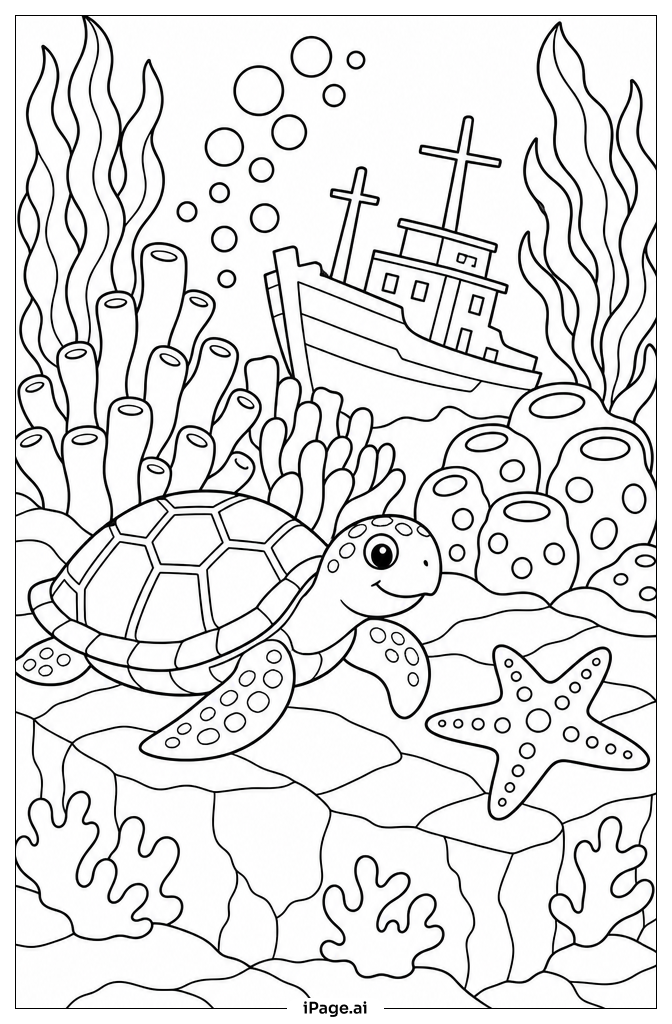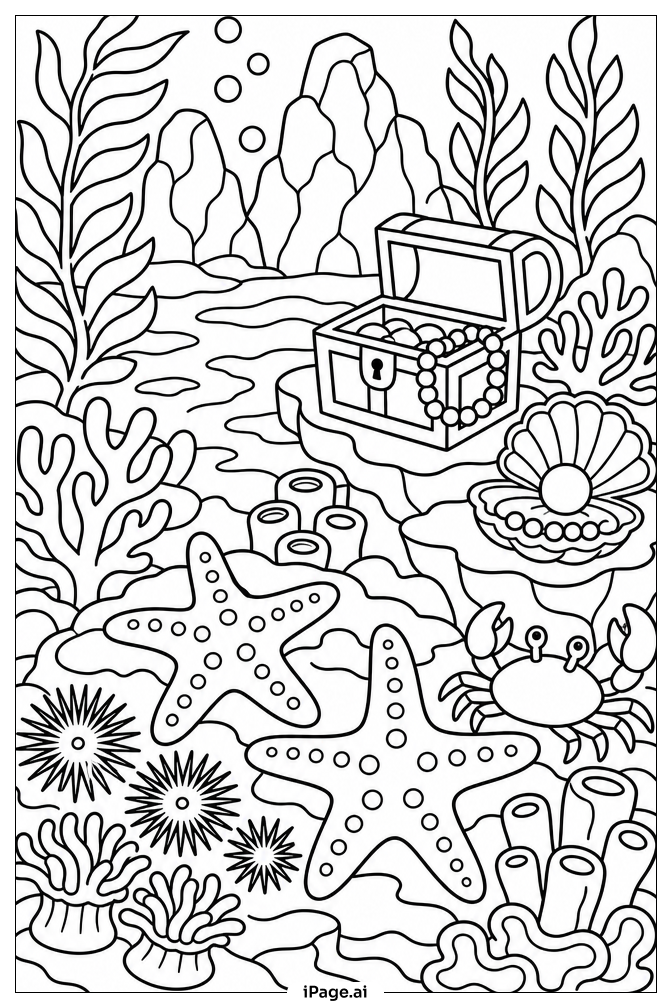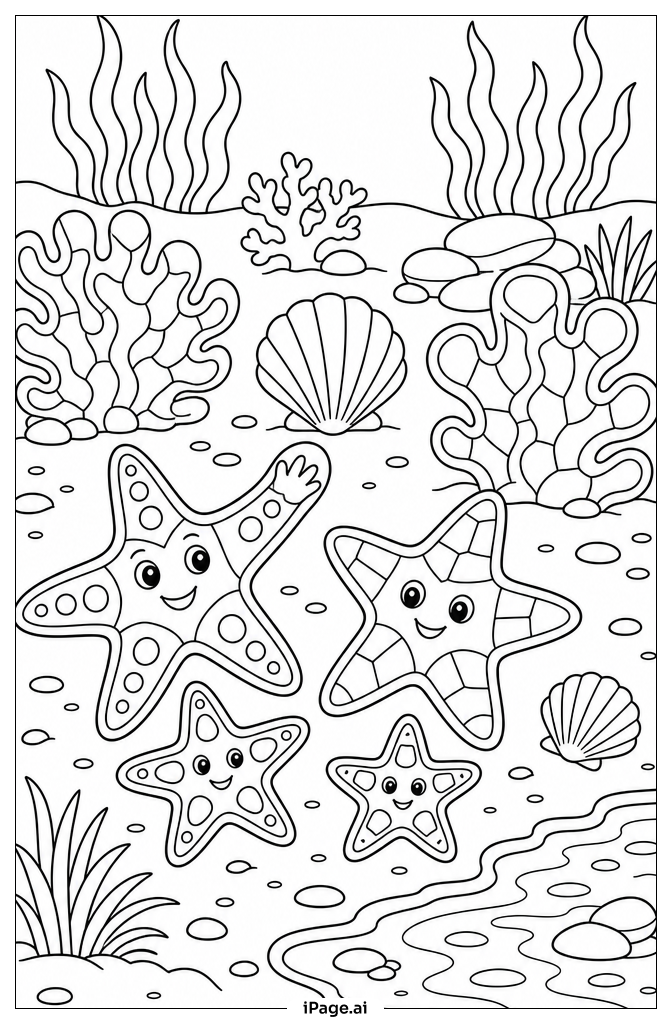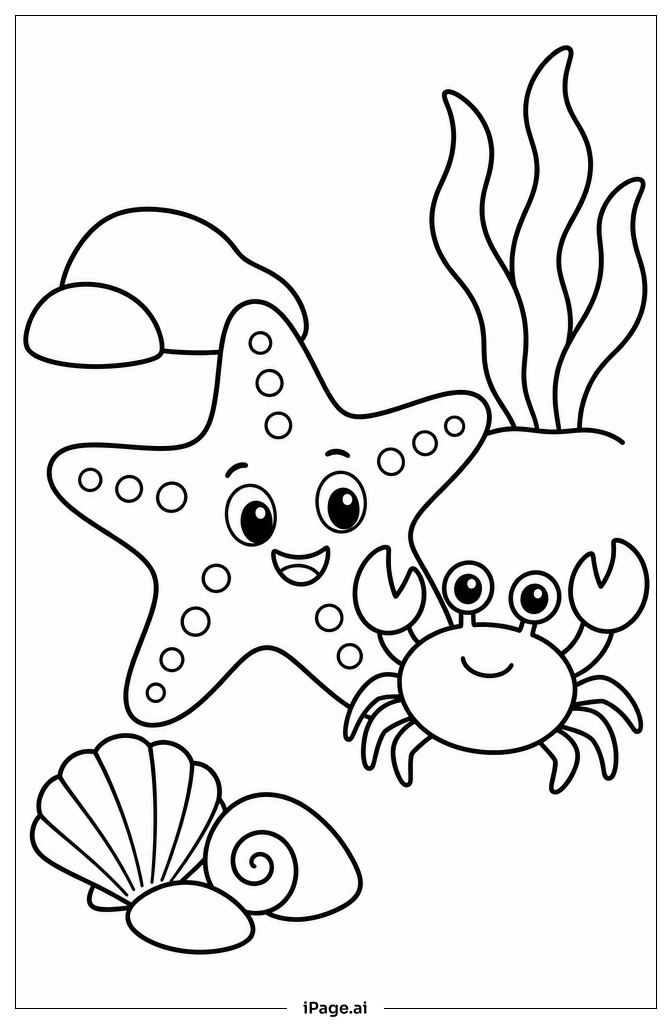
Coloring tips: How to color Starfish And Little Crab coloring page well?
Start by picking warm, ocean-inspired colors to bring this scene to life. Color the starfish in bright orange, golden yellow, or coral red — these are classic starfish shades that really pop. For the little crab, try red or orange with a slightly darker tone on the claws and legs to add depth. Use a soft sandy yellow or beige for the ocean floor. The seashells can be colored in pale pink, cream, or light purple. Add a light blue or aqua wash to any water or bubble elements in the background. For the dots and texture on the starfish's arms, use a slightly darker shade of your base color to make the patterns stand out. Kids can also get creative and use rainbow colors or mix unexpected shades. There are no wrong choices — this is a great image to experiment with color combinations!
Coloring challenges: Which parts are difficult to color and need attention for Starfish And Little Crab coloring page?
Coloring this image comes with a few fun challenges worth keeping in mind:
• **Textured surface on the starfish:** The starfish is covered with small bumps, dots, and repeating patterns along each of its five arms. Staying inside these tiny details requires patience and a sharp, fine-tipped colored pencil or thin marker. Younger children may find it easier to simply fill the arms with a solid base color and skip the fine texture work.
• **Small details on the crab:** The little crab has several small features — tiny legs, jointed claws, and expressive facial details. These tight areas can be tricky to color without going outside the lines, especially with broader markers or crayons. Using a fine-tip tool for the legs and claw outlines is recommended.
• **Keeping colors consistent:** With two main characters side by side, it can be tricky to choose colors that complement each other without clashing. Planning your color palette in advance — for example, warm orange for the starfish and bright red for the crab — helps keep the scene visually balanced.
• **Background elements:** The scattered shells, bubbles, and ground details around the characters are small and closely spaced. Coloring each one individually without smudging neighboring areas takes a steady hand. Letting each section dry before moving to an adjacent one helps avoid unwanted color mixing.
• **Blending and shading:** Adding shading or gradients to the starfish arms and crab body can make the image look more three-dimensional, but achieving smooth transitions requires some practice with blending techniques.
Benefits of coloring books: Advantages of drawing Starfish And Little Crab coloring page
Coloring this fun ocean scene offers a wonderful range of benefits for kids of all ages.
**Builds fine motor skills:** Carefully filling in the starfish's textured surface and the crab's small details helps children practice hand control and pencil grip — skills that support writing and drawing.
**Sparks creativity:** Choosing colors for the starfish, crab, and ocean floor encourages kids to make their own artistic decisions and express their personal style. There is no single right answer, which builds confidence.
**Teaches about nature:** The image introduces children to real ocean creatures. Parents and teachers can use the coloring session as a starting point to talk about starfish, crabs, and life under the sea, turning art time into a learning moment.
**Encourages focus and patience:** Working through the small patterns and details in this image helps children practice sitting still and concentrating — a valuable skill both in and out of the classroom.
**Reduces stress and promotes calm:** Coloring has a naturally calming effect. The gentle, friendly characters in this scene make it especially soothing, helping kids relax and unwind after a busy day.
This image is a great choice for both individual coloring sessions and group activities!