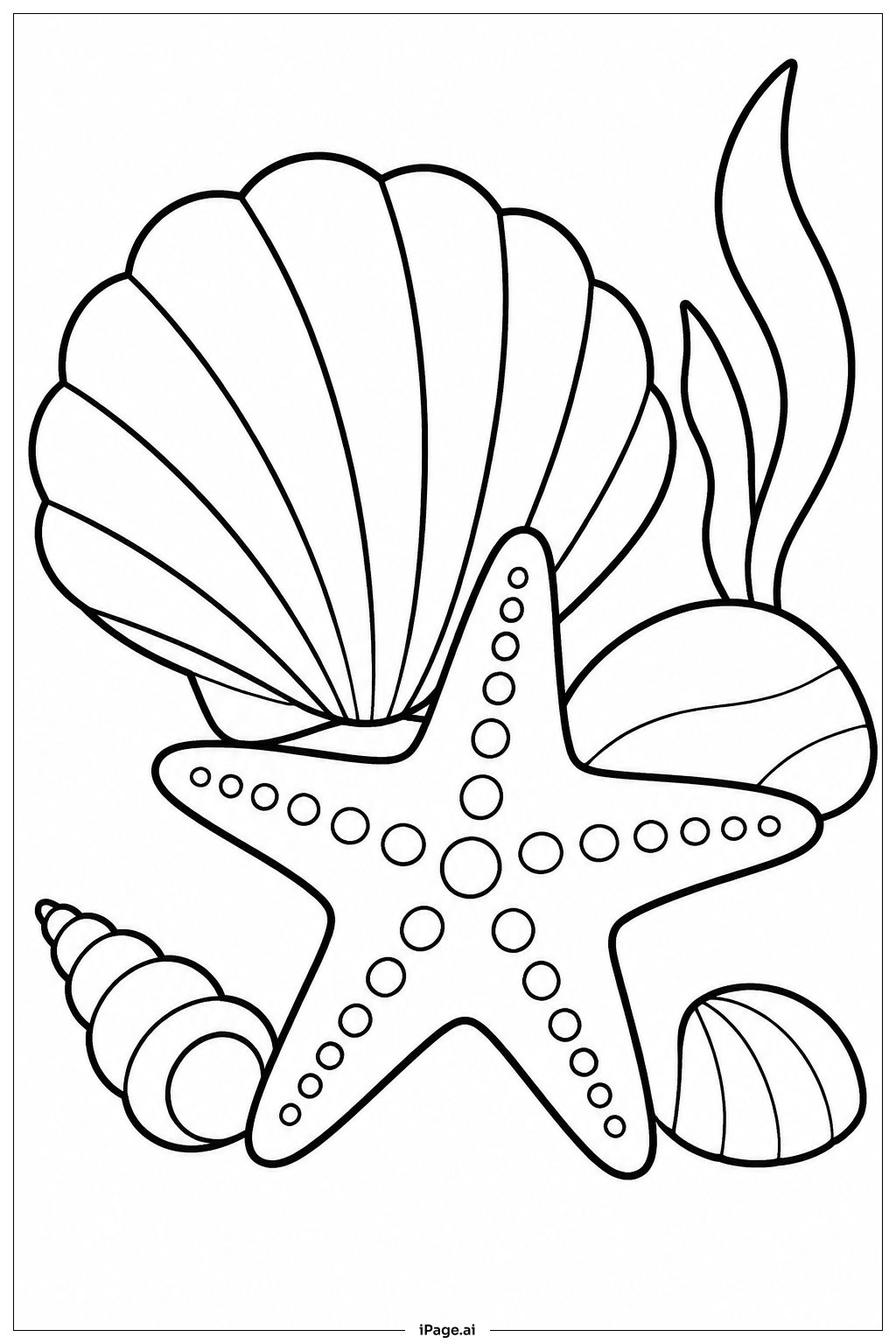
Coloring tips: How to color Starfish And Large Shell coloring page well?
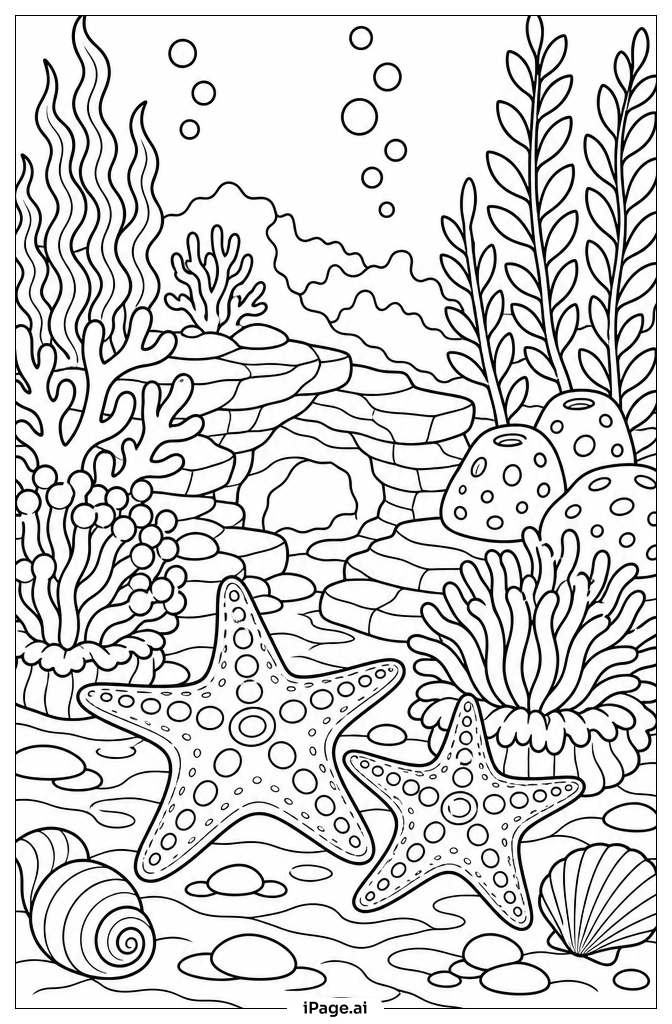
Start with the starfish and choose warm, sunny shades like orange, coral, or golden yellow to bring it to life. You can add light brown or tan spots to mimic the bumpy texture on its arms. For the large shell, try soft pinks, creamy whites, or peach tones on the inner curve, and use deeper purples, browns, or sandy beige along the outer ridges. Blending two shades of the same color on each section adds depth and dimension. For the background, light blue or aqua works well to suggest shallow ocean water, or leave it white for a clean, bright look. Kids can keep colors simple and bold, while older colorists may enjoy layering and shading for a more realistic ocean scene. Have fun mixing warm and cool tones to make the two subjects pop against each other.
Coloring challenges: Which parts are difficult to color and need attention for Starfish And Large Shell coloring page?
• Starfish Arm Symmetry: The five arms of the starfish radiate outward from a central body. Keeping the color consistent and even across all five arms can be tricky, especially when trying to shade each arm individually. Take it one arm at a time and use the same base color before adding any shading.
• Bumpy Texture Details: The starfish surface is covered in small raised bumps and dot patterns. Carefully coloring around each bump without smudging into neighboring areas requires a steady hand and a fine-tipped colored pencil or marker. Younger children may choose to fill these areas with a single flat color instead.
• Shell Ridges and Spirals: The large shell has curved ridges that follow a spiral path. Coloring along these ridges while keeping the lines smooth and following the natural curves of the shell is a real challenge. Using a lighter shade inside the grooves and a darker shade on raised ridges helps define the shape beautifully.
• Contrast Between Two Subjects: Placing two ocean objects side by side means color choices need to work together without blending into each other. If the starfish is orange, the shell should be a clearly different tone, such as pink or purple, so both shapes remain visually distinct and easy to identify.
• Background Balance: Deciding how much color to add to the background around the two subjects takes planning. Too much color can overpower the main figures, while too little can leave the page feeling incomplete. A soft, light wash of color works best to frame the scene without stealing the spotlight.
Benefits of coloring books: Advantages of drawing Starfish And Large Shell coloring page
Coloring this Starfish And Large Shell page offers a wonderful range of benefits for children and young learners. Working on the detailed textures of the starfish and the spiral ridges of the shell helps build fine motor skills and hand-eye coordination. Staying inside the lines and following the natural curves of each shape encourages patience and focus, skills that carry over into schoolwork and everyday tasks. Choosing colors for the ocean scene sparks creativity and gives kids the freedom to express themselves without any rules about right or wrong. Learning about the shapes and features of sea creatures through art also quietly builds early science awareness and curiosity about the natural world. For older kids and teens, the layering and shading challenges offer a satisfying artistic workout that boosts confidence and attention to detail. The calming, repetitive motion of coloring also helps reduce stress and anxiety, making this a great quiet-time activity. Whether done quickly with bold marker strokes or carefully with layered pencils, this page is a joyful way to explore color, nature, and creativity all at once.