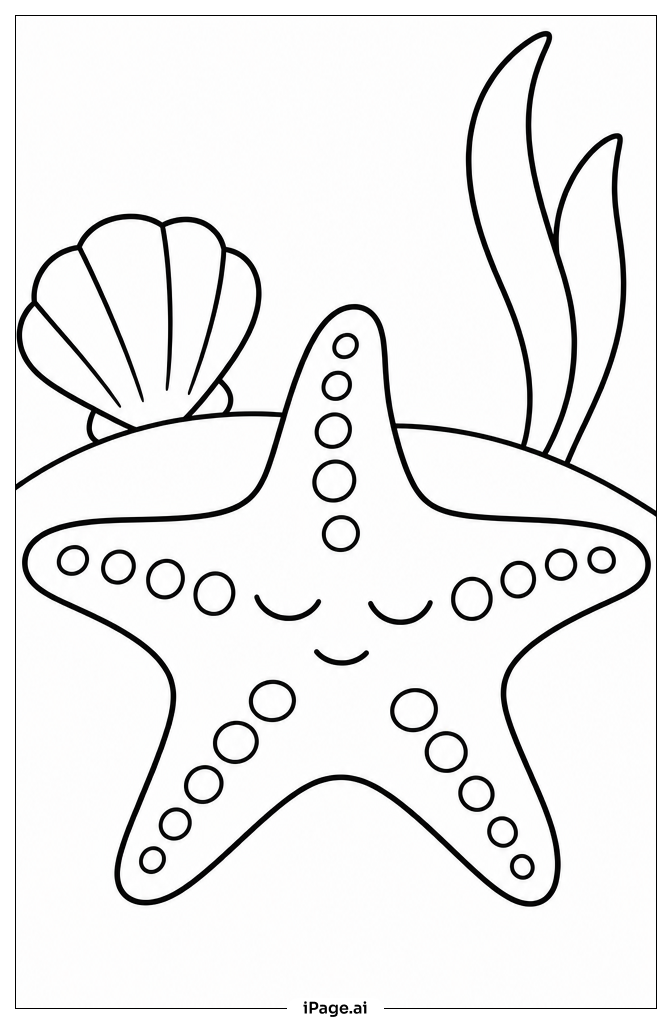
Coloring tips: How to color Sleeping Starfish In Bay coloring page well?
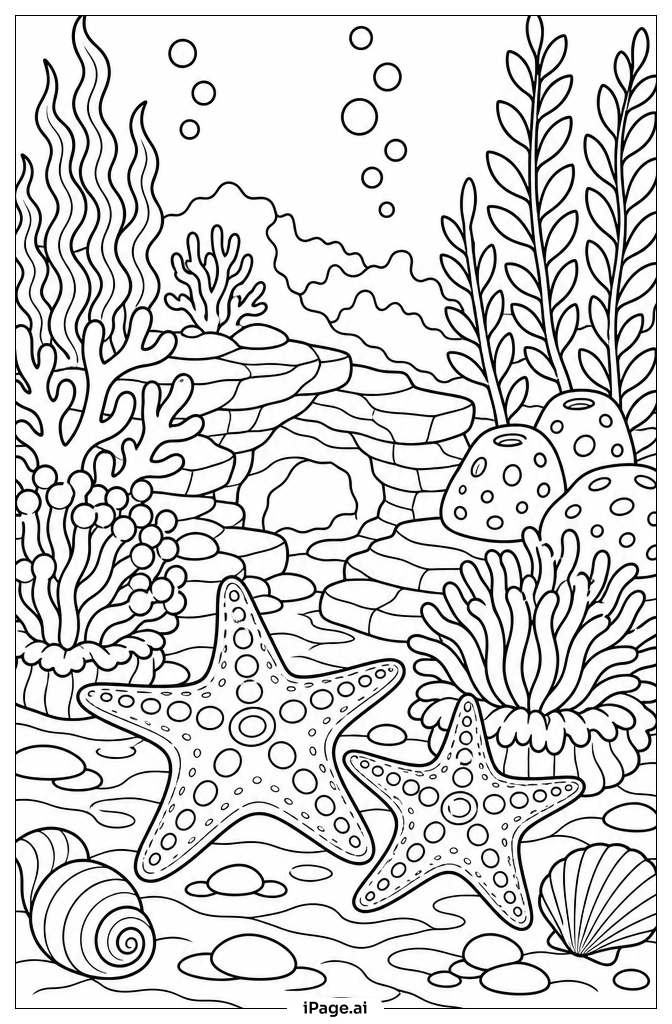
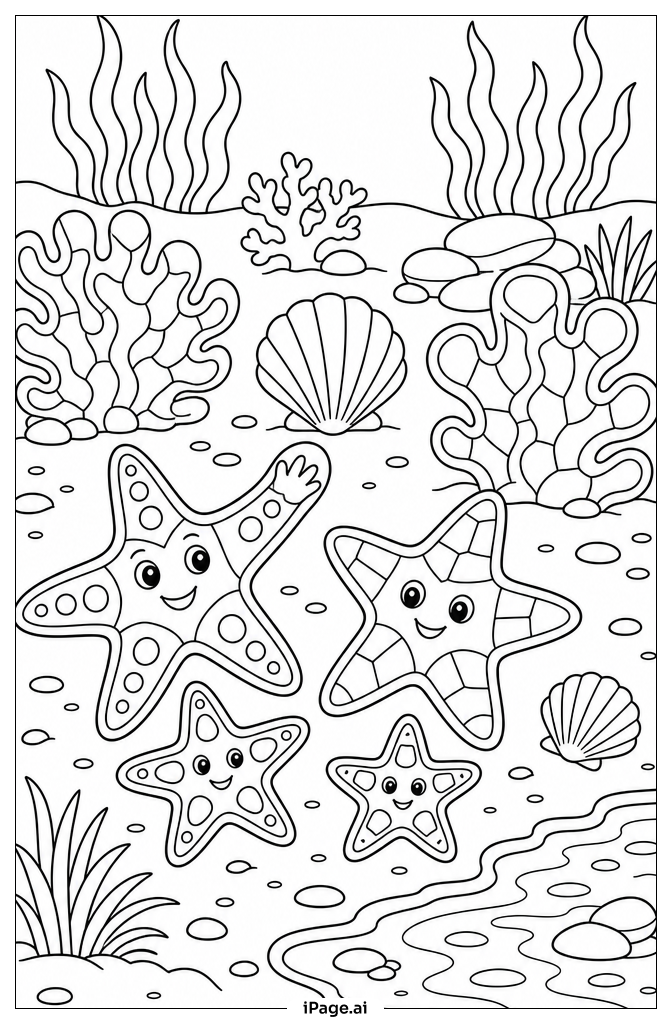
Start with the starfish itself — try a warm orange, coral red, or sunny yellow to make it pop against the ocean floor. You can add small dots or texture lines along each arm for extra detail. For the sandy bay floor, use light tan or beige, and mix in a little brown for depth. Color the tiny shells in soft pink, white, or lavender. The seaweed looks great in different shades of green — mix dark and light greens to make it feel alive. Use pale blue or aqua for the water and background, and add soft white streaks for the gentle waves above. The bubbles can be left light or colored in a very soft blue. Try blending colors gently to give the whole scene a calm, dreamy underwater feeling that matches the starfish's peaceful sleep.
Coloring challenges: Which parts are difficult to color and need attention for Sleeping Starfish In Bay coloring page?
Coloring this image comes with a few fun challenges to keep in mind:
• **Starfish arm texture and detail:** The starfish has small bumps, tube feet, and surface patterns along each of its five arms. Staying inside these fine lines requires a sharp colored pencil or a thin-tipped marker. Take your time with each arm and work slowly from the center outward to avoid smudging.
• **Blending the sandy seafloor:** The bay floor is made up of sand, pebbles, and scattered shells all layered together. Creating a natural, realistic look means blending multiple shades of tan, beige, and brown smoothly. Abrupt color changes can make the floor look patchy, so light, layered strokes work best here.
• **Differentiating background elements:** The water, seaweed, bubbles, and background waves all share a similar cool-toned space. The challenge is making each element visually distinct without making the scene feel too busy or cluttered. Using varying shades of blue and green, and leaving some areas lighter, helps each element stand out naturally.
• **The sleeping face expression:** The starfish has a small, sweet sleeping face at its center. This is a tiny area with delicate curved lines for closed eyes and a gentle smile. Using a very fine-tipped tool here is important to keep the expression clear and expressive without overcoloring the small details.
• **Maintaining the calm mood:** Perhaps the biggest challenge is keeping the overall color palette soft and harmonious. Choosing colors that are too bold or too many contrasting shades can break the peaceful, sleepy bay atmosphere that makes this image so charming.
Benefits of coloring books: Advantages of drawing Sleeping Starfish In Bay coloring page
Coloring this peaceful underwater scene offers many wonderful benefits for children and beginners alike.
Focusing on the sleeping starfish and all its small details — the textured arms, tiny shells, and swaying seaweed — helps build **concentration and patience**. Kids learn to slow down and pay careful attention to each part of the picture.
Choosing colors for the ocean floor, water, and sea life encourages **creative thinking and imagination**. There is no single right answer, so children feel free to express themselves and experiment with different color combinations.
Working on the fine lines of the starfish's arms and the small shells on the seafloor helps **develop fine motor skills** and hand-eye coordination. This is especially valuable for younger children who are still building pencil control.
The calm, dreamy mood of the image also makes it a great tool for **relaxation and stress relief**. The quiet bay setting and the gently sleeping starfish invite a slow, mindful coloring experience that feels soothing and enjoyable.
Finally, learning about a real ocean creature like a starfish while coloring sparks **curiosity about marine life and nature**, making this a fun and quietly educational activity too.