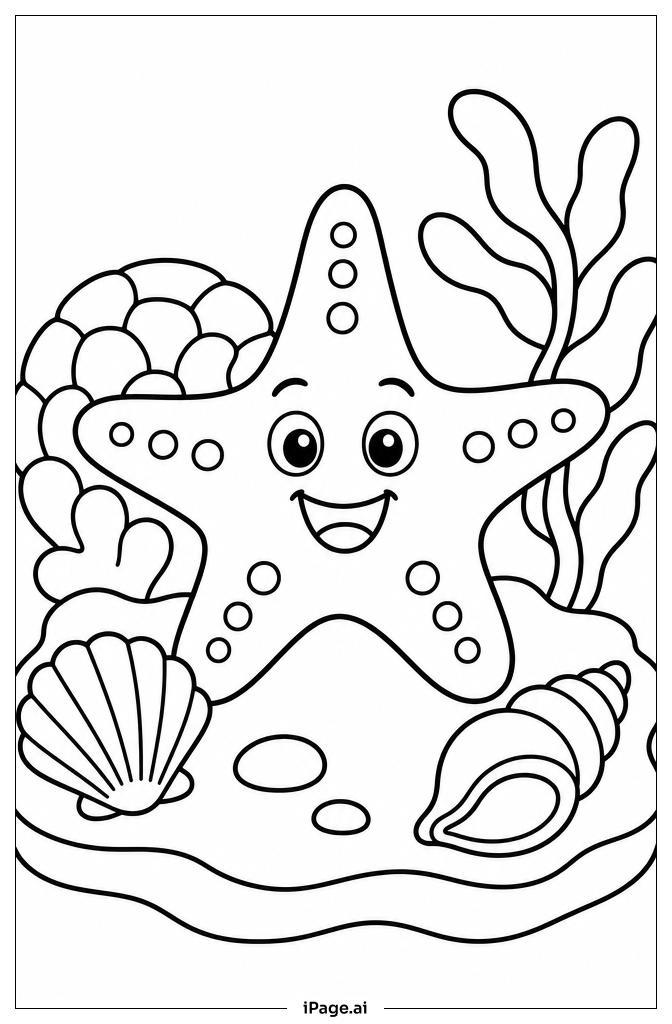
Coloring tips: How to color Happy Starfish On Reef coloring page well?
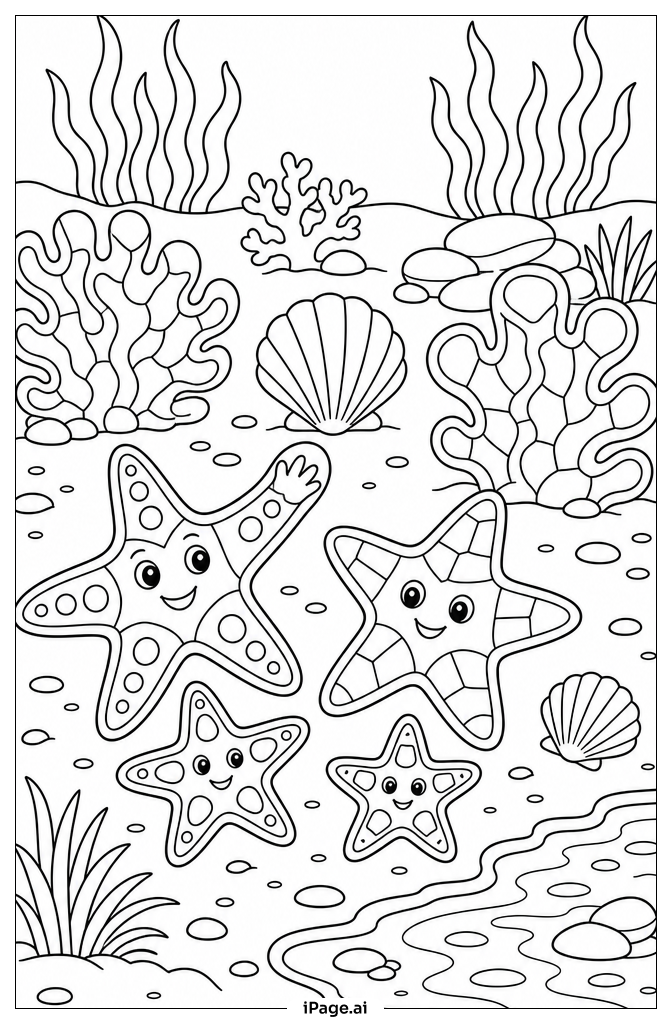
Start with the starfish and make it the star of the scene! Use warm, bright colors like orange, red, yellow, or pink to bring it to life. You can add dots or stripes on each arm for extra fun.
For the coral reef, try a mix of colors — purple, pink, red, and orange work great. Use darker shades at the base and lighter shades at the tips to give the coral depth.
Color the seaweed in shades of green, and use teal or blue for the water background. The bubbles can be left white or lightly shaded with pale blue.
Small fish and shells can be colored in bright, bold colors to make them pop. Try yellow fish with orange stripes or rainbow-colored shells. Don't be afraid to mix and match — the ocean is full of color, so let your imagination run wild! Use colored pencils for fine details and markers or crayons for larger areas.
Coloring challenges: Which parts are difficult to color and need attention for Happy Starfish On Reef coloring page?
Coloring this image comes with some fun challenges to keep in mind:
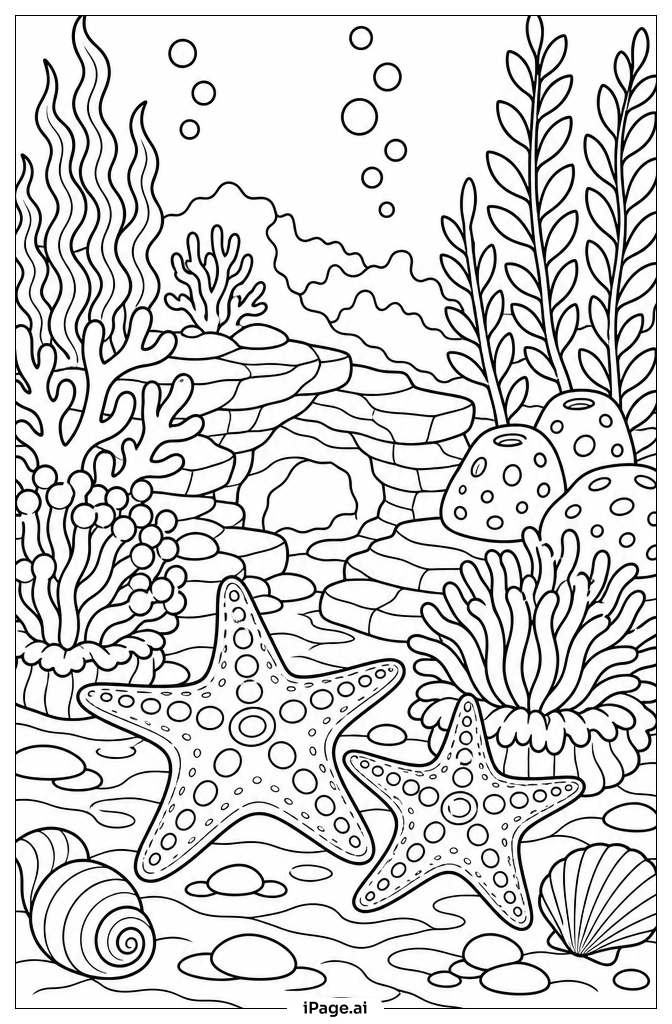
• **Staying within the small details:** The starfish arms are covered in tiny bumps and patterns, and the surrounding reef has many small shapes like pebbles, anemones, and shells. Coloring these tiny areas neatly can be tricky, especially for younger kids. Fine-tipped colored pencils or thin markers work best for these spots.
• **Balancing colors across the scene:** With so many different elements — the starfish, coral, seaweed, fish, and water — it can be hard to choose colors that work well together without making the image look too busy or messy. Planning your color palette before you start helps a lot.
• **Creating depth in the coral reef:** Reefs have layers, with some parts closer and some farther away. Showing this depth using lighter and darker shades of the same color takes some practice. Blending two shades gradually, from dark at the base to light at the tips, gives a more realistic look.
• **Coloring the water background:** Filling in the water without covering the outlines of the bubbles and sea life requires a steady hand. Light, even strokes with a pale blue or aqua color work well, and you can leave small areas white to suggest light shining through the water.
• **Keeping the starfish face expressive:** The smile and eyes on the starfish are small but important. Using the right colors here — like a soft peach or warm orange for the face and dark brown or black for the eyes — helps preserve the cheerful expression of the character.
Benefits of coloring books: Advantages of drawing Happy Starfish On Reef coloring page
Coloring this happy starfish scene offers many wonderful benefits for kids and adults alike.
For children, it helps build fine motor skills as they carefully color small details like the starfish's bumpy arms, tiny shells, and coral branches. Staying inside the lines trains hand-eye coordination and pencil control, skills that are useful in school and everyday life.
Choosing colors for the reef encourages creativity and imagination. Kids learn that the ocean is full of amazing colors, and they feel proud when they create their own colorful version of the underwater world.
The friendly, smiling starfish makes this a fun and joyful image to color. It creates a positive, calming experience that can help reduce stress and anxiety, even for young children. Focusing on a single activity like coloring also improves concentration and patience.
For older kids and adults, the complex reef details provide a satisfying challenge. Blending colors, shading coral, and adding texture to the starfish arms turns this into a relaxing and meditative creative exercise.
Coloring ocean scenes also sparks curiosity about marine life, encouraging kids to learn more about starfish, coral reefs, and the creatures that live in the sea. It is a simple but powerful way to connect art with nature and learning.