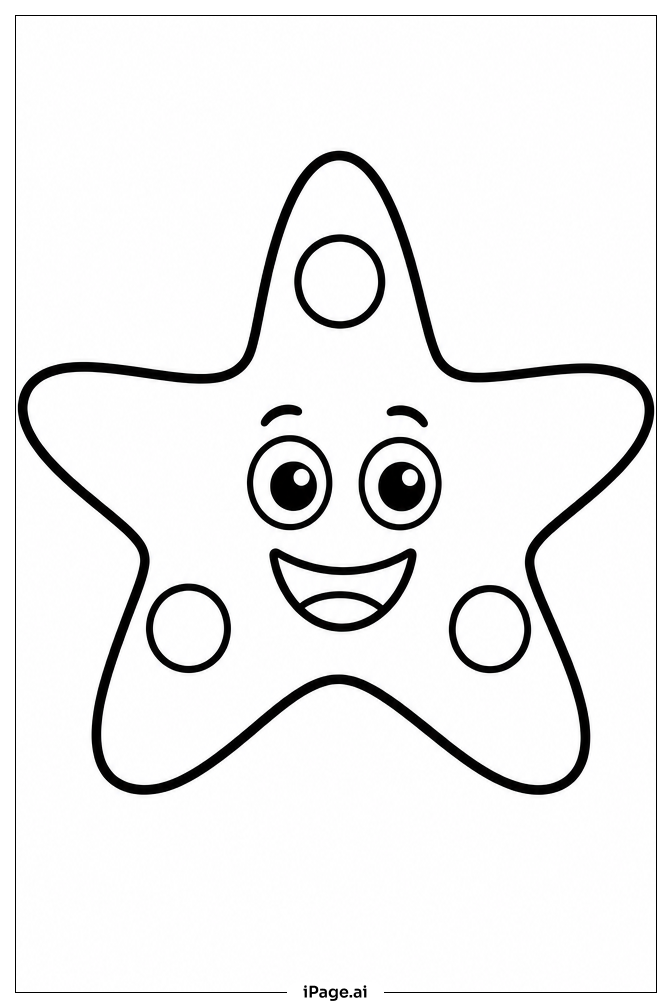
Coloring tips: How to color Happy Starfish coloring page well?
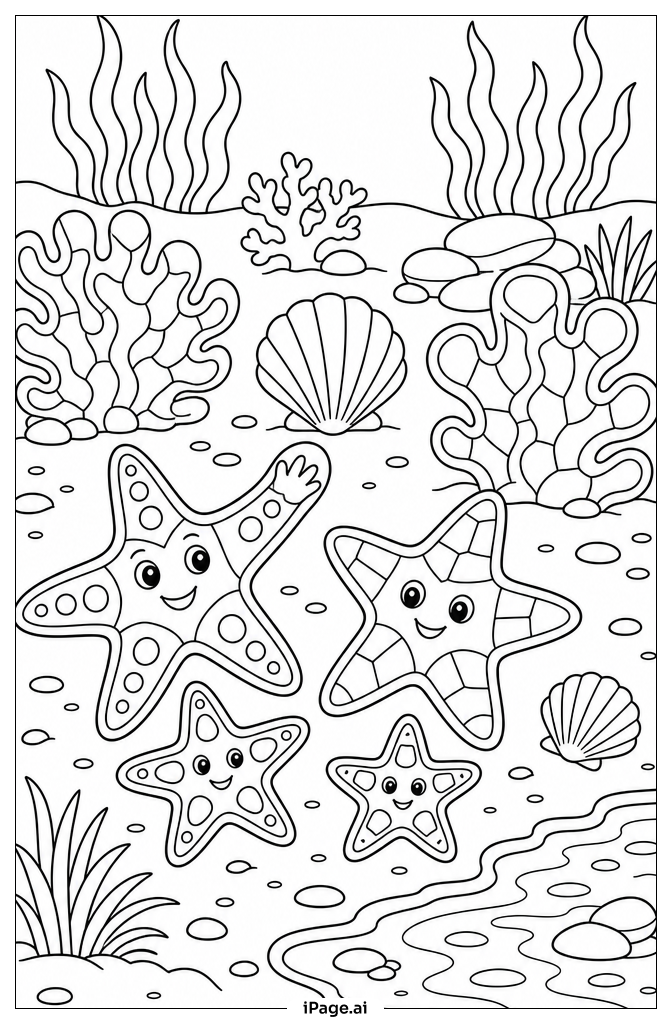
Start with the starfish itself. Orange and yellow are classic starfish colors, but feel free to use pink, red, or even purple for a creative twist. Use a slightly darker shade of your base color to add shading along the edges of each arm, giving the starfish a rounded, three-dimensional look. Color the bumps and texture patterns with a contrasting shade to make them pop. For the face, use peach or light skin tones, with bright colors for the eyes. The background ocean water looks great in shades of blue and teal. Color the bubbles in light blue or leave them white for a glowing effect. Seashells can be tan, cream, or soft pink. Use swirling strokes for the water to give a sense of gentle movement. Younger kids can keep it simple with solid colors, while older children can try blending and layering for a more detailed finish.
Coloring challenges: Which parts are difficult to color and need attention for Happy Starfish coloring page?
Coloring this Happy Starfish image is a fun challenge with a few tricky spots to watch out for:
• **Textured surface details:** The starfish body is covered in small bumps and dot patterns. Staying inside these tiny areas requires a sharp colored pencil or a fine-tip marker. Rushing through this section may result in colors bleeding outside the lines, so take your time and work slowly.
• **Smooth color transitions on the arms:** Each arm of the starfish is curved and long. Achieving an even, smooth color across the full length of each arm — especially if you want to add shading or gradients — can be tricky. Uneven pressure with a pencil can create streaky results, so practice consistent, light strokes.
• **Small background elements:** The bubbles, seashells, and decorative swirls in the background are small and closely spaced. Coloring these without accidentally overlapping into neighboring areas calls for careful, precise work and a well-sharpened tool.
• **Facial features:** The starfish's eyes and smile are small but important. Using the wrong color or going outside the lines here can change the character's cheerful expression. Use fine-tipped tools and go slowly when working on the face.
• **Color harmony across the scene:** Choosing colors that work well together across the starfish, background, and details takes planning. Without a color scheme in mind, the finished piece can look mismatched. Consider picking two or three main colors before you begin to keep everything looking balanced and cohesive.
Benefits of coloring books: Advantages of drawing Happy Starfish coloring page
Coloring this Happy Starfish page offers a wide range of benefits for children of all ages.
For young kids, staying inside the lines of the starfish's arms and tiny texture details helps build fine motor skills and hand-eye coordination. These are important skills that support writing and other everyday tasks.
The cheerful, smiling face of the starfish creates a positive emotional experience. Coloring a happy character can lift a child's mood and encourage feelings of joy and calm. It's a great activity for winding down after a busy day.
Choosing colors for the starfish, ocean background, and decorative details sparks creativity and imagination. Kids learn to make their own artistic decisions, building confidence in their creative choices.
For older children, planning a color scheme and adding shading or blending is a wonderful introduction to basic art concepts like contrast, tone, and color theory.
The ocean theme also gently introduces children to marine life, encouraging curiosity about the natural world and creatures that live under the sea.
Overall, this page is a relaxing, screen-free activity that supports focus, patience, and self-expression — making it a great choice for Boys, Girls, and even Adults who enjoy a moment of creative calm.