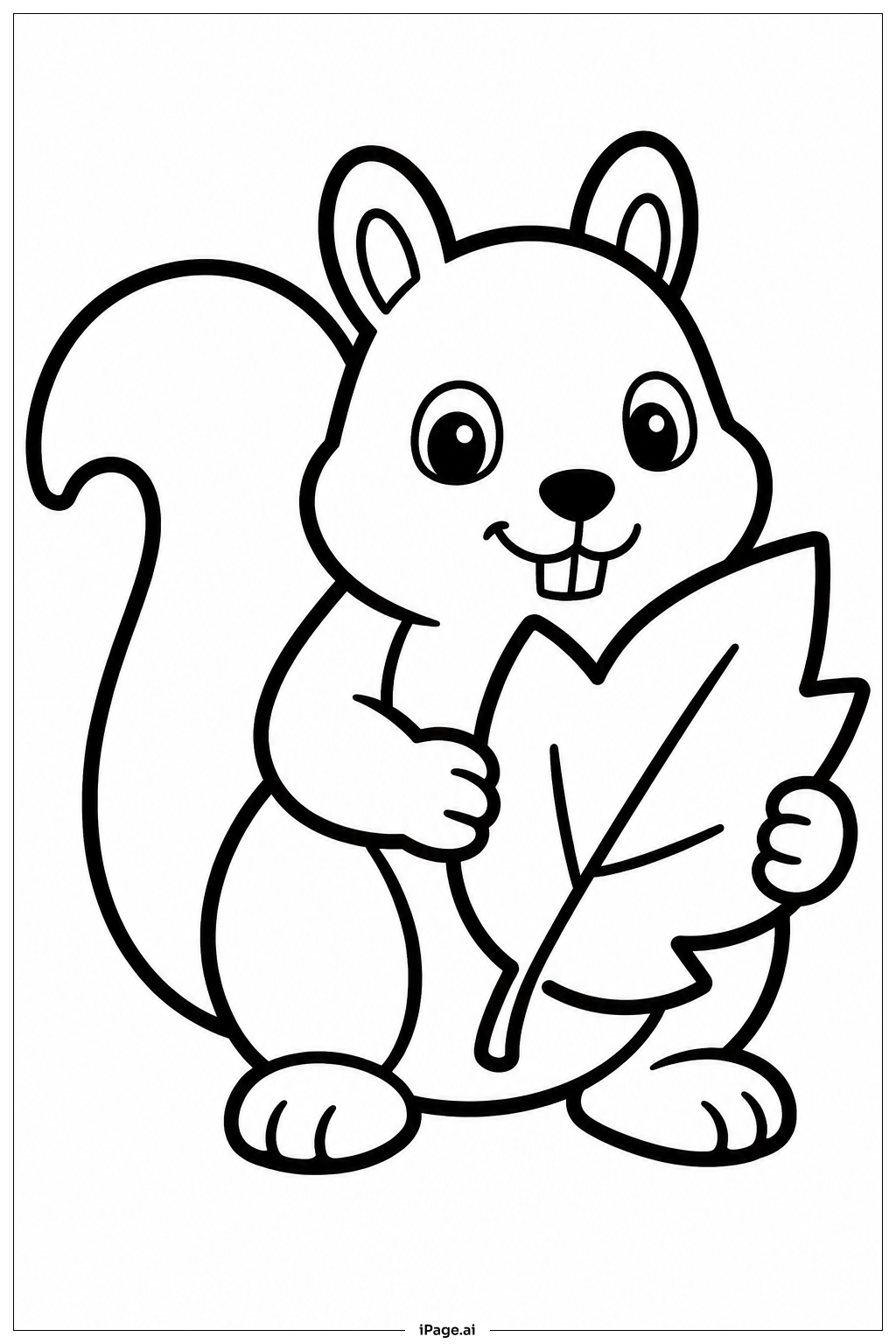
Coloring tips: How to color Squirrel With Leaf coloring page well?
To make this image come alive, use warm shades of brown and orange for the Squirrel’s fur. You can add lighter beige or cream colors around its belly and face for contrast. The bushy tail can be shaded with darker browns for depth. For the Leaf, try greens like emerald or olive, or even autumn colors such as red, yellow, or orange to give it a seasonal feel. The background plants can be colored in fresh spring greens or soft browns to match an earthy setting. Feel free to add soft shadows under the squirrel and leaf to make the picture more realistic and vibrant.
Coloring challenges: Which parts are difficult to color and need attention for Squirrel With Leaf coloring page?
• The intricate details of the squirrel’s face and paws require careful coloring to keep the lines clear and avoid blending colors too much.
• The leaf has visible veins and a large surface area that needs balanced coloring to avoid a flat look.
• The bushy tail consists of many overlapping strokes, which means colors and shading must be applied carefully to show texture.
• Coloring the small plants at the squirrel’s feet can be challenging due to their fine lines, requiring patience.
• Maintaining the contrast between the squirrel’s fur, the leaf, and the background while using similar earthy tones is tricky and needs good coordination of colors.
Benefits of coloring books: Advantages of drawing Squirrel With Leaf coloring page
Coloring this image can help children develop fine motor skills by coloring small and detailed areas like the squirrel’s face and paws. It encourages attention to detail when shading the leaf’s veins and the textured tail. The image also promotes creativity through color choices—children can experiment with realistic or imaginative colors for the squirrel and leaf. Additionally, it fosters an appreciation for nature and animals, sparking curiosity about wildlife. Overall, this coloring exercise builds patience, focus, and artistic expression.



