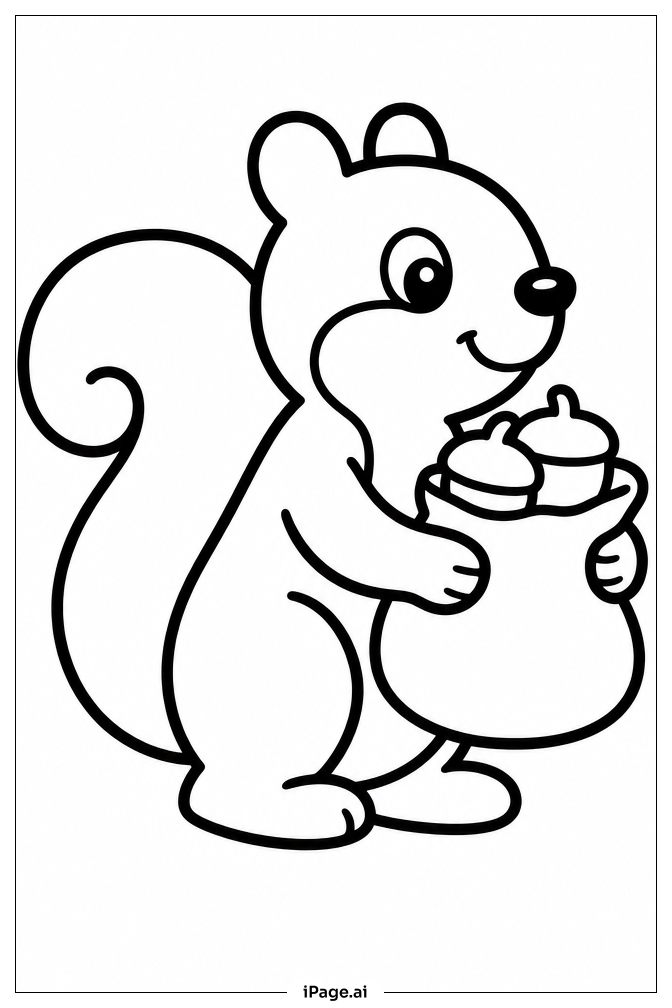
Coloring tips: How to color Squirrel With Acorn Sack coloring page well?
To bring this image to life, you can use warm browns and oranges for the squirrel’s fur to reflect autumn colors. Its bushy tail can be shaded with different browns or hints of red. The acorn sack might look great in earthy tones like dark green, deep brown, or even a rustic burlap texture using tan colors. For the acorns, mix shades of brown with lighter caps. The background can be colored with soft greens for leaves and a warm yellow or orange for fallen autumn leaves, creating a vibrant forest feel. Feel free to add touches of shading to give the squirrel and sack a three-dimensional look. Bright blues or soft sky tones might also make the scene pop.
Coloring challenges: Which parts are difficult to color and need attention for Squirrel With Acorn Sack coloring page?
• The squirrel’s fur has fine details and texture which may be tricky to color smoothly without overwhelming the smaller shapes. Keeping the fur soft and natural requires careful layering of colors.
• The bushy tail is curved and voluminous, needing attention to direction and shading to convey fluffiness and depth.
• The acorn sack includes creases and folds which demand subtle shading to look realistic, posing a challenge for blending colors softly.
• Small acorns and leafy branches around the squirrel require precision since these tiny elements can easily be smudged or overlapped if not careful.
• Balancing the warm autumn tones with the cooler background colors takes planning, so the main subject stands out yet fits naturally with the environment.
Benefits of coloring books: Advantages of drawing Squirrel With Acorn Sack coloring page
Coloring this squirrel and acorn sack image helps improve fine motor skills and hand-eye coordination, especially when working on the detailed fur and small acorns. It encourages creativity through choosing natural colors and experimenting with shading techniques. For kids aged 4 to 16, completing this picture can boost focus and patience, as they develop the skill to color within lines and make artistic decisions. The theme of autumn and preparation for winter also opens opportunities to learn about nature and animal habits, inspiring a connection with wildlife. Overall, it’s a fun way to build both artistic talent and knowledge.