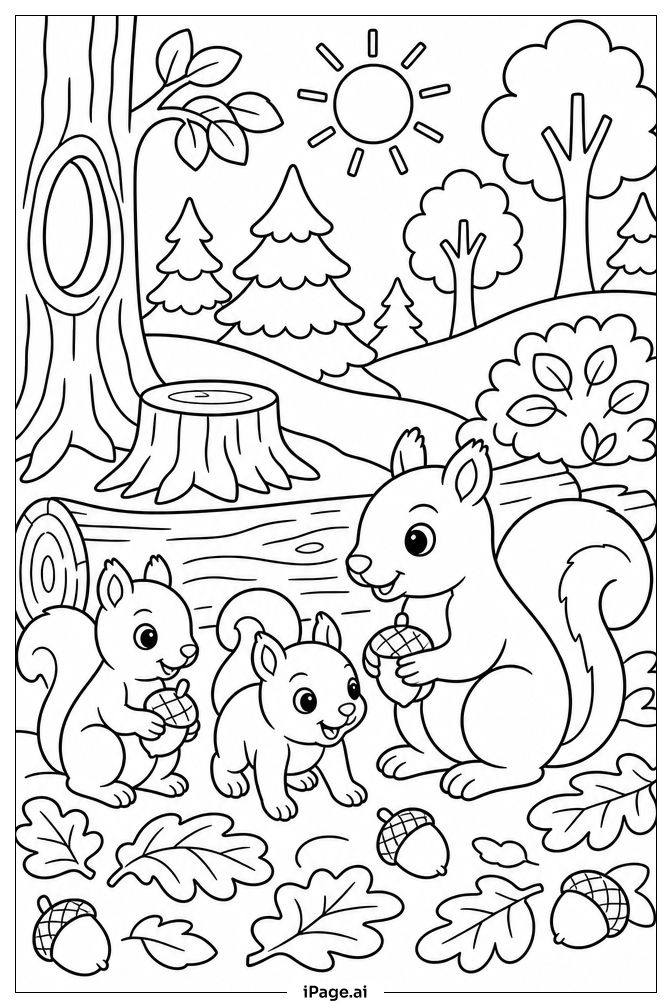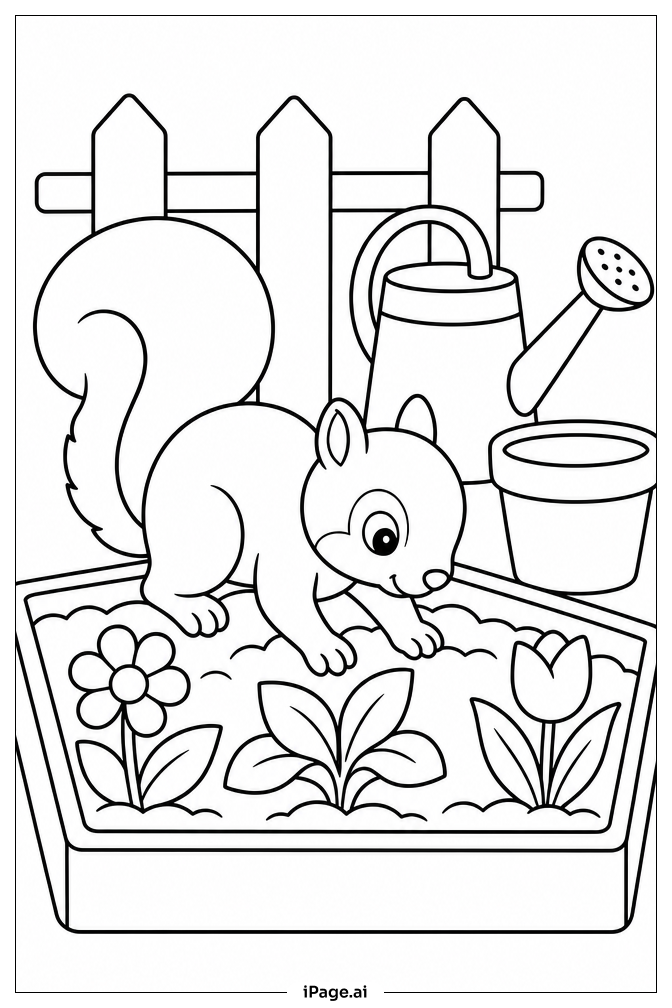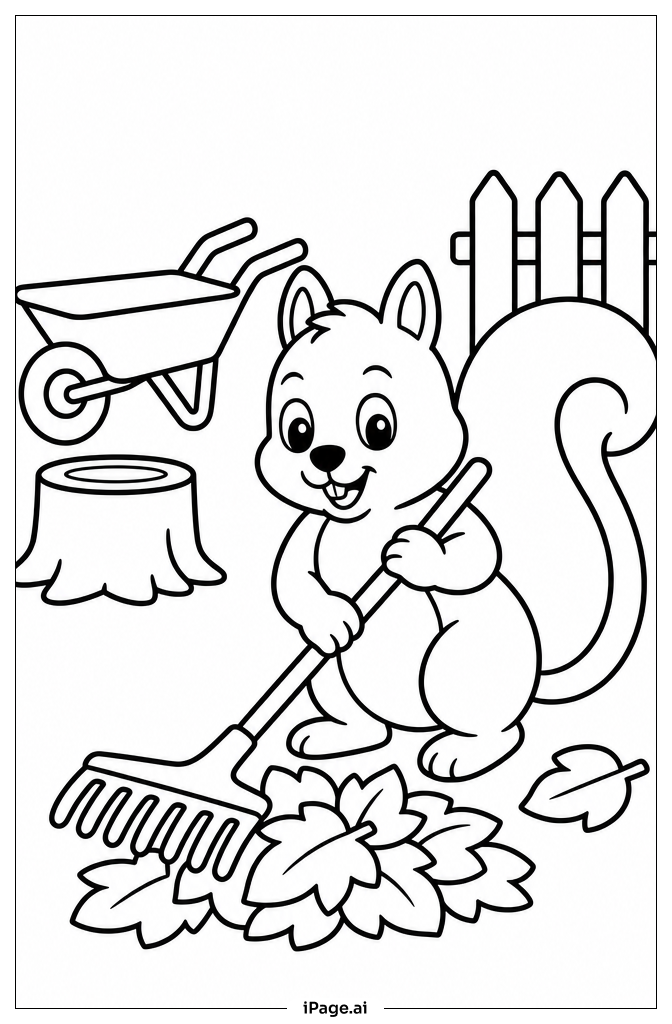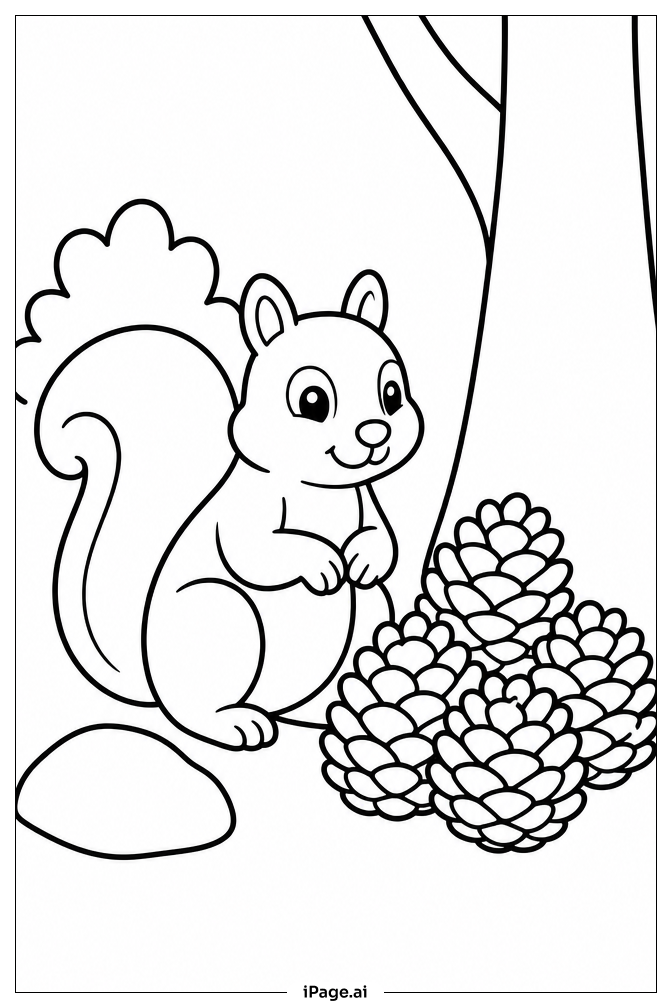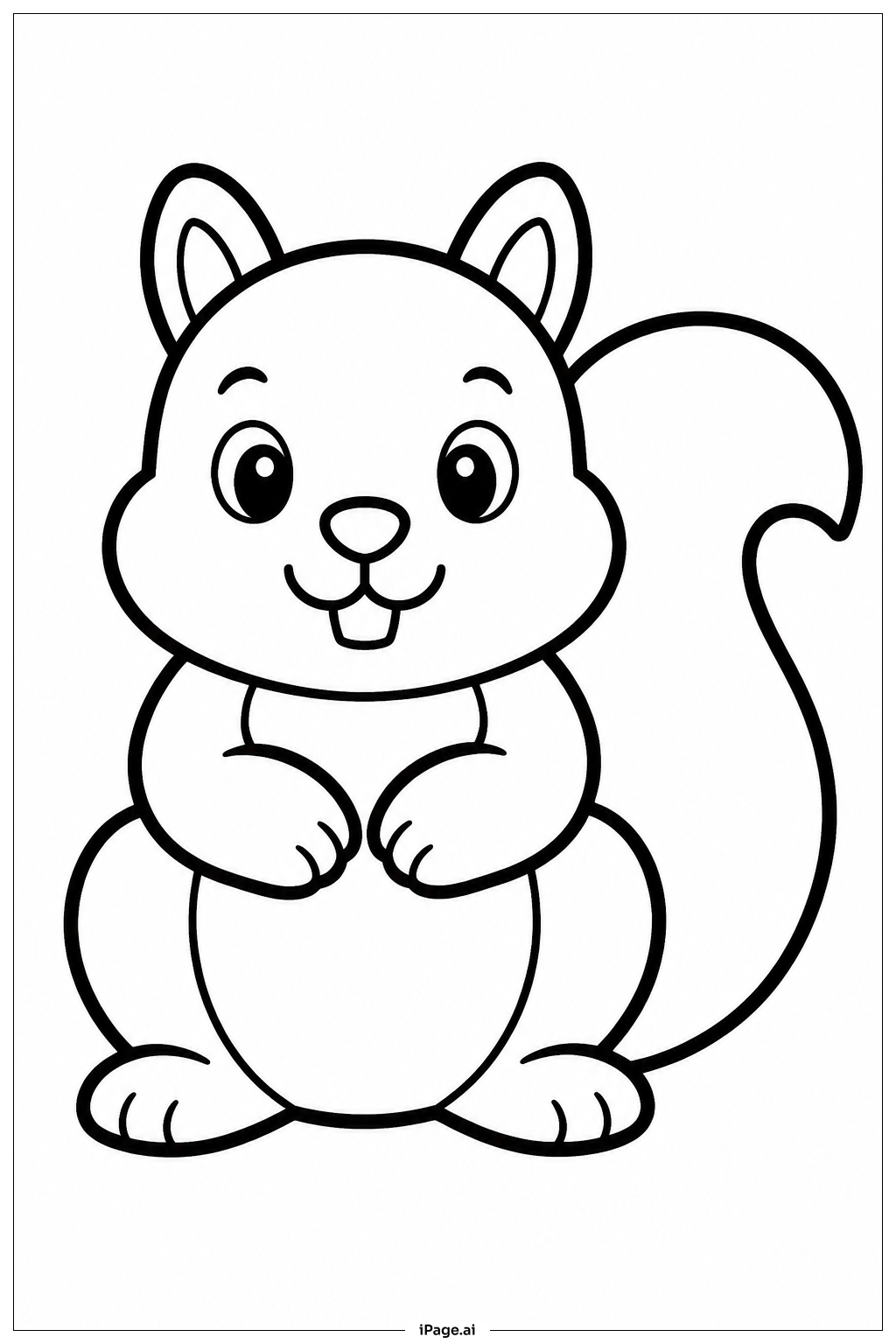
Coloring tips: How to color Squirrel Sitting coloring page well?
Start with the squirrel's body using warm shades like light brown, tan, or reddish-brown. These earthy tones give the fur a natural and realistic look. Use a slightly darker brown for the back, sides, and tail to add depth and shadow. The belly area can be colored with a lighter cream or soft white to show contrast. For the fluffy tail, try layering two or three shades of brown and add light strokes of beige or white to make it look soft and full. The eyes can be filled with dark brown or black, with a tiny white dot left uncolored to create a lifelike shine. The small nose can be done in light pink or dark brown. If you want a more playful and creative look, feel free to use fun colors like orange, golden yellow, or even purple for a fantasy-style squirrel. Add light pencil strokes in the direction of fur growth to make the texture feel more realistic. Take your time with the tail — it is the most eye-catching part of the image!
Coloring challenges: Which parts are difficult to color and need attention for Squirrel Sitting coloring page?
Coloring this squirrel image looks simple at first, but there are a few areas that require extra care and attention. Here are the main challenges to watch out for:
• Fur Texture and Direction: The squirrel's body is covered in fine lines that suggest fur. Coloring in the same direction as these lines helps the fur look natural. Switching directions mid-section can make the coat look messy or flat. Using short, light strokes instead of filling in solid blocks of color will give a much more realistic result.
• Fluffy Tail Shading: The large, bushy tail is the most complex part of the image. It has multiple layers of overlapping fur lines that need to be colored carefully. To make the tail look full and three-dimensional, you need to use at least two or three shades of the same color — lighter tones near the edges and slightly darker tones toward the center or base. Blending these tones smoothly without harsh lines is tricky, especially for younger colorists.
• Small Facial Features: The squirrel's face has tiny details like the eyes, nose, and inner ear. These areas are small and easy to color outside of the lines. Using a fine-tipped colored pencil or a thin marker will help keep the details neat and clean. The eyes especially need a steady hand to add that small white highlight dot.
• Belly and Body Color Contrast: Showing the difference between the lighter belly and the darker back requires careful color selection and smooth transitions. Without this contrast, the squirrel can look flat. Gradually blending from light cream to medium brown helps the body look round and lifelike.
• Paw and Claw Details: The small paws and tiny claws near the squirrel's chest are delicate areas. These fine lines are easy to accidentally fill over, so slow and careful coloring near the paw edges is important.
Benefits of coloring books: Advantages of drawing Squirrel Sitting coloring page
Coloring this squirrel image is a fun and rewarding activity for kids and beginners alike. Here are some of the wonderful benefits it offers:
Working on the fur texture and tail shading helps build fine motor skills and improves hand control. Staying inside the lines and using careful strokes trains steady, precise movements that are useful in writing and drawing.
Choosing color combinations for the squirrel's coat, belly, and tail encourages creative thinking. Kids get to experiment with natural tones or invent their own colorful version of the squirrel, which sparks imagination and self-expression.
Focusing on a detailed image like this one helps improve concentration. Children learn to slow down, observe details, and work through a task step by step — skills that carry over into school and everyday life.
The process of coloring is naturally calming and meditative. It gives children and Adults a quiet moment to relax, unwind, and enjoy a screen-free creative activity.
Learning to blend colors for fur and shadows introduces basic art concepts like shading, contrast, and layering. These are valuable foundations for more advanced drawing and painting skills later on.
Finally, finishing this coloring page gives a strong sense of accomplishment. Seeing the completed squirrel come to life with color builds confidence and encourages kids to keep creating.