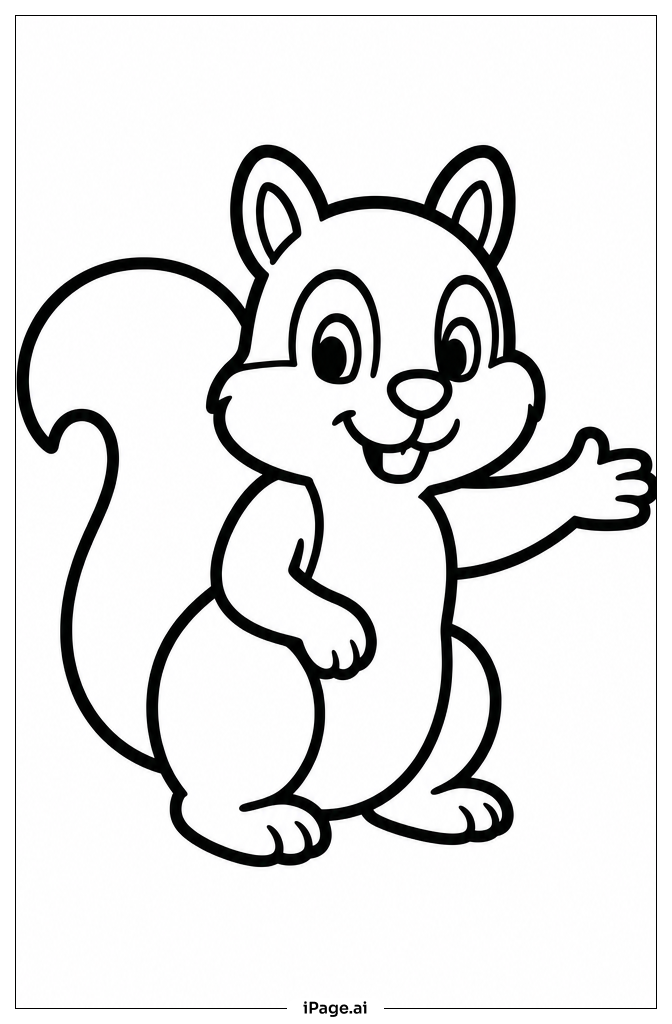
Coloring tips: How to color Squirrel Reaching Paw coloring page well?
Consider using warm browns and soft greys to color the squirrel’s fur, giving it a natural look. The tail can be shaded with varying tones to show fluffiness and texture. For the eyes, using a deep black with a small white highlight will add life and sparkle. The background can feature subtle greens and yellows to represent leaves or branches. Don’t be afraid to use bright colors if you want to give the image a fun and playful atmosphere. Adding light brown or orange tones on the paw will help emphasize the reaching motion. Try blending different shades gently to make the squirrel look soft and furry.
Coloring challenges: Which parts are difficult to color and need attention for Squirrel Reaching Paw coloring page?
- The squirrel’s small paws and fingers require careful coloring to keep the details clear and prevent the colors from bleeding together.
- Capturing the texture of the bushy tail can be tricky; it needs layering of multiple shades to look fluffy and natural rather than flat.
- The fine lines that form the fur around the face and ears demand patience to avoid coloring outside the lines while maintaining delicate details.
- Coloring the eyes with precision is important to convey the squirrel's focused expression; uneven coloring might make them look dull.
- Background elements, if included, may create challenges in balancing the colors so the squirrel remains the focal point without getting lost in the surrounding scenery.
Benefits of coloring books: Advantages of drawing Squirrel Reaching Paw coloring page
Coloring this squirrel reaching its paw helps children develop fine motor skills by guiding them to color small shapes and intricate details carefully. It encourages focus and concentration because the image demands attention to delicate features like the claws and fur texture. This activity also stimulates creativity as children decide how to blend different browns, greys, and greens to bring the scene to life. Additionally, coloring animals connects kids to nature, promoting curiosity about wildlife and the outdoors. Overall, it’s a fun and educational way to practice hand-eye coordination and express artistic ideas.



