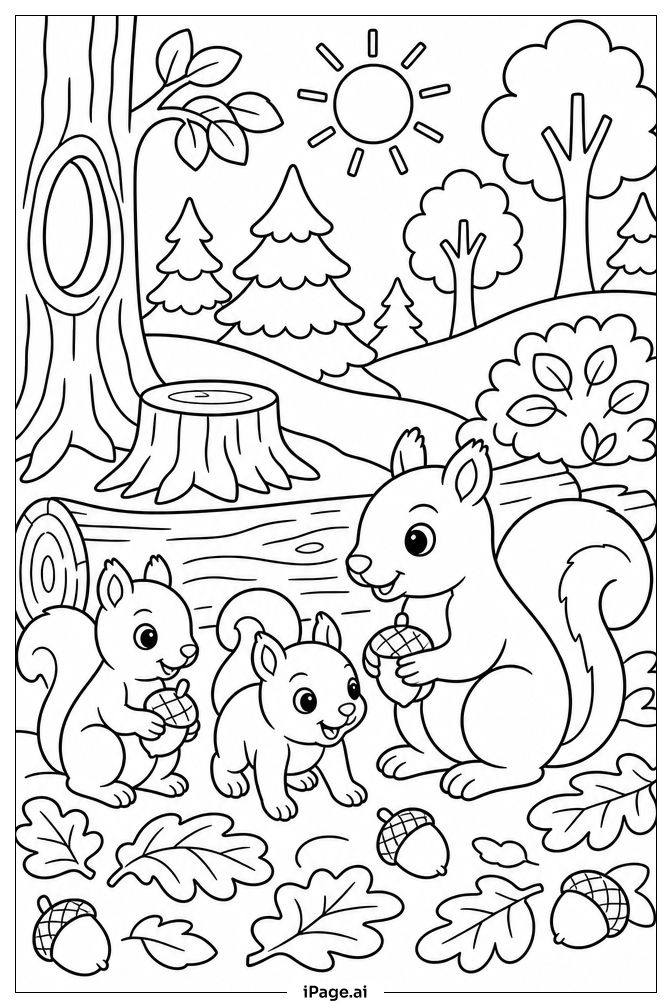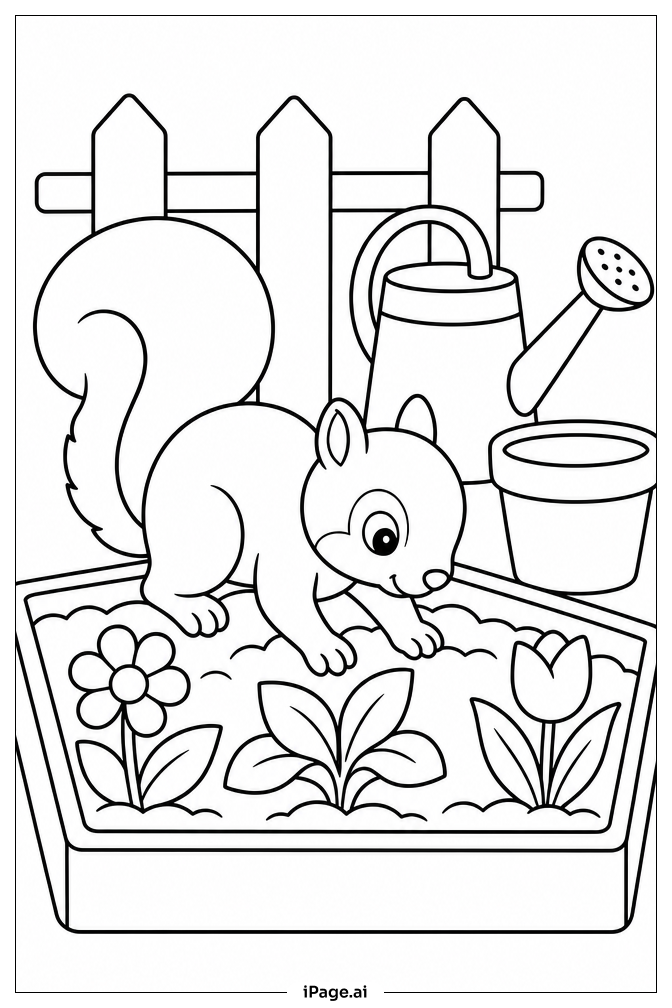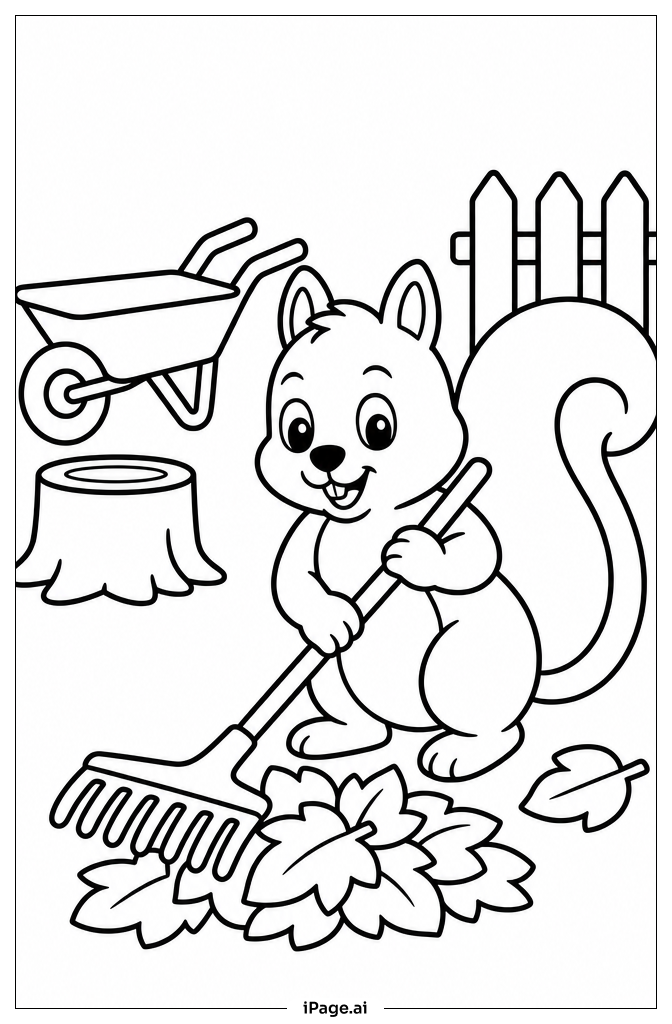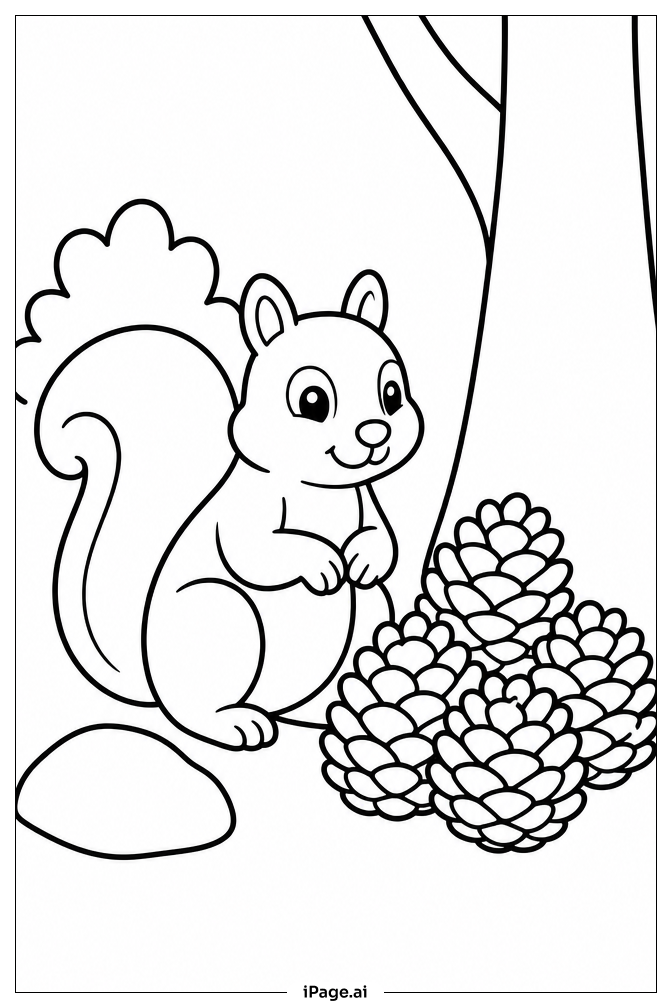
Coloring tips: How to color Squirrel Playing With Ball coloring page well?
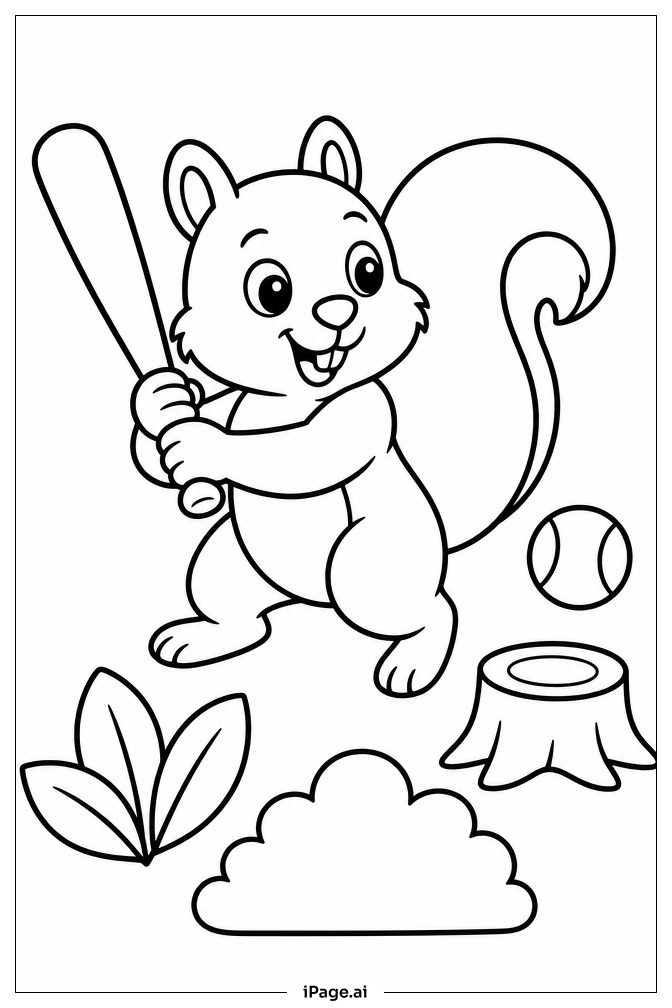
For this image, try using warm brown shades for the squirrel’s fur to make it look natural and inviting. You can add lighter tones for the belly and inner tail to create depth. The ball offers a perfect chance to use bright, cheerful colors like red, blue, or green to make it pop and attract attention. The background plants and grass can be colored in different vibrant greens to add a lively outdoor feel. Don’t be afraid to experiment with shading around the squirrel’s body and tail to give it a three-dimensional look. Keep your strokes gentle and follow the curves of the squirrel to highlight its fluffy texture.
Coloring challenges: Which parts are difficult to color and need attention for Squirrel Playing With Ball coloring page?
• The squirrel’s bushy tail has many fine lines and details, which can be challenging to color neatly without going outside the lines.
• Achieving a natural texture effect for the fur requires careful blending of several brown shades, which might be tricky for beginners.
• Coloring the small round ball evenly can be difficult to avoid patchy or streaky color.
• The squirrel’s eyes and facial details are small and require precise coloring to keep the expression lively and clear.
• The grass and plants have multiple thin shapes that demand attention to avoid overlapping colors or smudging.
Taking your time and using sharpened coloring tools will help overcome these challenges.
Benefits of coloring books: Advantages of drawing Squirrel Playing With Ball coloring page
Coloring this joyful scene encourages children to practice fine motor skills through careful coloring of small and detailed areas like the squirrel’s tail and face. It also nurtures creativity by allowing them to experiment with natural and vibrant colors for both the animal and its surroundings. Engaging with nature-themed images like this can foster an appreciation for wildlife and outdoor play. Additionally, focusing on this fun and active pose helps improve hand-eye coordination as children try to follow the contours precisely. Overall, it’s a delightful way to relax while boosting artistic confidence and concentration.