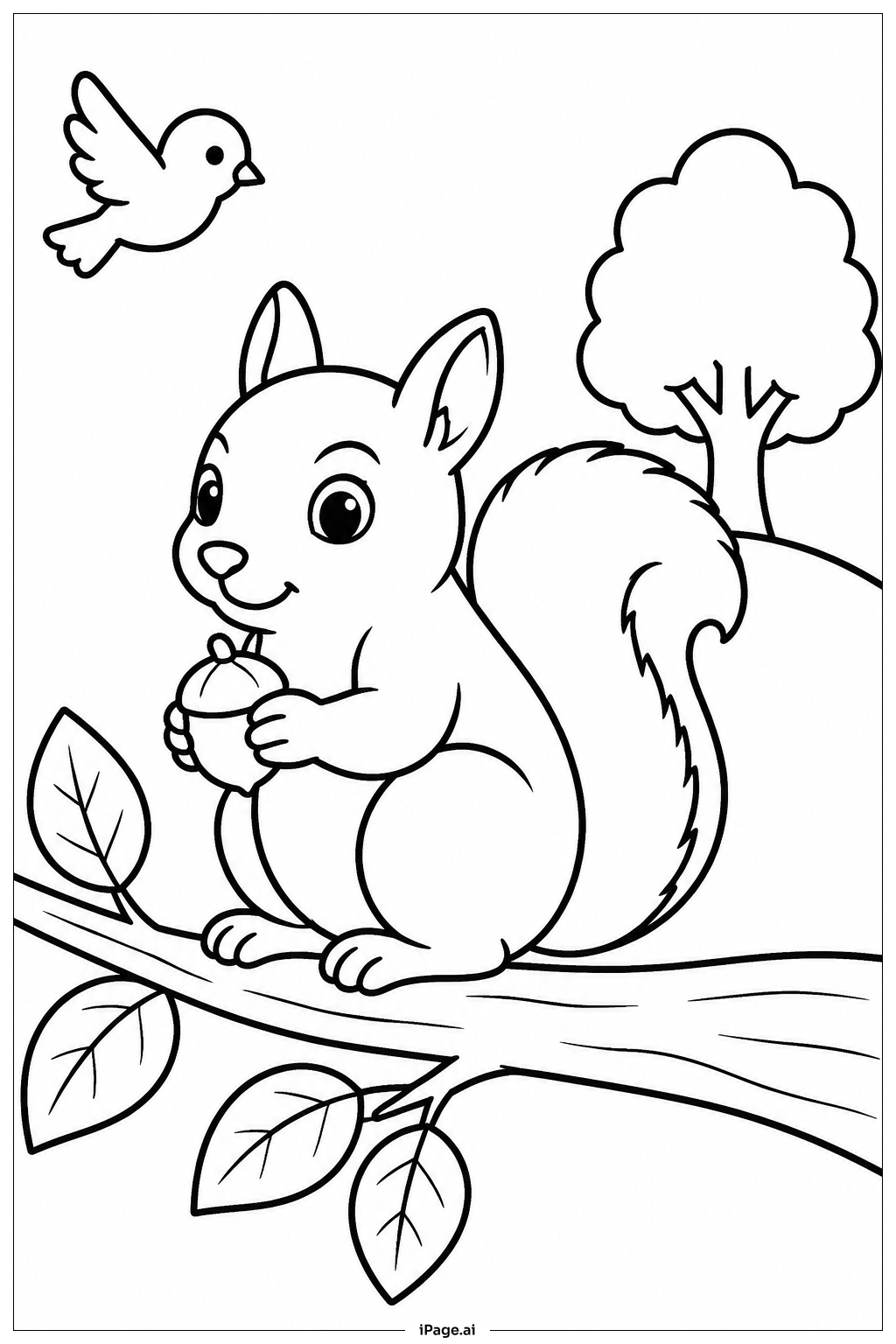
Coloring tips: How to color Squirrel On Tree Branch coloring page well?
Try coloring the squirrel using warm brown tones for its fur. You can add lighter shades of beige or cream on its belly and under the tail to show fluffy fur. For the bushy tail, blend different browns and maybe a touch of orange for a rich, natural look. The tree branch can be colored with dark brown and gray to give texture to the bark. Green is perfect for the leaves, and don’t be afraid to mix in yellow or lighter green to show sunlight shining through. Feel free to use a blue or soft sky color in the background to complete your picture.
Coloring challenges: Which parts are difficult to color and need attention for Squirrel On Tree Branch coloring page?
- Capturing the texture of the squirrel’s bushy tail can be tricky because it has many fine hairs and delicate curves. Layers of color and detail are needed to make it look realistic.
- The tree bark has rough, uneven surfaces that require careful shading to show depth and dimension without blurring the patterns.
- Small details like the squirrel’s tiny paws and facial features need precise coloring to keep clarity and prevent smudging.
- Balancing the shades on the leaves to depict light and shadow can be challenging since they overlap and have different angles.
- Keeping the colors natural while still vibrant enough to bring the image to life takes patience and skill, especially blending browns, greens, and subtle highlights.
Benefits of coloring books: Advantages of drawing Squirrel On Tree Branch coloring page
Coloring this image helps develop fine motor skills through careful attention to detail, especially around the squirrel’s small features and the texture of the tree bark. It encourages observation skills as you decide how to layer colors on the fur and leaves to create depth. This activity also sparks creativity, allowing you to experiment with natural colors and shading techniques. Additionally, coloring scenes from nature can be calming and foster a connection with animals and the outdoors, making it a fun and relaxing experience for children and adults alike.



