Coloring tips: How to color Squirrel And Birdhouse coloring page well?
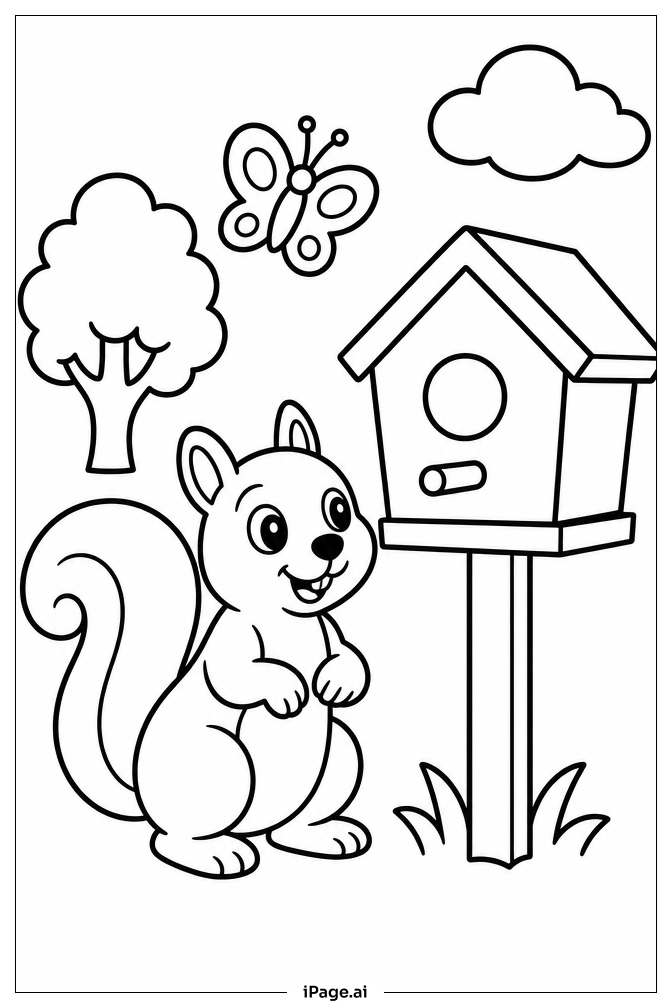
For the squirrel, use warm browns, grays, or reddish tones for the body, with a lighter cream or white for the belly. The bushy tail can be colored with multiple shades to show depth and fluffiness. The birdhouse offers great opportunities for creativity—try natural wood tones like browns and tans, or paint it in bright, cheerful colors like red, blue, or yellow. Add darker lines to emphasize the wood grain texture. The roof can be a contrasting color, perhaps gray or green to mimic shingles. For the natural surroundings, use various shades of green for leaves and grass, with pops of color for flowers or berries in reds, pinks, or purples. The background elements allow children to practice blending colors and creating a cohesive outdoor scene.
Coloring challenges: Which parts are difficult to color and need attention for Squirrel And Birdhouse coloring page?
• Squirrel Fur Texture: The squirrel's bushy tail and body require careful attention to create a realistic fur appearance. Children may find it challenging to use multiple shades and directional strokes to suggest the flow and fluffiness of the fur. The tail especially has many flowing lines that need consistent coloring to avoid a patchy look.
• Wood Grain Details: The birdhouse features visible wood grain patterns and texture lines that add realism but can be tricky to color. Staying within these fine lines while maintaining consistent color requires patience and precision. Younger children might struggle to follow the grain direction or may accidentally color over important details.
• Small Intricate Elements: The image contains numerous small details such as the circular entrance hole, tiny leaves, berries, flowers, and the squirrel's facial features including eyes, nose, and whiskers. These require fine motor control and careful coloring to avoid going outside the lines or losing the definition of these delicate features.
• Overlapping Shapes: Several elements overlap in the composition—the squirrel sits on the birdhouse, leaves drape across various surfaces, and grass surrounds the post. Children need to decide which elements are in front and which are behind, then choose appropriate colors and shading to create depth and prevent the image from looking flat or confusing.
Benefits of coloring books: Advantages of drawing Squirrel And Birdhouse coloring page
Coloring this squirrel and birdhouse scene offers wonderful developmental benefits for children. It helps improve fine motor skills and hand-eye coordination as they navigate the various detailed elements, from the squirrel's intricate tail to the small leaves and flowers. The image encourages creativity in color selection while teaching about nature and wildlife—children learn about squirrels, their habitats, and how birdhouses serve as homes for birds. The overlapping elements provide an excellent opportunity to understand spatial relationships and depth perception. Working with the wood grain patterns introduces children to textures found in real materials. This scene also promotes patience and concentration as children work through the different sections. The peaceful woodland theme can have a calming effect, making it an enjoyable and relaxing activity that combines artistic expression with learning about the natural world.