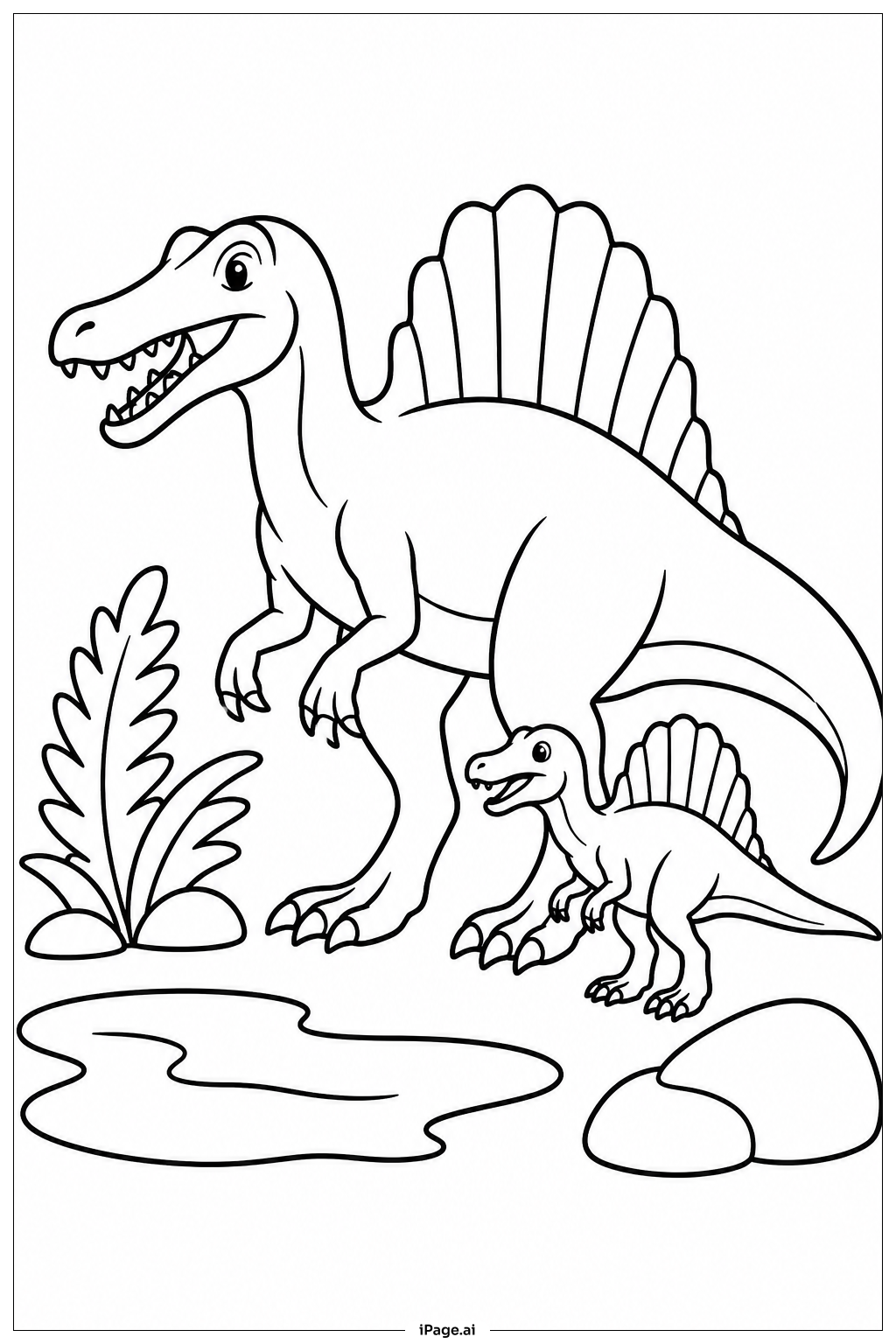
Coloring tips: How to color Spinosaurus With Hatchling coloring page well?
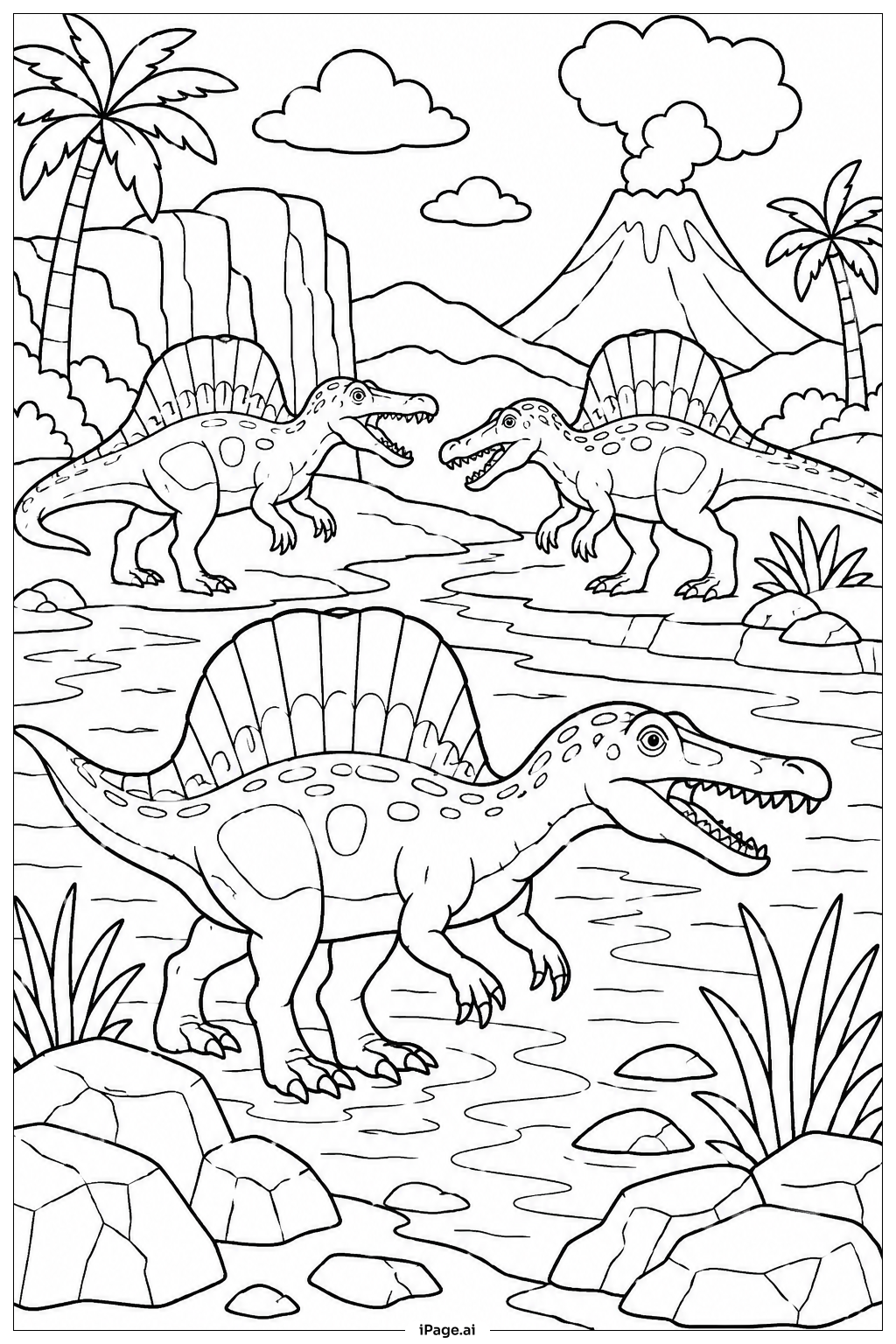
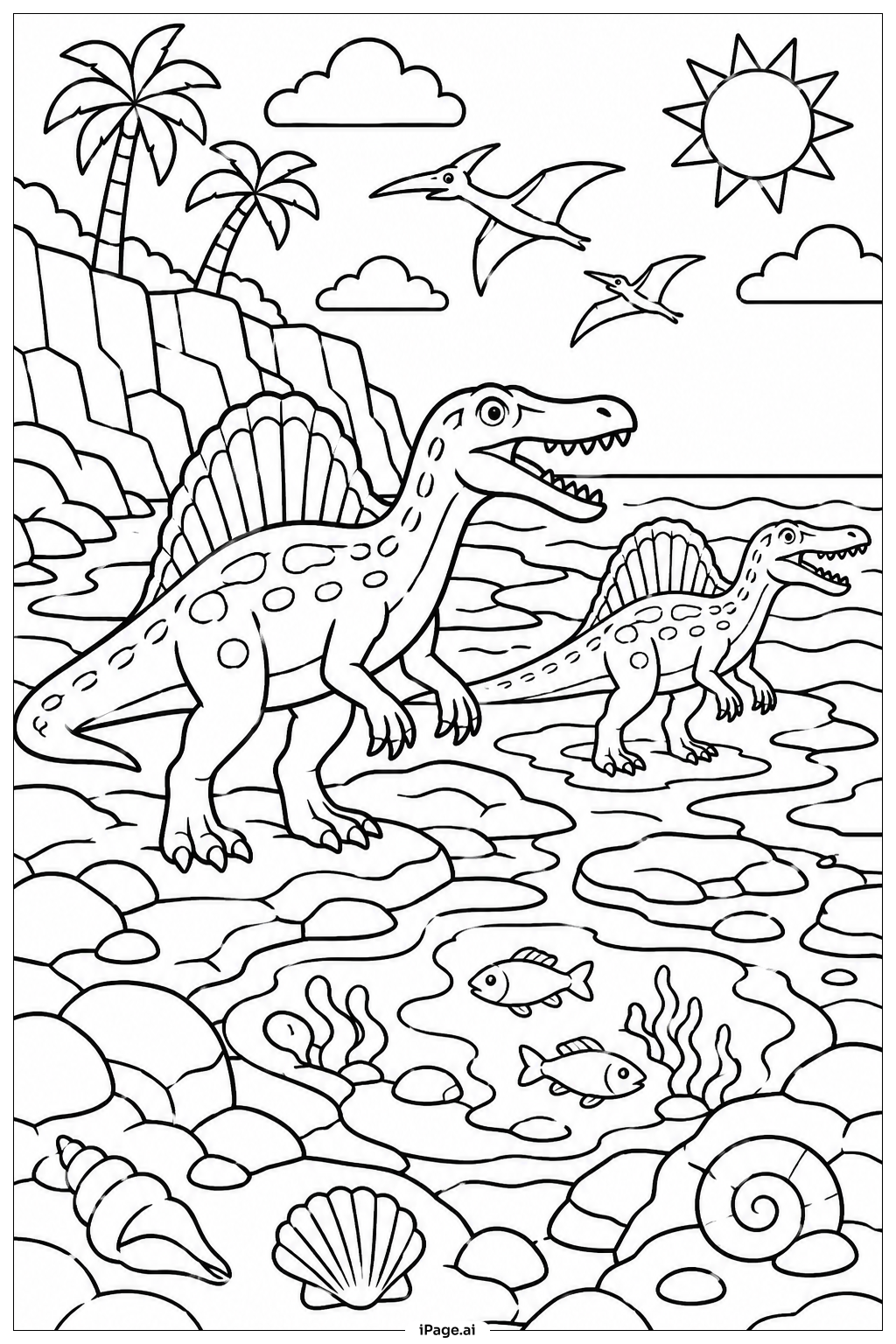
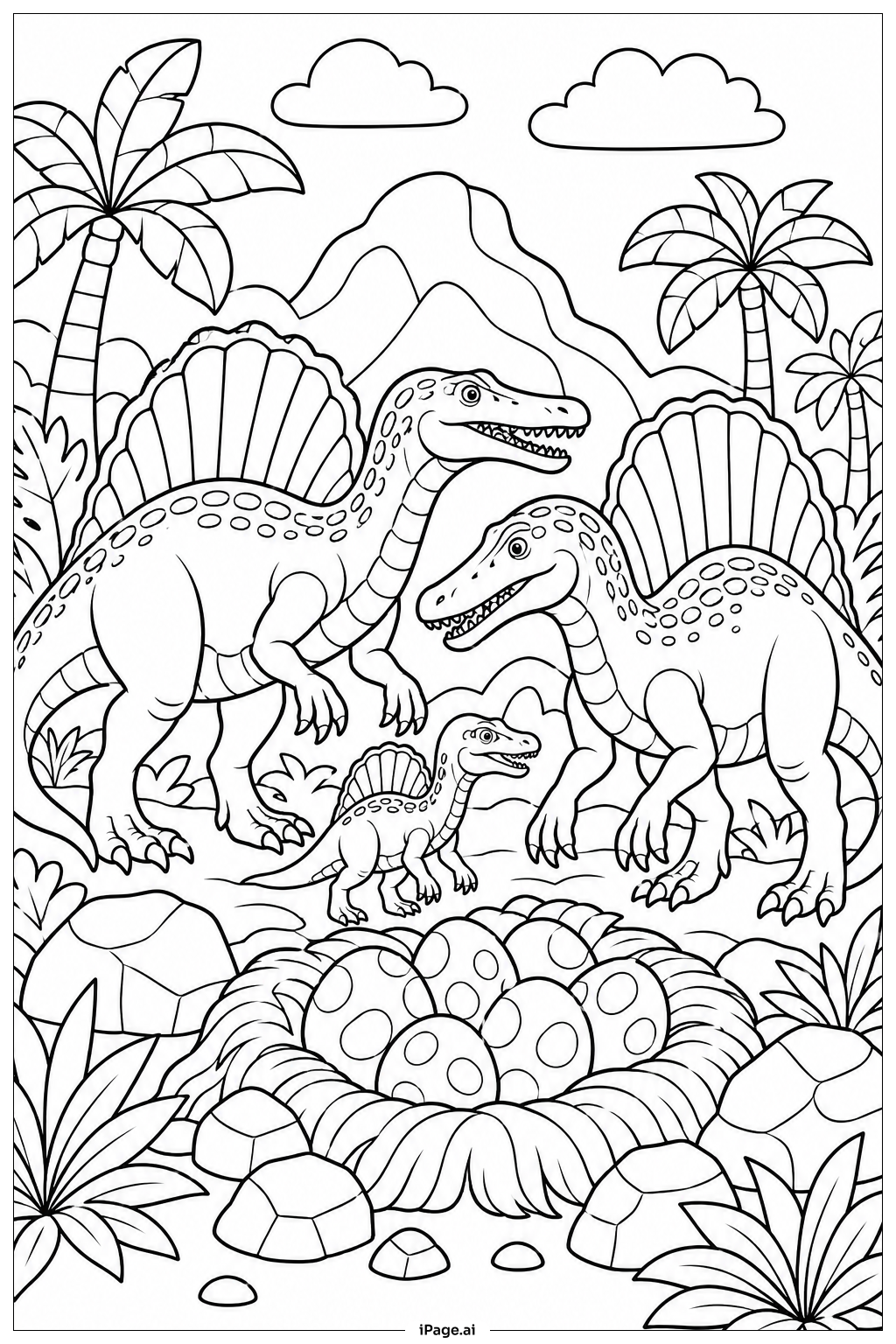
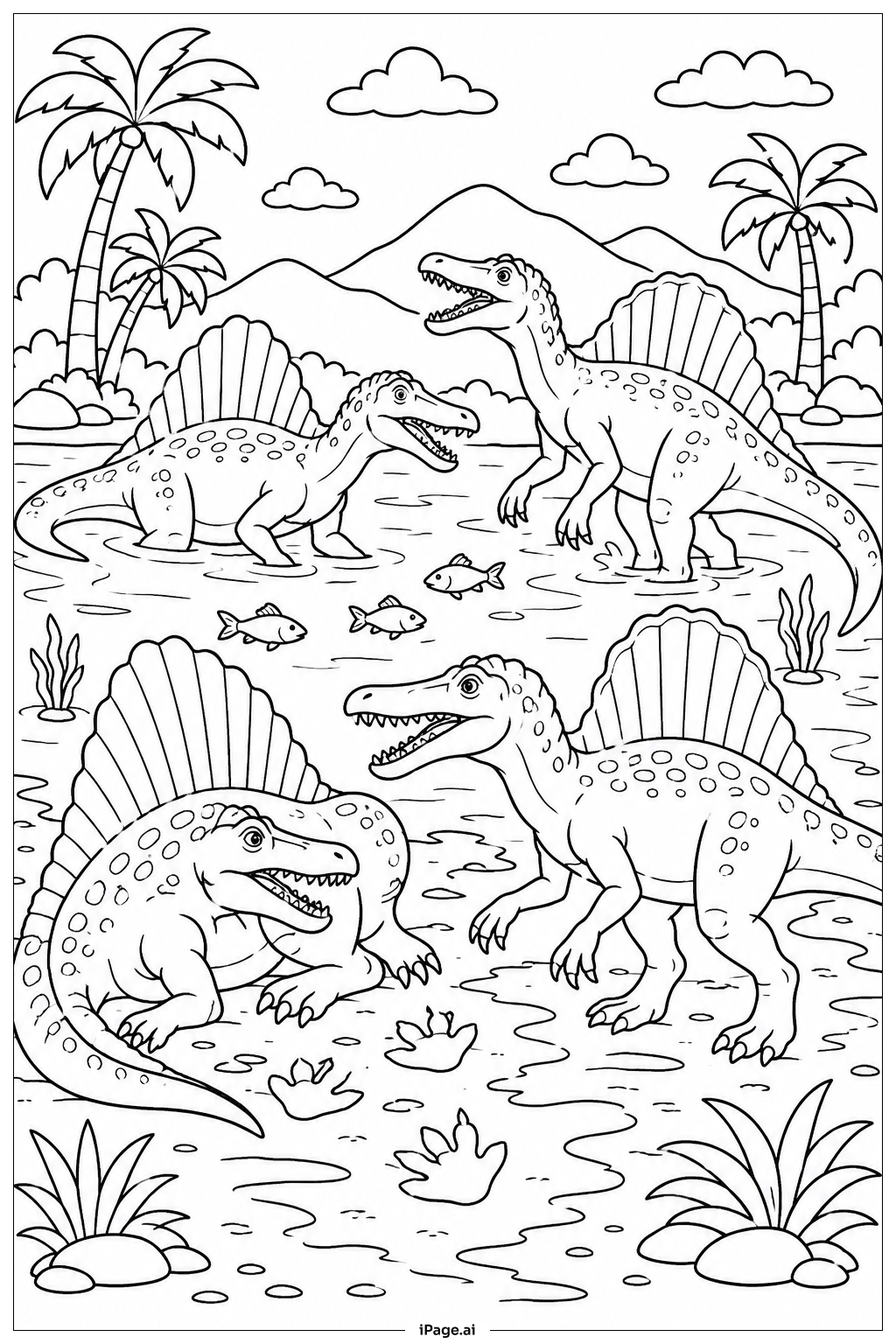
Try using a mix of earthy tones like dark greens and browns to color the Spinosaurus’s body and sail. You can add a gradient on the sail from a deep red near the base to a lighter orange or yellow on the tips to make it stand out. The hatchling might look cute with lighter colors such as pale green or soft yellow to show its youth. For the skin texture, use small strokes or dots with a darker shade to highlight the scales. The rocks can be colored in grays and tans, while the plants around can be various shades of green to bring life to the scene. Don’t forget to add some shadows under the dinosaurs to create depth. Bright blue or turquoise could be added to the water nearby if you want to show a riverbank landscape.
Coloring challenges: Which parts are difficult to color and need attention for Spinosaurus With Hatchling coloring page?
• Fine Skin Texture: Coloring the scales and detailed skin requires careful coloring to avoid going outside lines, which can be challenging for younger artists. • Sail Gradient: Creating a smooth gradient on the Spinosaurus’s sail from dark to light colors needs blending skills that may be hard to master at first. • Small Hatchling Details: The hatchling has many tiny features like claws, eyes, and tail segments that demand patience and a steady hand. • Background Elements: Adding natural colors to the rocks and plants involves choosing different shades to make the scene realistic, which takes time and thought. • Shadowing: Adding shadows under and between the dinosaurs for depth requires knowledge of light direction and shading techniques that might be tricky for beginners.
Benefits of coloring books: Advantages of drawing Spinosaurus With Hatchling coloring page
Coloring this image helps children improve their attention to detail by focusing on the complex textures and small features of the Spinosaurus and its hatchling. It encourages creativity when choosing colors for the sail and environment, promoting an understanding of natural tones and color blending. Working on shading and gradients enhances fine motor skills and hand-eye coordination. The dinosaur theme sparks an interest in prehistoric creatures and science, making learning fun. Finally, finishing the picture can boost confidence and provide a relaxing, rewarding activity for kids and adults alike.