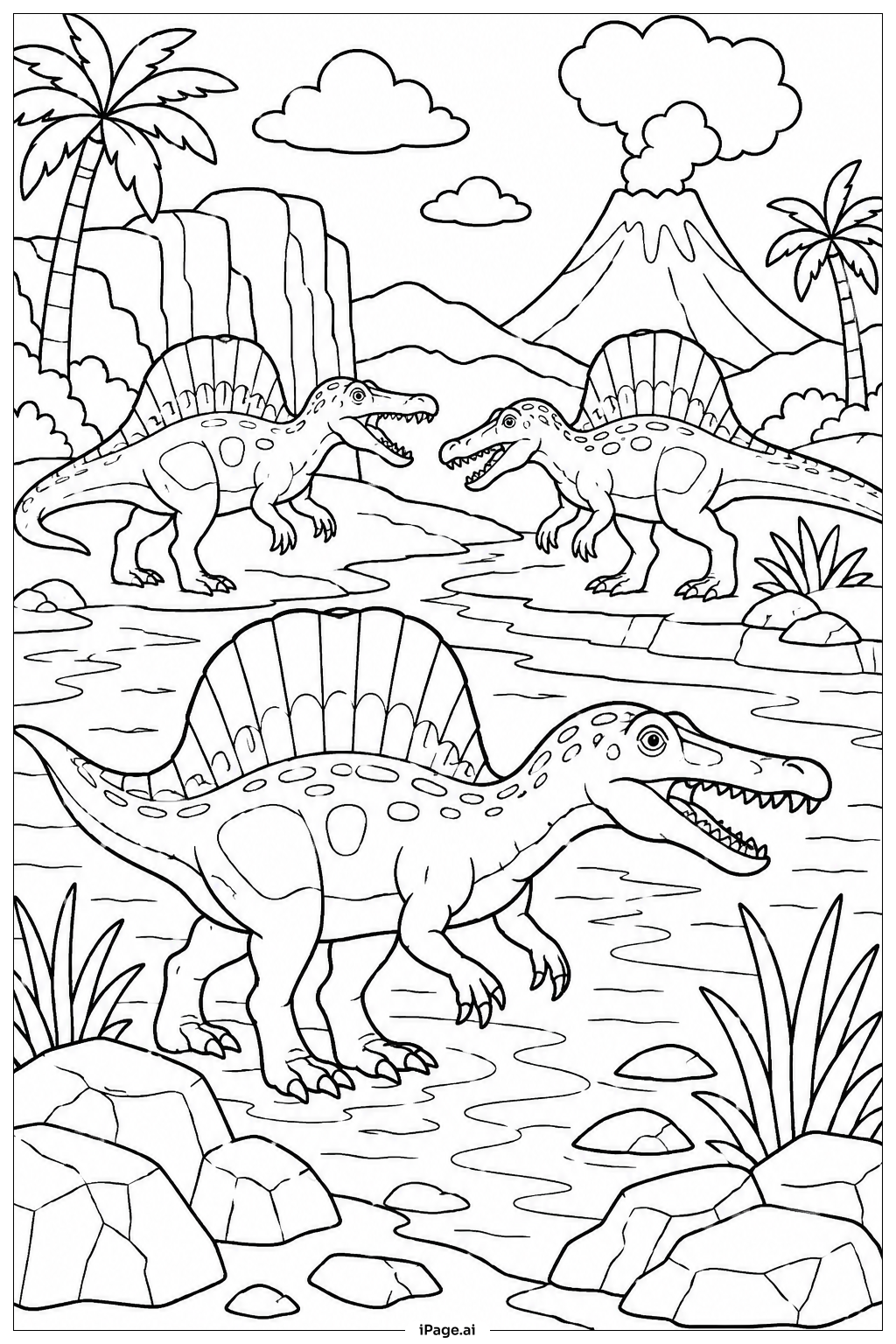
Coloring tips: How to color Spinosaurus Prehistoric Panorama coloring page well?
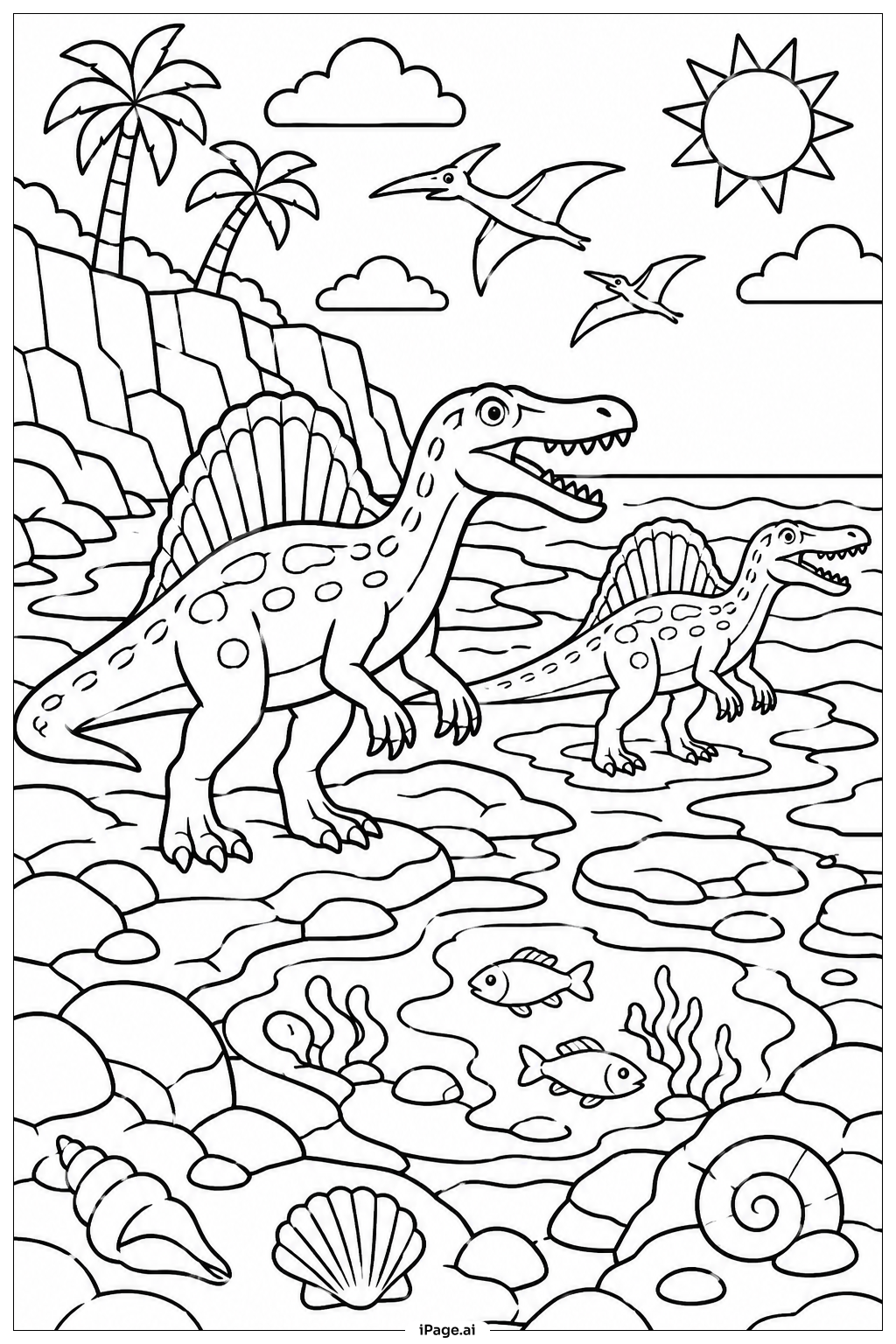
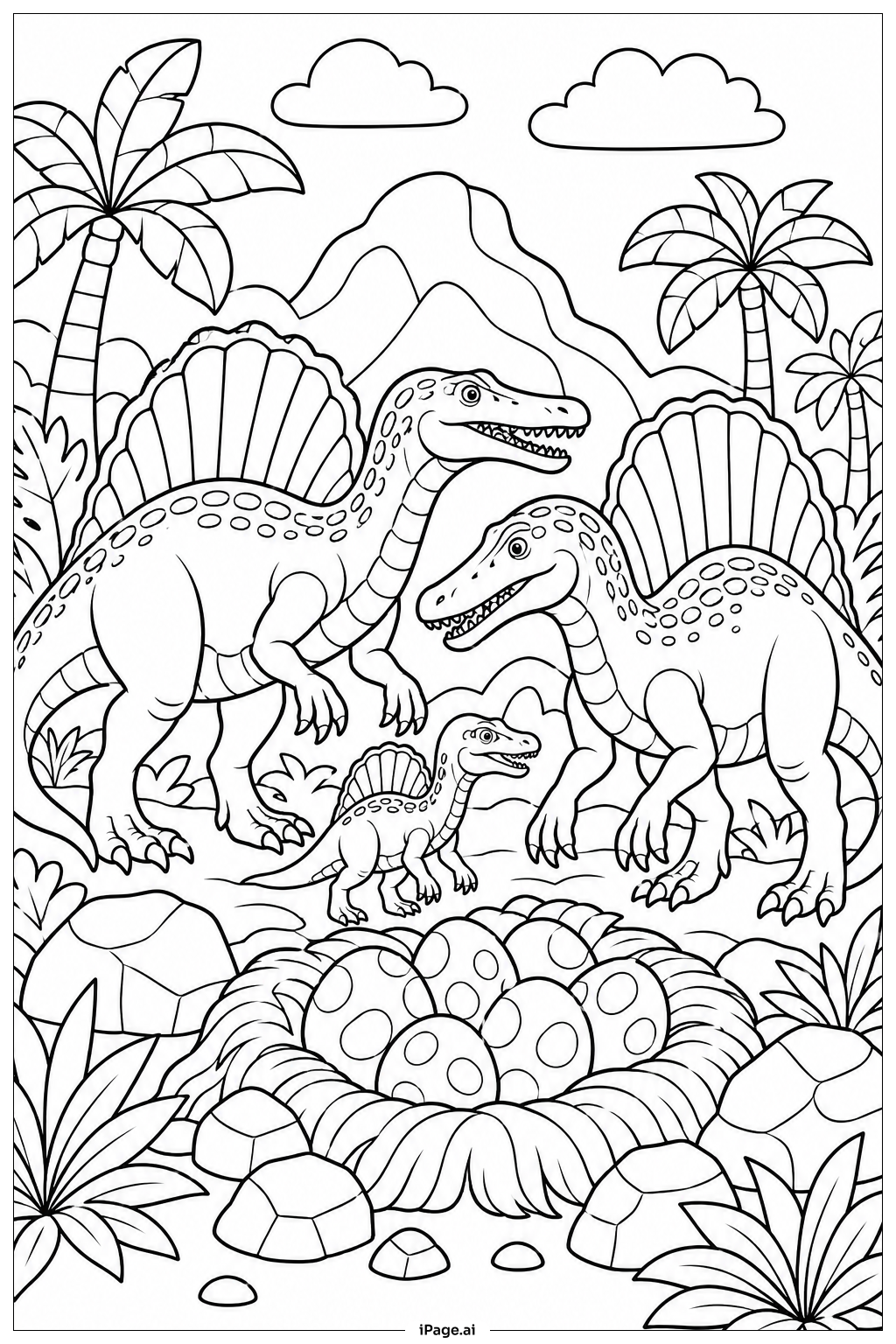
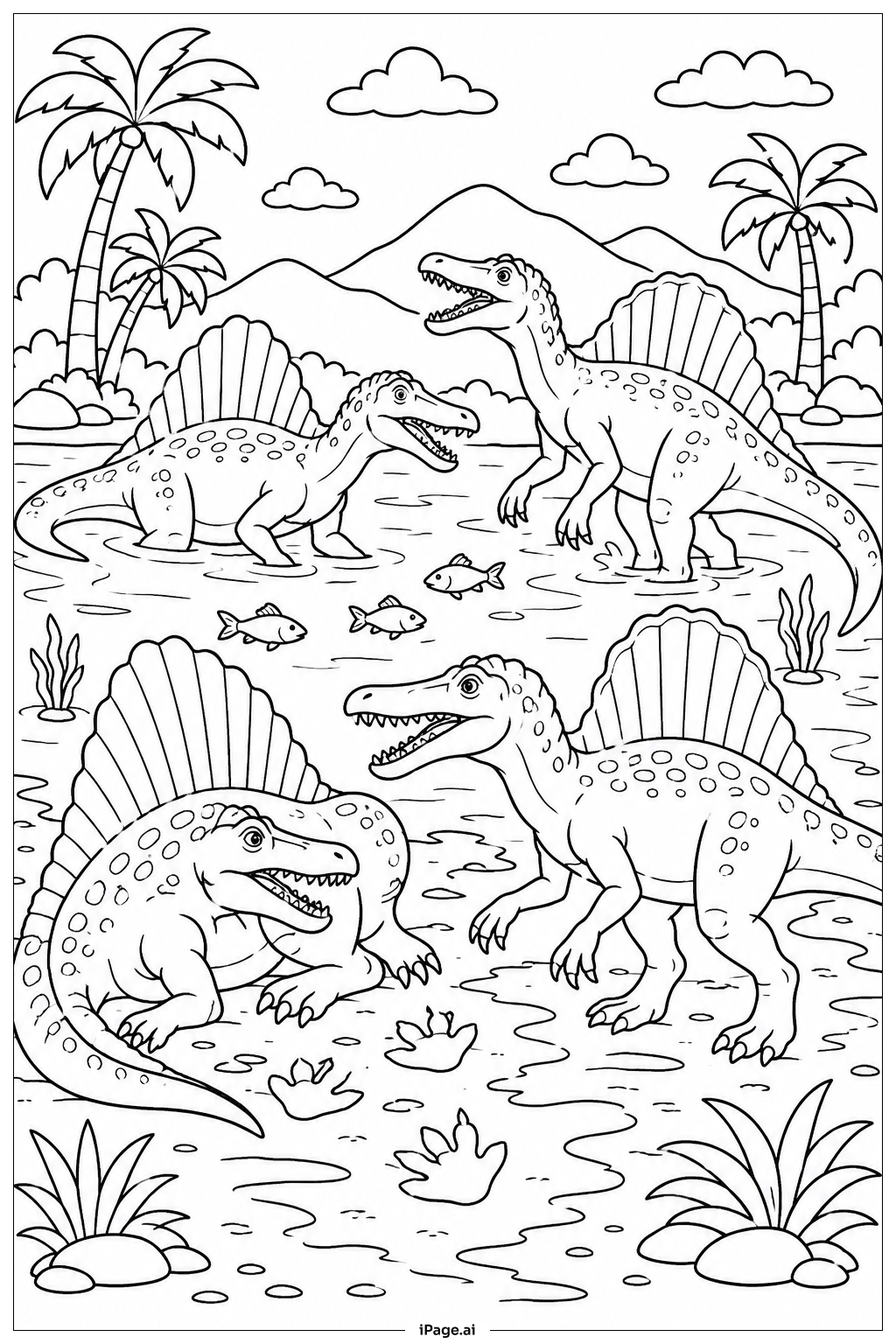
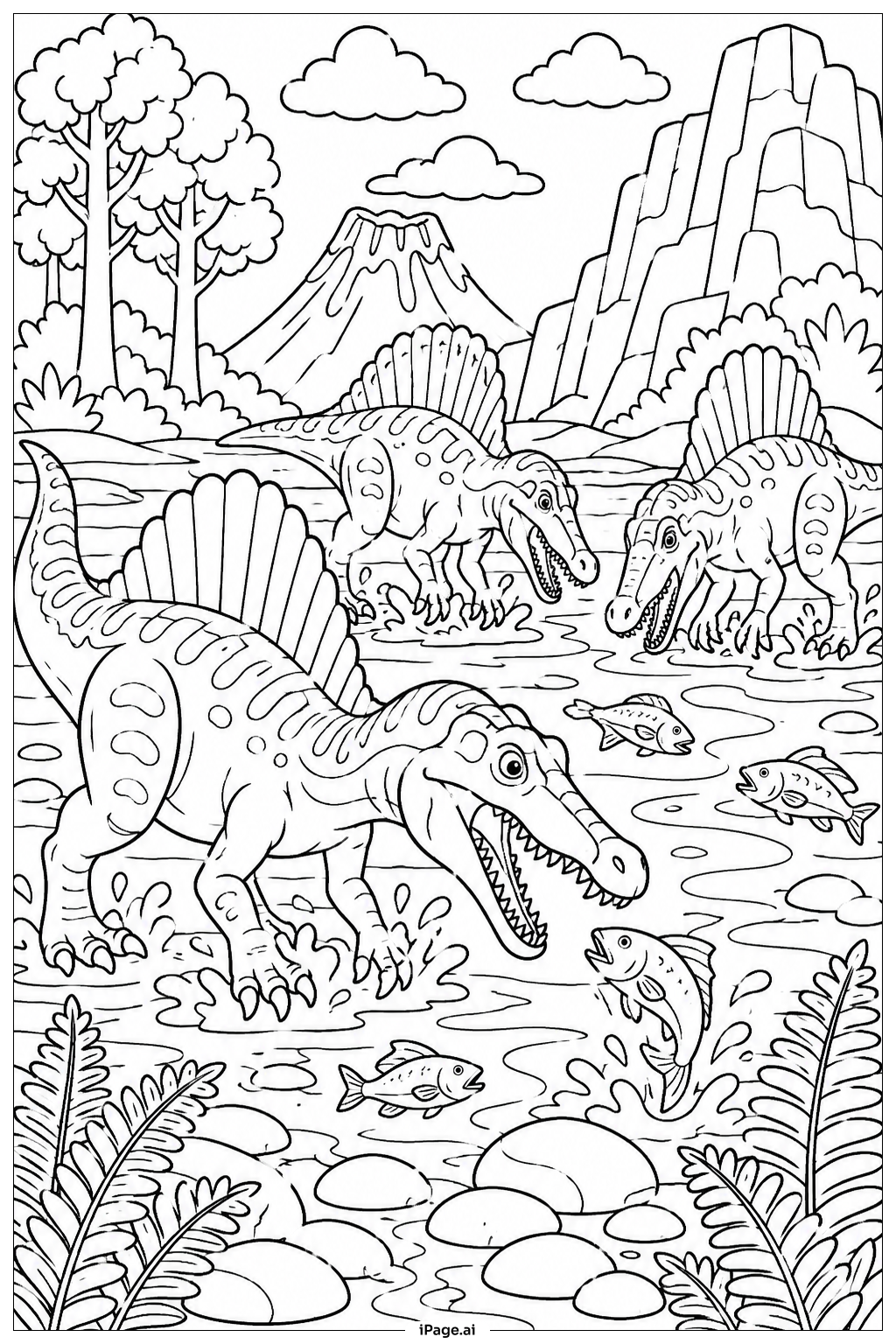
When coloring this Spinosaurus Prehistoric Panorama, try using different shades of green and brown for the dinosaur’s skin to create a natural look. You can add touches of darker colors on the sail to make it stand out. Use light blue or turquoise for the water to show the flowing river. For the trees and plants, pick various greens to give depth and make the scene lively. Don’t forget to color the sky in shades of blue with soft whites or light yellows for clouds or sunlight. Feel free to be creative and use bright or unusual colors if you want this Spinosaurus to look more fantastical. This will help the image pop and make coloring more fun.
Coloring challenges: Which parts are difficult to color and need attention for Spinosaurus Prehistoric Panorama coloring page?
• Detailed Textures: The Spinosaurus’s skin and sail have many small lines and patterns, which require careful coloring to stay inside the shape. This challenges hand control and attention to detail. • Natural Landscape: The trees, rocks, and water each have different textures and shades. Coloring these realistically means choosing the right colors and blending them well. • Overlapping Elements: Some parts of the dinosaur overlap with rocks and plants, which can be tricky to color distinctly without mixing colors. • Shadows and Light: The image includes shadows on the dinosaur’s body and around the environment. Adding these requires understanding how light works, which can be hard for younger colorers. • Large and Small Areas: Some parts like the sail are large and open, needing broad color strokes, while claws and teeth are small and detailed, needing careful strokes.
Benefits of coloring books: Advantages of drawing Spinosaurus Prehistoric Panorama coloring page
Coloring this Spinosaurus Prehistoric Panorama helps develop fine motor skills and hand-eye coordination by managing both big and small spaces. It encourages creativity as children decide which colors to use for the dinosaur and surroundings. Working on this image also builds focus and patience because of its detailed parts. Additionally, it offers a fun way to learn about prehistoric animals and nature, sparking curiosity about dinosaurs. Coloring the different textures boosts observation skills and helps children understand how light, shadow, and natural colors work in real life.