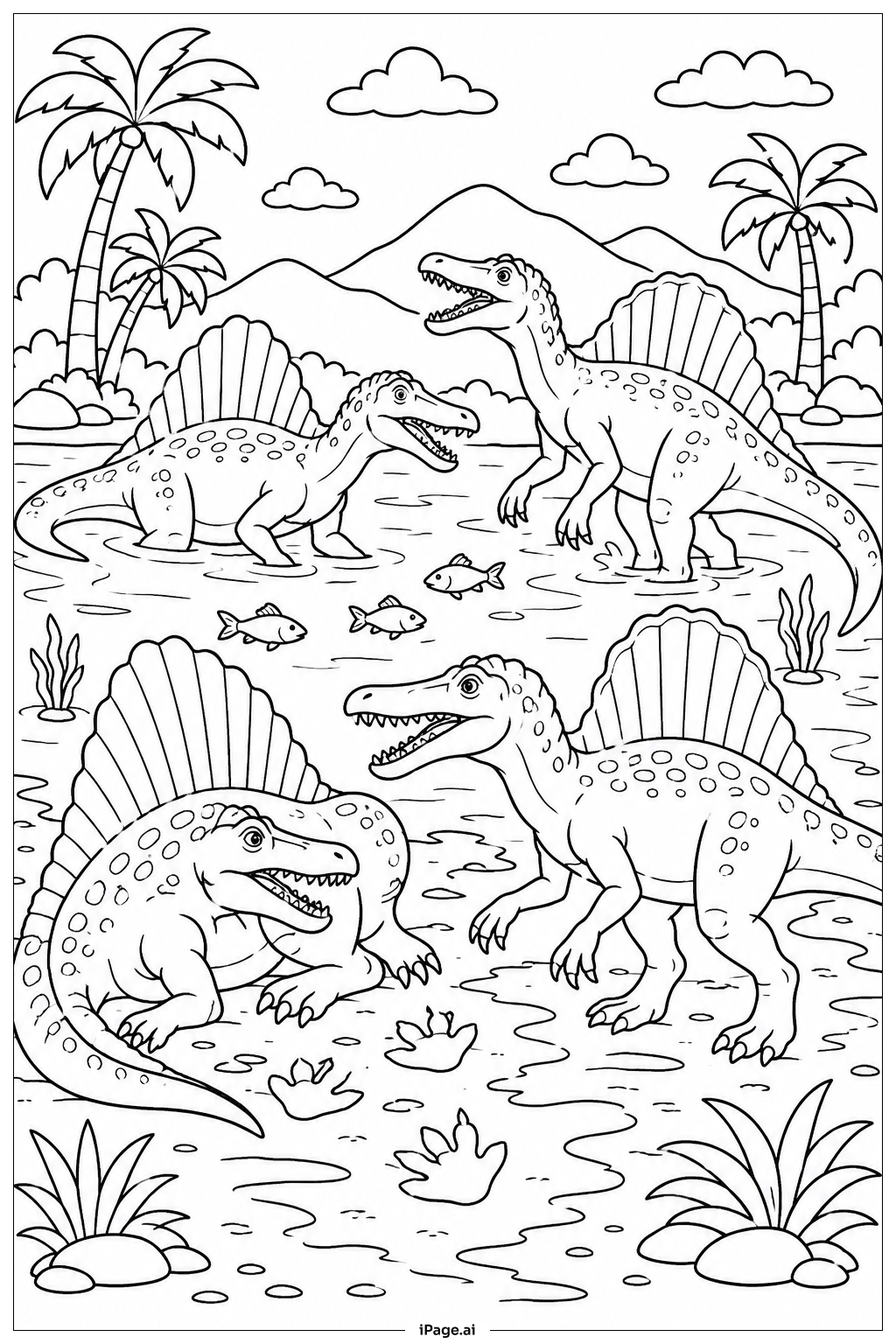
Coloring tips: How to color Spinosaurus Pack Interaction coloring page well?
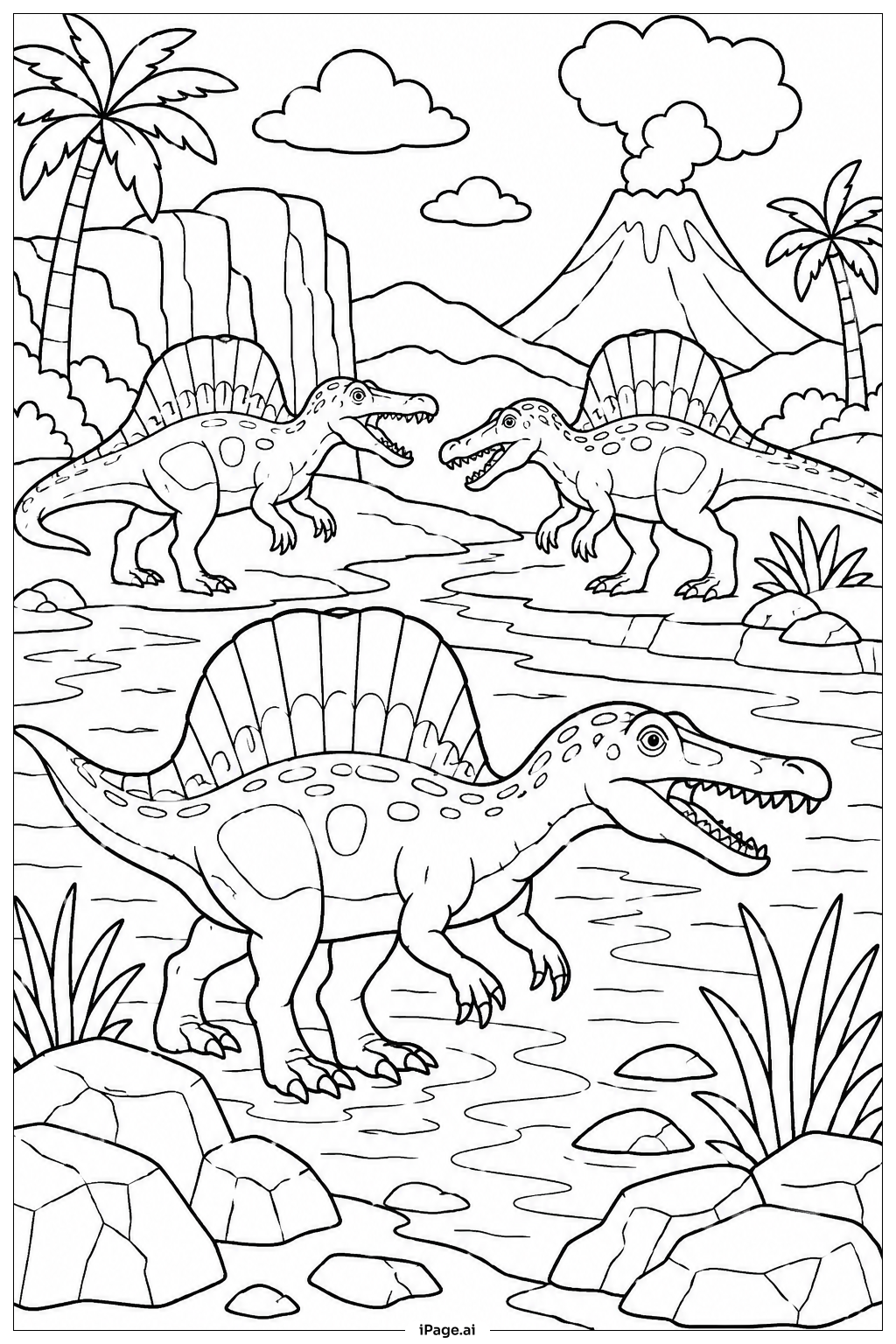
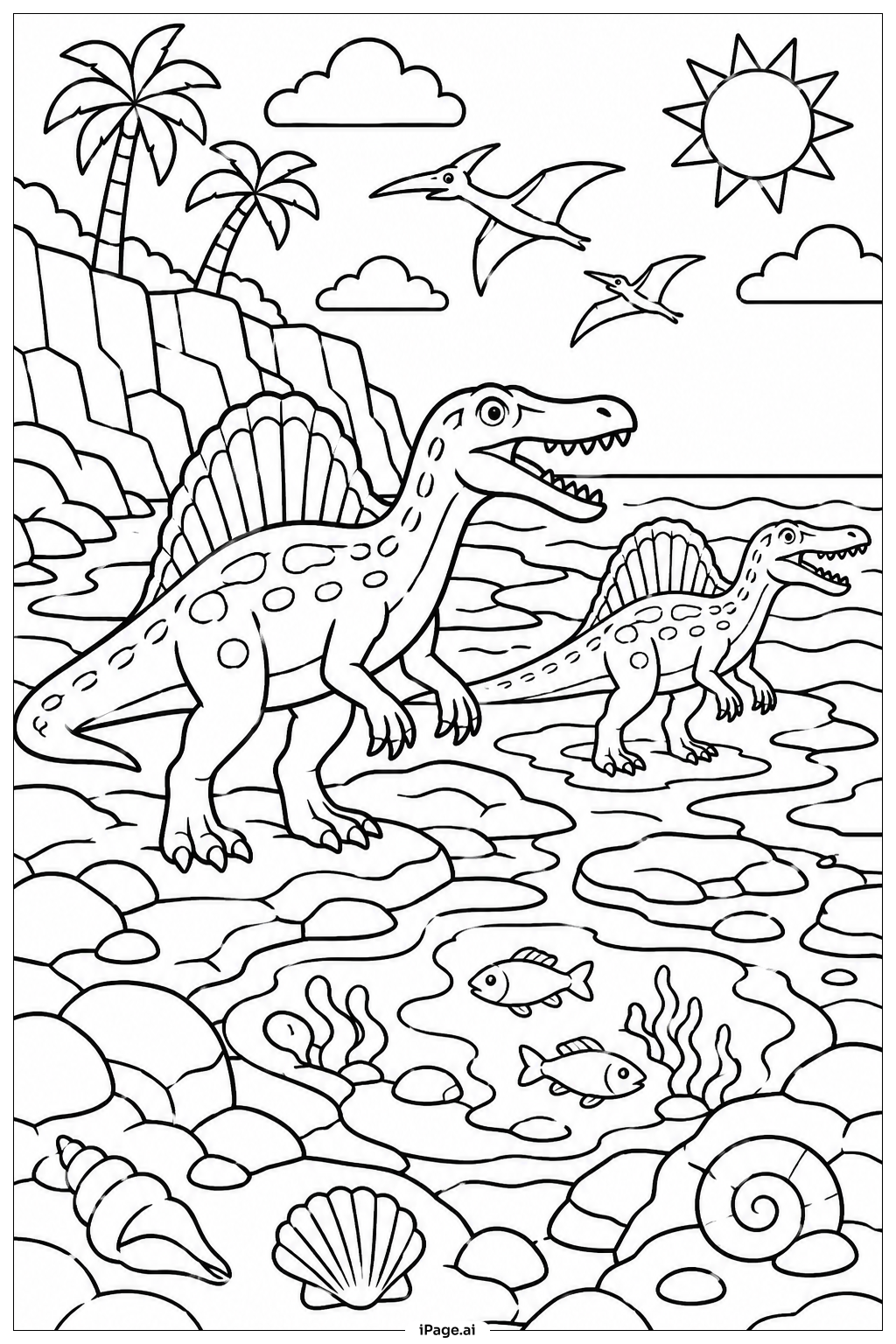
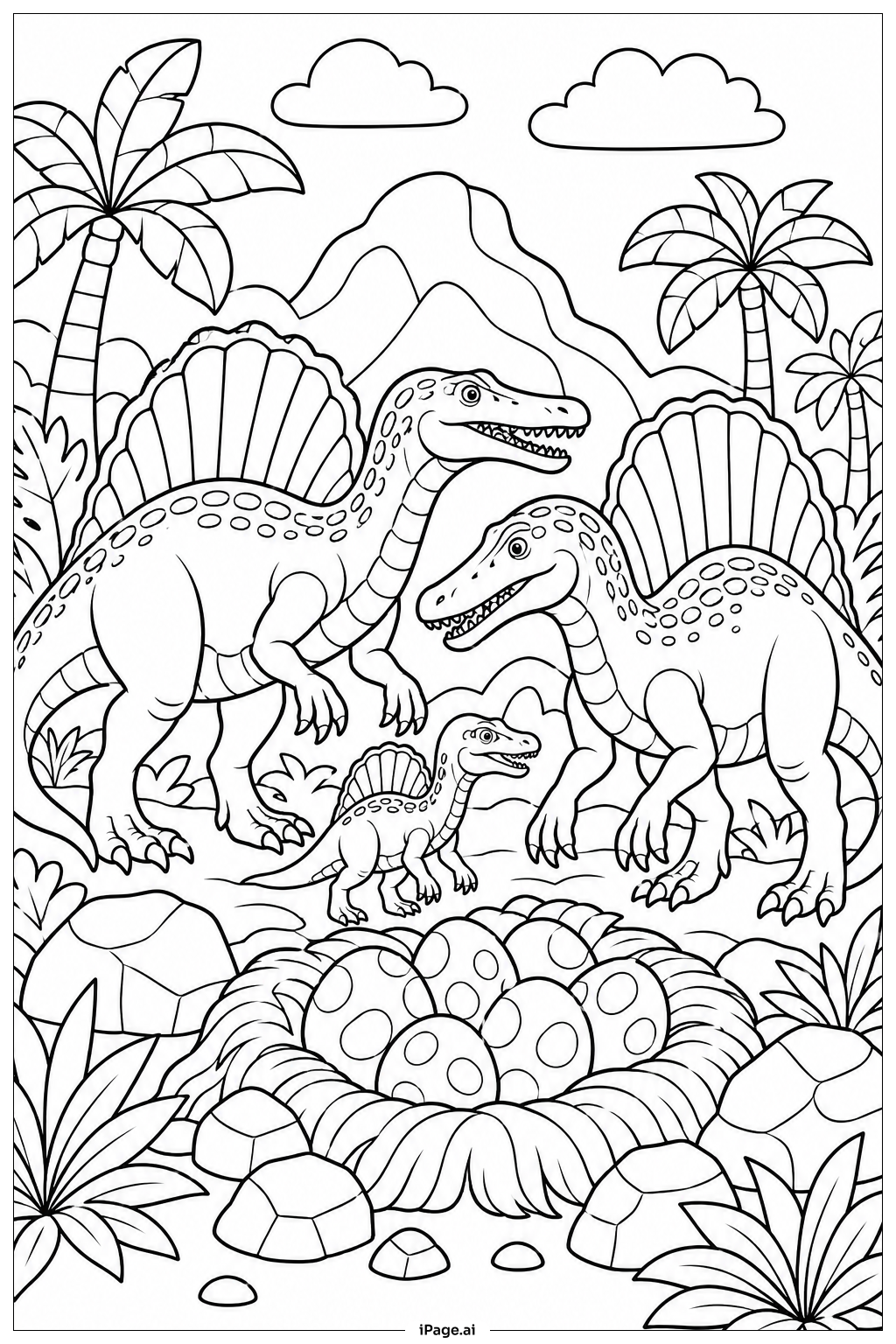
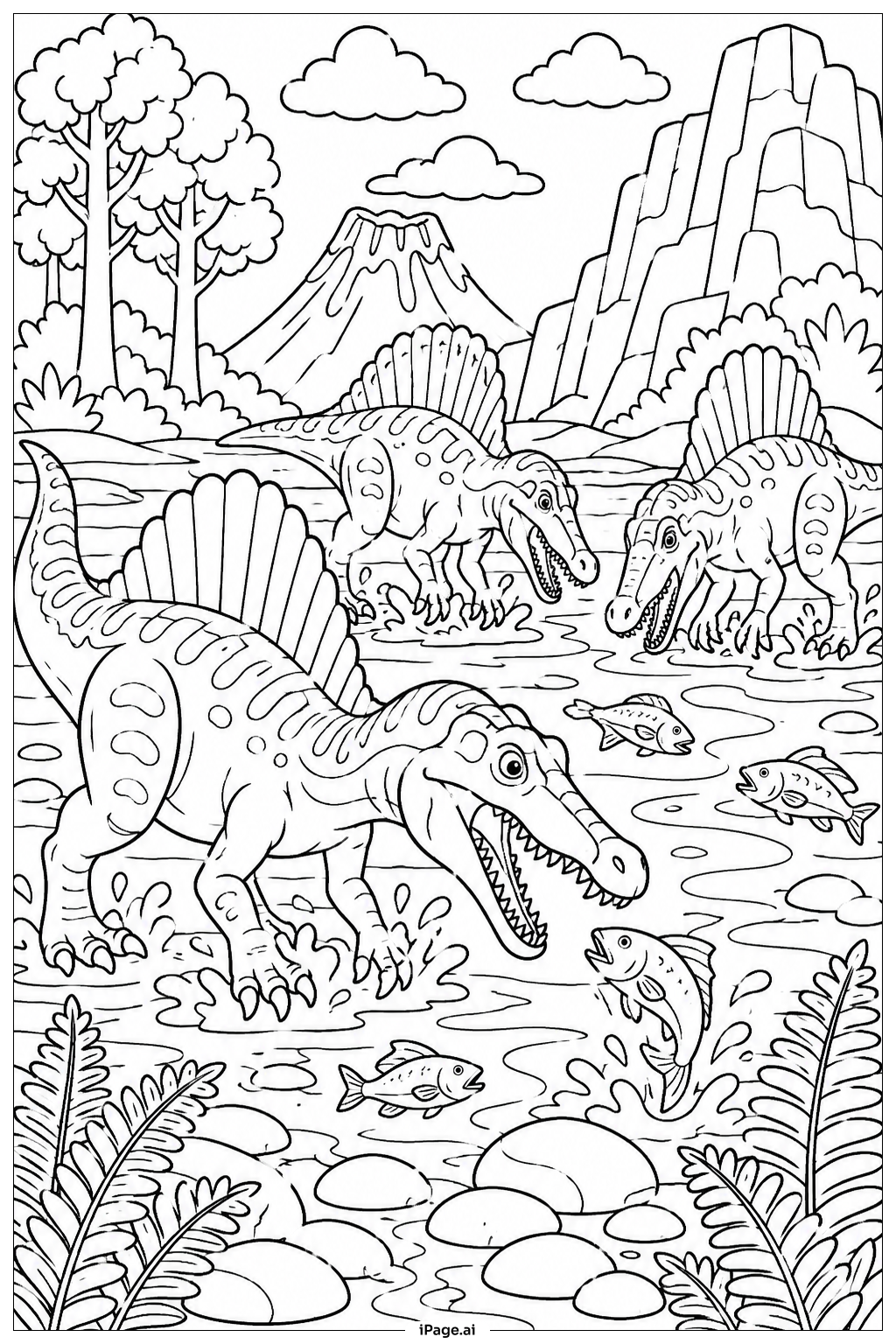
Use a variety of earthy colors to bring the Spinosaurus to life. Shades of green, brown, and gray will work well for their skin to reflect their natural environment. You can add brightness by coloring the sail structures with warm colors like orange, red, or yellow. For the background, use blues and greens to represent water and plants. Try blending lighter and darker shades to show shadows and depth on the dinosaurs’ bodies. Feel free to use your imagination for patterns or spots to make each Spinosaurus unique. Remember to color the details like the eyes and claws carefully to make them stand out.
Coloring challenges: Which parts are difficult to color and need attention for Spinosaurus Pack Interaction coloring page?
• Detailed Anatomy: The Spinosaurus dinosaurs have many intricate parts like long snouts, sharp claws, and large sails, which require careful coloring to maintain their shape and definition. • Overlapping Figures: The pack interaction means the dinosaurs partly overlap each other, making it tricky to color without mixing edges and keeping each Spinosaurus distinct. • Texture Variation: Capturing different textures such as smooth skin, rough claws, and scaled areas means using varying strokes and pressure, which can be challenging especially for younger artists. • Background Simplicity: The minimal background focuses attention on the dinosaurs, so coloring must balance between leaving empty spaces and adding subtle tones to avoid a flat look. • Color Coordination: Choosing harmonious colors for multiple large dinosaurs while highlighting their unique features can be tough, requiring planning before coloring.
Benefits of coloring books: Advantages of drawing Spinosaurus Pack Interaction coloring page
Coloring this Spinosaurus Pack Interaction page helps improve hand-eye coordination as you carefully color within lines and shapes. It encourages creativity by allowing you to explore different color combinations and imagine how these dinosaurs might have looked. The image promotes focus and patience due to its detailed features and overlapping figures. Coloring multiple dinosaurs also teaches spatial awareness and differentiating between similar but distinct shapes. Overall, this activity provides both relaxation and learning about prehistoric animals and their social behaviors.