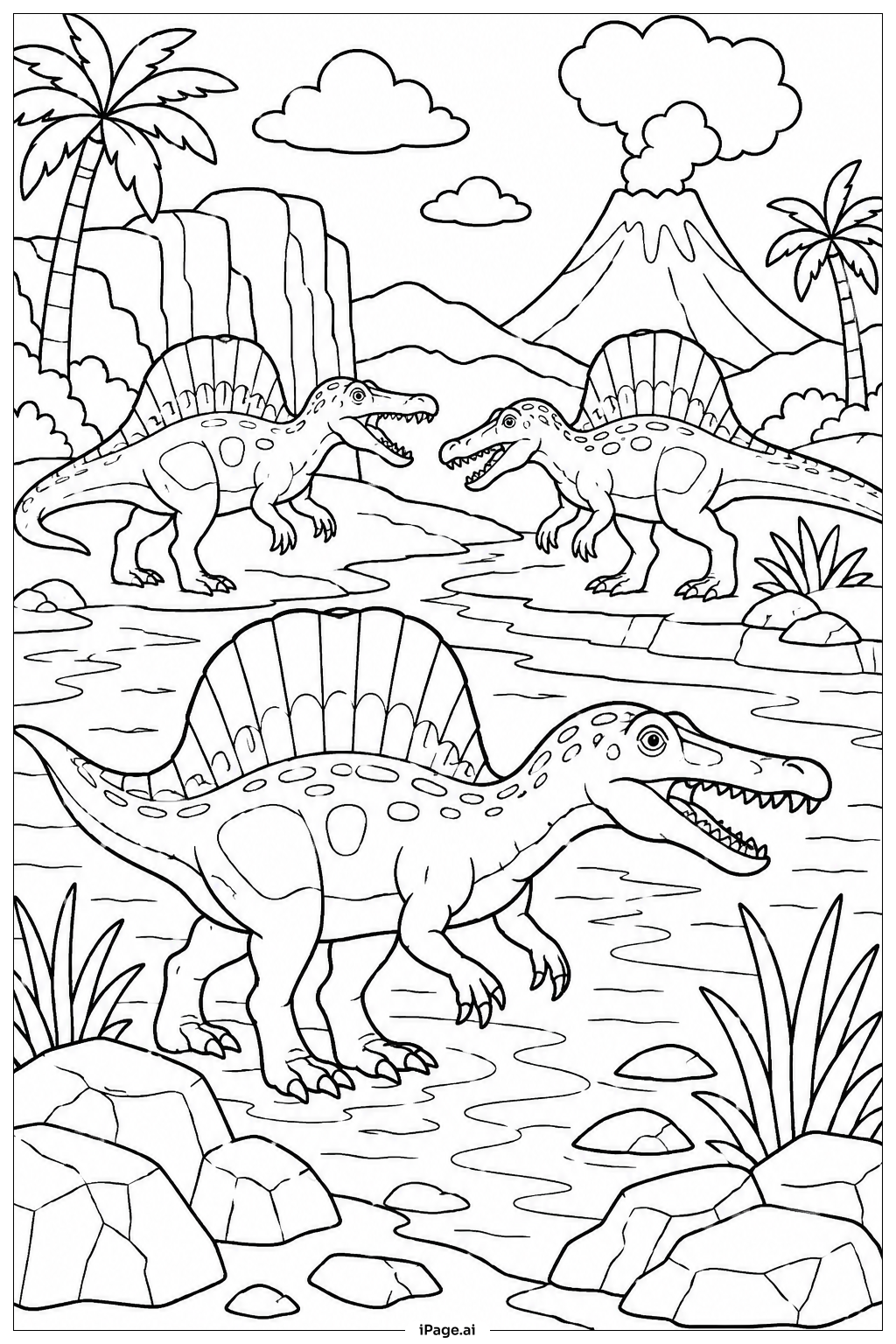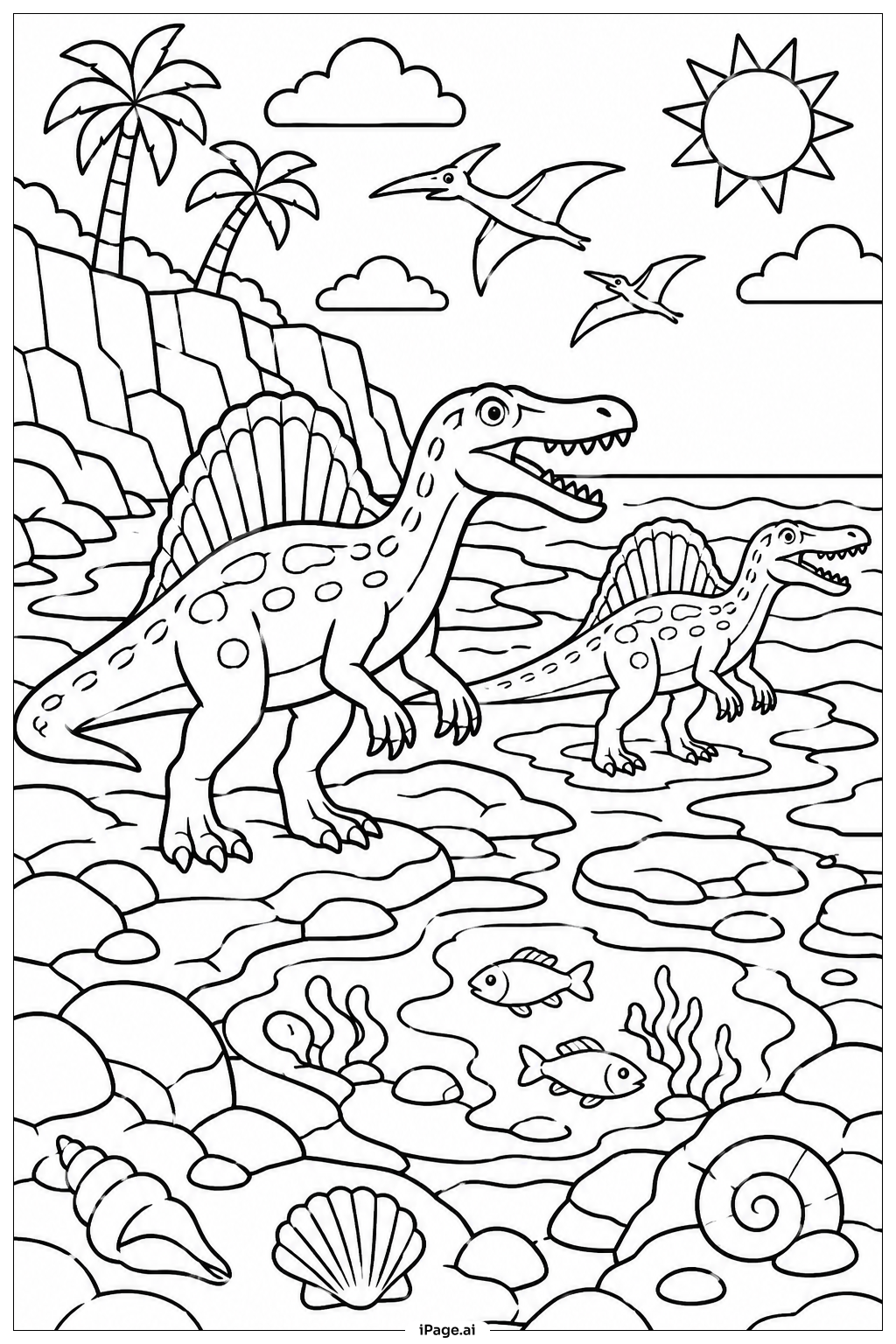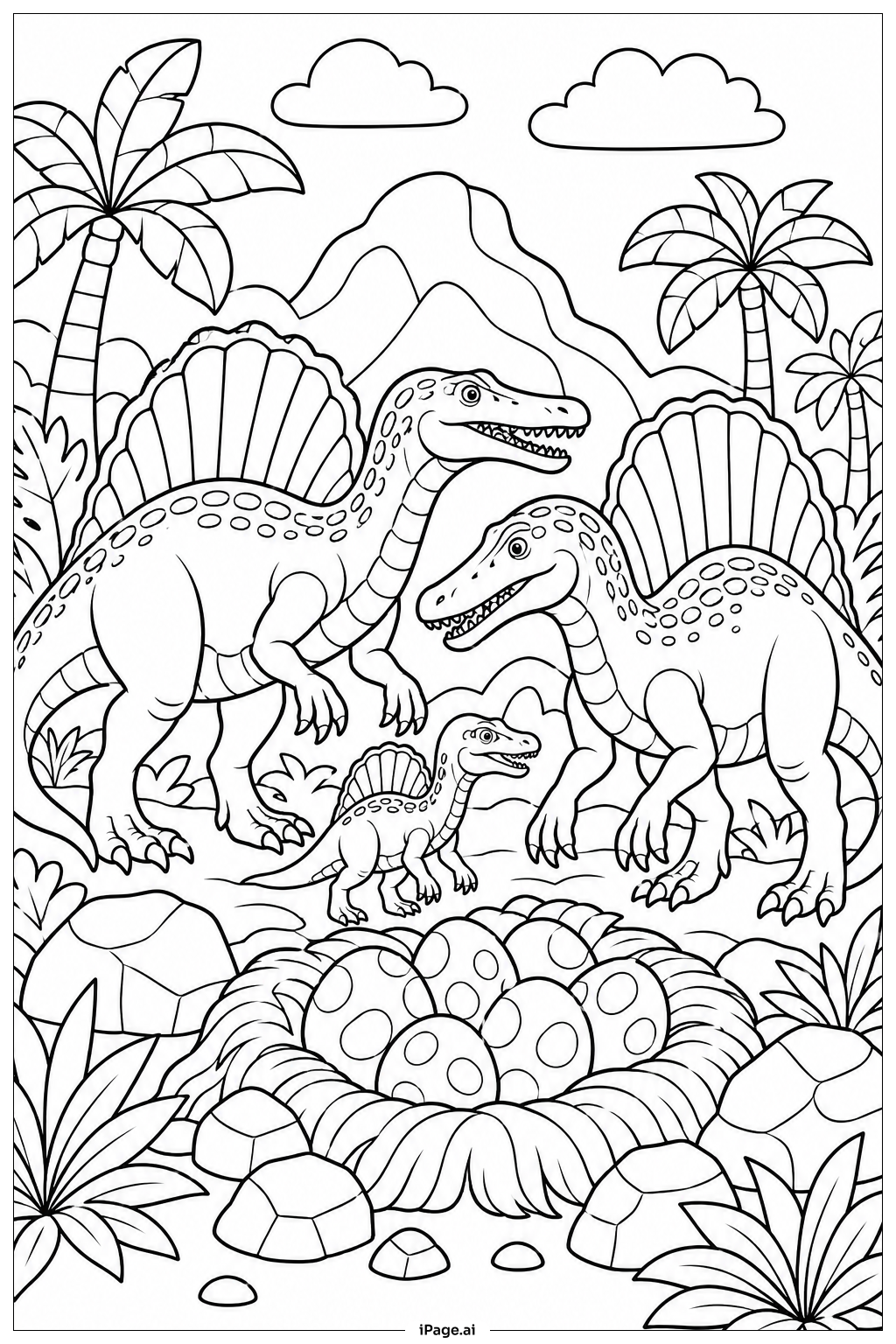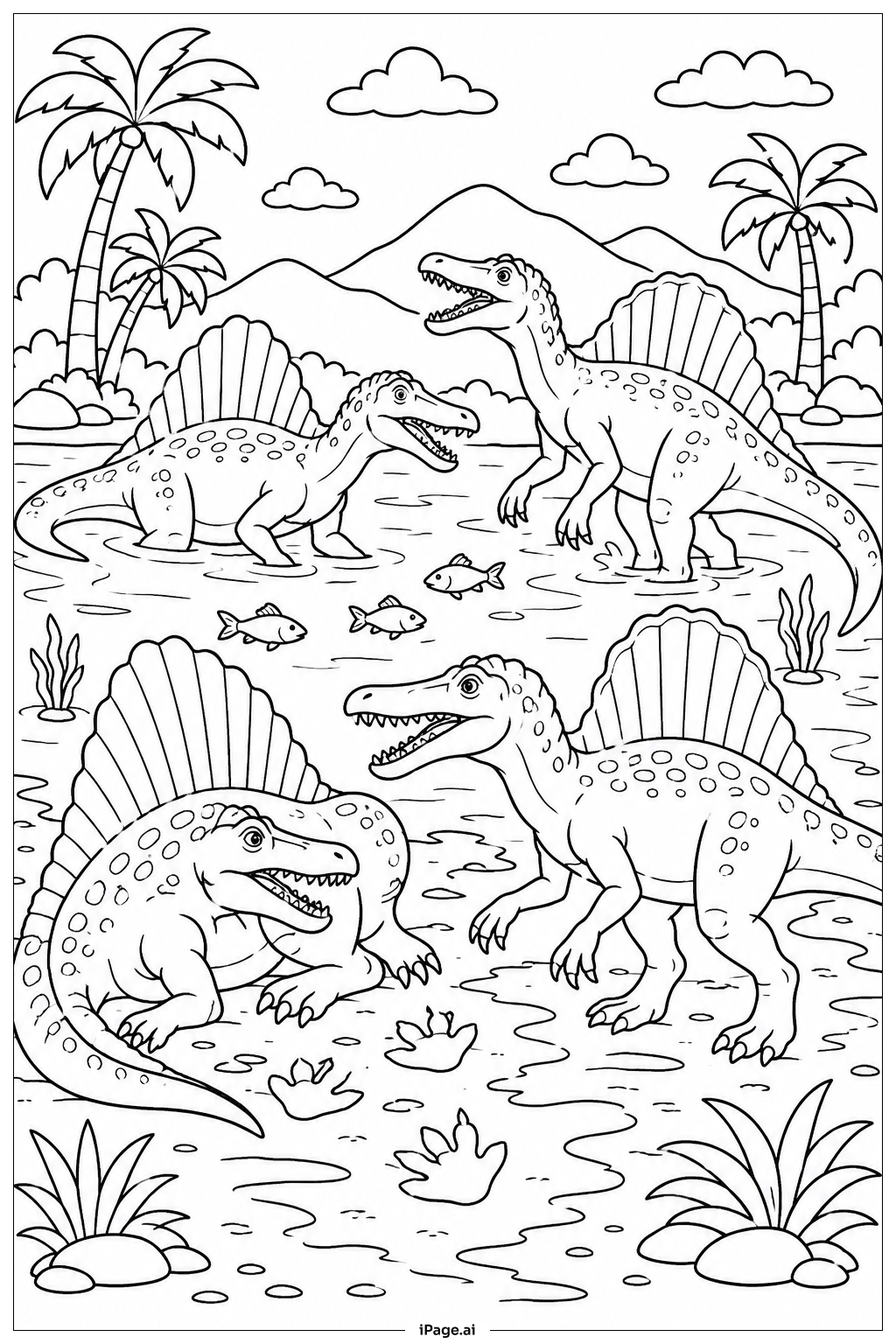
Coloring tips: How to color Spinosaurus With Aquatic Plants coloring page well?
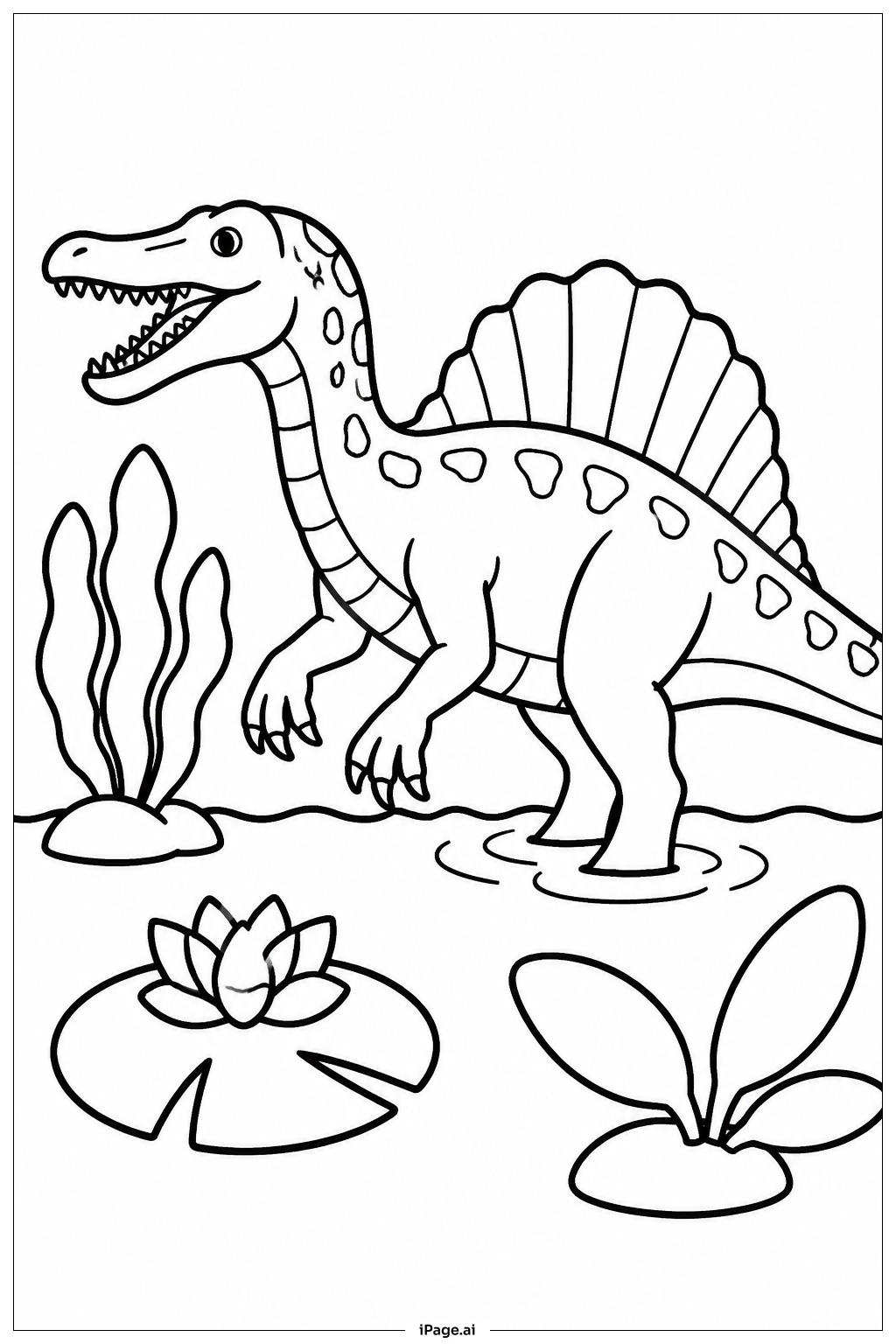
For coloring this Spinosaurus With Aquatic Plants image, you might want to start with earthy tones like browns and greens for the dinosaur’s body. Use shades of green for the aquatic plants, mixing lighter and darker greens to show depth and variety. The sail on the Spinosaurus’ back could be colored with brighter or contrasting colors like oranges or reds to make it stand out. For the water area, blues and teals can add a watery feel. Don’t forget to use different shades and layers to give a sense of texture to the dinosaur’s scales and the leaves of the plants. You can also add some shadows under the dinosaur’s feet to ground it in the scene.
Coloring challenges: Which parts are difficult to color and need attention for Spinosaurus With Aquatic Plants coloring page?
• Dinosaur Texture: The Spinosaurus has many small details such as scales and skin folds that require careful coloring to show texture and depth. Filling these areas evenly while keeping the details visible can be tricky. • Aquatic Plants Variety: The different shapes and sizes of the aquatic plants call for multiple shades of green. Balancing these without making the scene too busy requires attention. • Sail on the Back: Coloring the sail to look three-dimensional means carefully shading edges and highlights. Using too flat or uniform color might make it look less dynamic. • Water Effects: Depicting water with transparency or reflections is challenging because it involves blending blues and greens softly around the plants and dinosaur. • Overlapping Elements: The dinosaur overlaps with plants and water in many places, so it’s important to color layers in a way that clearly separates each to avoid a muddled look.
Benefits of coloring books: Advantages of drawing Spinosaurus With Aquatic Plants coloring page
Coloring this Spinosaurus With Aquatic Plants image helps children and learners develop patience and fine motor skills due to the detailed textures and small shapes. It encourages creativity when choosing natural yet imaginative colors for both the dinosaur and the plants. The scene promotes learning about prehistoric life and ecosystems, connecting art with science. Engaging with this image also improves focus and hand-eye coordination as colorists must stay inside the lines and balance multiple colors without overwhelming the page. Overall, it’s a fun way to enhance artistic confidence while exploring an interesting dinosaur in its watery habitat.