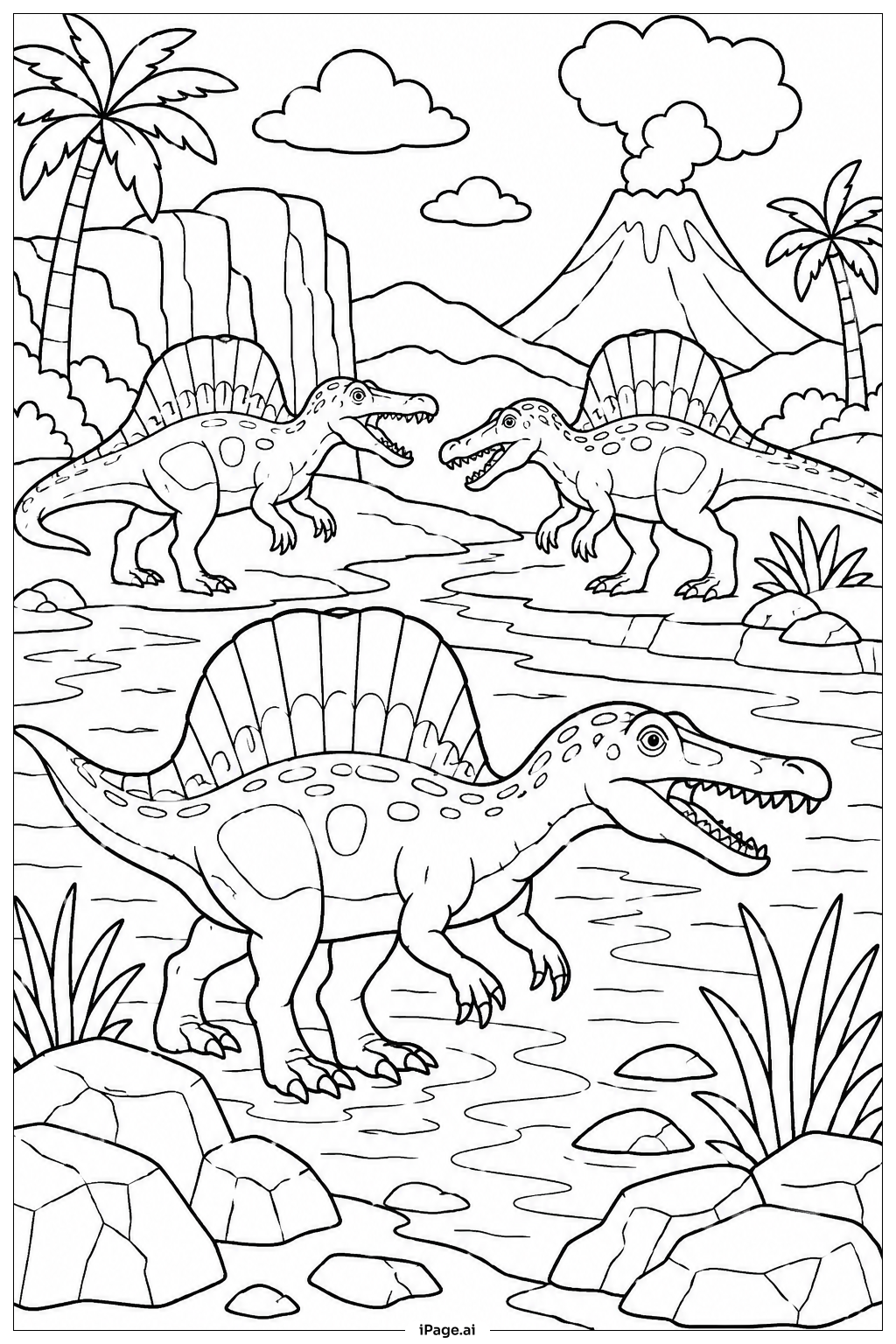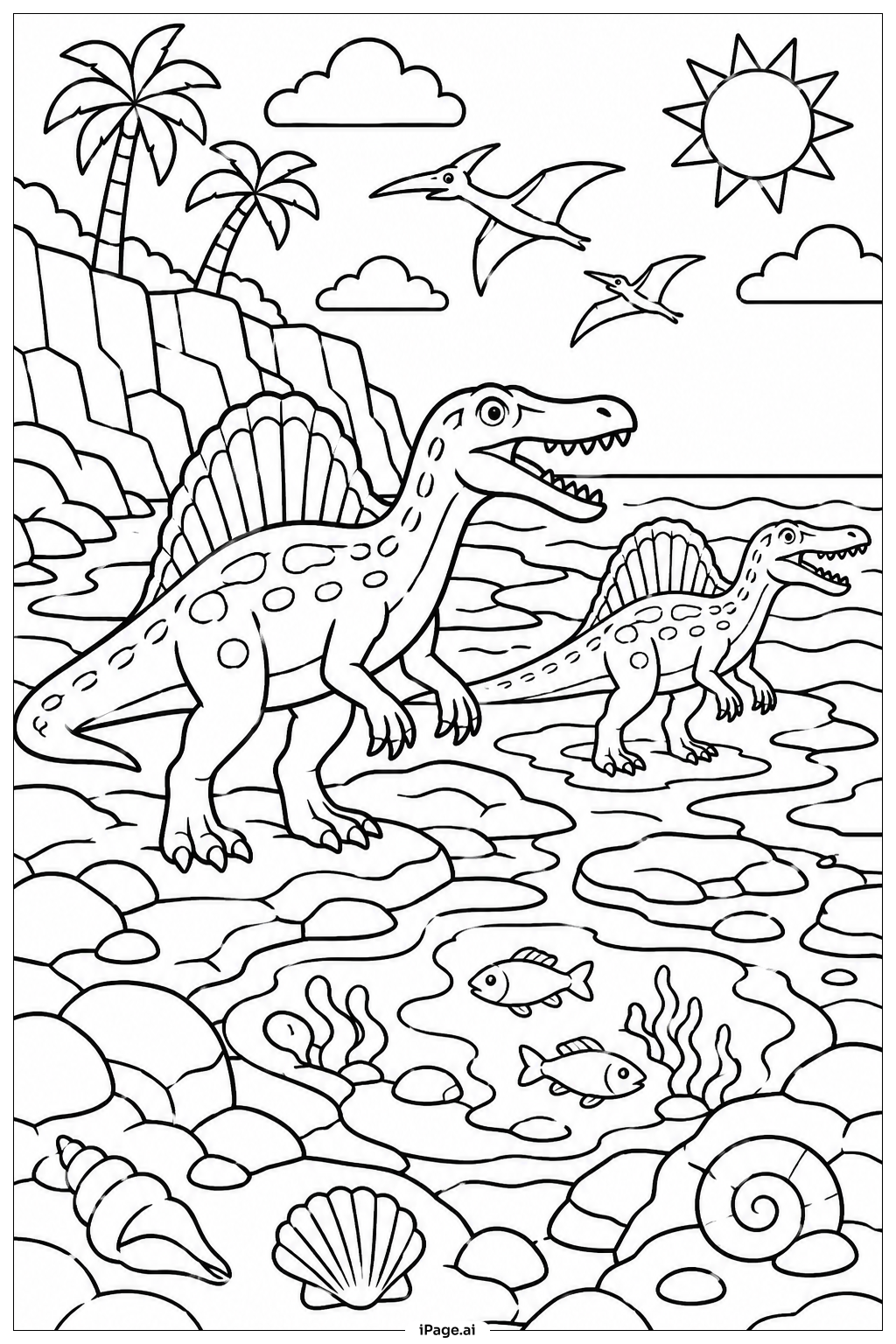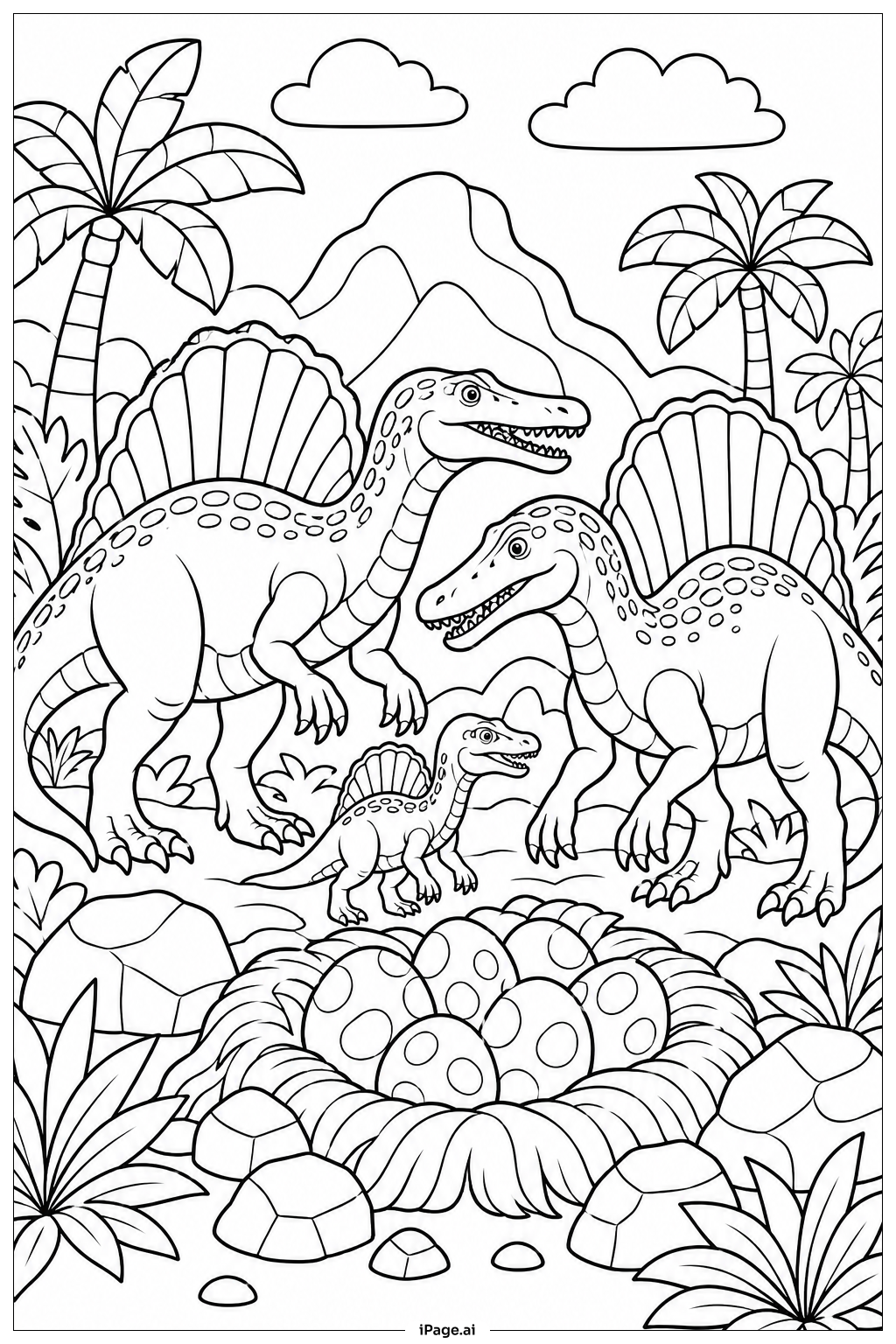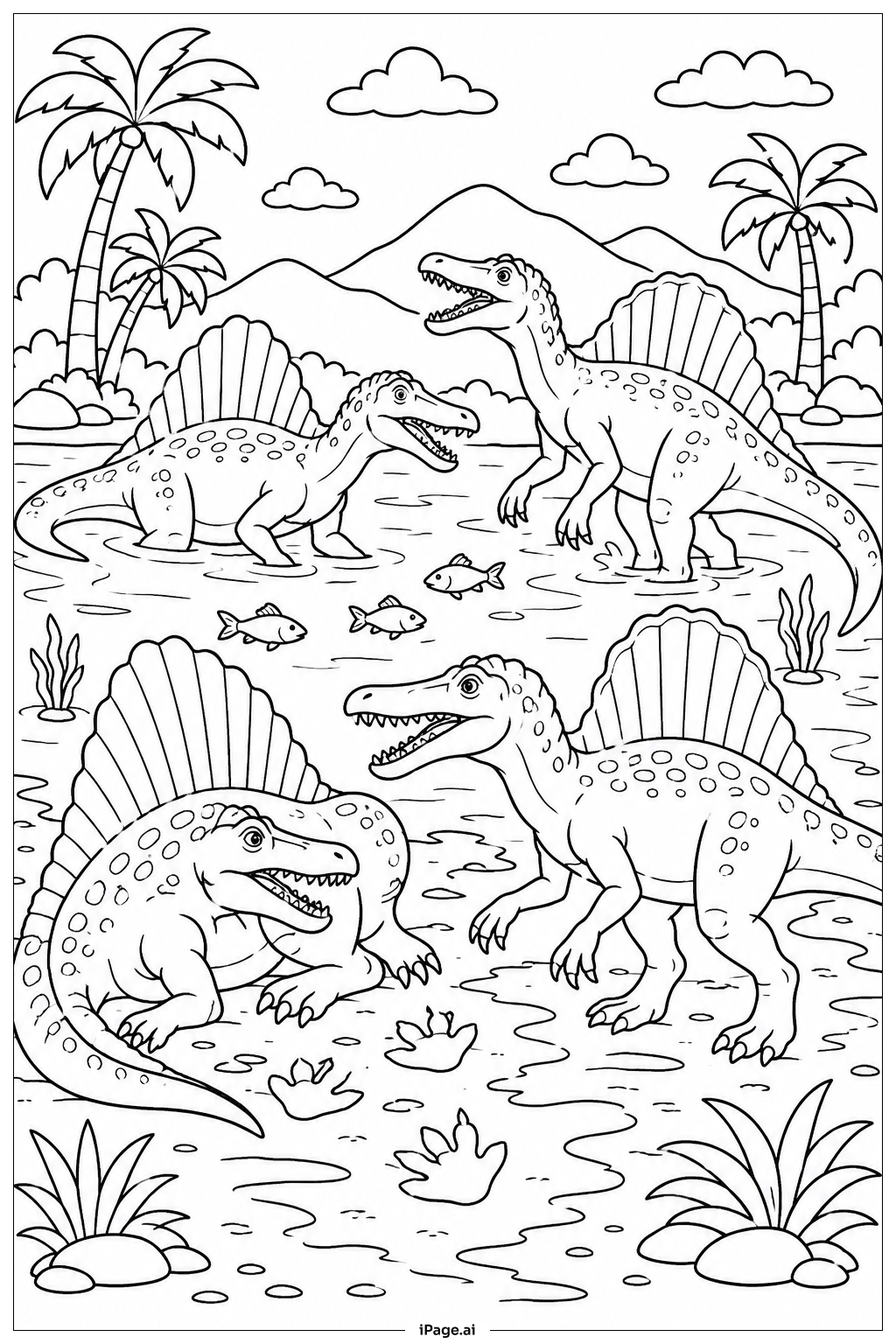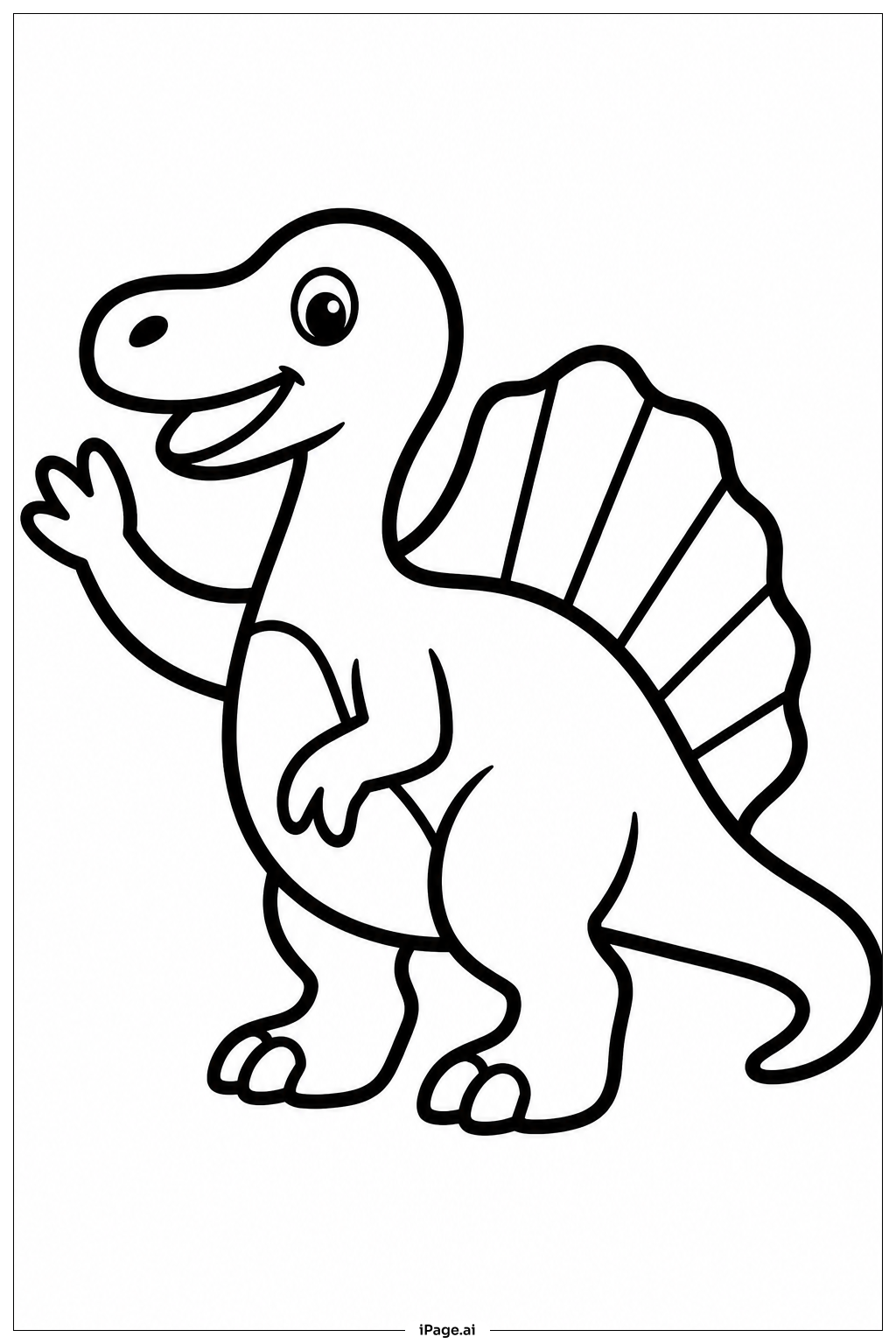
Coloring tips: How to color Spinosaurus Waving coloring page well?
Start with the body of the Spinosaurus. Most Spinosaurus are shown in shades of green, brown, or dark gray, but feel free to get creative. You can use a mix of olive green and sandy brown for the body to give it a natural look. For the tall sail on its back, try a brighter color like orange, red, or purple to make it stand out. Add lighter tones on the belly area to create depth. Use dark brown or black for the claws and teeth. The eyes can be bright yellow or orange to give the dinosaur a lively look. If you want your Spinosaurus to feel extra special, try adding stripes or spots on the body using a darker shade of your main color. There are no rules — this is your dinosaur, so have fun with it!
Coloring challenges: Which parts are difficult to color and need attention for Spinosaurus Waving coloring page?
• The Sail Details: The tall sail along the Spinosaurus's back is one of the trickiest parts to color. It has long, thin spines with a membrane stretched between them. You will need to carefully color each spine and the skin between them, possibly using two different colors to show the difference in texture. A fine-tipped marker or colored pencil works best here to stay within the narrow spaces.
• The Snout and Teeth: The Spinosaurus has a long, crocodile-like snout with visible teeth. Coloring the teeth white or light yellow while keeping the mouth interior a dark pink or red requires careful control. The teeth are small and close together, making it easy to accidentally color over the lines.
• The Clawed Limbs: The small front arms and large hind legs both have curved claws at the tips. These tiny curved shapes are hard to fill in neatly, especially for younger colorists. Take your time and use a sharp pencil or thin marker to stay inside the lines.
• Body Shading and Texture: A large dinosaur body like this looks much more impressive with shading. Adding darker tones along the sides and lighter tones on the belly can make the figure look three-dimensional. Blending colors smoothly without muddy patches takes some practice and patience.
• The Waving Arm: The raised, waving arm is a focal point of the image. Since it overlaps slightly with the body, coloring it in a way that makes it look separate from the torso — without losing the outline — requires careful attention to contrast and color choice.
Benefits of coloring books: Advantages of drawing Spinosaurus Waving coloring page
Coloring this Spinosaurus Waving page offers a wonderful mix of fun and learning for kids and dinosaur lovers of all ages. As you work through the image, you practice fine motor skills by carefully staying within the lines of the sail, claws, and teeth. This kind of detailed work strengthens hand-eye coordination and builds the patience needed for more complex tasks.
Choosing colors for a prehistoric creature also sparks creativity and imagination. Since no one knows exactly what color Spinosaurus really was, there are no wrong answers. This freedom encourages creative thinking and builds confidence in making independent choices.
For younger children, the friendly, waving pose makes the image approachable and fun rather than scary. It helps them feel comfortable with dinosaur themes while developing a natural curiosity about prehistoric life.
For older kids, focusing on realistic shading and texture in the sail and body provides a satisfying artistic challenge. It teaches basic concepts of light and shadow in a relaxed, pressure-free setting.
Overall, this page turns screen-free time into a calm, engaging activity that supports focus, reduces stress, and leaves colorists with a finished piece they can be proud of.