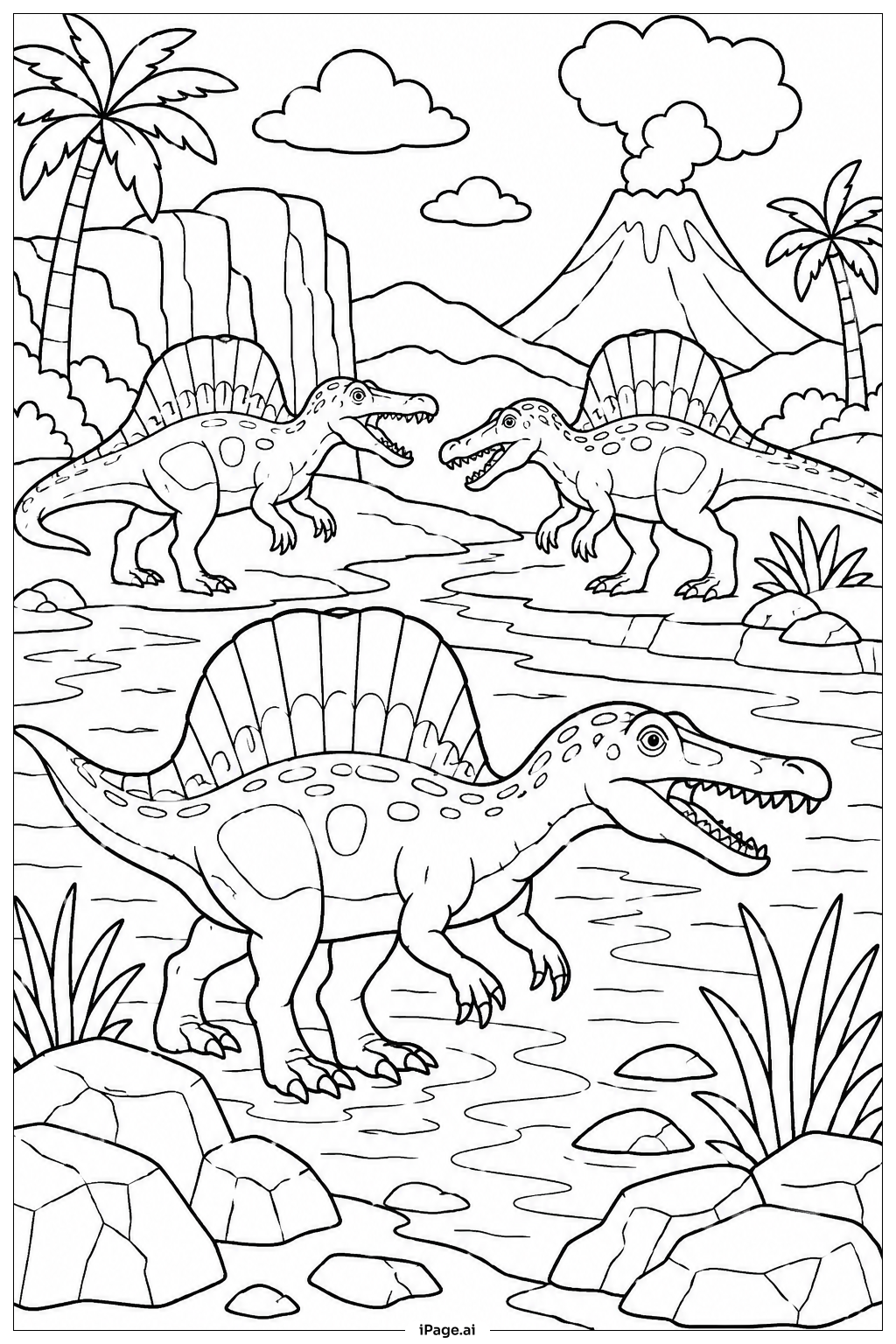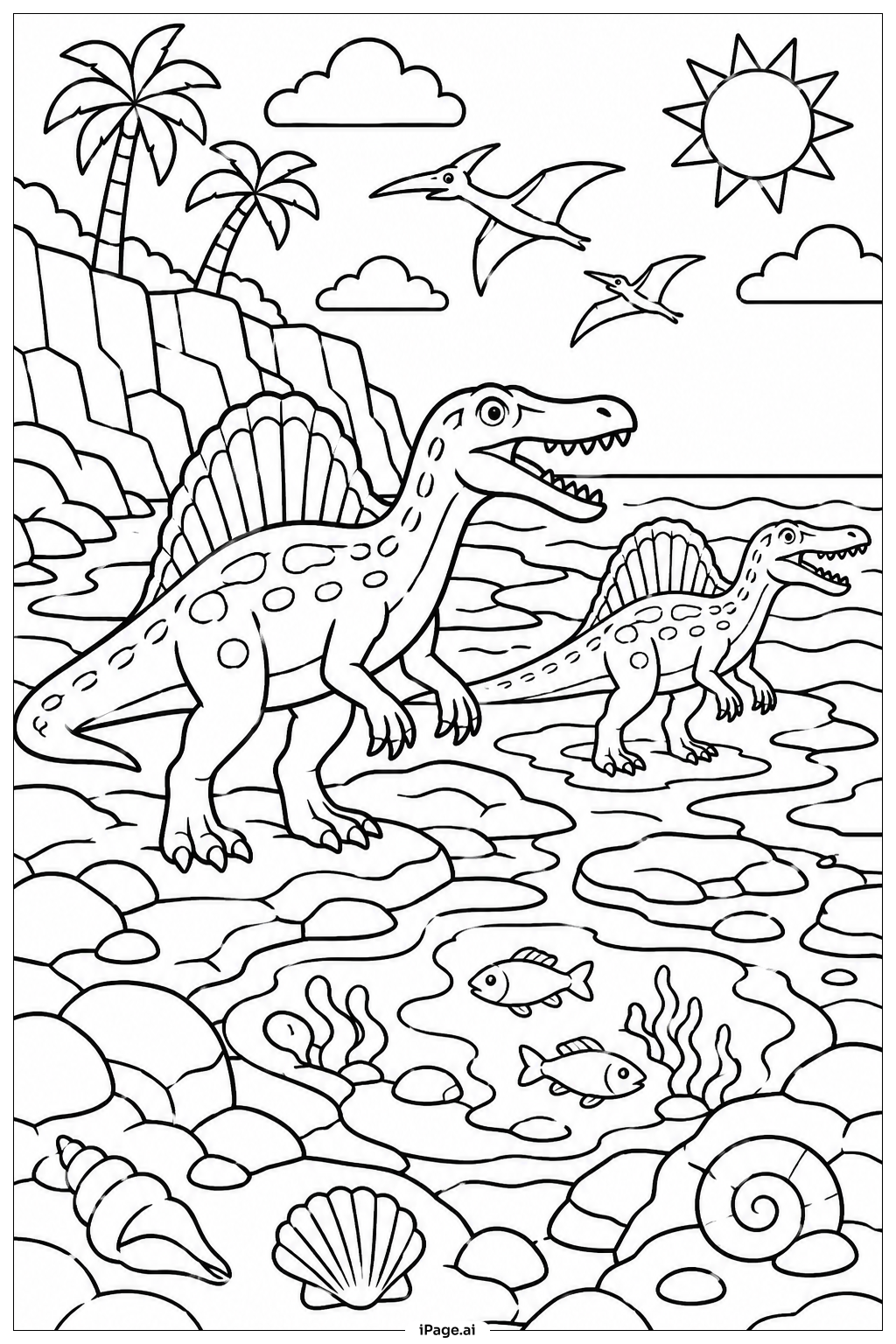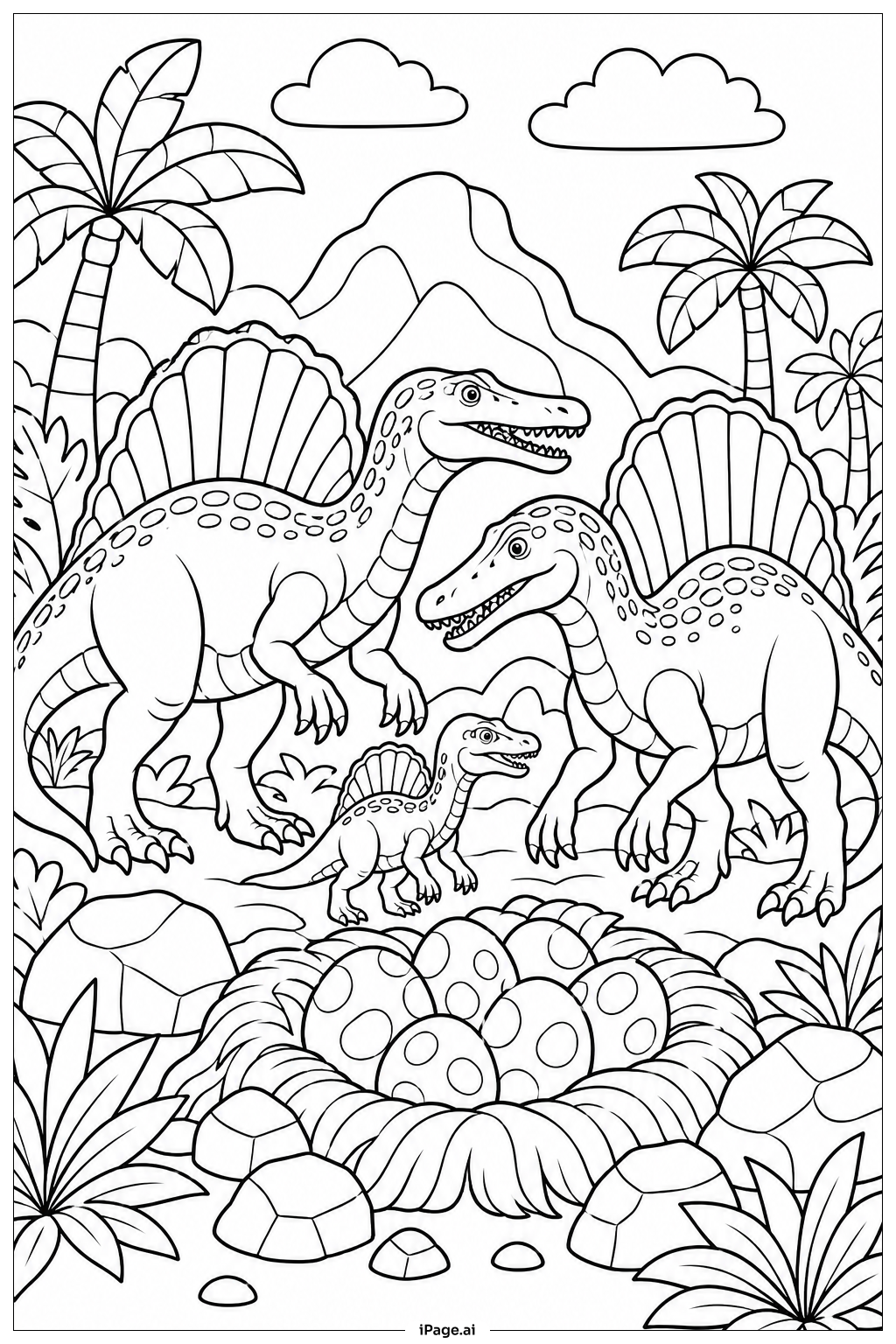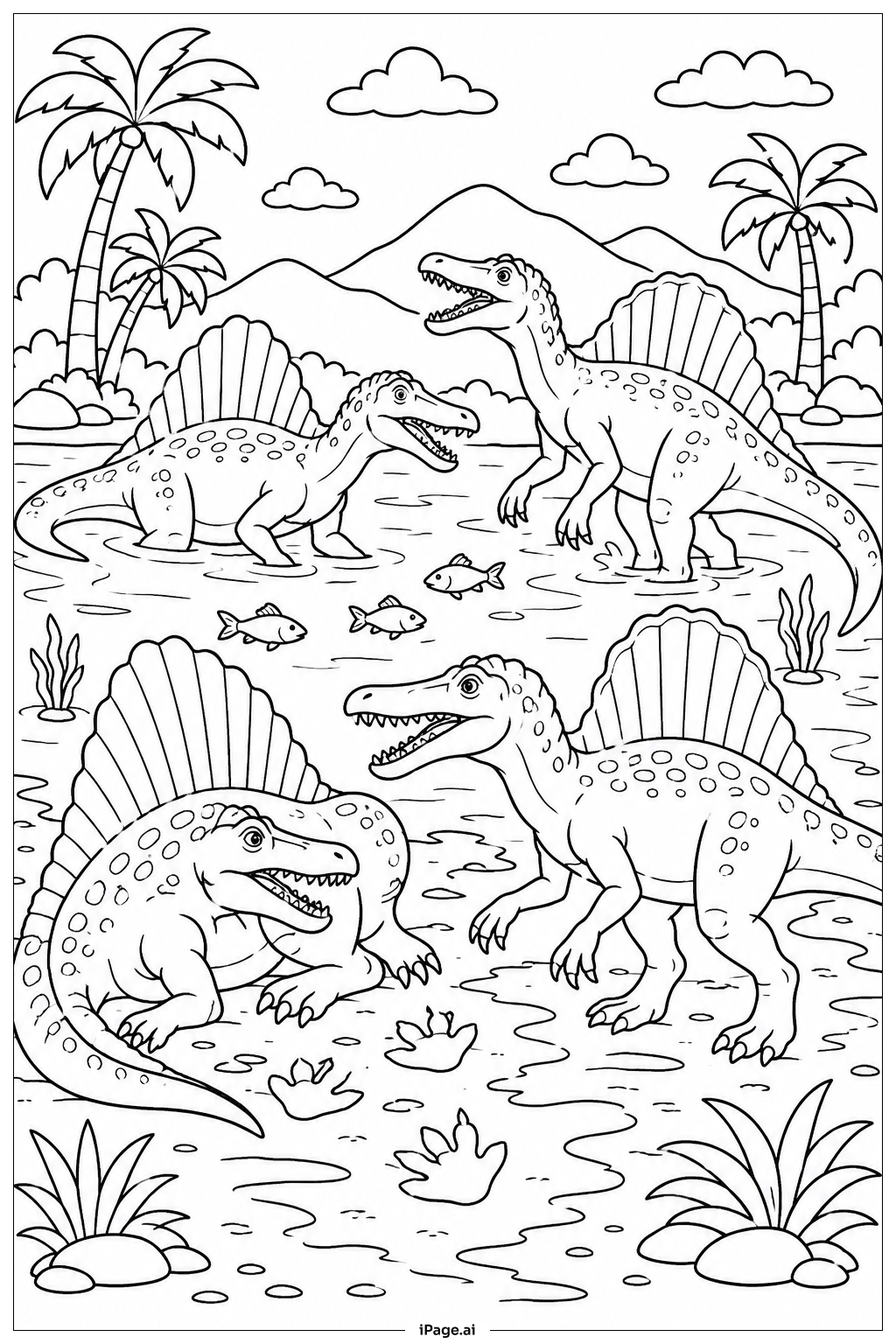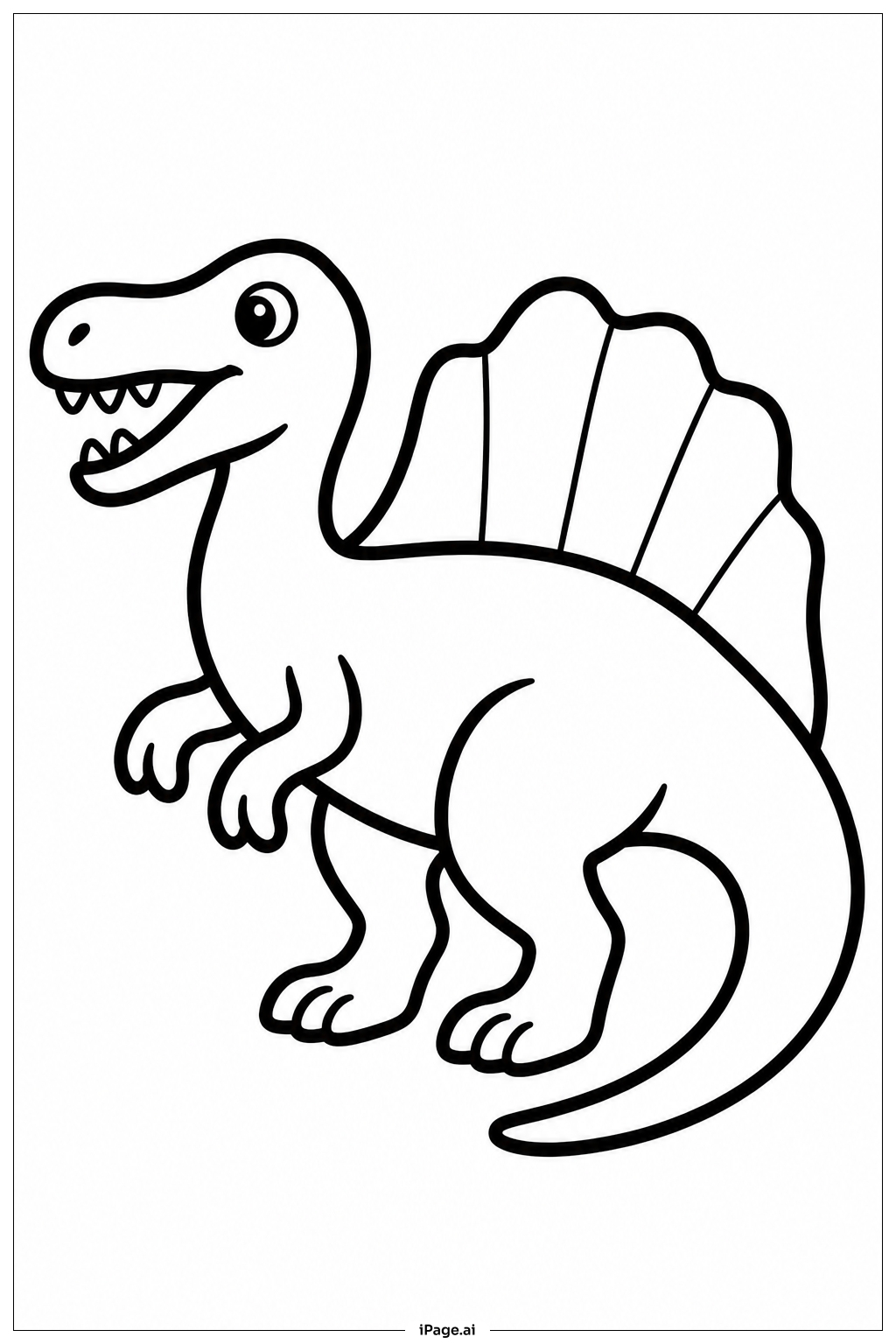
Coloring tips: How to color Spinosaurus Tail Swing coloring page well?
Start with the body of the Spinosaurus using earthy tones like olive green, dark brown, or sandy tan. These colors feel natural for a dinosaur that lived near rivers and swamps. For the sail along the back, try something bold — orange, red, or even a gradient from yellow at the base to deep purple at the tips. This makes the sail pop and look exciting. Use a slightly darker shade of your base color to add shading along the belly, under the arms, and beneath the tail to give the body a rounded, three-dimensional look. The tail can be colored the same as the body but with added shadows along the curve to show movement. Add subtle dark stripes or spots across the back for extra texture. Use a light gray or white for the claws and teeth to make them stand out. For the ground, try dry brown dirt or rocky gray to match the prehistoric setting. Do not be afraid to mix colors and experiment — there is no wrong way to bring this dinosaur to life!
Coloring challenges: Which parts are difficult to color and need attention for Spinosaurus Tail Swing coloring page?
• Sail Spine Complexity: The tall spines running along the Spinosaurus's back form one of the most visually striking features, but they are also tricky to color. Each spine is thin and elongated, and the webbed skin between them needs careful attention. Staying inside the narrow spaces without smudging onto neighboring spines requires a fine-tipped tool and a steady hand, especially for younger colorists.\n\n• Tail Motion and Shading: The sweeping arc of the tail is meant to show movement, but capturing that sense of motion with color takes skill. Adding gradual shading from light on the raised outer curve to dark on the inner curve helps the tail look dynamic rather than flat. Blending two or more tones smoothly in a curved shape can be challenging for beginners.\n\n• Scale Texture Across the Body: The Spinosaurus is covered in scales of varying sizes. Coloring each scale individually to add depth would be time-consuming but rewarding. Even just adding darker outlines or shadows around groups of scales can take patience and precision, particularly across the wide surface of the back and sides.\n\n• Limb Proportions and Overlap: The front arms of Spinosaurus are notably smaller than its powerful hind legs. Where limbs overlap or cross the body outline, it can be easy to lose track of which area belongs to which body part. Careful attention to boundaries is needed to avoid muddy or confusing color zones.\n\n• Balancing the Overall Color Scheme: With so many distinct regions — the sail, body, tail, claws, and ground — keeping the full image visually balanced without one area overpowering the rest requires planning. Choosing a cohesive palette before starting helps avoid a clashing or chaotic final result.
Benefits of coloring books: Advantages of drawing Spinosaurus Tail Swing coloring page
Coloring this Spinosaurus Tail Swing page offers a wonderful mix of fun, learning, and creative development for kids and dinosaur fans of all ages. Here are some of the key benefits:\n\nFirst, it builds fine motor skills. Coloring within the detailed outlines of the scales, sail spines, and curved tail helps children develop hand-eye coordination and pencil control, which are important foundations for writing and drawing.\n\nSecond, it sparks curiosity about science and nature. Spinosaurus is one of the largest carnivorous dinosaurs ever discovered. Engaging with its image naturally encourages kids to ask questions about paleontology, prehistoric life, and how these amazing creatures lived millions of years ago.\n\nThird, it encourages creative thinking. Choosing colors for a dinosaur that no one has ever seen in real life gives children full creative freedom. There are no rules — this builds confidence and imagination.\n\nFourth, it promotes focus and patience. Completing a detailed image like this one requires sustained attention, which helps children practice staying on task in a low-pressure, enjoyable way.\n\nFinally, it provides a calming activity. The repetitive, gentle motion of coloring is known to reduce stress and anxiety in both children and adults, making this page a great quiet-time activity for the whole family.