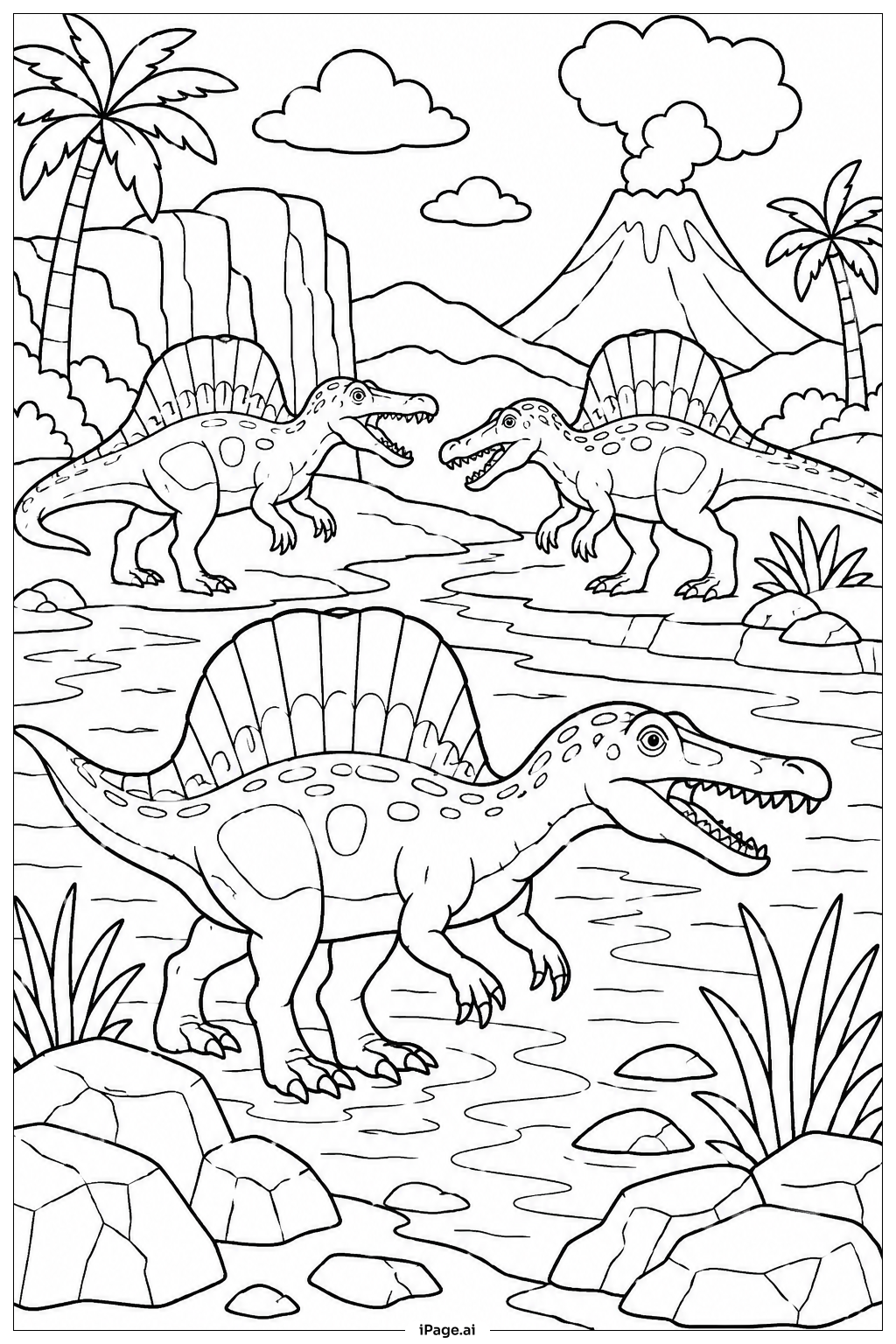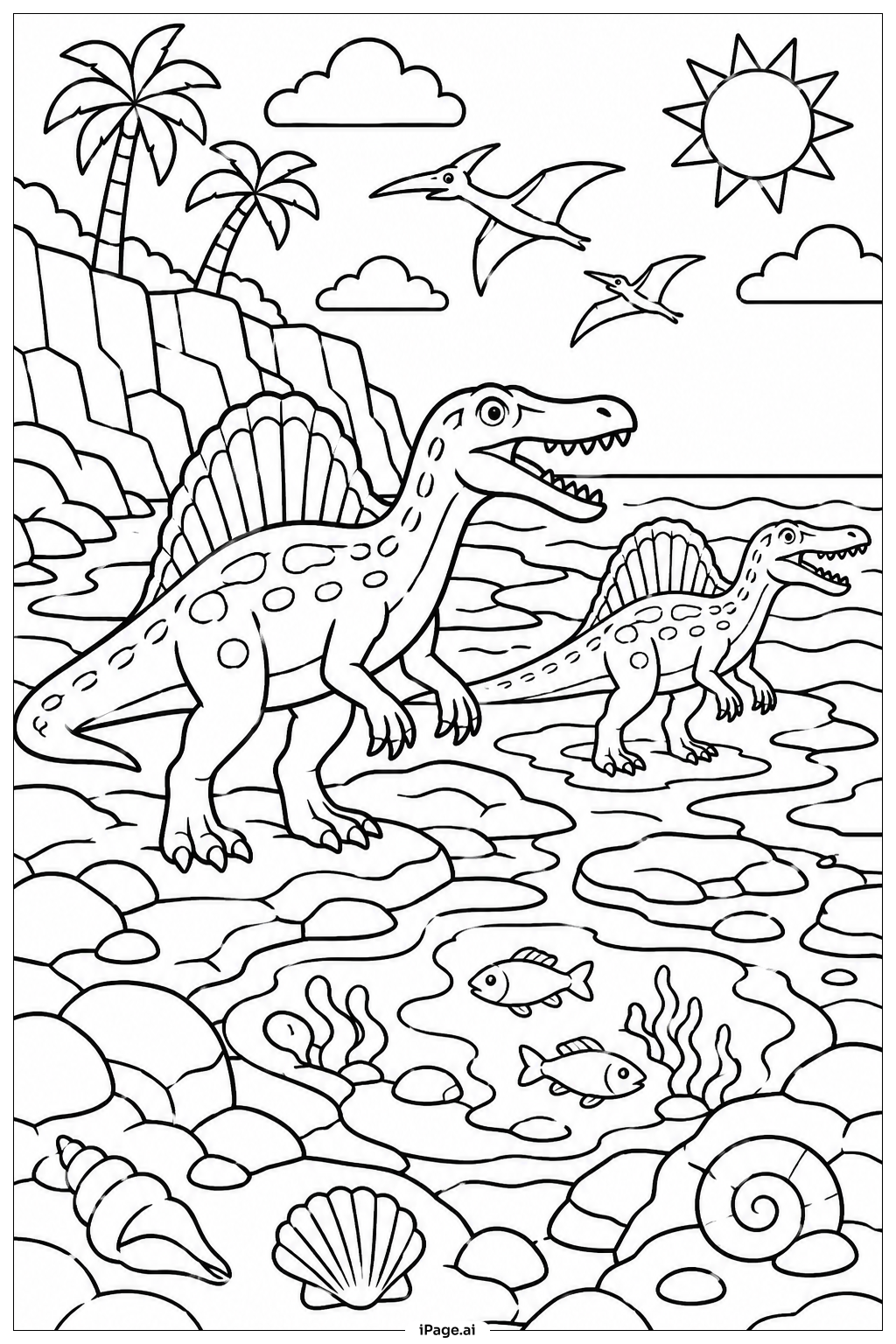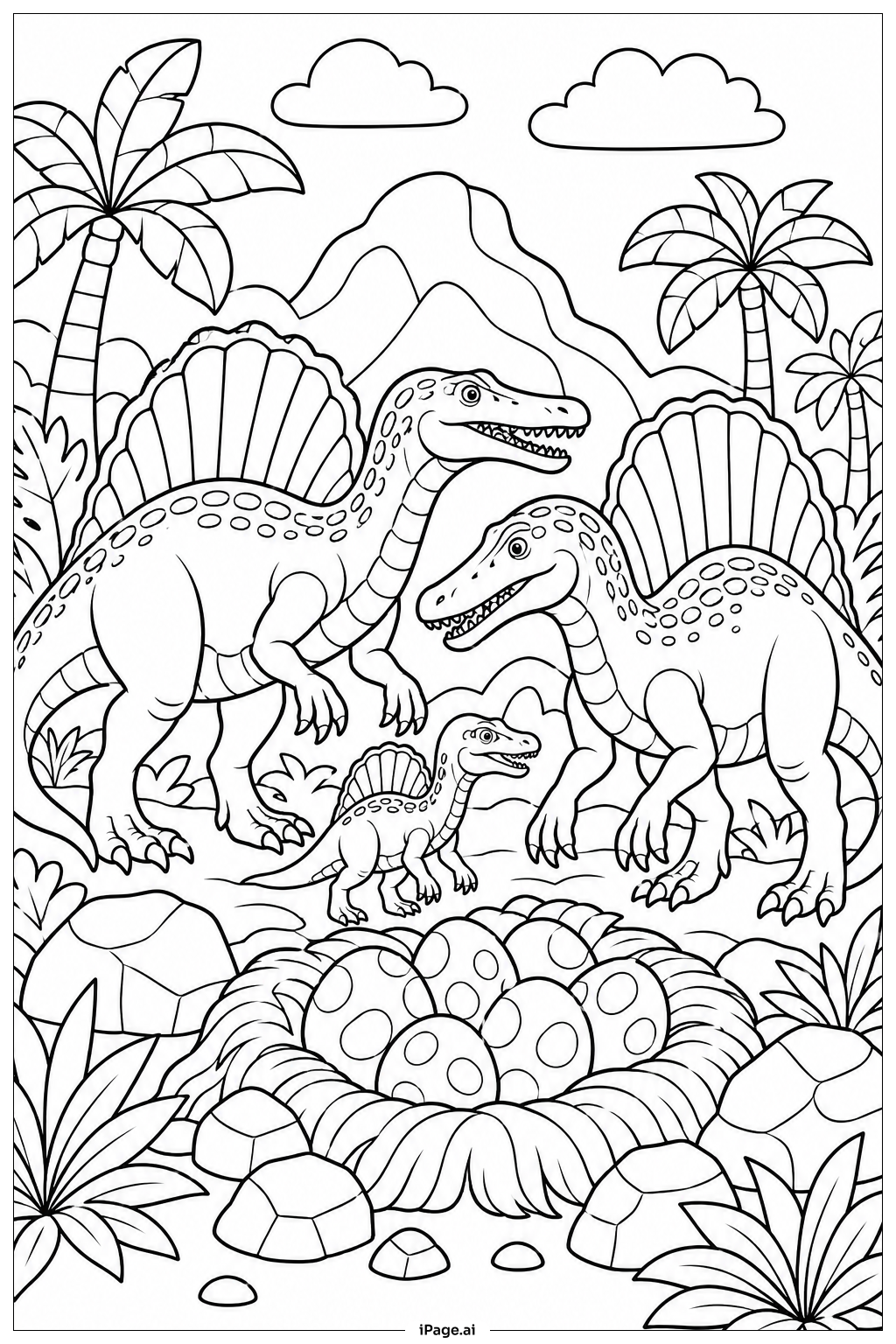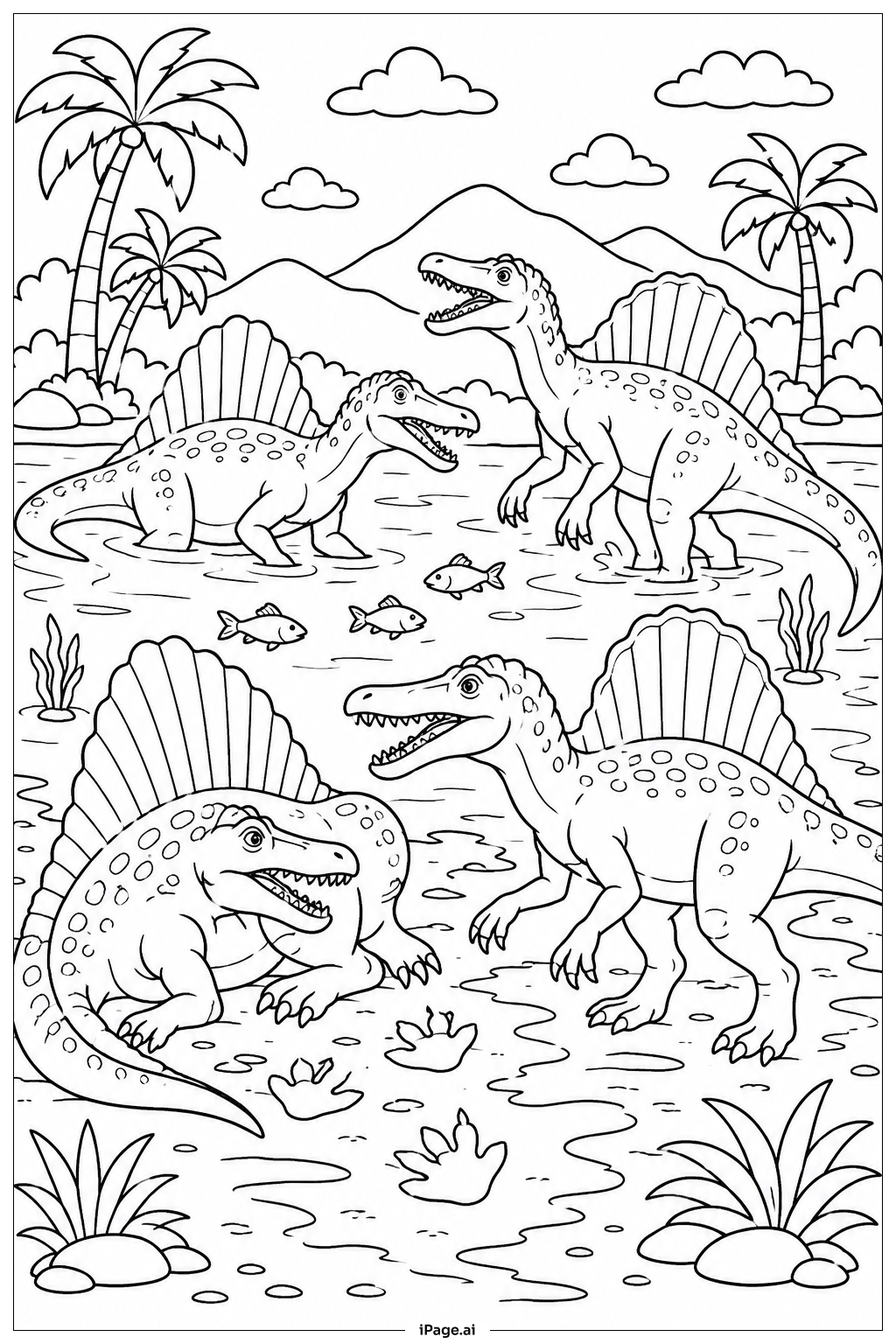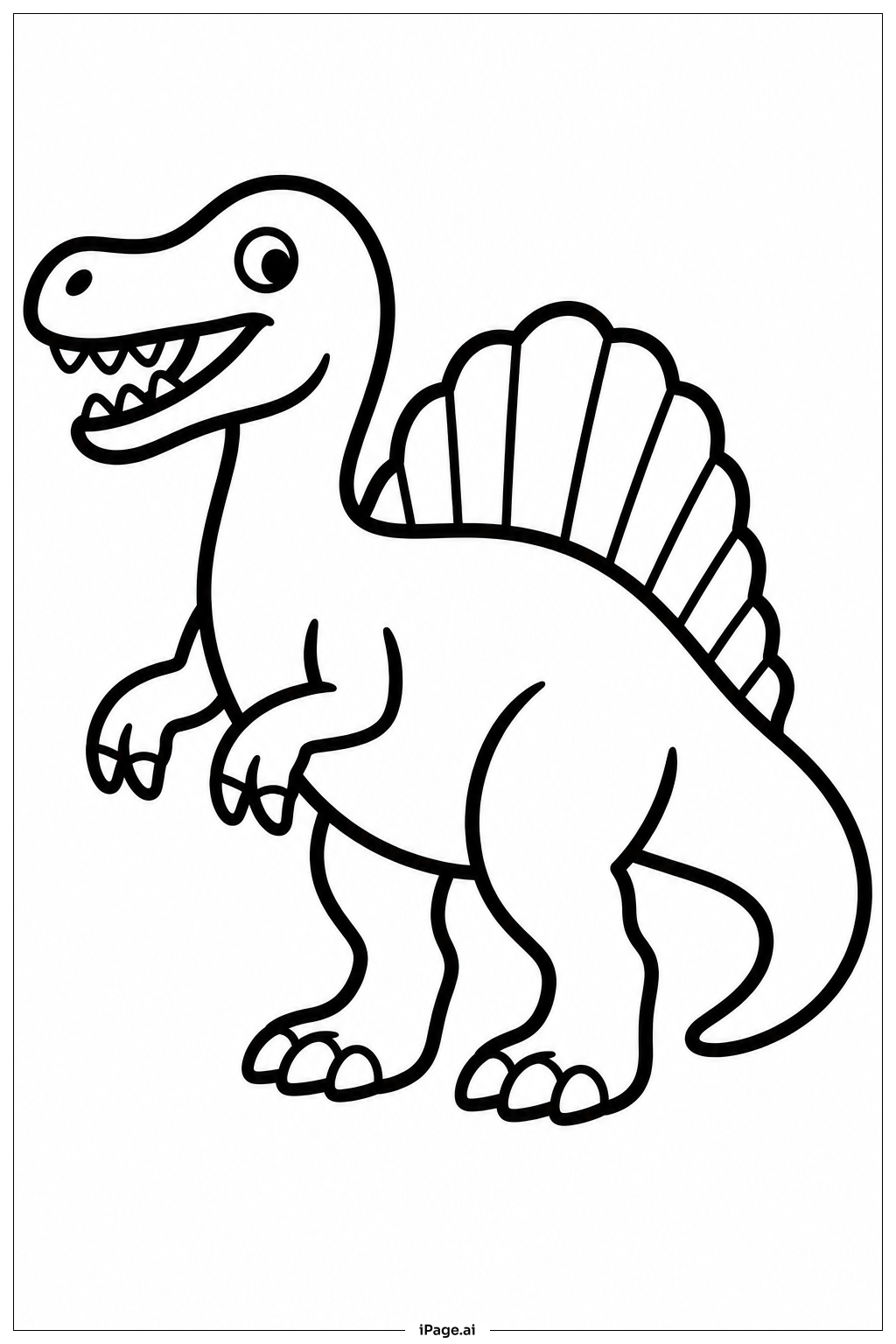
Coloring tips: How to color Spinosaurus Standing coloring page well?
Start with the body of the Spinosaurus. Most scientists believe Spinosaurus had brownish, greenish, or grayish tones to blend into its swampy habitat. Try a dark olive green or muddy brown for the main body. Use a slightly lighter shade on the belly area to create a natural contrast. The sail on its back is a great place to get creative. You can color it with warm reds, oranges, or purples to make it stand out. Add thin lines of a darker shade along each spine for depth. For the claws and teeth, use off-white or pale yellow. The eyes can be bright yellow or amber to give the dinosaur a fierce, lifelike look. Don't be afraid to mix colors and add shading along the sides of the body to give it a three-dimensional feel. Have fun with it!
Coloring challenges: Which parts are difficult to color and need attention for Spinosaurus Standing coloring page?
• Sail Membrane Details: The large sail on the Spinosaurus's back contains multiple long spines with a thin membrane stretched between them. Coloring each spine individually while keeping the membrane a different but complementary shade requires a steady hand and careful attention. Using a fine-tipped tool for the spines before filling in the membrane helps avoid color bleeding between sections.
• Body Scale Texture: The skin of the Spinosaurus is covered in small, overlapping scales. Trying to shade or color each scale individually can be time-consuming. A good technique is to apply a base color first, then use a slightly darker shade in circular or diagonal strokes to suggest texture without coloring every single scale.
• Long Snout and Teeth: The elongated, crocodile-like jaw contains many small, pointed teeth. The narrow spaces between each tooth make it tricky to color them cleanly without smudging into the gum line or jaw. Using a very fine marker or a sharpened pencil tip works best for this area.
• Belly and Underbody Contrast: Creating a natural gradient from the darker back and sides to a lighter belly is a common challenge. Blending two or more shades smoothly without creating harsh lines takes practice. Colored pencils work well here, as they allow for gentle layering and blending.
• Claws and Small Limb Details: The front arms are short but have visible curved claws. These small areas are easy to overlook but add realism when colored carefully. Use a darker tone for the claw tips and a lighter base for the rest to give them a sharp, defined appearance.
Benefits of coloring books: Advantages of drawing Spinosaurus Standing coloring page
Coloring this Spinosaurus Standing page offers a range of great benefits for kids and dinosaur fans of all ages. First, it helps build fine motor skills. Carefully staying within the lines of scales, teeth, and the detailed sail trains hand control and pencil grip, which supports everyday writing skills. Second, it encourages creativity. Choosing colors for a prehistoric creature that no one has ever seen in real life gives kids the freedom to imagine and experiment without any wrong answers. Third, it sparks curiosity about science and natural history. While coloring, children often ask questions about what Spinosaurus really looked like, what it ate, and where it lived, turning a fun activity into a learning moment. Fourth, it promotes focus and patience. A detailed image like this one requires sitting quietly and working through each section step by step, which helps build concentration. Finally, finishing a coloring page gives a real sense of accomplishment, boosting confidence and encouraging kids to take on more creative challenges. It is a simple, screen-free activity that is both calming and rewarding.