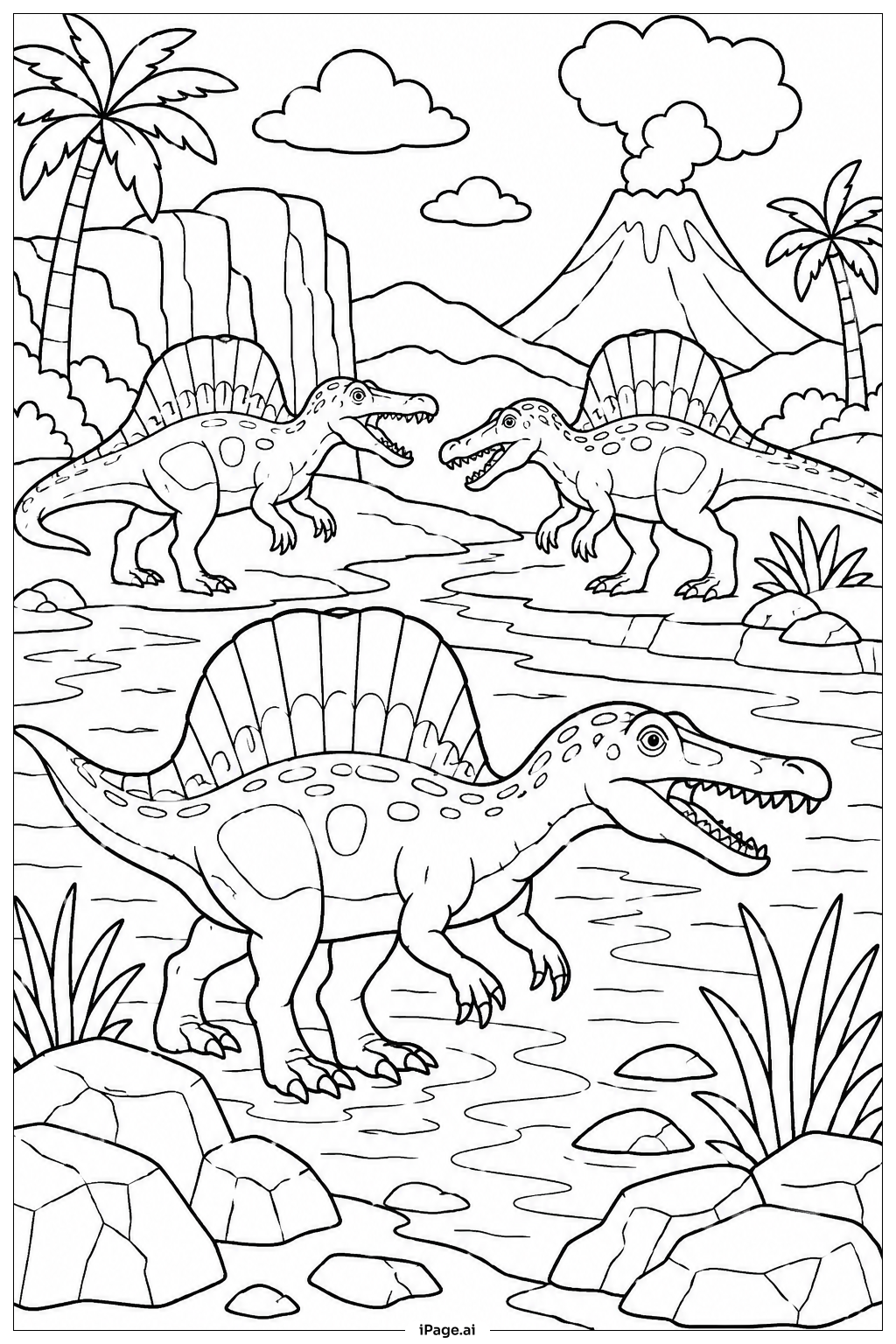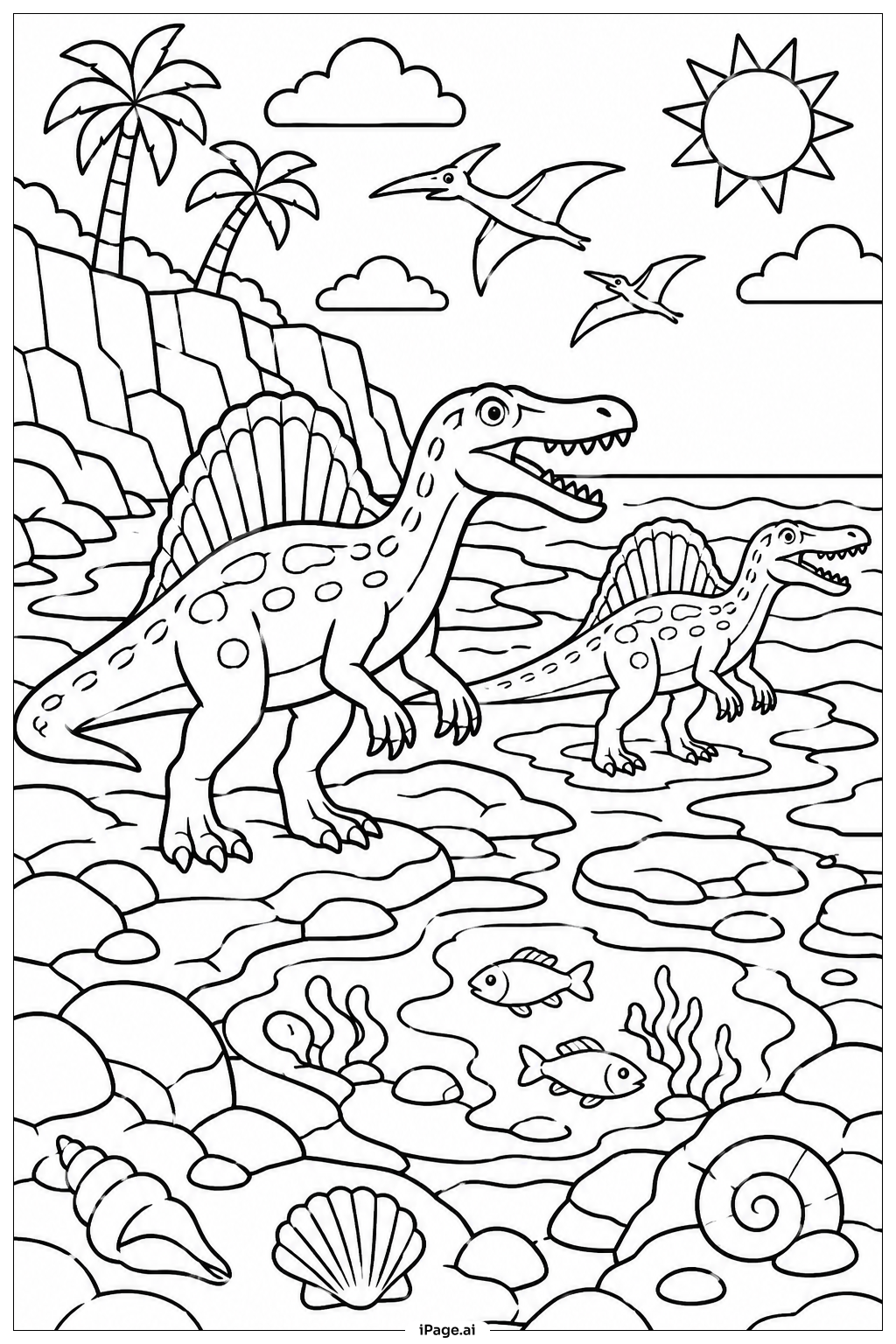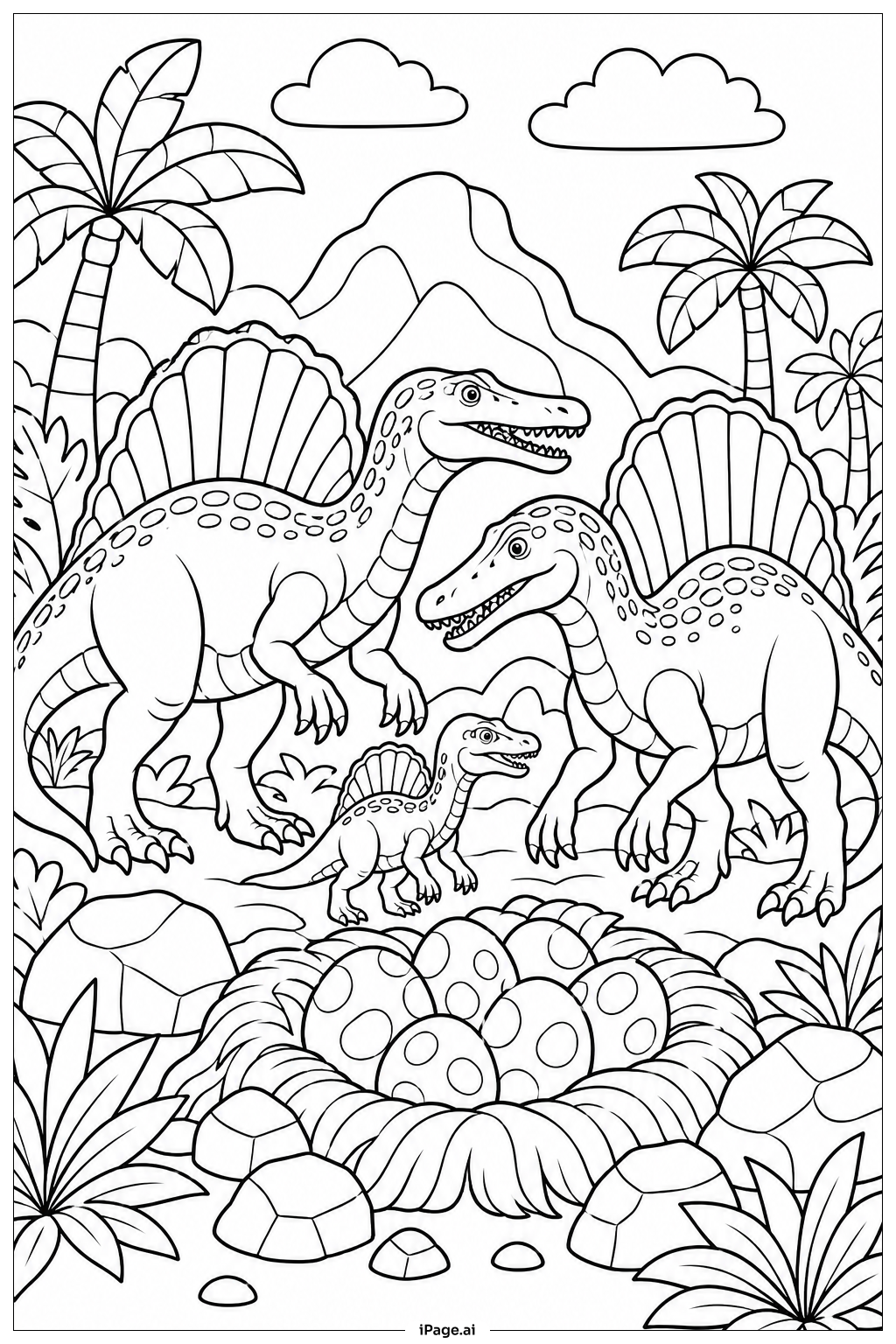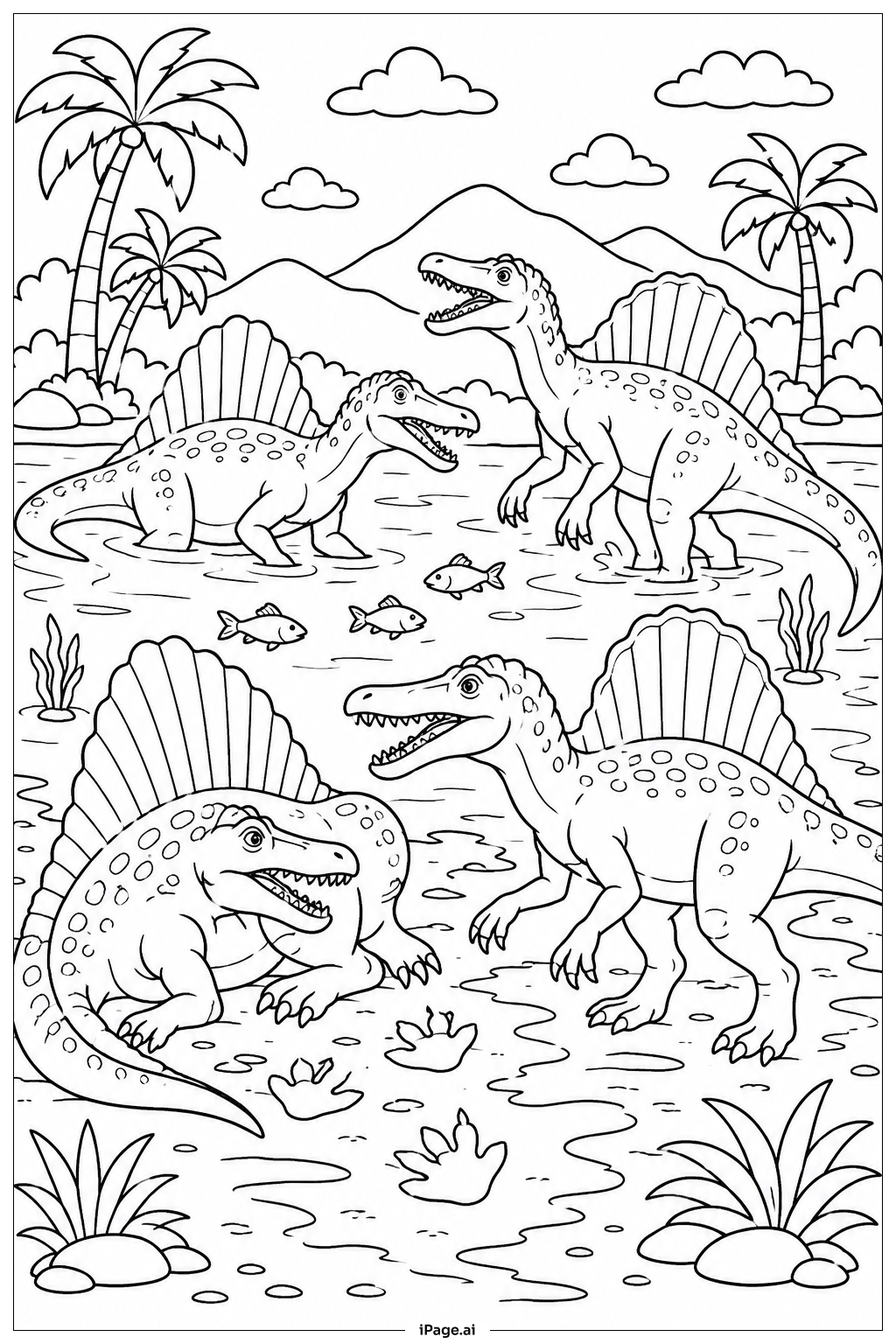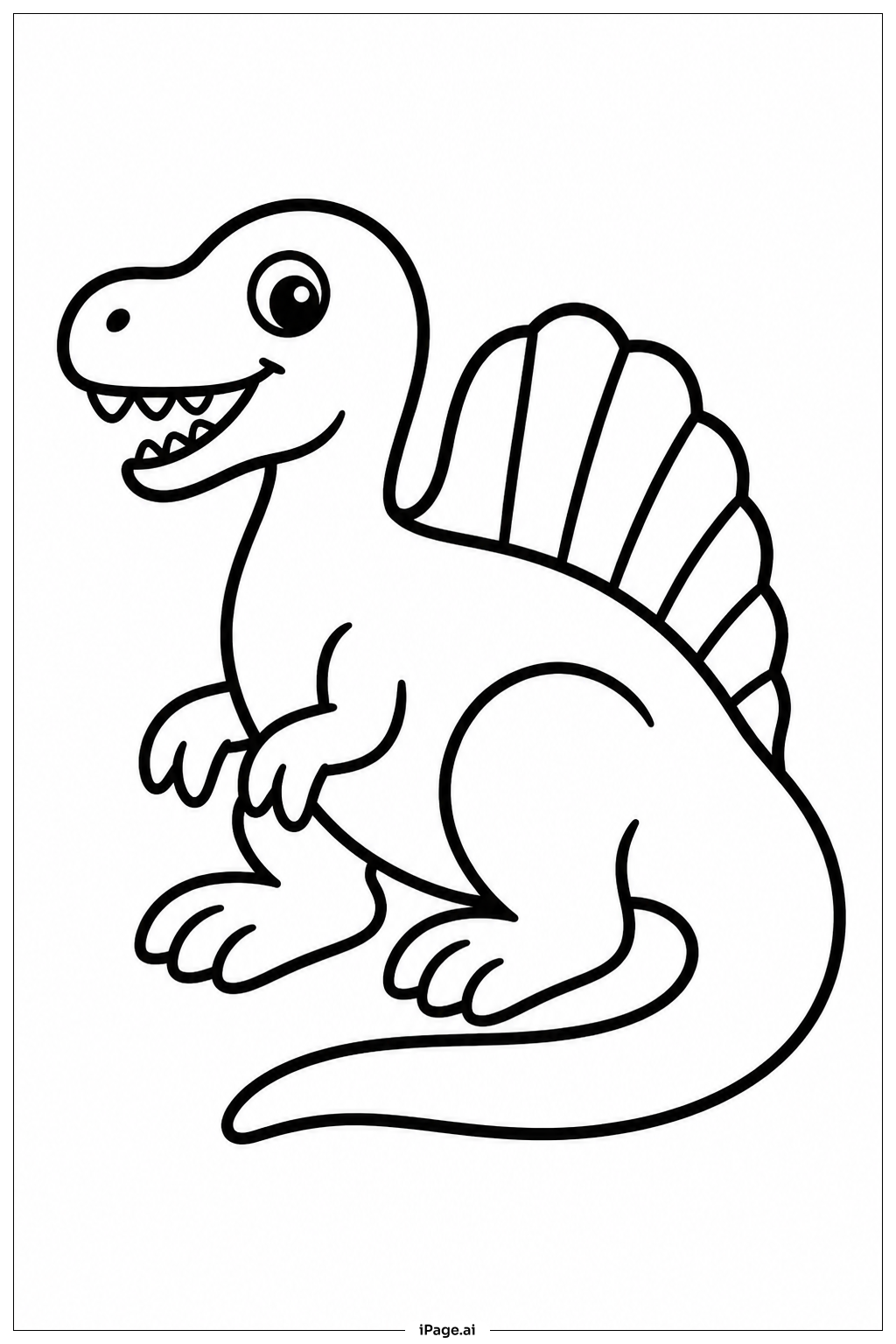
Coloring tips: How to color Spinosaurus Sitting coloring page well?
For this Spinosaurus Sitting image, consider using earthy colors like different shades of green, brown, and grey for the body and tail to bring out a natural dinosaur look. You can make the tall sail colorful by using reds, oranges, or yellows to highlight its importance and make it eye-catching. Don't forget to color the claws a darker shade like black or deep brown to show sharpness. The background plants and rocks can be various greens and greys to create a prehistoric environment. Feel free to use your imagination and experiment with bright or subtle tones to make your Spinosaurus unique and lively.
Coloring challenges: Which parts are difficult to color and need attention for Spinosaurus Sitting coloring page?
• Sail Details: The tall sail on the Spinosaurus’s back has many lines and textures that might be tricky to color evenly, requiring careful attention to keep the shading consistent. • Scales and Texture: The dinosaur’s skin shows many small scale patterns and bumps which demand patience and fine coloring skills to fill without going outside the lines. • Claws and Teeth: These small, sharp elements need careful coloring with fine strokes to highlight their shape without over coloring surrounding areas. • Background Elements: The rocks and plants in the background have irregular shapes and overlapping lines that may challenge younger children in staying within the lines. • Large Space Coverage: The overall large body area requires endurance to maintain creativity and focus throughout coloring the whole Spinosaurus without rushing.
Benefits of coloring books: Advantages of drawing Spinosaurus Sitting coloring page
Coloring this Spinosaurus Sitting image helps improve hand-eye coordination and fine motor skills as children learn to color inside detailed spaces like the scales and claws. It encourages creativity by allowing them to choose different color combinations for both the dinosaur and the background. This activity can also enhance patience and concentration, especially when working on the intricate sail and textured skin. Moreover, it introduces young learners to prehistoric life, sparking curiosity about dinosaurs and nature. The finished picture provides a sense of accomplishment and can boost confidence in artistic abilities, making it both fun and educational.