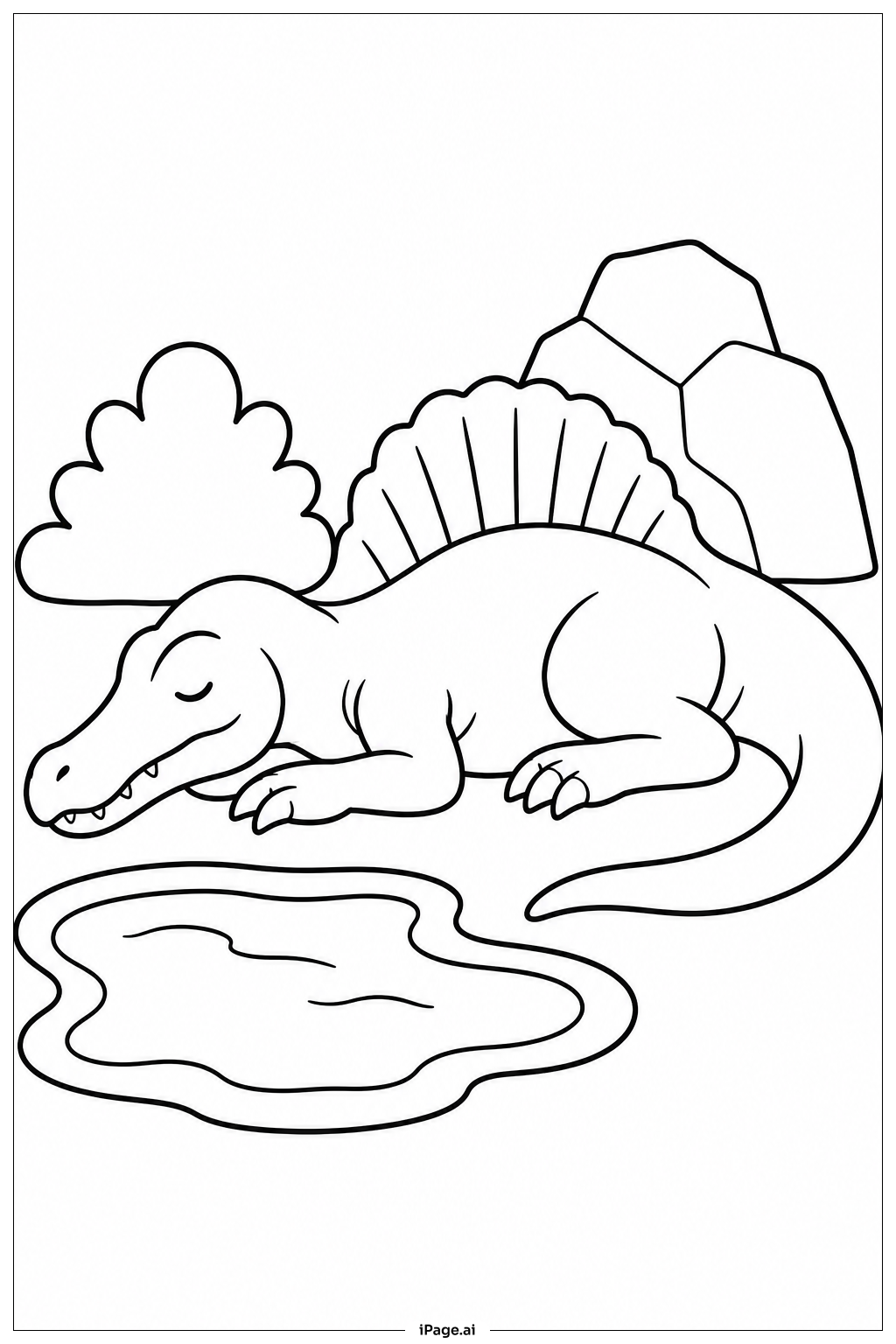
Coloring tips: How to color Spinosaurus Napping By Water coloring page well?
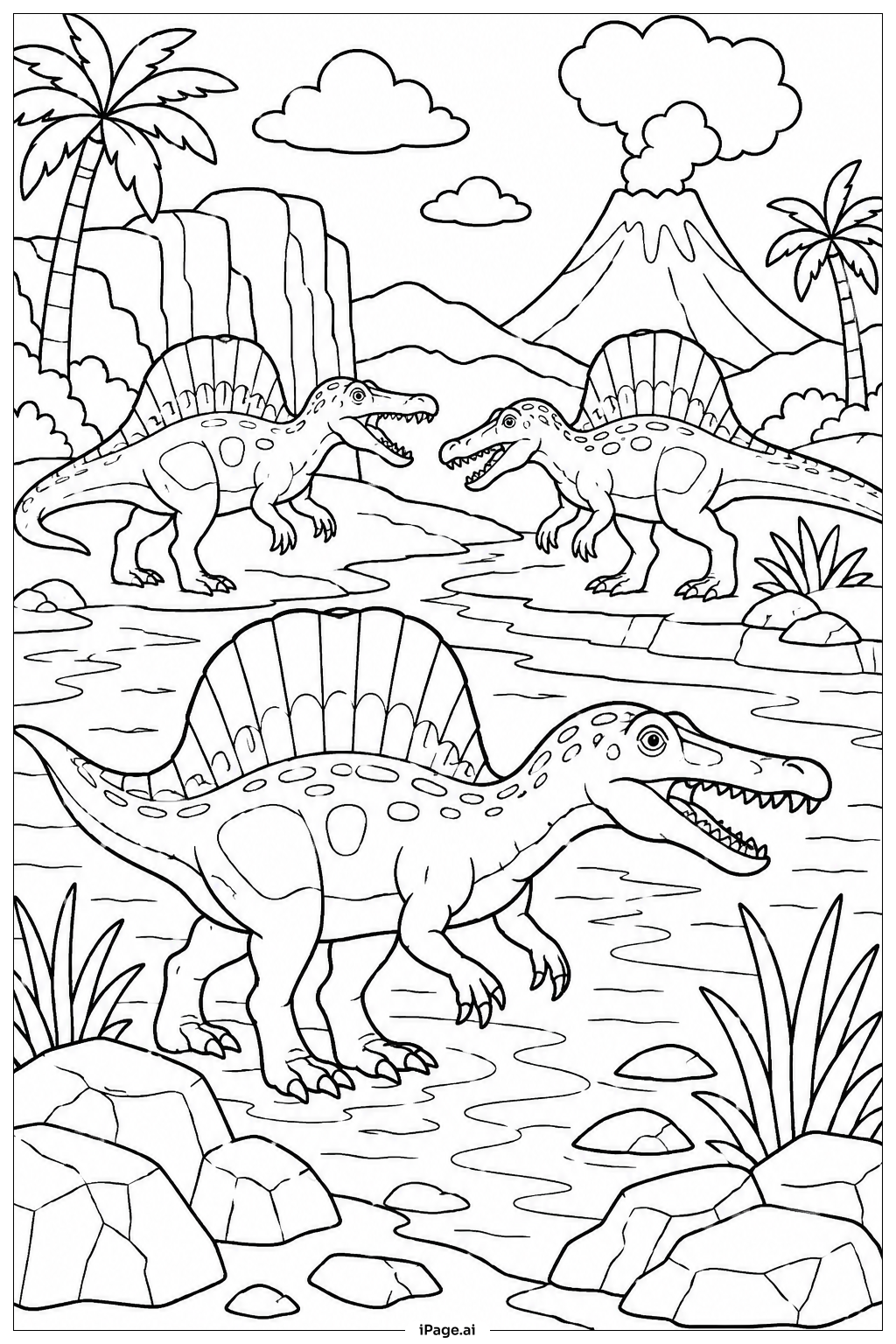
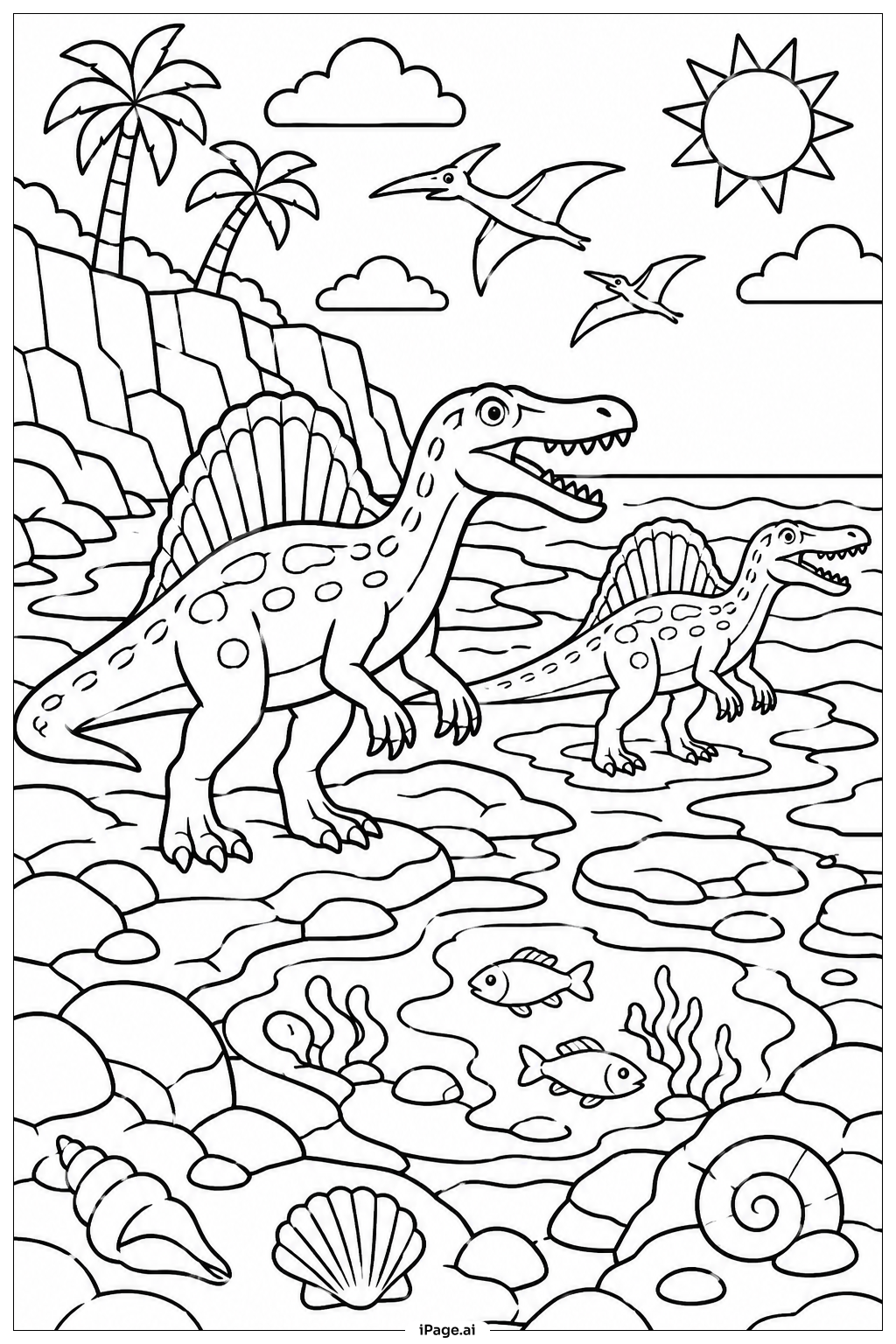
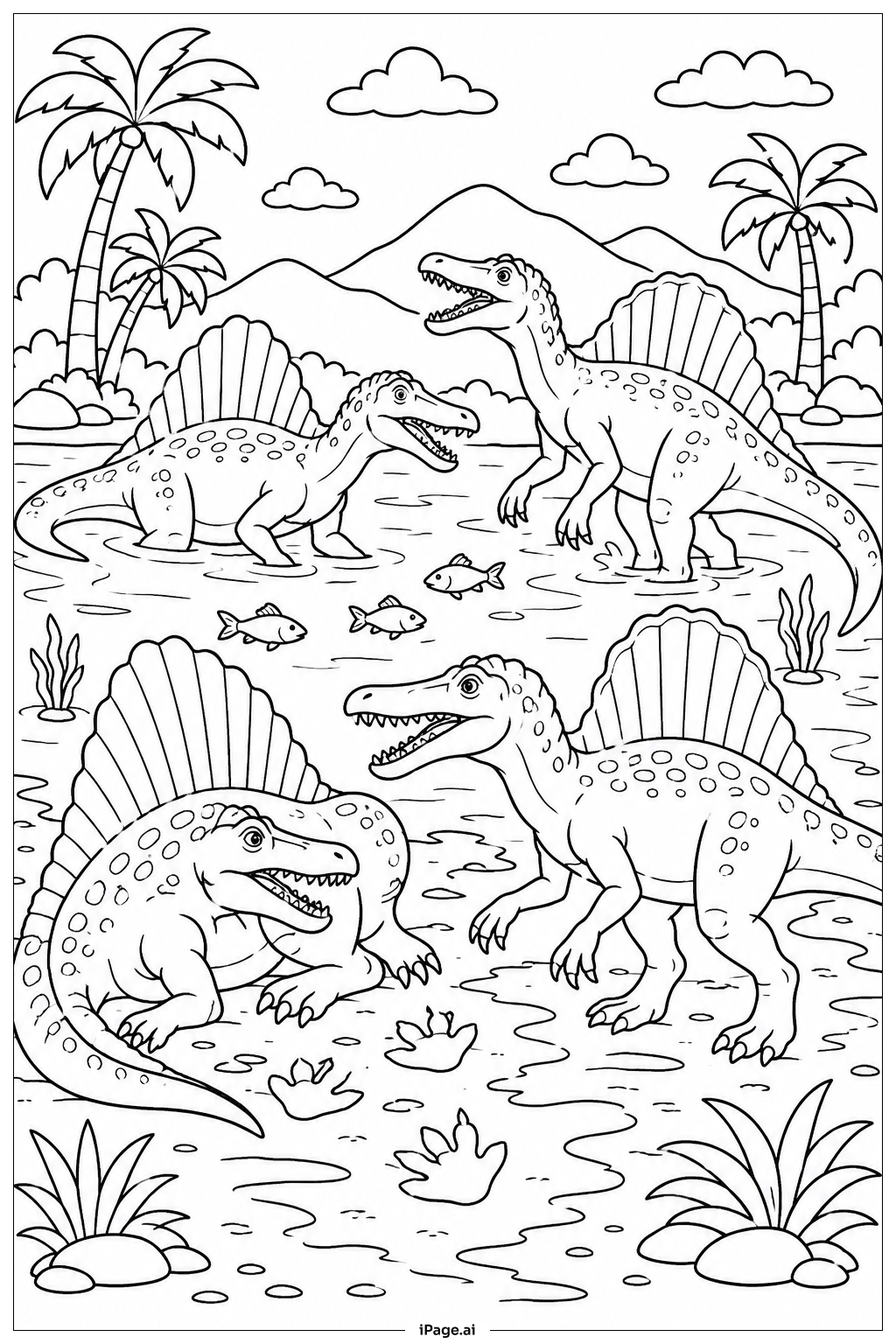
Start with the Spinosaurus's body using shades of green, olive, or brown to give it a natural prehistoric look. You can add darker stripes or spots along the back and sides to make it more realistic or fun. The tall sail on its back is a great place to experiment — try blending orange, red, and yellow to make it stand out. Use light blue or blue-green for the water, adding slightly darker tones to show ripples and depth. Color the reeds and plants in different shades of green and yellow-green. Rocks can be gray or tan with a few darker shadows. For the background, soft greens and pale blues work well for trees and sky. Feel free to use your imagination and pick colors you love — there are no wrong choices when it comes to coloring!
Coloring challenges: Which parts are difficult to color and need attention for Spinosaurus Napping By Water coloring page?
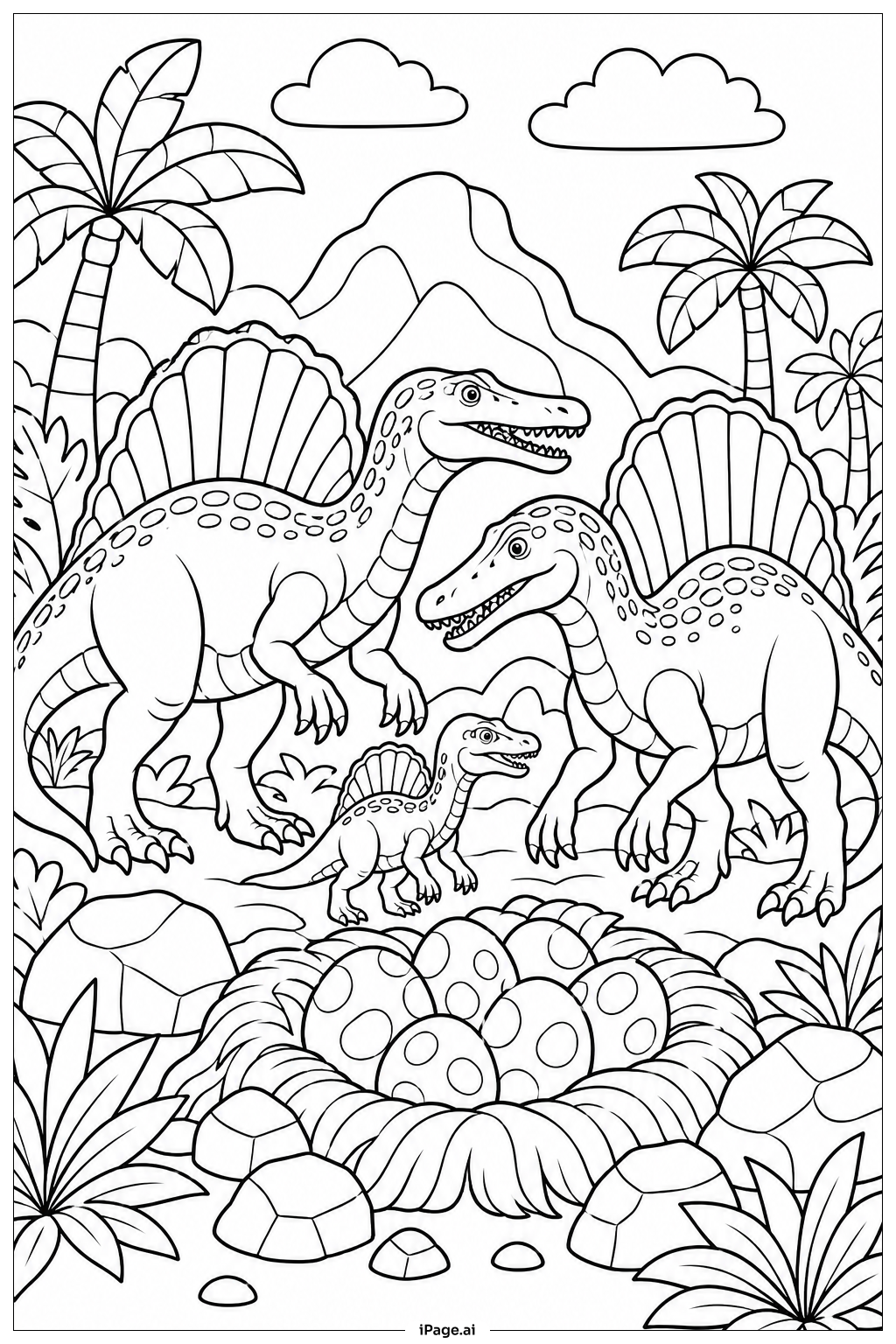
• The Spinosaurus's Sail: The large sail along the dinosaur's back has a complex structure with many ridges and fine lines running through it. Coloring this area neatly without going outside the lines takes patience. Blending multiple colors here to show texture and depth can be tricky, especially for younger colorists.
• Scales and Skin Texture: The body of the Spinosaurus is covered in detailed scale patterns. Trying to color each small scale individually takes a lot of time and care. Using colored pencils works best here, as they allow better control over small areas. Markers may bleed outside the fine lines more easily.
• Water Reflections and Ripples: The water surface includes ripple lines and subtle details that suggest movement. Keeping the water area looking smooth while still showing depth and reflection requires careful color layering. Using two or three shades of blue and blending them gently gives the best result.
• Background Vegetation: The plants, reeds, and trees in the background include many overlapping shapes. Coloring each element a slightly different shade of green helps separate them and adds depth. However, knowing where one plant ends and another begins can be confusing at first glance.
• Shadow and Depth on the Body: The Spinosaurus's large, rounded body benefits from shading to look three-dimensional. Adding darker tones along the belly, under the chin, and beneath the sail gives a sense of volume. This kind of shading can be challenging for beginners but is very rewarding once learned.
Benefits of coloring books: Advantages of drawing Spinosaurus Napping By Water coloring page
Coloring this Spinosaurus Napping By Water page offers a wonderful mix of fun and learning for kids and adults alike. As you color the dinosaur and its peaceful surroundings, you naturally improve your fine motor skills and hand-eye coordination. Carefully staying within the detailed lines of the scales, sail, and plants builds focus and patience over time.
This scene also sparks curiosity about prehistoric life. Kids may want to learn more about what Spinosaurus looked like, where it lived, and what it ate — turning a coloring session into a mini science lesson.
Choosing colors for the dinosaur's skin, sail, and the water around it encourages creative thinking. Since no one knows exactly what colors dinosaurs were, there are no wrong answers, giving colorists full creative freedom.
The calm, restful mood of the scene also makes this a relaxing activity. Focusing on coloring can help reduce stress and anxiety, making it a great quiet-time activity after a busy day. For younger children, it builds color recognition and develops an early love of art. For older kids and adults, the detailed elements offer a satisfying challenge. Overall, this page is a great way to unwind, create, and learn all at once.