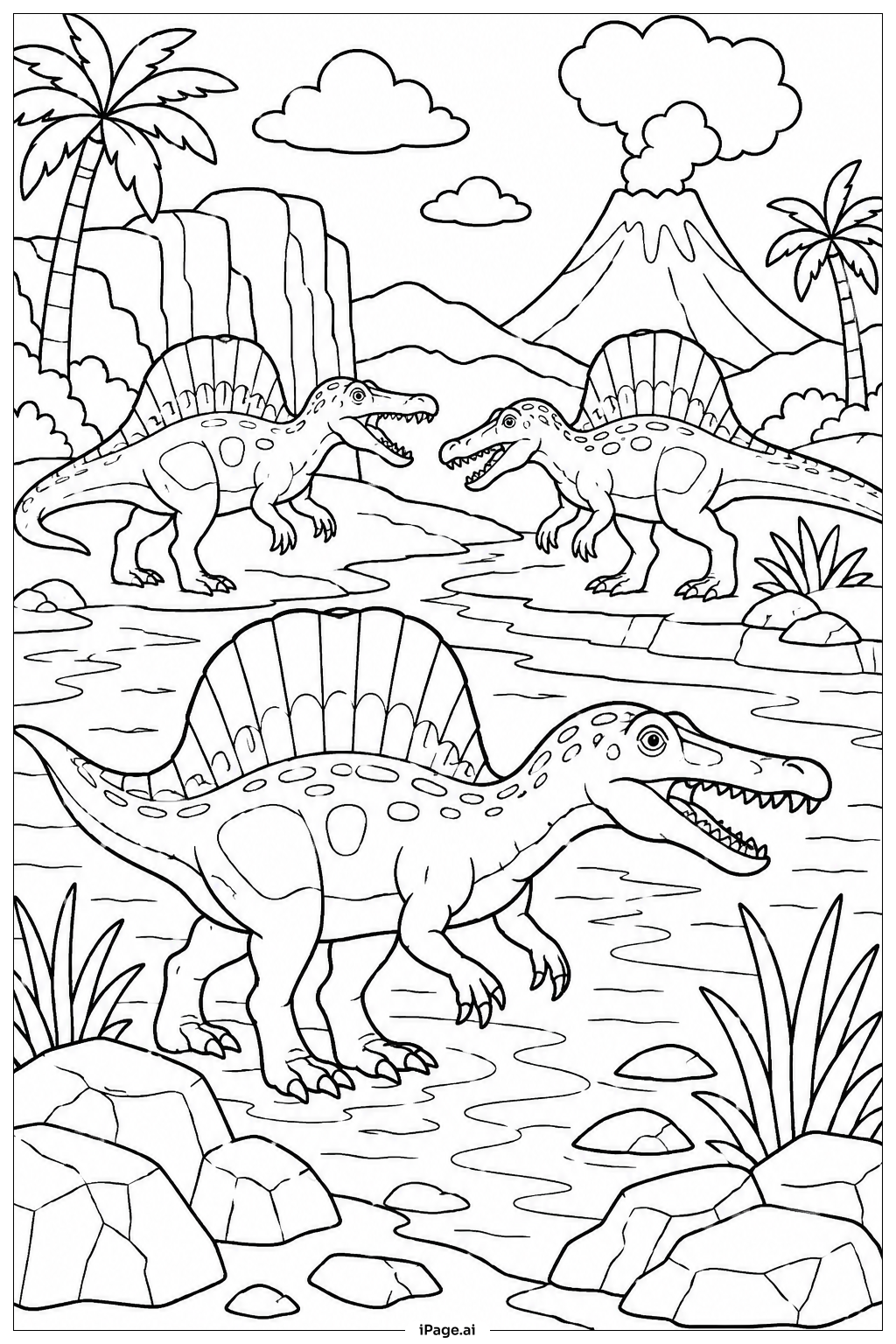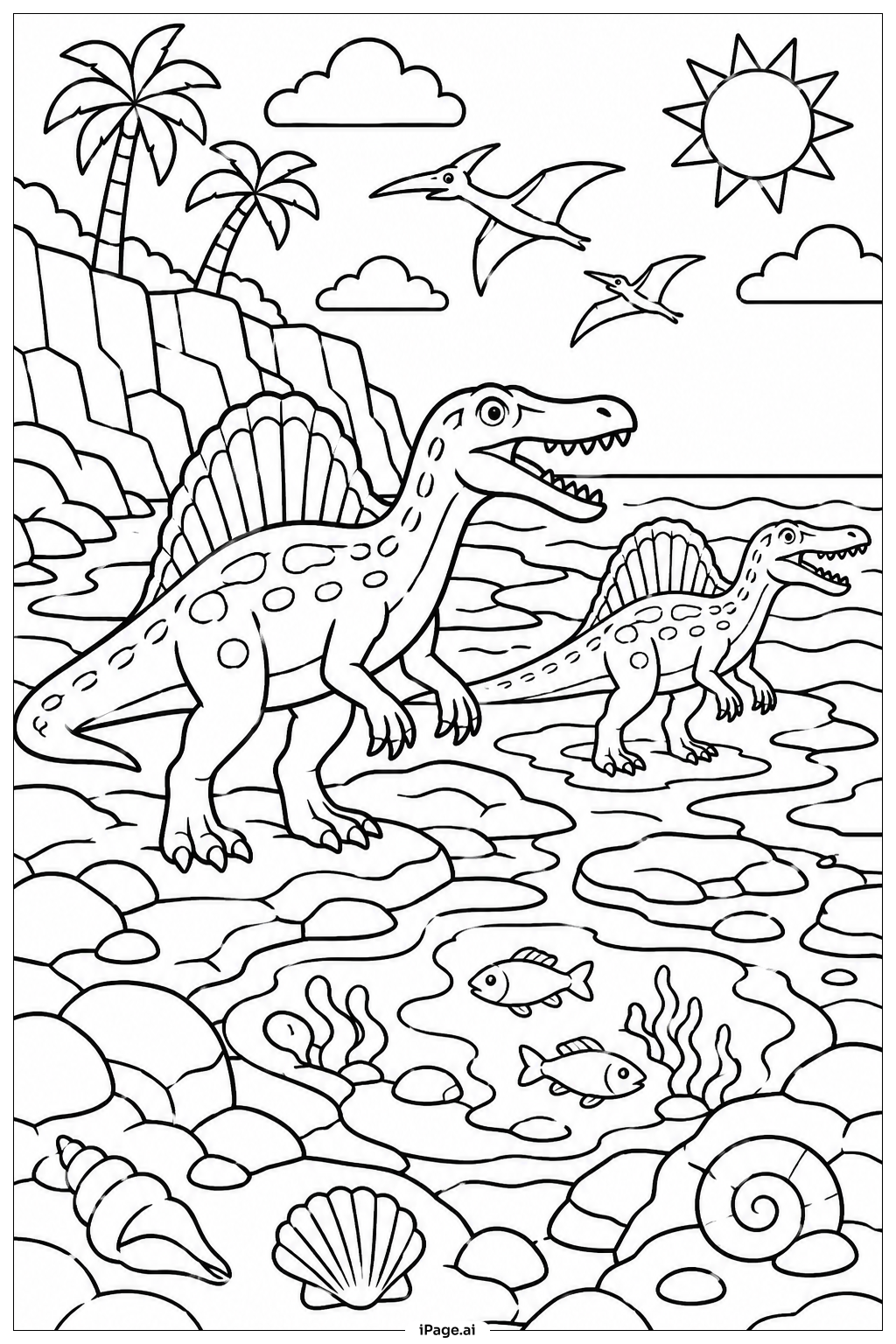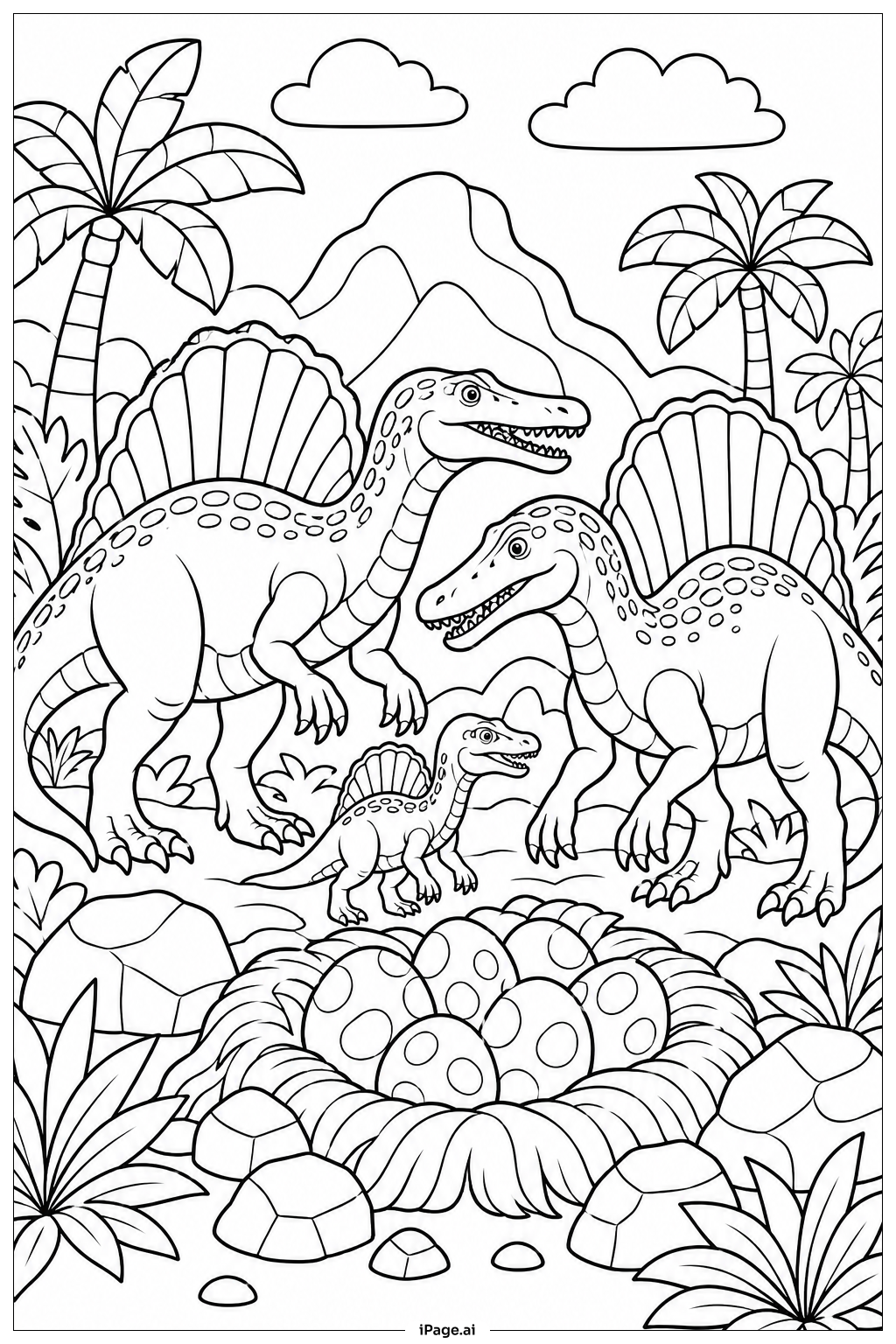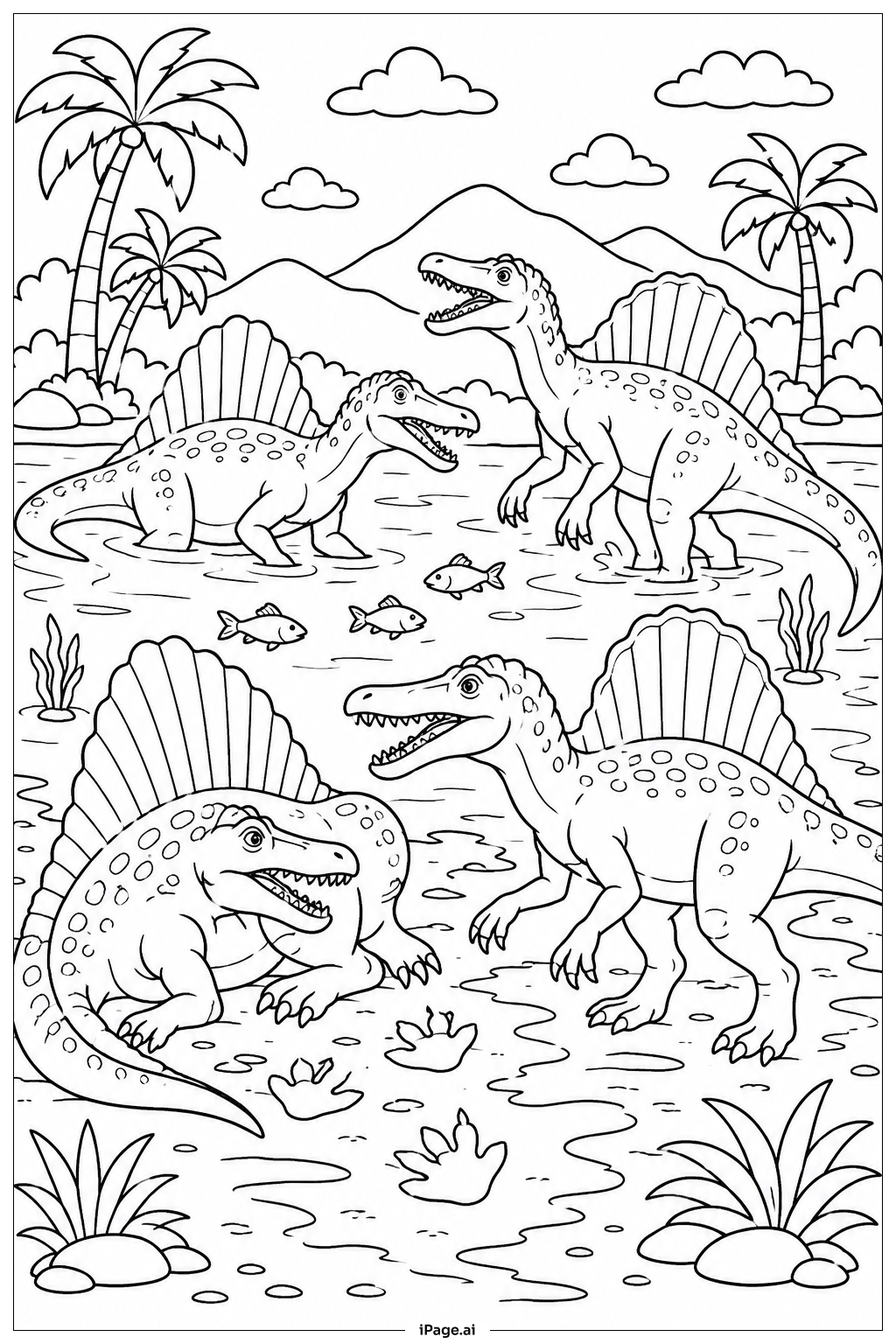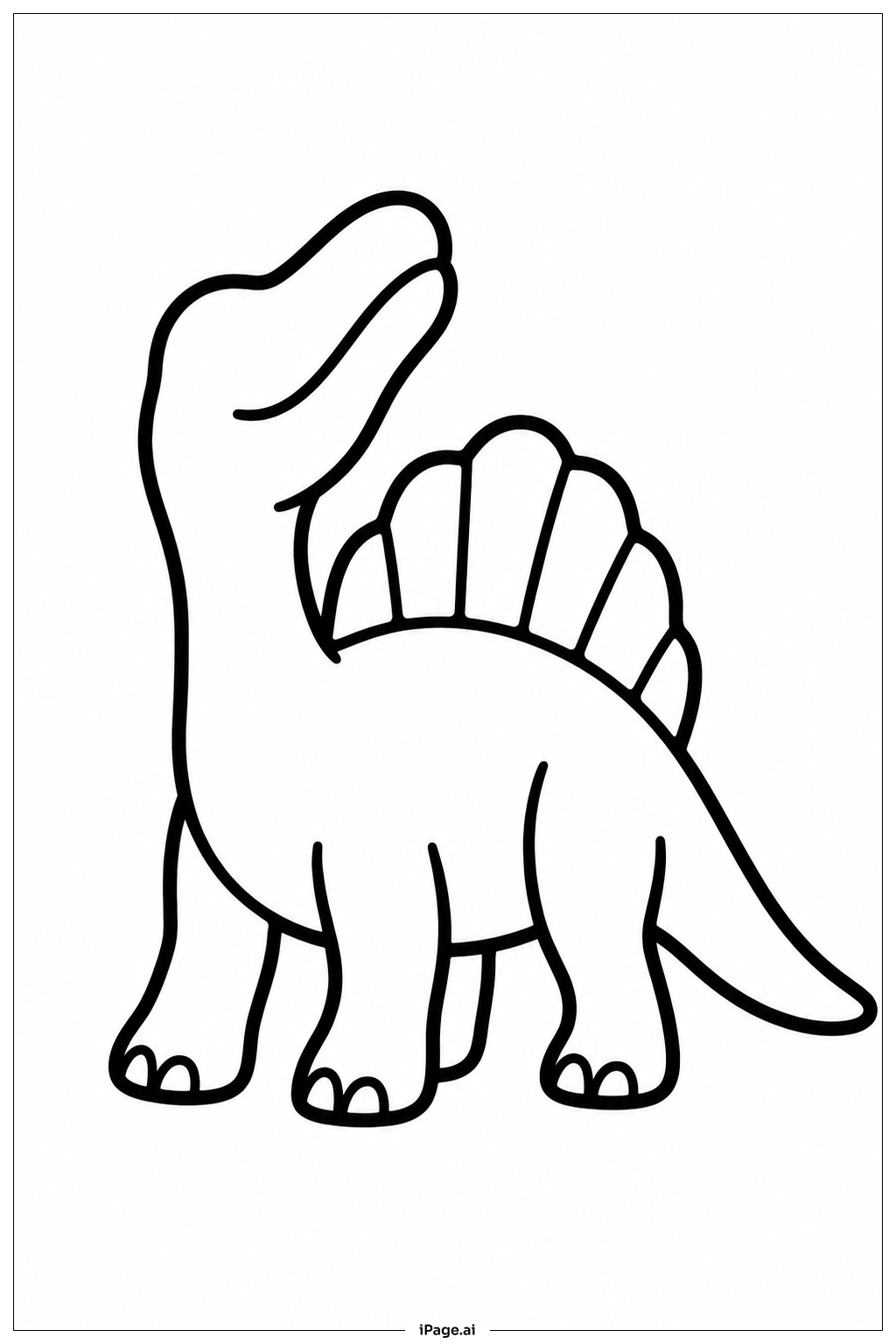
Coloring tips: How to color Spinosaurus Looking Up coloring page well?
Start with the body of the Spinosaurus. Use earthy tones like dark green, olive, or brownish gray for the main scales. You can add lighter shades of tan or cream along the belly area to show the underside. For the famous sail on its back, try something bold and eye-catching — orange, red, or even purple with visible vein-like lines running through it. Use a darker shade of the same color to add depth to the edges of each spine. The claws and teeth can be colored ivory or pale yellow. Add shadows under the chin, belly, and limbs using a slightly darker version of your base color. For the background, soft greens, blues, and misty grays work well to suggest a prehistoric forest or swamp setting. Feel free to mix colors and create your own unique Spinosaurus — there are no wrong choices when you are coloring for fun!
Coloring challenges: Which parts are difficult to color and need attention for Spinosaurus Looking Up coloring page?
• Sail Spine Details: The large sail on the Spinosaurus's back is one of the most visually complex parts of this image. It has multiple tall spines with a membrane stretching between them. Coloring each spine individually while keeping the membrane looking smooth and consistent takes patience. You will need to carefully switch between colors and blend where the spines meet the skin.
• Scale Texture on the Body: The body of the Spinosaurus is covered in many small overlapping scales. Filling in all these tiny shapes evenly without going outside the lines is a real challenge, especially for younger colorists. Using a fine-tipped marker or a sharpened colored pencil will help you stay within each scale section.
• Snout and Teeth Shading: The long, narrow snout has several visible teeth and ridges. Getting the shading right around the mouth and jaw area requires using at least two or three shades of the same color. The teeth should stand out from the gums and the surrounding skin, so picking contrasting tones here is important.
• Limbs and Claws: The short front limbs and the larger back legs both end in curved claws. These small areas are tight and detailed, making it easy to accidentally color outside the lines. Taking your time with a thin tool will give you the cleanest result.
• Depth and Dimension: The overall figure needs shading to look three-dimensional. Without adding highlights and shadows, the dinosaur can end up looking flat. Try using a lighter color in the center of large body sections and a darker tone near the edges to create a sense of volume and realism.
Benefits of coloring books: Advantages of drawing Spinosaurus Looking Up coloring page
Coloring this Spinosaurus Looking Up page offers a wide range of benefits for kids and dinosaur fans of all ages. First, it helps build fine motor skills. Carefully filling in the scales, sail, and claws strengthens hand control and improves pencil grip, which supports writing and drawing development. Second, it encourages focus and patience. The many detailed sections of this image invite colorists to slow down, concentrate, and work through each area one step at a time — a great way to practice mindfulness. Third, it sparks creativity. Choosing colors for a prehistoric creature is an open-ended activity with no wrong answers, giving children the freedom to imagine and express themselves. Fourth, it builds knowledge about dinosaurs. As kids color the sail, the long snout, and the muscular body, they naturally become more curious about what Spinosaurus looked like and how it lived — turning a fun activity into a learning moment. Finally, finishing the page gives a real sense of accomplishment. Completing a detailed coloring page boosts confidence and makes children proud of what they have created.