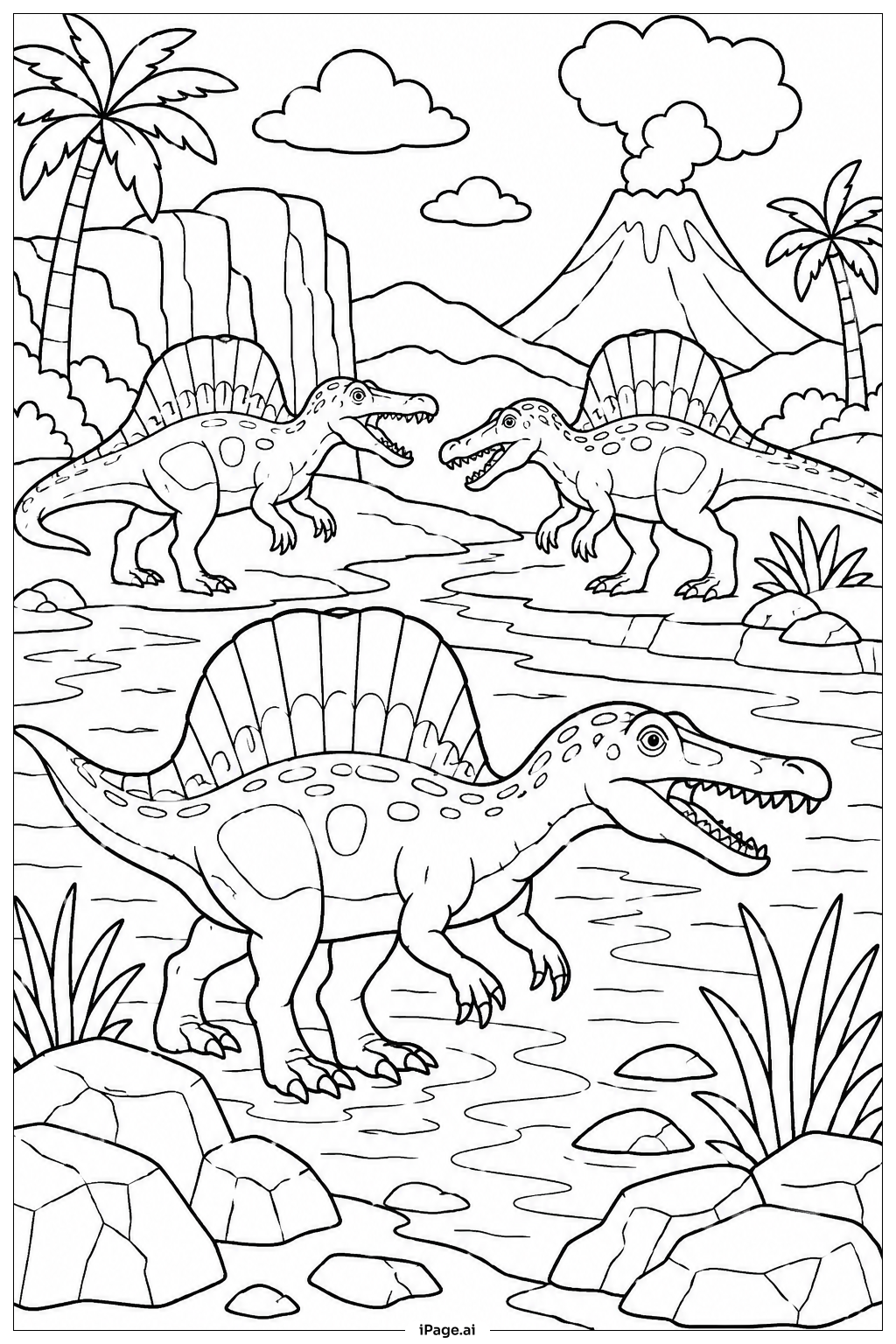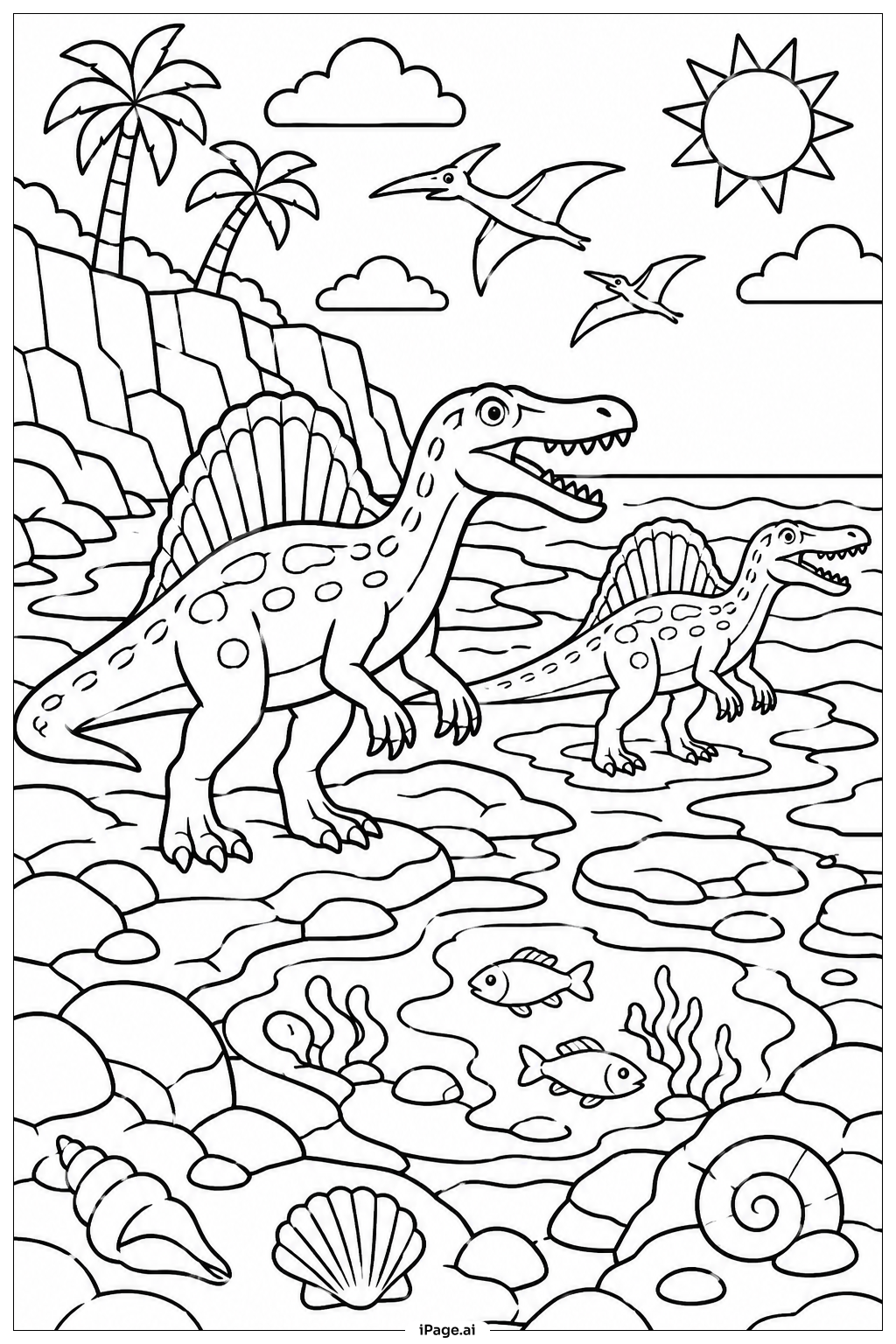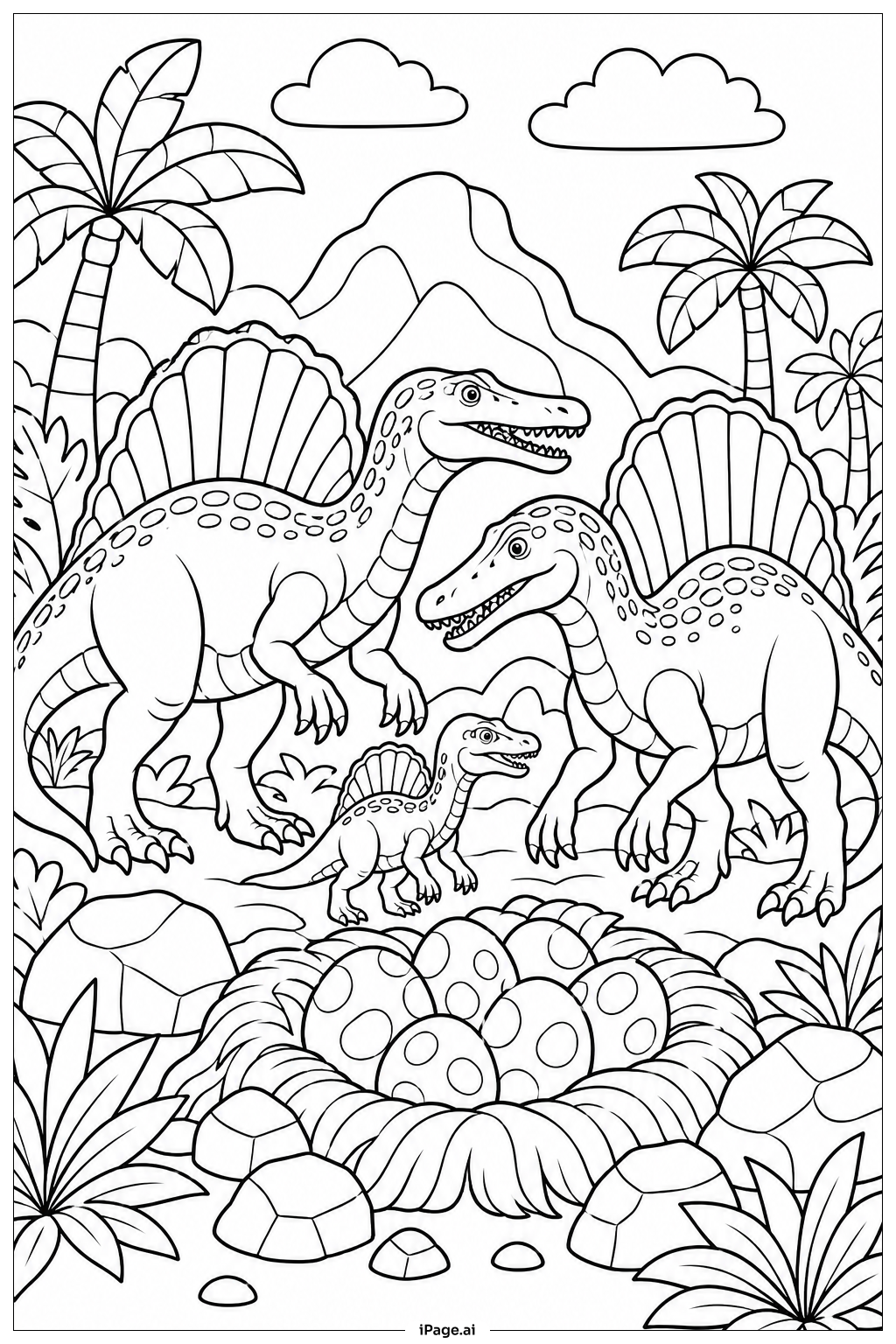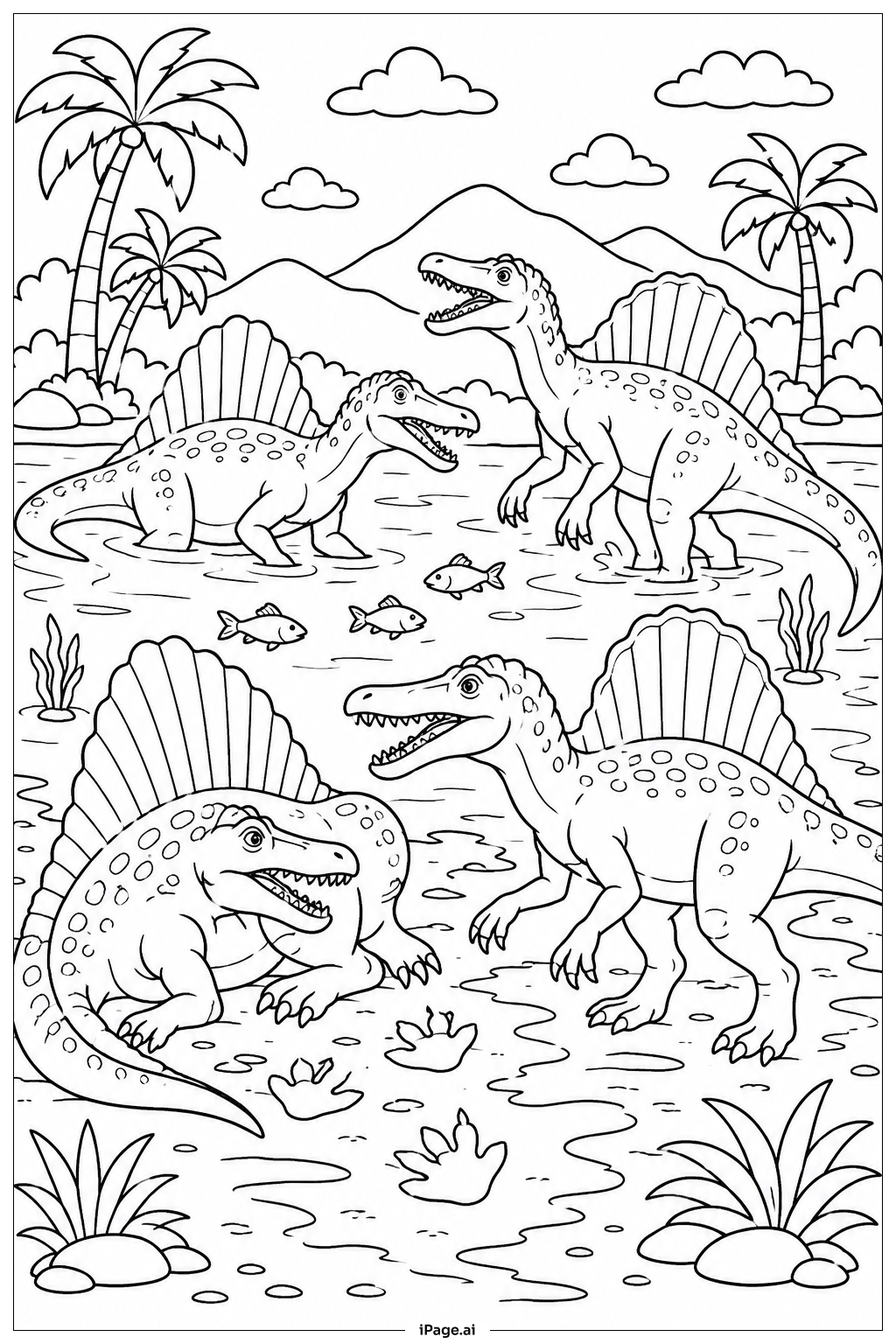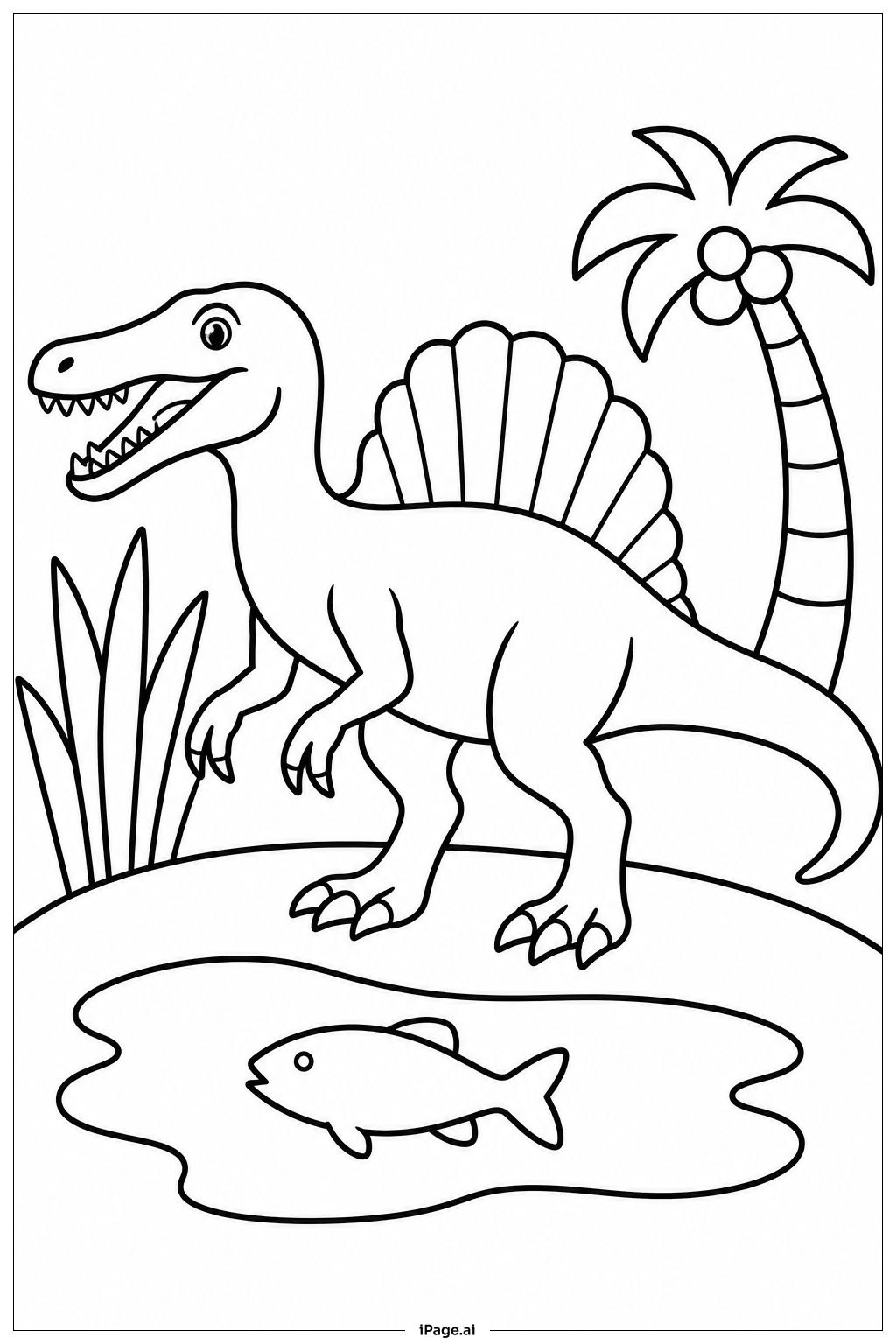
Coloring tips: How to color Spinosaurus In Marsh coloring page well?
To color this Spinosaurus, you can use shades of green and brown for the marsh plants and grasses, giving a natural muddy wetland feel. The dinosaur's body can be colored with a blend of gray, olive green, or brown tones, with the sail on its back in brighter colors like red or orange to make it stand out. For the water, use light blue or greenish-blue shades, adding darker colors to create a sense of depth. Add some yellow or light brown for mud patches. Try blending colors gently to create smooth transitions, especially on the Spinosaurus’s body and marshy ground to make the picture come alive.
Coloring challenges: Which parts are difficult to color and need attention for Spinosaurus In Marsh coloring page?
• Detailed Anatomy: The Spinosaurus has many intricate features such as its long snout, sharp teeth, and the unique sail on its back that require careful coloring to capture their shape and texture. • Marsh Vegetation: The tall grasses and reeds in the marsh have thin, overlapping leaves which can be tricky to color individually while maintaining neatness. • Water Effects: Depicting the shallow water with ripples and reflections is challenging because it needs subtle color blending and layering to look realistic rather than flat. • Muddy Ground: The muddy patches on the ground involve uneven textures and mixed colors, requiring attention to shading and gradients to avoid a monotone look. • Maintaining Contrast: Balancing the colors of the Spinosaurus and the background marsh so the dinosaur stands out clearly without the scene looking too busy or dull may need thoughtful color choices and contrast adjustments.
Benefits of coloring books: Advantages of drawing Spinosaurus In Marsh coloring page
Coloring this Spinosaurus In Marsh image helps improve focus and fine motor skills as children work on the small details in the dinosaur and the marsh plants. It encourages creativity by allowing them to mix and match colors for both the dinosaur and its environment. The image also supports learning about prehistoric life and habitats, sparking curiosity and imagination. By exploring shading and blending for water and mud, children develop their artistic techniques and better understand how to represent different textures and natural elements. Overall, coloring this picture builds patience and concentration while providing a fun way to engage with natural history.