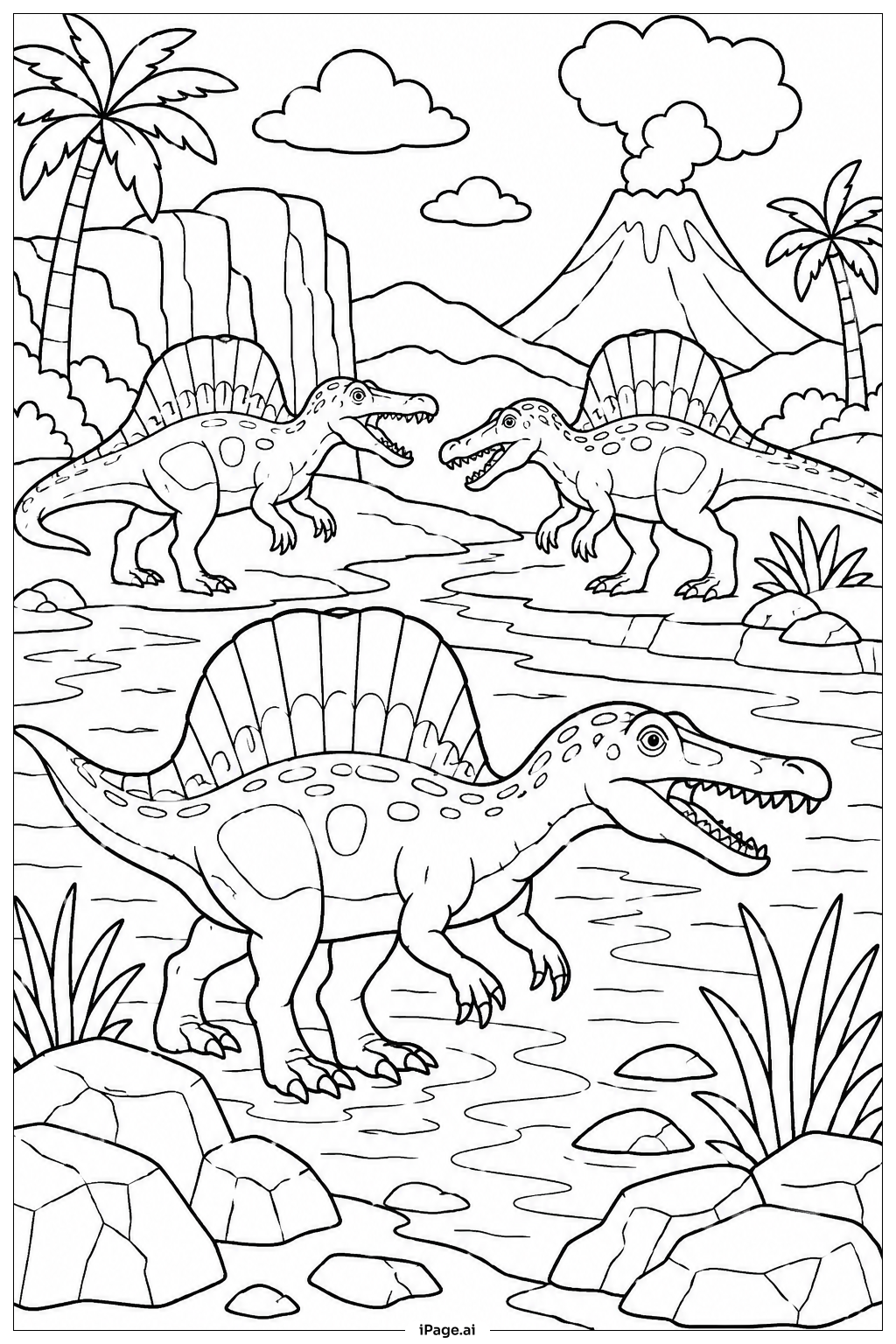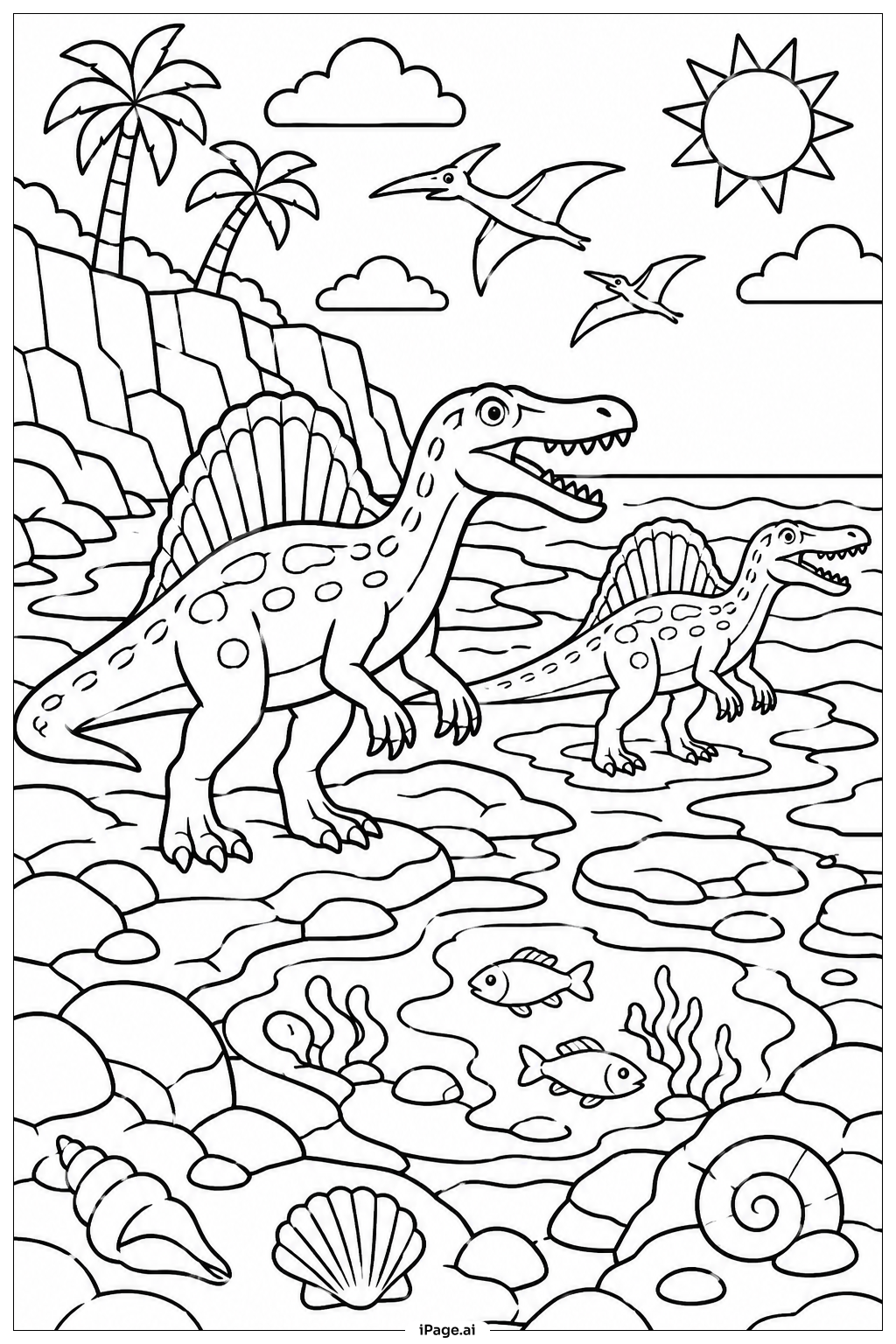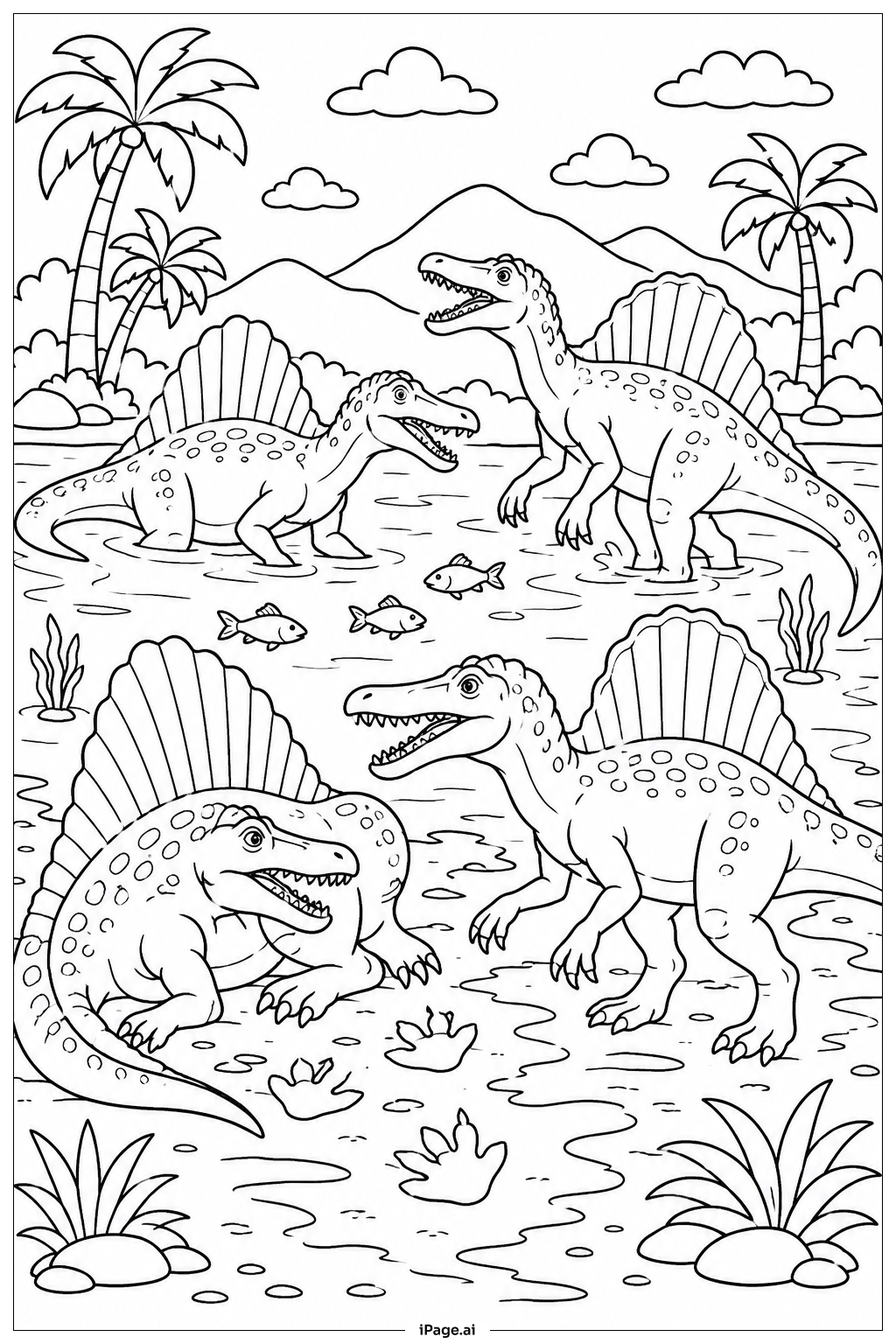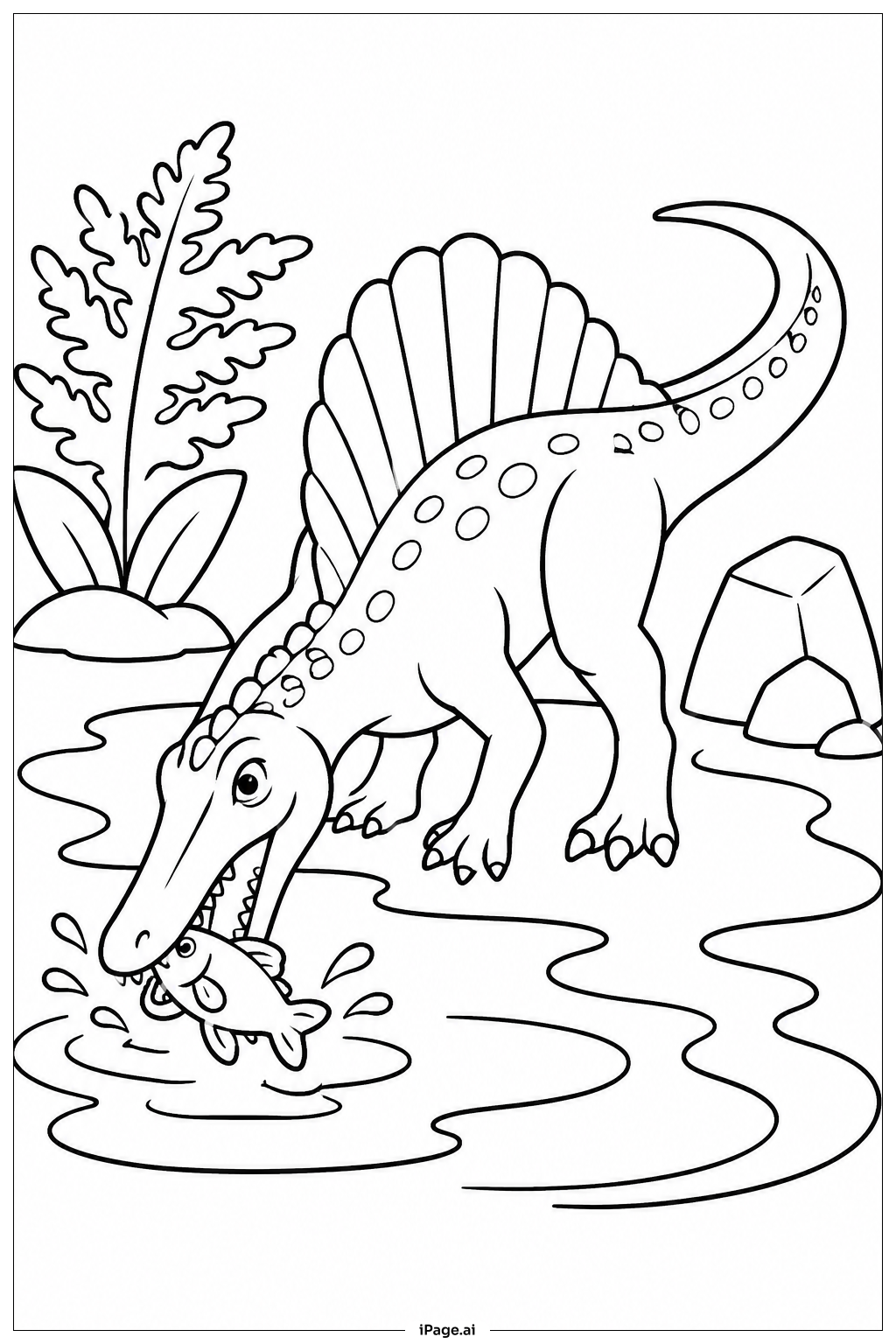
Coloring tips: How to color Spinosaurus Hunting Fish coloring page well?
Start with the Spinosaurus's body by using shades of dark green or olive green for its skin. Add lighter tan or yellow on the belly area to show contrast. The tall sail on its back can be colored in a mix of reddish-orange and brown to make it look bold and striking. Use deep blue and teal for the river water, and add white in the splashing areas to show movement. The fish can be silver, blue, or orange to make it pop against the water. Color the rocky banks in gray and brown tones. Use bright greens for the plants along the riverbank. Don't be afraid to mix colors — try dark shadows under the dinosaur's belly and along the lower legs to give the image depth. Light yellow or white highlights on the sail and the top of the head can make the dinosaur look even more powerful and three-dimensional.
Coloring challenges: Which parts are difficult to color and need attention for Spinosaurus Hunting Fish coloring page?
• The Sail Details: The large sail on Spinosaurus's back has a pattern of ridges and veins running through it. Coloring each ridge carefully without going outside the lines takes patience. Try using a lighter base color first, then add darker lines on top to show each ridge clearly.
• Water and Splashing Effects: The splashing water around the dinosaur's legs is made up of many curved, flowing shapes. Keeping the water looking natural and fluid requires blending multiple shades of blue, teal, and white. Coloring in the direction of the water's movement helps it look more realistic.
• Skin Texture and Scales: The dinosaur's body is covered in small bumps and scale patterns. Filling in each tiny detail evenly without making the skin look flat is a real challenge. Using short, light strokes and layering two or three shades of the same color can help bring the texture to life.
• The Fish: The fish being caught is a small but important part of the scene. Its scales and shiny surface are tricky to color because they need both light and dark tones to look three-dimensional. Silver, white, and a touch of blue work well together here.
• Background Plants and Rocks: The plants and rocks in the background have many overlapping shapes. Deciding which areas are in shadow and which are in light helps separate them visually. Using darker greens for background plants and lighter greens for those in front creates a sense of depth in the scene.
Benefits of coloring books: Advantages of drawing Spinosaurus Hunting Fish coloring page
Coloring this Spinosaurus Hunting Fish page offers many wonderful benefits for kids and dinosaur fans of all ages. First, it builds focus and concentration. Staying inside the lines and working through each detailed section trains the brain to slow down and pay close attention. Second, it sparks creativity. Choosing colors for a prehistoric creature that no one has ever seen in real life gives kids total freedom to use their imagination. There is no wrong answer — a bright purple Spinosaurus is just as valid as a realistic dark green one. Third, it helps develop fine motor skills. Carefully coloring small areas like fish scales and water splashes strengthens the small muscles in the hands and fingers, which is great for young learners. Fourth, it teaches kids about prehistoric life. While coloring, children naturally become curious about what Spinosaurus looked like, what it ate, and where it lived. This can lead to fun conversations and a love of science and history. Finally, finishing the page gives a real sense of achievement. Completing a detailed coloring page builds confidence and encourages kids to keep trying new creative challenges.