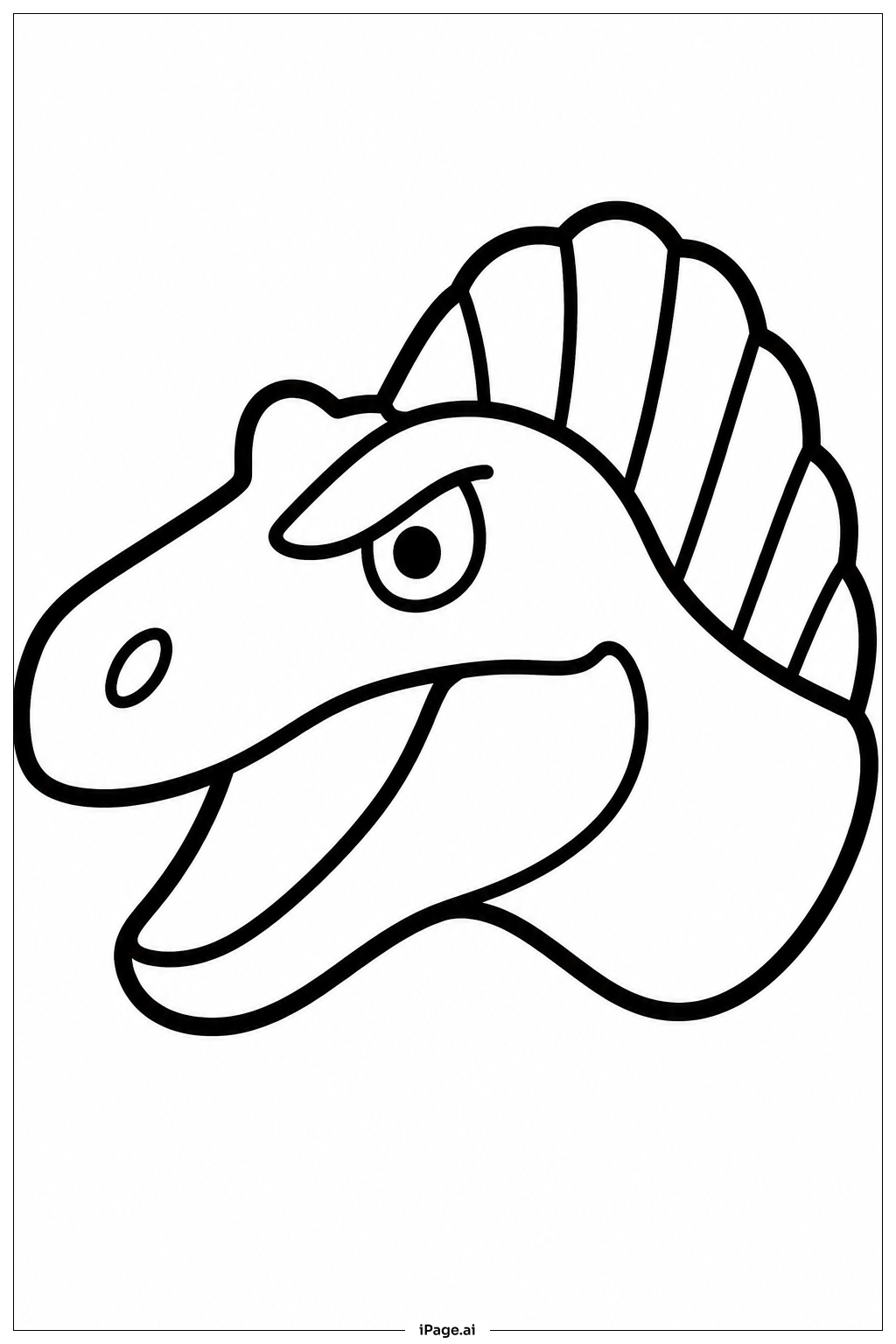
Coloring tips: How to color Spinosaurus Head Closeup coloring page well?
For this Spinosaurus Head Closeup, try using earth tones to create a natural dinosaur look. You could start with shades of green or brown for the skin, adding darker tones to show the textured scales and ridges. Bright yellow, orange, or red near the eyes and nostrils can add interest and make the face look more lively. Don’t be afraid to use contrasts by shading areas under the jaw or around the teeth with gray or even black to create depth. You can give the teeth a whitish or pale yellow color, and consider blending softly for a realistic touch. Using multiple colors in small areas will help bring out the details and make your picture stand out.
Coloring challenges: Which parts are difficult to color and need attention for Spinosaurus Head Closeup coloring page?
• Skin Texture Details: The Spinosaurus head in this closeup shows many small scales and rough patches, which can be tricky to color neatly. Careful attention is needed to avoid coloring outside the lines and to show the differences in skin texture clearly.
• Teeth and Jaw: The teeth are sharp and evenly spaced, requiring careful coloring to keep them separate and clean. It’s challenging to color the teeth white while shading the jaw effectively without blending them together.
• Eye Area: The eye is quite detailed and is a key focus point. Capturing its shape and the surrounding folds with correct shading takes precision to make it look alive.
• Shading for Depth: Because this is a closeup, shadows and light effects are important. Correctly placing darker and lighter colors to show the contours of the head can be difficult for younger colorers.
• Narrow Spaces: The tight areas between the scales, teeth, and around the nostrils demand steady hand control and patience to color thoroughly without mess.
Benefits of coloring books: Advantages of drawing Spinosaurus Head Closeup coloring page
Coloring this Spinosaurus Head Closeup can help improve fine motor skills as you carefully fill in detailed areas like scales and teeth. It encourages creativity in choosing natural colors, helping children learn about prehistoric animals and their features in a fun way. Coloring this image also promotes focus and patience, as the details require attention without rushing. Additionally, it can inspire curiosity about dinosaurs and nature, making learning enjoyable. For older kids, it is a chance to practice shading and blending techniques to bring a realistic feel to the picture, developing artistic skills. Overall, this image is an excellent tool for combining education with creative play.