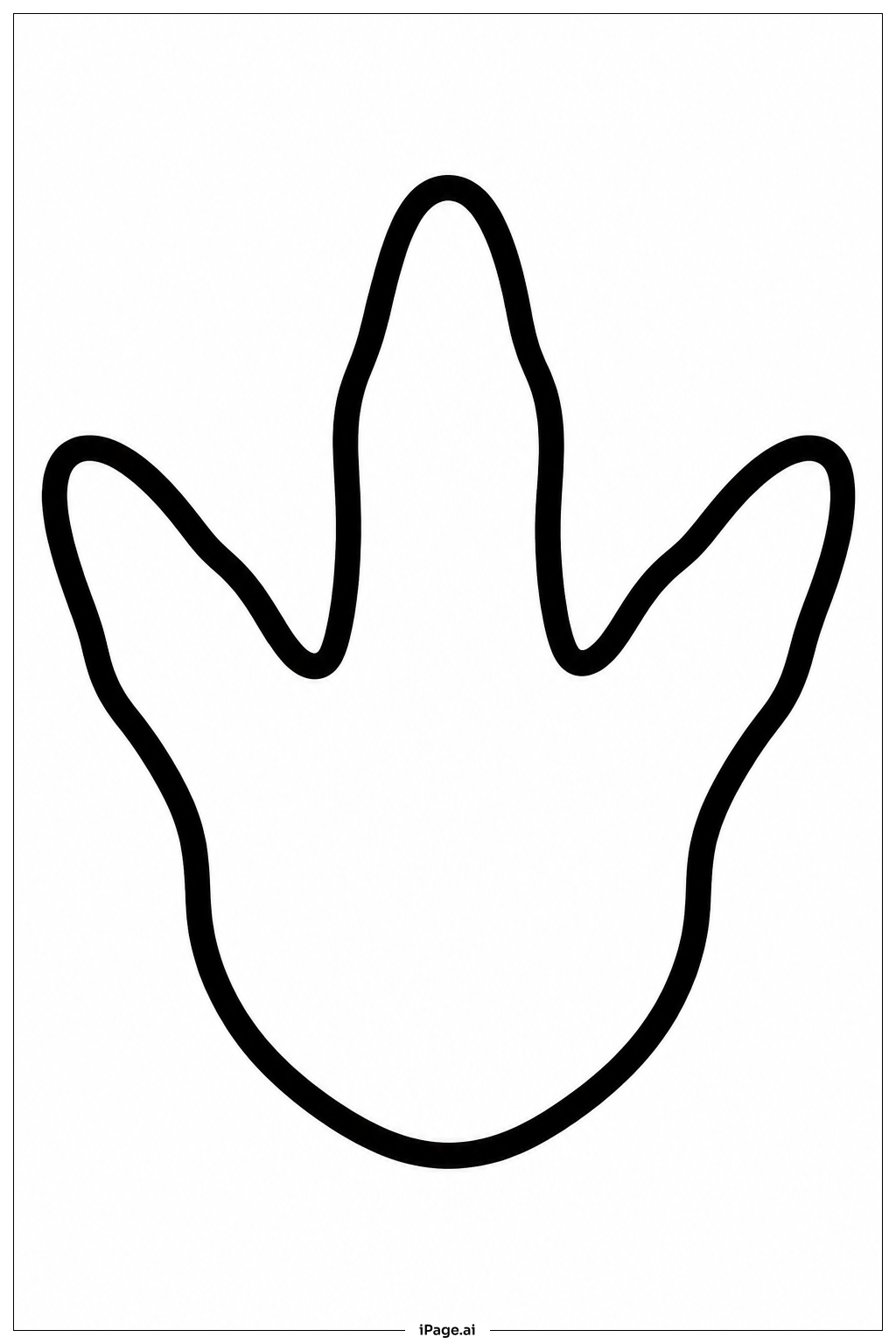
Coloring tips: How to color Spinosaurus Foot Print coloring page well?
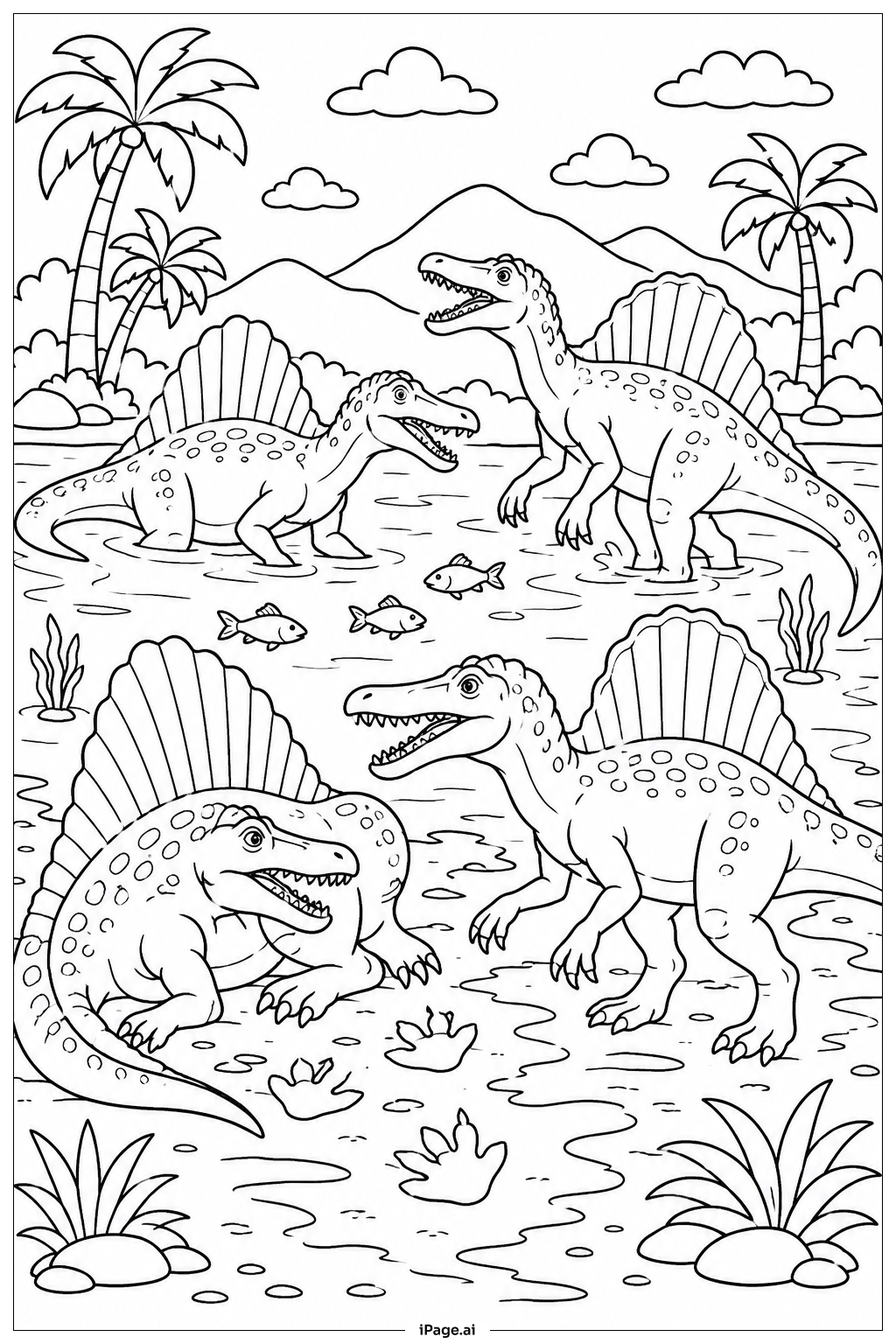
You can use shades of brown and green to color the footprint and the ground around it. Try using dark brown for the deep parts of the print and lighter brown for the edges. You might add green to show grass or plants nearby. For the claw marks, a darker gray or black color will make them stand out. To create a realistic effect, shade the cracks carefully with a thin pencil or dark color. You could also color the background sky blue or yellow to suggest different times of day. Experiment with blending colors to give the impression of mud or dirt texture under the footprint.
Coloring challenges: Which parts are difficult to color and need attention for Spinosaurus Foot Print coloring page?
• Large Toe Details: The three big toes have curves and small sections inside. Coloring inside these narrow shapes carefully can be challenging for young artists. Staying inside the lines requires patience and control.
• Claw Marks: The claw marks at the end of each toe are thin and sharp. It can be tricky to color these without overlapping onto other parts of the footprint.
• Ground Texture: The rough, cracked ground around the footprint has lots of tiny lines and cracks. Coloring these small details evenly while keeping them visible needs focus.
• Shading and Depth: To make the footprint look three-dimensional, shading is important. This involves gradual color changes from light to dark, which can be difficult if you are just starting to learn shading techniques.
• Balancing Colors: Choosing the right colors for the footprint and the surrounding earth so they look natural and blend well together can be tough for beginners who are still learning color harmony.
Benefits of coloring books: Advantages of drawing Spinosaurus Foot Print coloring page
Coloring this Spinosaurus Foot Print helps develop fine motor skills and hand-eye coordination. Kids learn how to control their pencil or crayons to stay inside detailed lines. It encourages paying attention to small shapes and textures, improving concentration. This image also introduces the concept of shading and how colors can create depth and dimension. It stimulates creativity as children choose colors to imagine the environment around the dinosaur. Moreover, learning about dinosaurs this way connects art with science, making coloring both fun and educational.