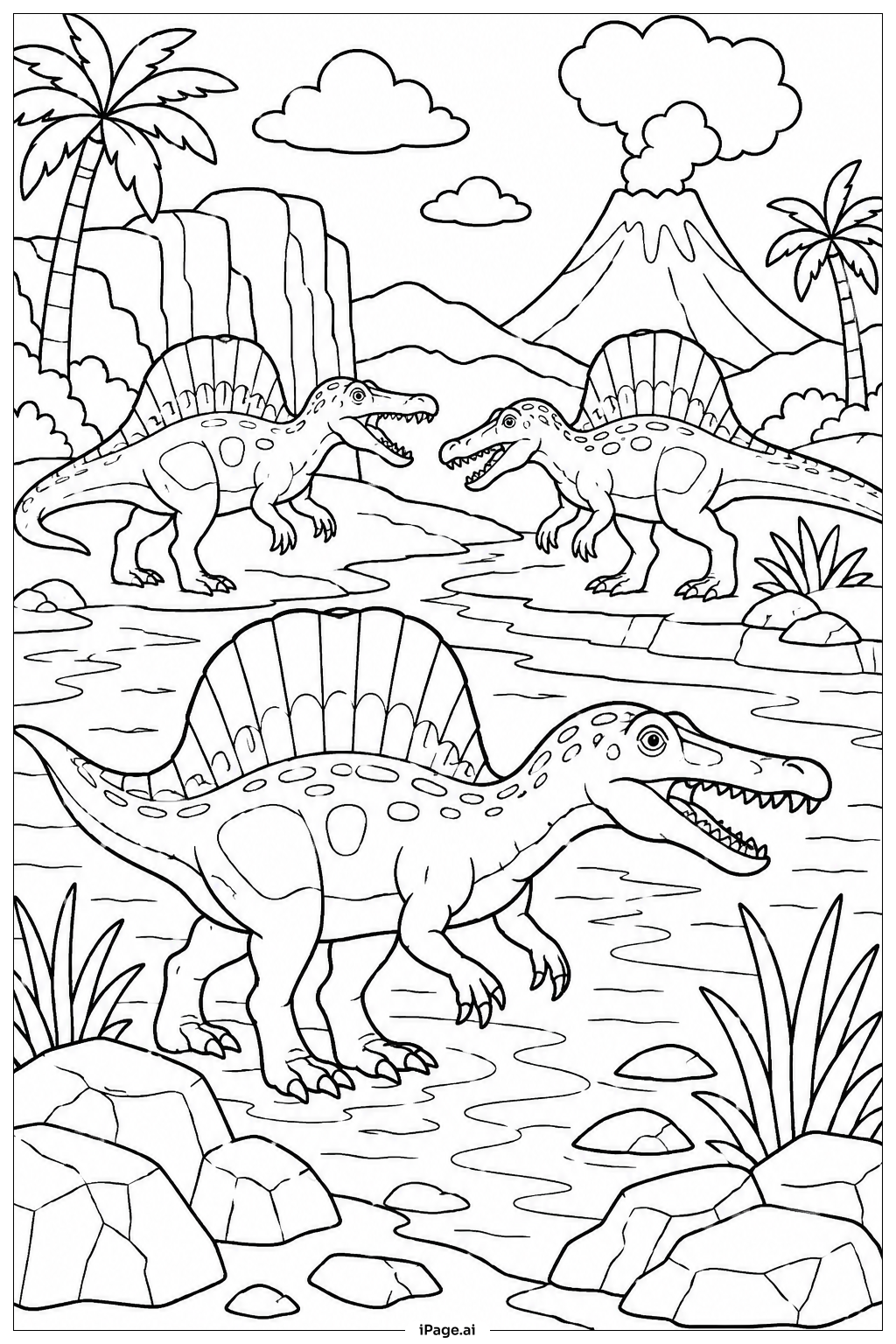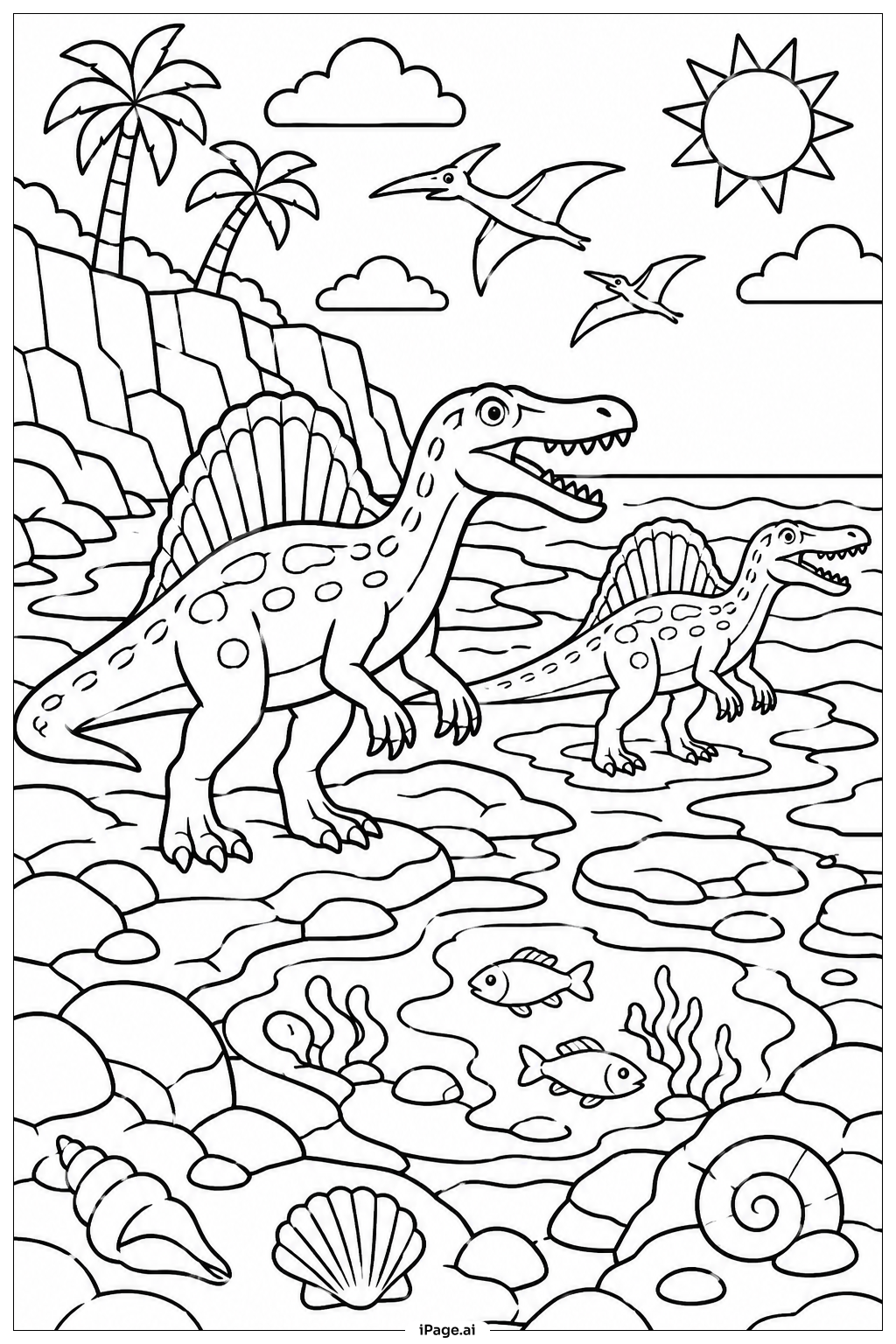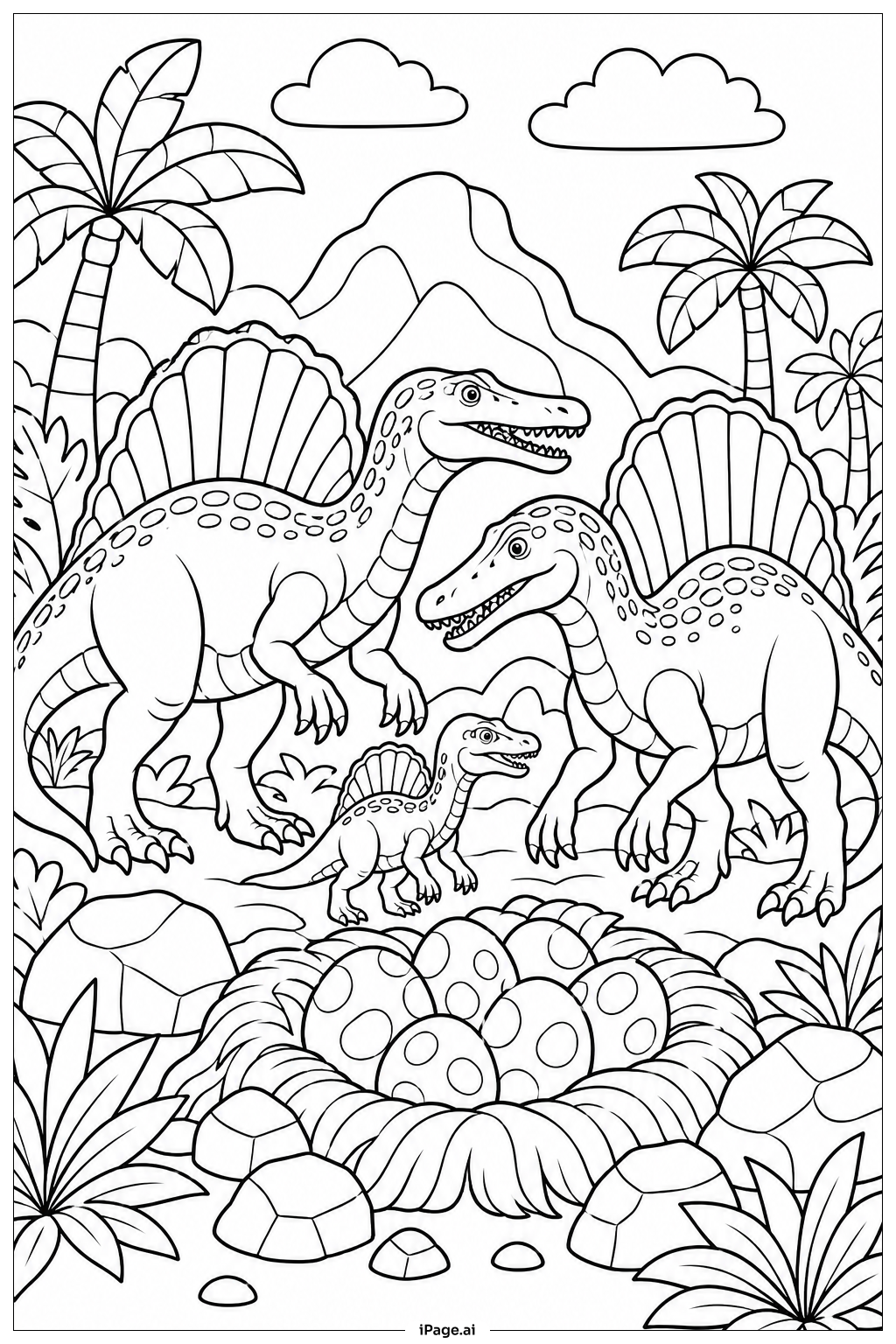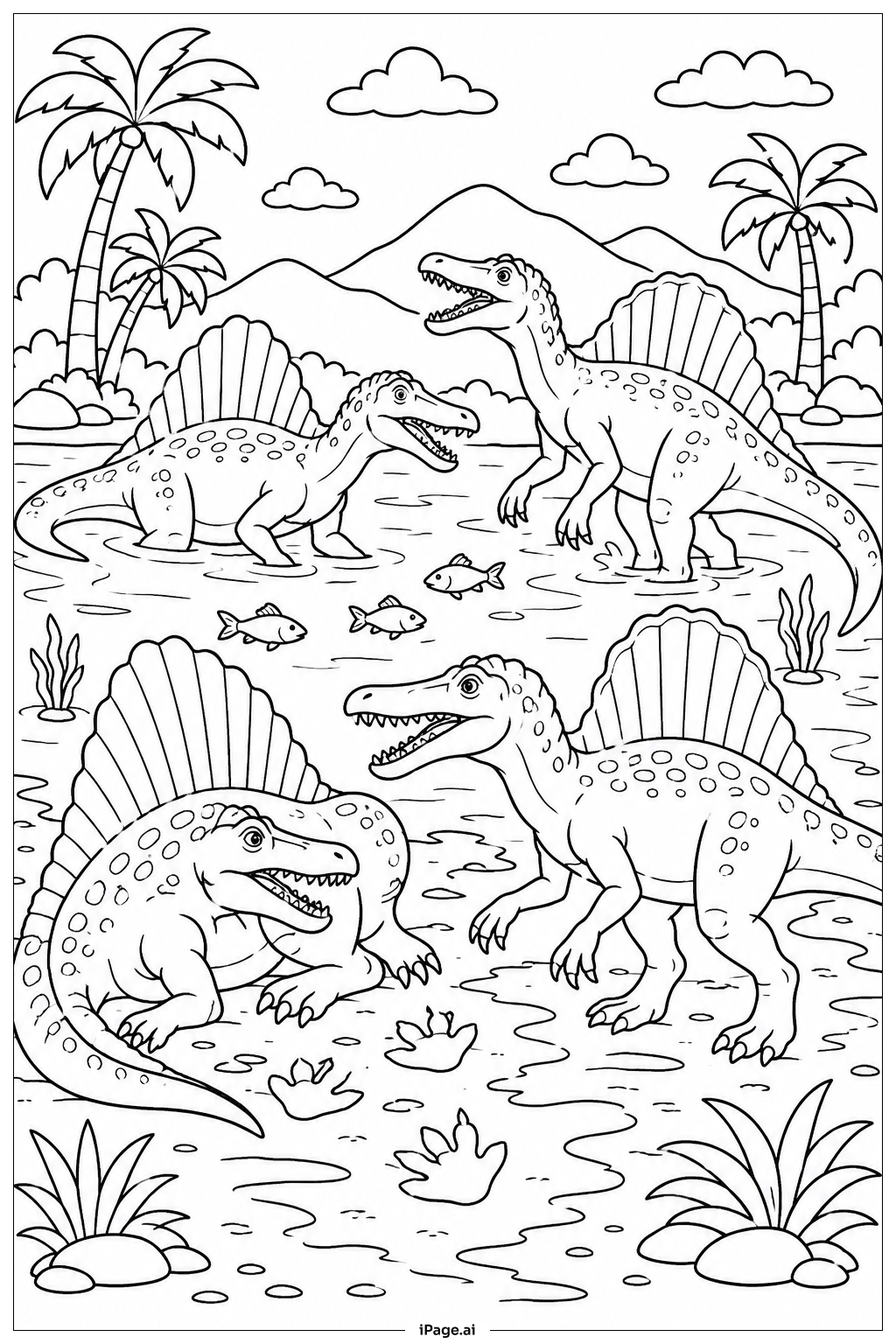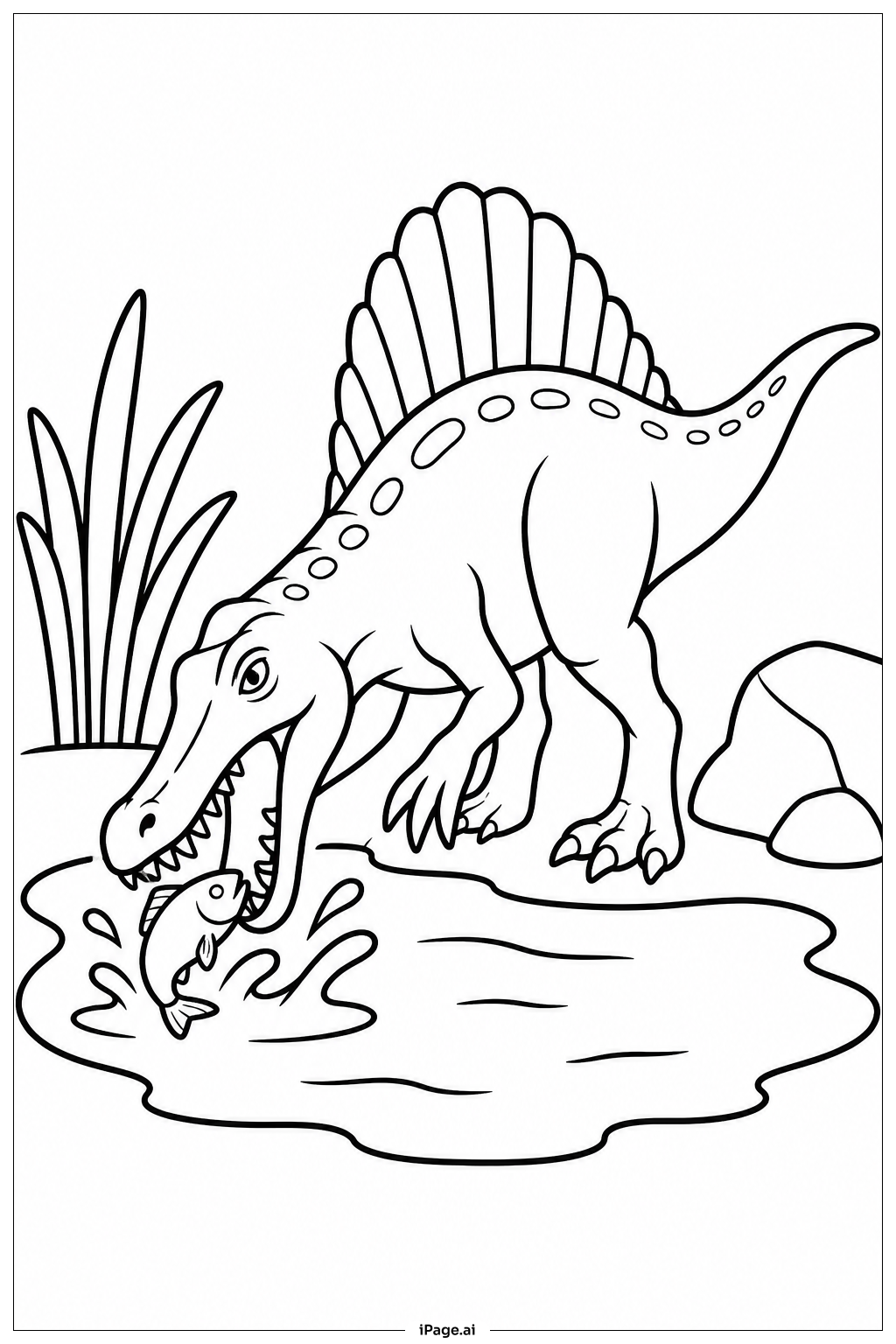
Coloring tips: How to color Spinosaurus Fishing Scene coloring page well?
Try using different shades of green for the tall grasses and plants to show variety in the surroundings. The Spinosaurus body can be colored in shades of brown, gray, or even muted green to reflect its natural camouflage. Use brighter colors such as silver or blue for the fish to make it stand out in the water. The water itself can be colored with blues and light grays to show ripples and reflections. For the dinosaur’s sail, consider using a gradient of colors like red, orange, or yellow to make it eye-catching and dynamic. Don’t forget to add some lighter colors on the underbelly of the Spinosaurus and highlights on the water splash for a lively effect.
Coloring challenges: Which parts are difficult to color and need attention for Spinosaurus Fishing Scene coloring page?
• Fine Details: The fish leaping from the water has small scales and fins that require careful attention to capture their delicate shapes. This can be tricky when coloring within the lines. • Water Effects: Showing ripples and splashes in the water needs thoughtful shading to create a sense of movement. Blending blue and white colors smoothly can be challenging for younger artists. • Textured Skin: The Spinosaurus’s skin may have a rough, scaly texture that is hard to represent with coloring tools. It requires varying pressure and layering techniques to give it depth. • Background Complexity: The tall grasses and plants behind the Spinosaurus contain many thin strands and overlapping shapes. Coloring these without mixing colors or going outside lines demands focus and patience. • Sail Gradient: Coloring the dinosaur’s large sail with a smooth color gradient to show light and shadow needs advanced skills in blending and shading.
Benefits of coloring books: Advantages of drawing Spinosaurus Fishing Scene coloring page
Coloring this Spinosaurus Fishing Scene helps children develop fine motor skills by practicing careful coloring inside the detailed outlines. It encourages creativity as they choose colors for the dinosaur, fish, water, and surroundings. The image also inspires learning about prehistoric animals and aquatic habitats, which boosts curiosity about nature and science. Coloring water effects and textures provides an opportunity to explore light and shadow, improving artistic observation. Finally, completing this scene can build confidence and patience as children see their artwork come to life with color.