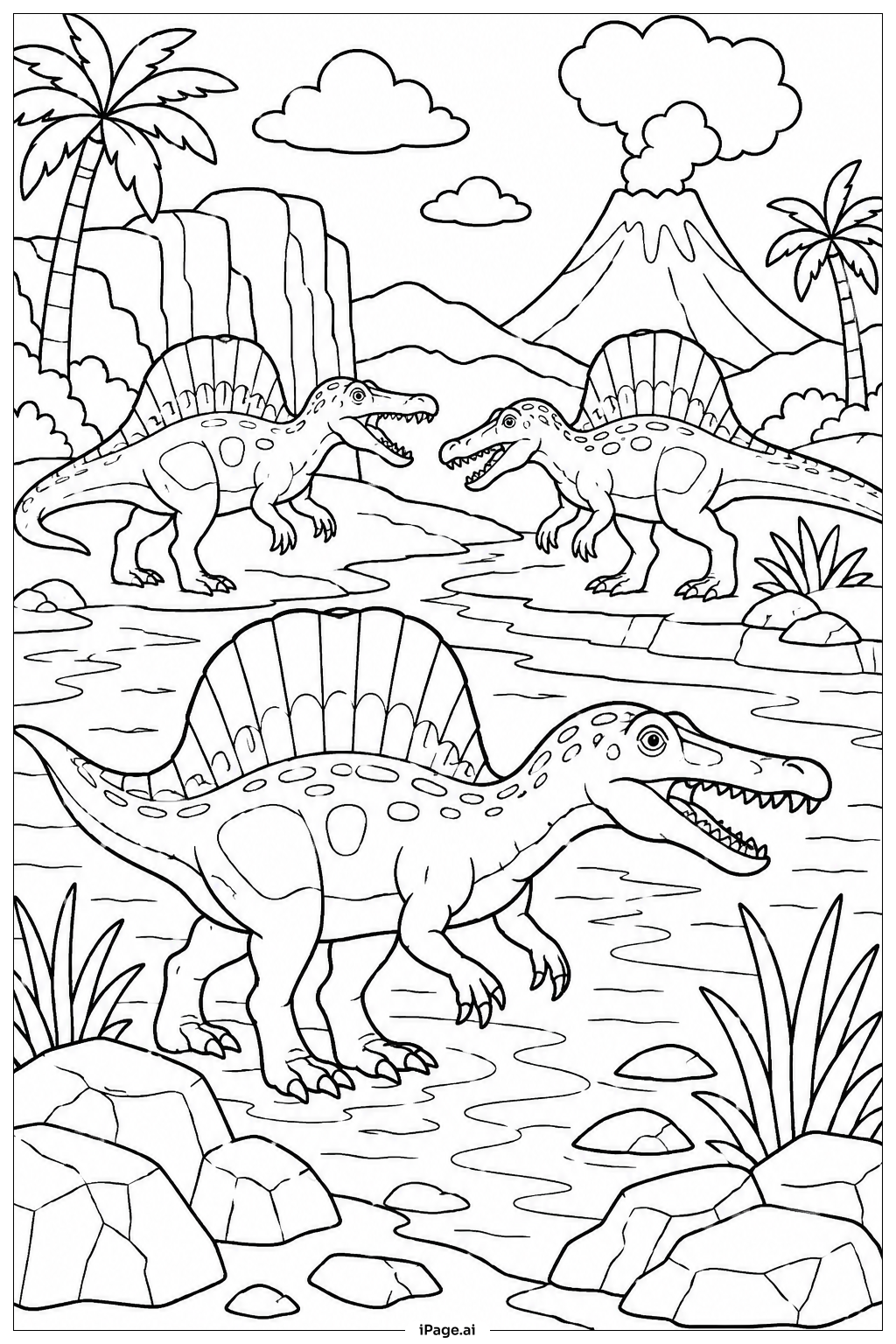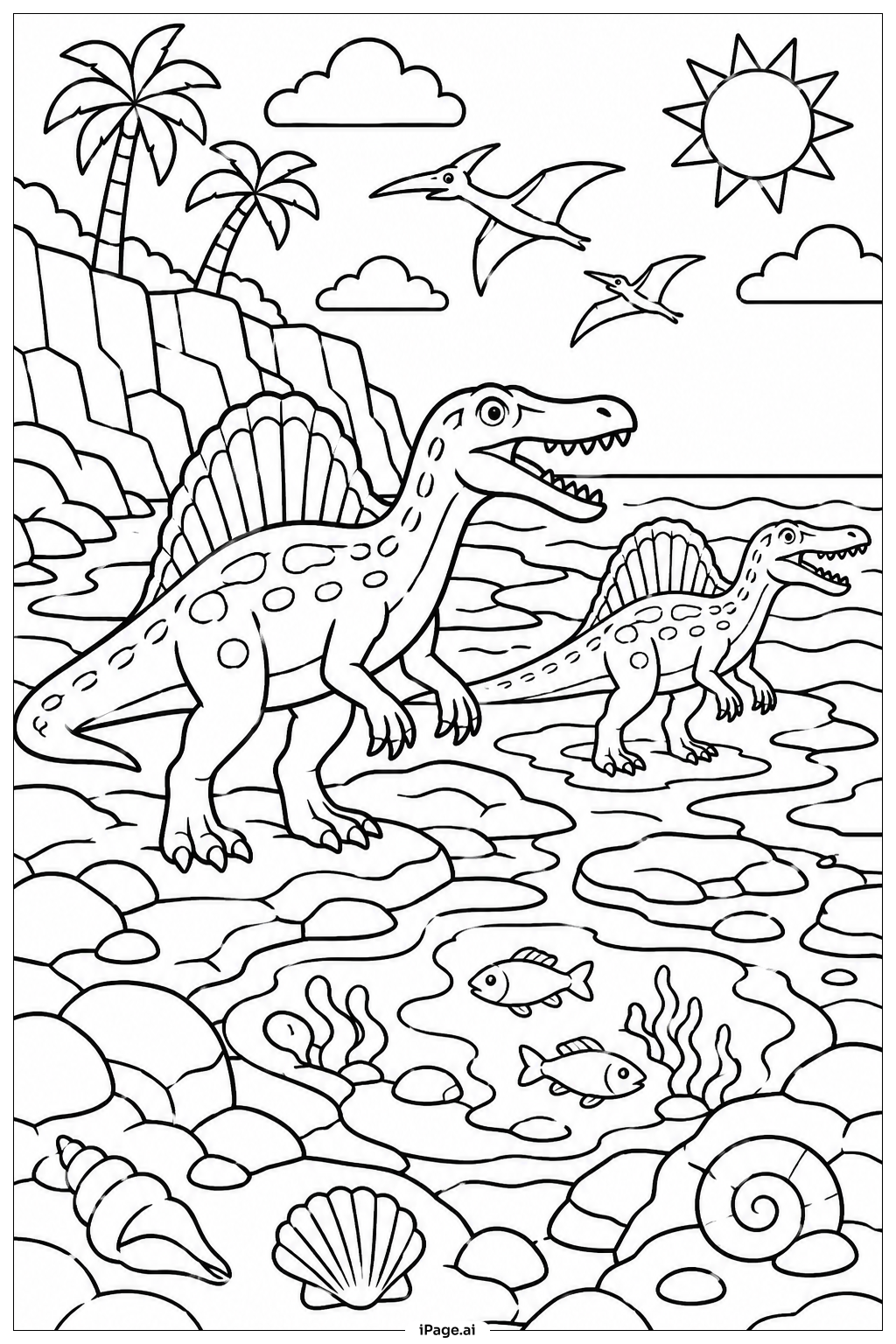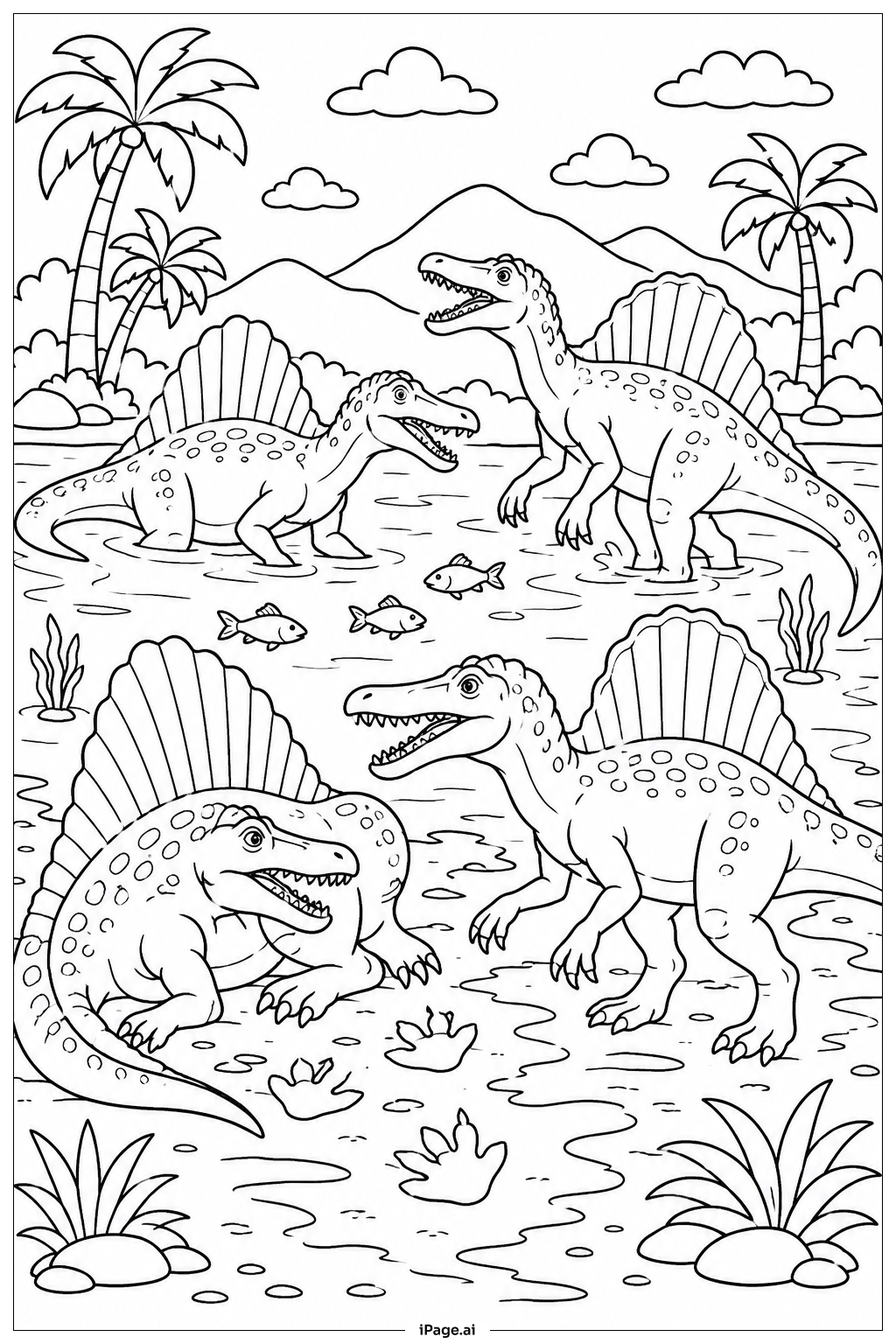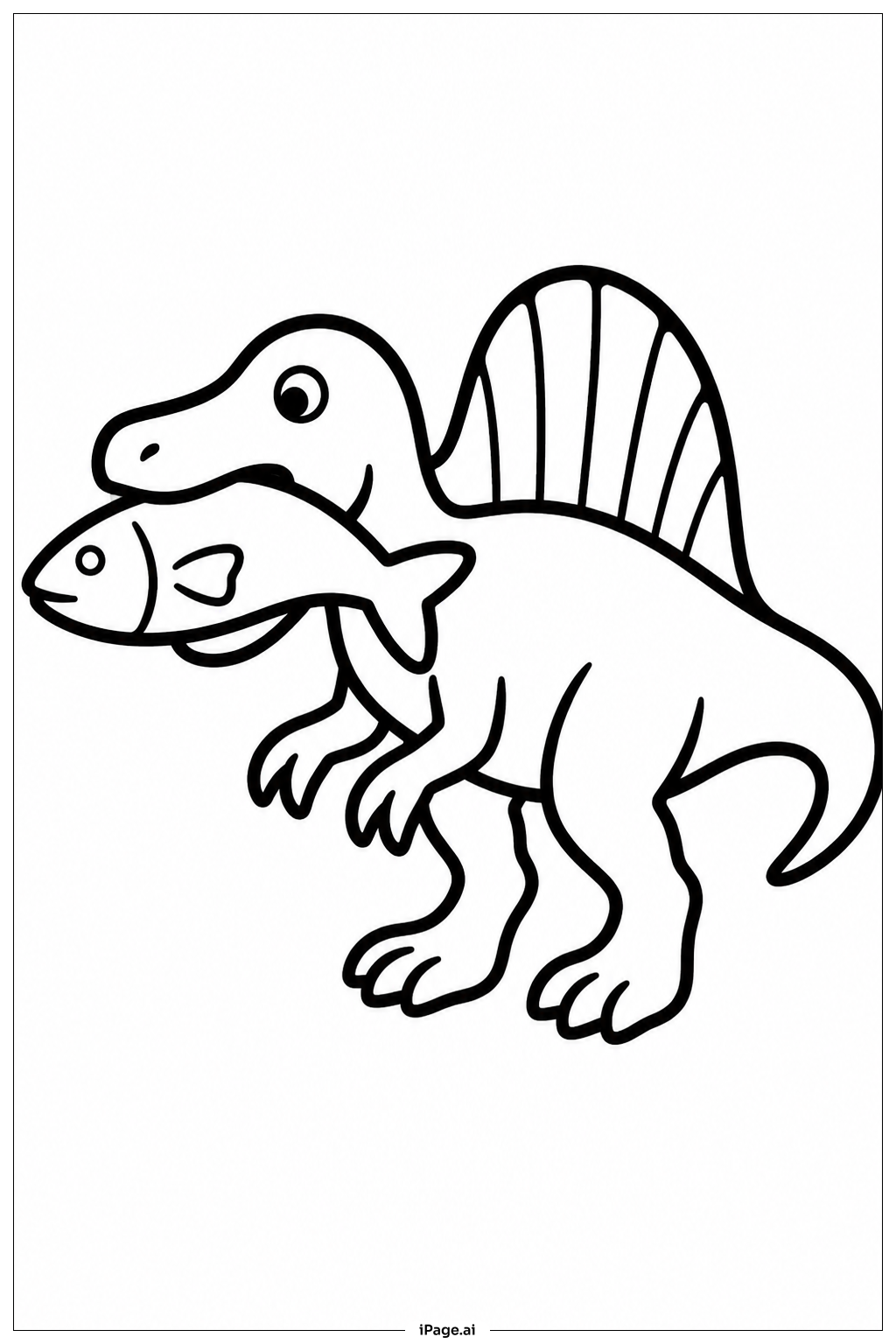
Coloring tips: How to color Spinosaurus Eating Fish coloring page well?
You can color the Spinosaurus using shades of green, brown, or gray to show its rough, scaly skin. Use brighter colors like red or orange for the sail on its back to make it stand out. Color the fish with silvery blues or greens to reflect its shiny scales. For the water, use a mix of light and dark blue shades to create depth and movement. The shore can be colored with browns and sandy tones. Adding some green for plants or trees in the background will make the scene lively. Try using different shades to highlight the Spinosaurus’s muscles and scales, giving your artwork more texture and life.
Coloring challenges: Which parts are difficult to color and need attention for Spinosaurus Eating Fish coloring page?
• Fine Details: The Spinosaurus’s sail has thin, vertical features that require careful coloring within small areas to avoid going outside the lines. • Texture and Scales: Showing the rough, scaly skin with coloring requires attention to shading and blending to make it look realistic rather than flat. • Water Effects: Coloring the water so it looks reflective and flowing involves using gradients of blue and white highlights, which can be challenging for beginners. • Fish Movement: Capturing the shifting shape and shimmer of the fish needs subtle color changes to make it look lively. • Overlapping Parts: Parts like the Spinosaurus’s claws on the fish and its tail behind other body parts require careful layering of colors to keep the shapes clear and distinct.
Benefits of coloring books: Advantages of drawing Spinosaurus Eating Fish coloring page
Coloring this Spinosaurus Eating Fish image helps develop fine motor skills by requiring careful strokes and control over small details. It encourages concentration and patience as children pay attention to different parts of the dinosaur and its environment. The image inspires creativity through choices of colors and shading techniques to bring a prehistoric scene to life. It also offers a fun way to learn about dinosaurs and aquatic creatures, sparking curiosity about nature and history. Overall, the activity supports artistic development, focus, and knowledge building in an engaging way.