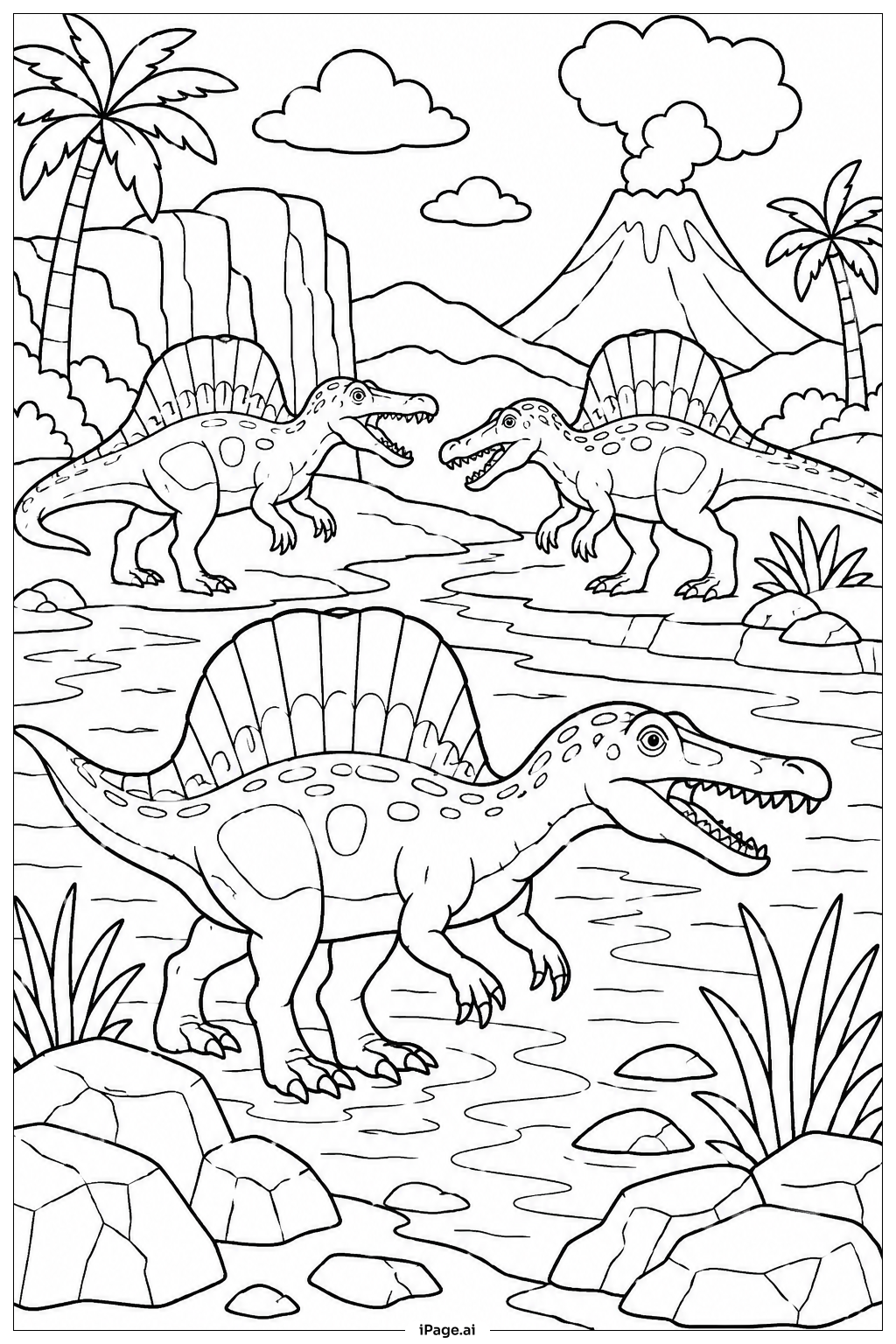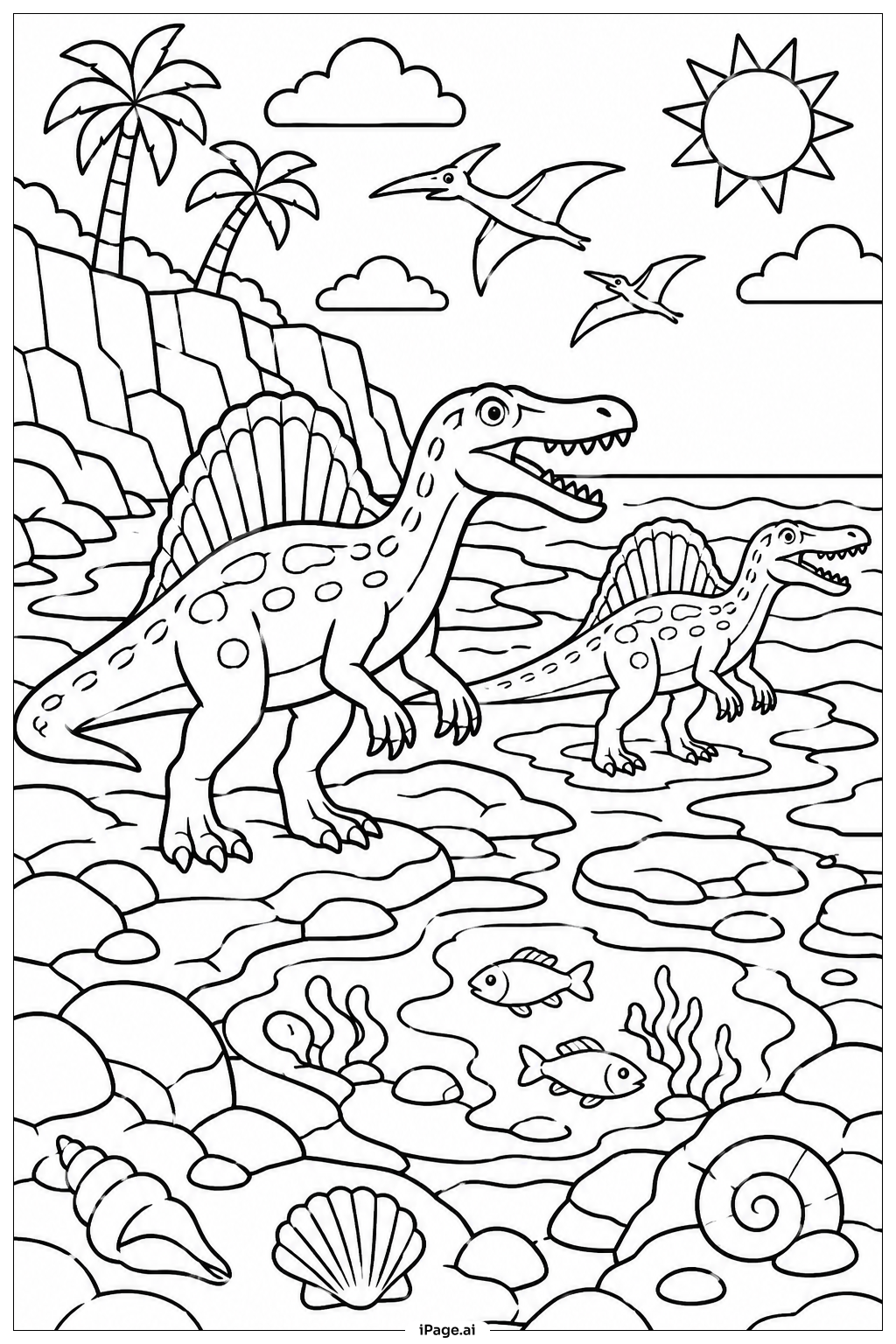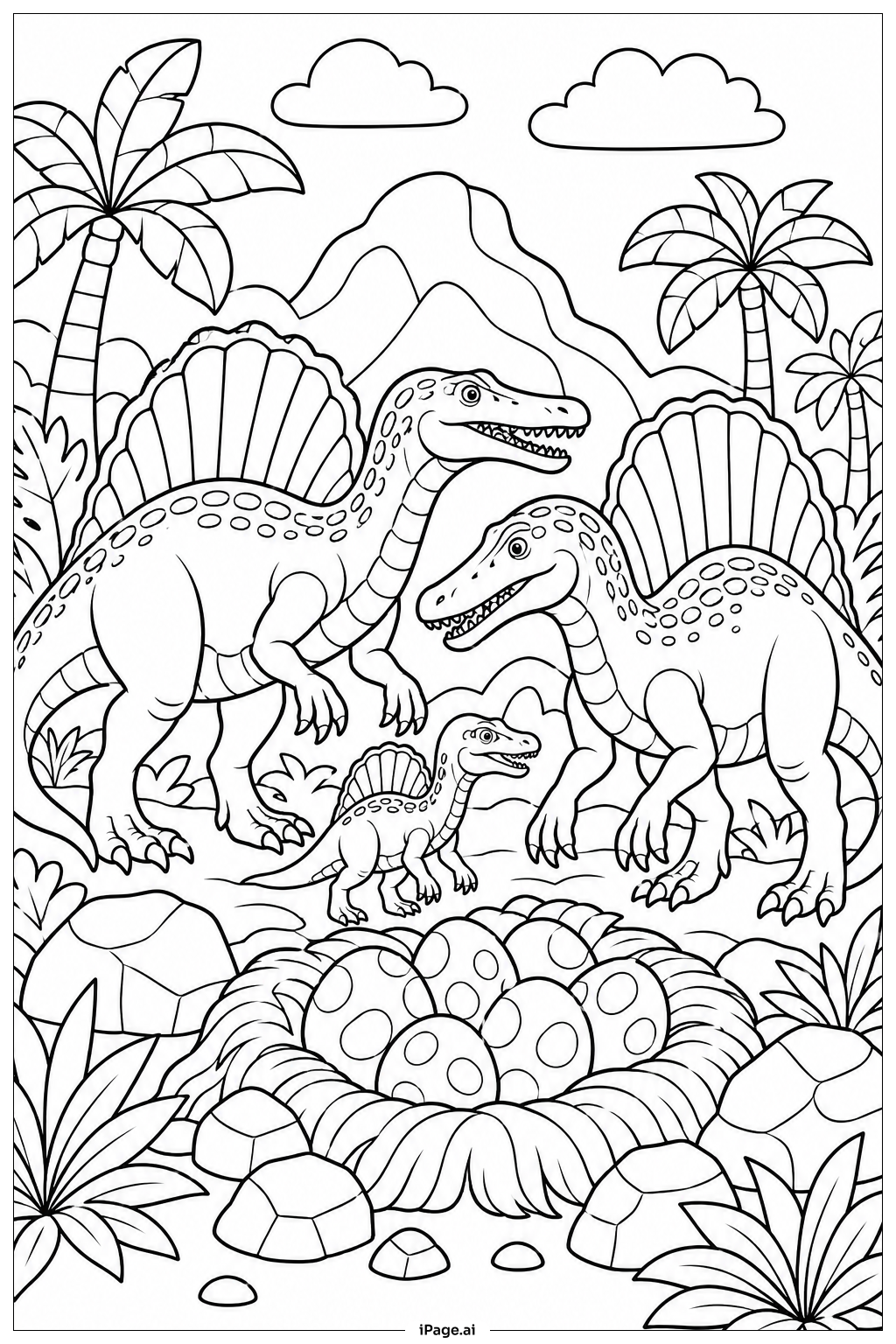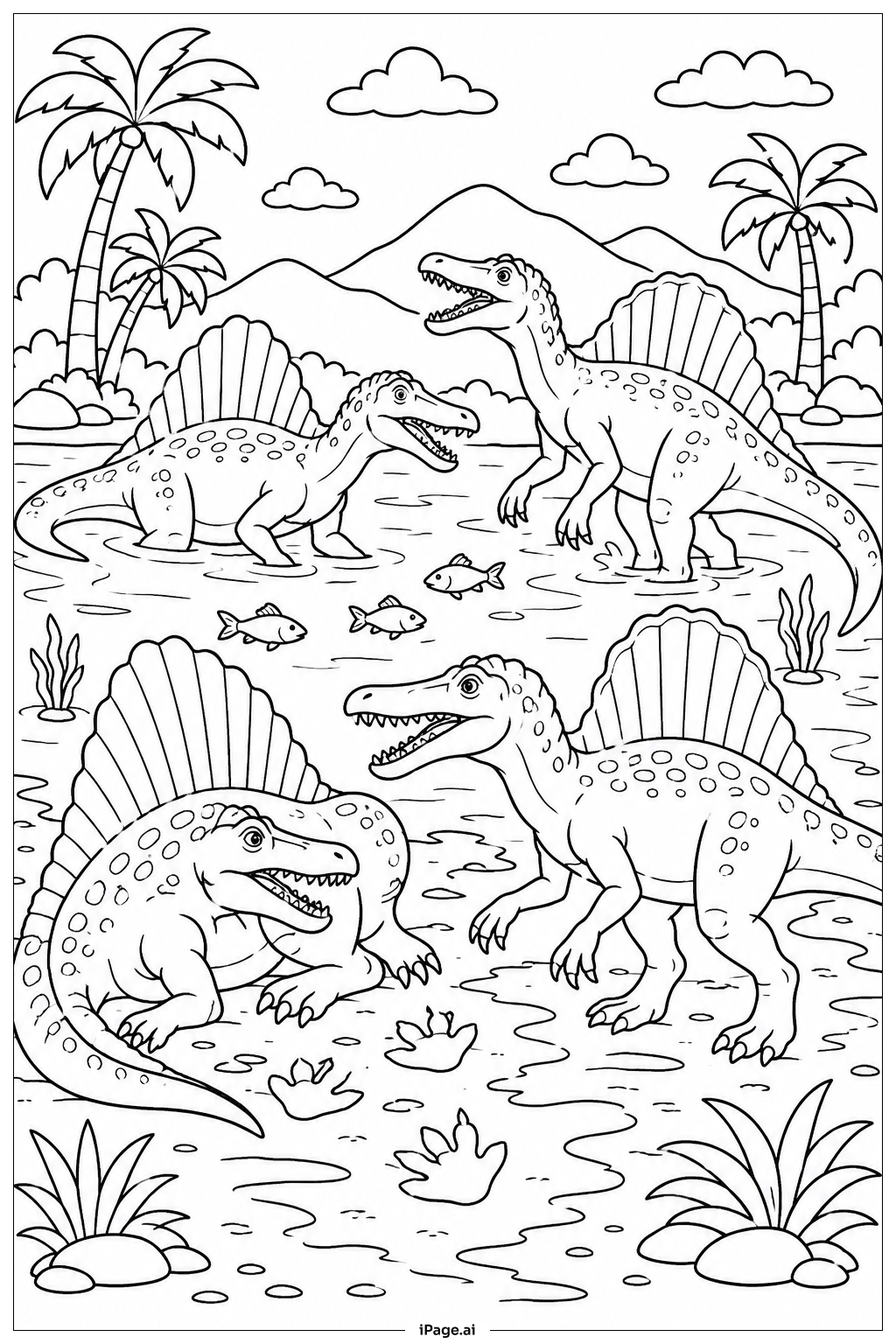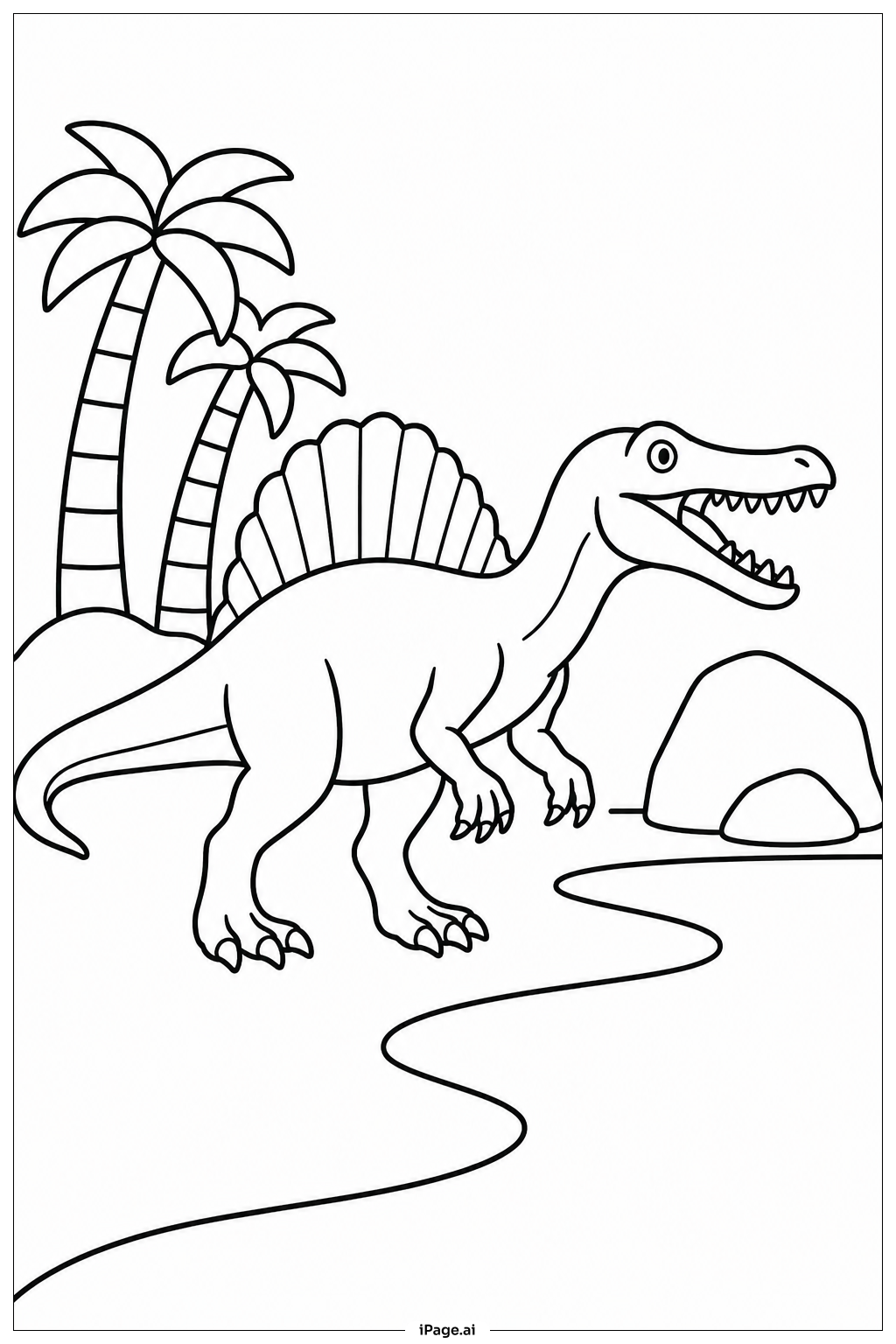
Coloring tips: How to color Spinosaurus At Riverbank coloring page well?
Start with the Spinosaurus body using earthy tones like sandy brown, olive green, or dark gray. Many paleoartists imagine Spinosaurus with striped or mottled patterns, so feel free to add darker streaks or spots along the back and sides for a wild, realistic look. The tall sail on its back is a great place to experiment — try warm oranges, reds, or purples to make it stand out. Use a lighter shade for the belly area to give the body depth and dimension. For the riverbank, go with rich browns and muddy tans. Paint the water in shades of blue, teal, and gray, adding white lines to show movement and ripples. The plants and ferns look great in various shades of green — mix light and dark greens to make the foliage feel full and lush. Finally, use a pale blue or lavender for the sky peeking through the background to complete the prehistoric atmosphere.
Coloring challenges: Which parts are difficult to color and need attention for Spinosaurus At Riverbank coloring page?
Coloring this Spinosaurus At Riverbank scene is a rewarding challenge. Here are the main difficulties to watch out for:
• The Spinosaurus Sail: The tall dorsal sail is one of the trickiest parts. It has a large surface area but needs smooth, even color to look good. Blending gradient tones from base to tip — going from dark at the bottom to lighter at the top — takes patience and a steady hand. Rushing this section can leave streaks or uneven patches.
• Body Shading and Texture: The dinosaur's body is large and muscular. To make it look three-dimensional rather than flat, you need to apply lighter colors on raised areas and darker shades in the recesses and folds. This kind of shading requires careful observation of where light would naturally fall.
• Water Rendering: Coloring convincing water is always a challenge. The river needs layered blues, teals, and grays blended together, plus light strokes to suggest ripples and current. Getting this to look natural rather than muddy takes a gentle, controlled touch.
• Foreground Plants and Reeds: The ferns and riverside vegetation have many small leaves and overlapping shapes. Staying within each leaf without smudging into neighboring ones demands fine motor control and a sharp, well-pointed coloring tool.
• Background Depth: Creating a sense of distance — where far-off trees and sky look softer and lighter than the foreground — requires deliberate color choices. Without this atmospheric perspective, the whole scene can feel flat and two-dimensional.
Benefits of coloring books: Advantages of drawing Spinosaurus At Riverbank coloring page
Coloring this Spinosaurus At Riverbank page offers a wide range of benefits for kids and young learners.
First, it builds focus and concentration. Filling in the details of a large dinosaur and its environment requires sustained attention, which is great practice for school-age children.
Second, it sparks curiosity about science and nature. Spinosaurus is one of the most fascinating dinosaurs ever discovered, and coloring it can inspire kids to learn more about prehistoric life, ecosystems, and how ancient creatures lived.
Third, it develops fine motor skills. Carefully coloring within the lines — especially around the detailed sail, the plants, and the rippling water — strengthens hand muscles and improves pencil control, which directly supports handwriting development.
Fourth, it encourages creativity. There is no single "correct" way to color a dinosaur, so children are free to experiment with bold, imaginative color choices. This builds confidence and self-expression.
Finally, coloring is a calming, screen-free activity. It gives children a chance to slow down, relax, and enjoy a quiet creative process. Completing the page also delivers a real sense of accomplishment, boosting self-esteem and pride in their work.