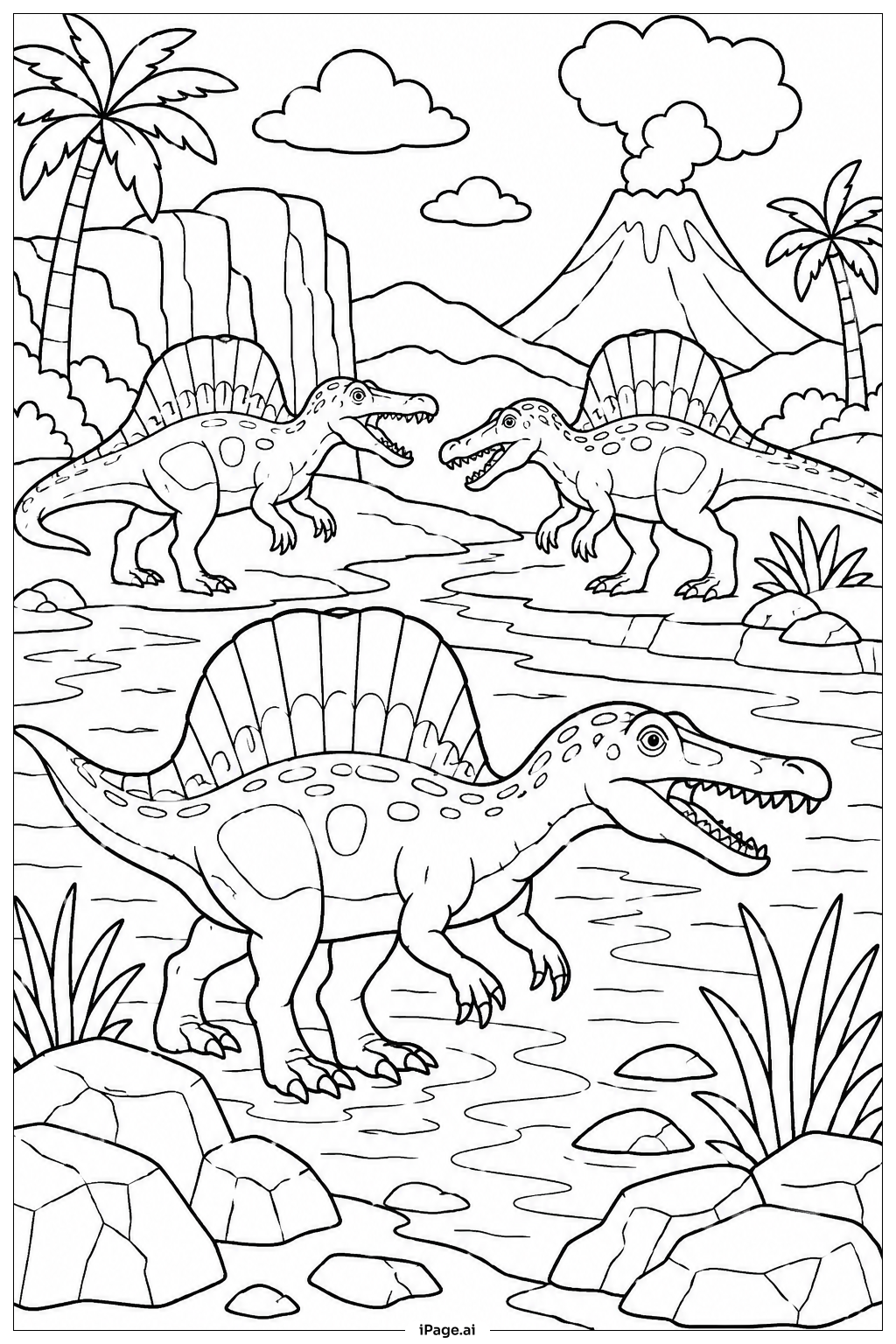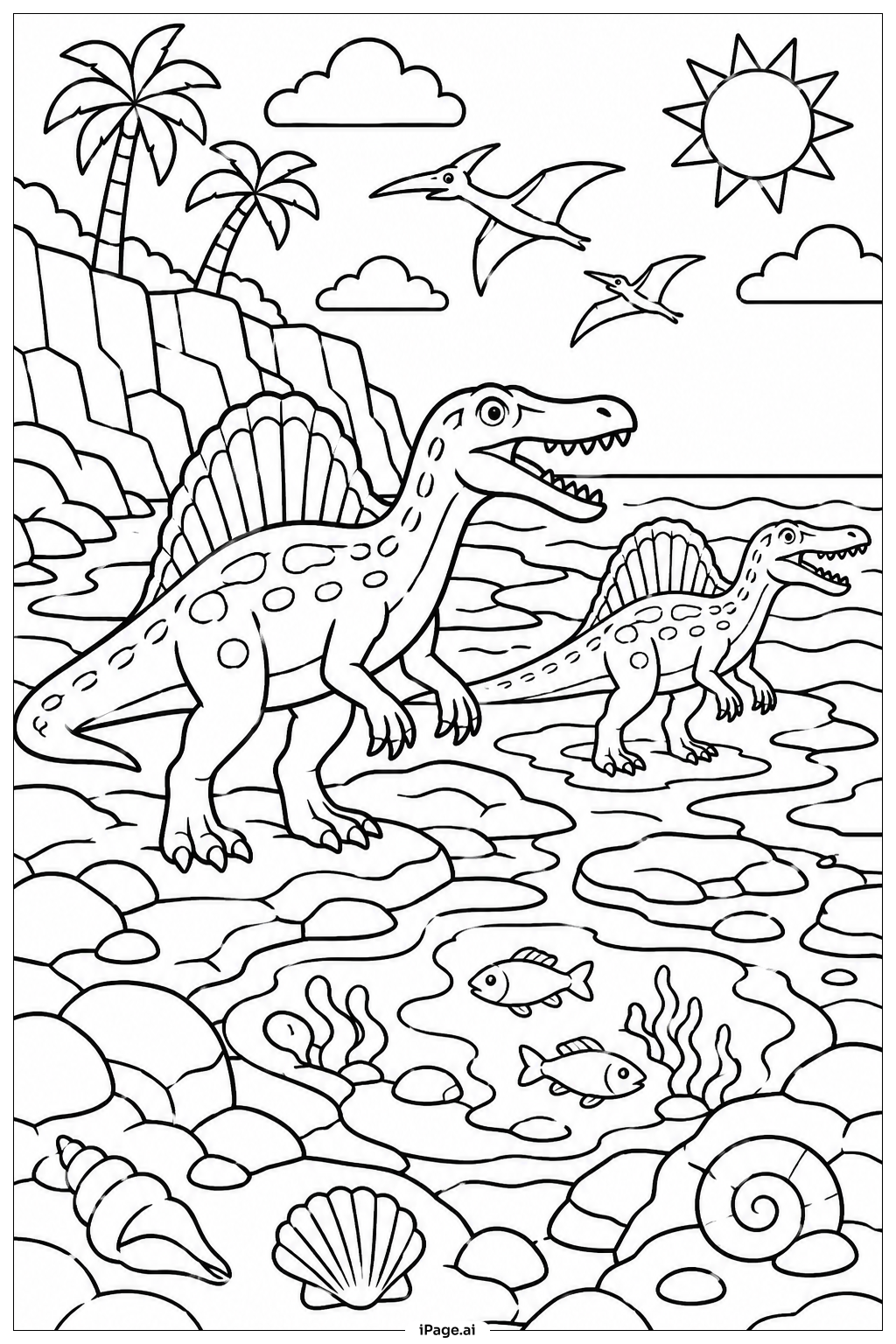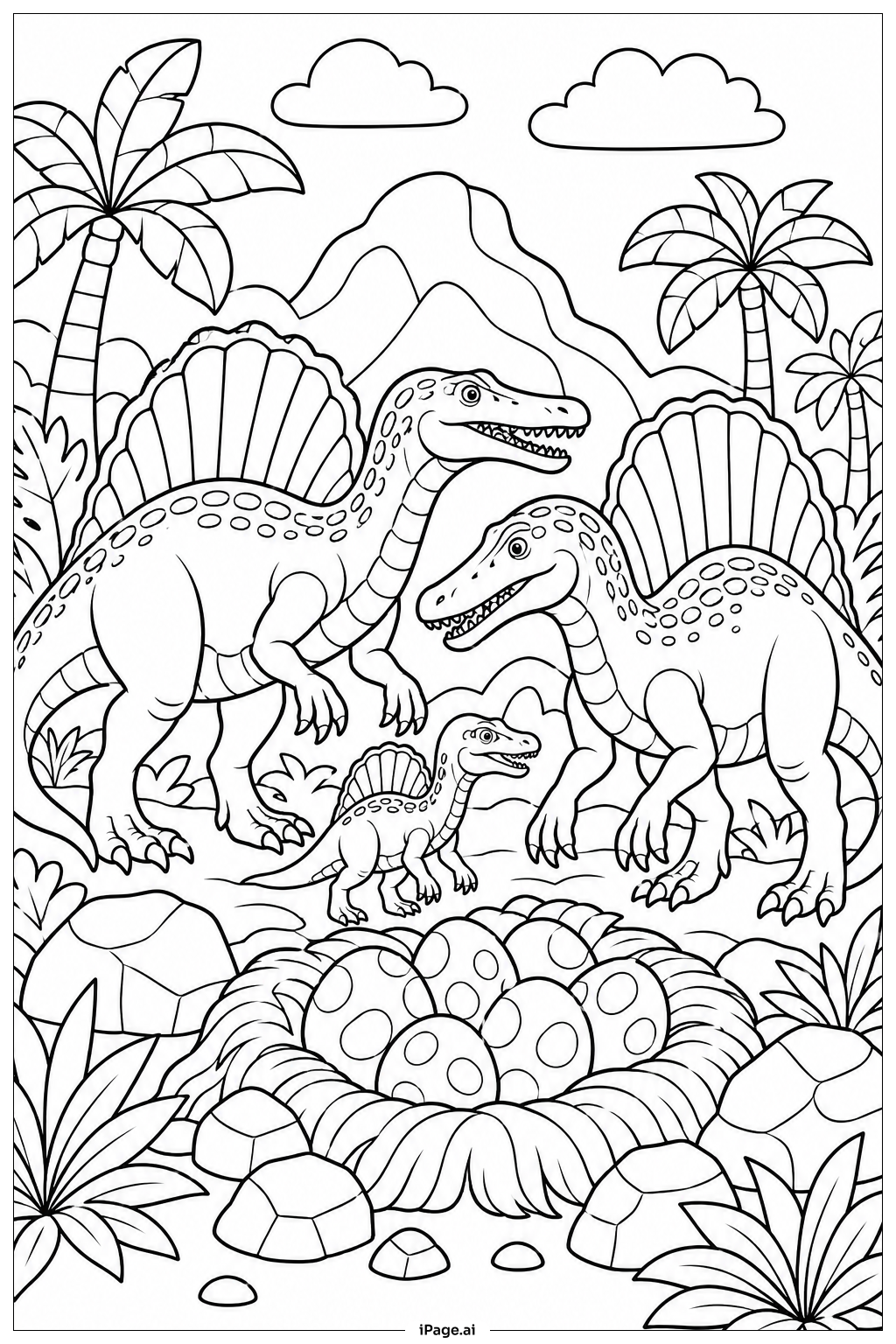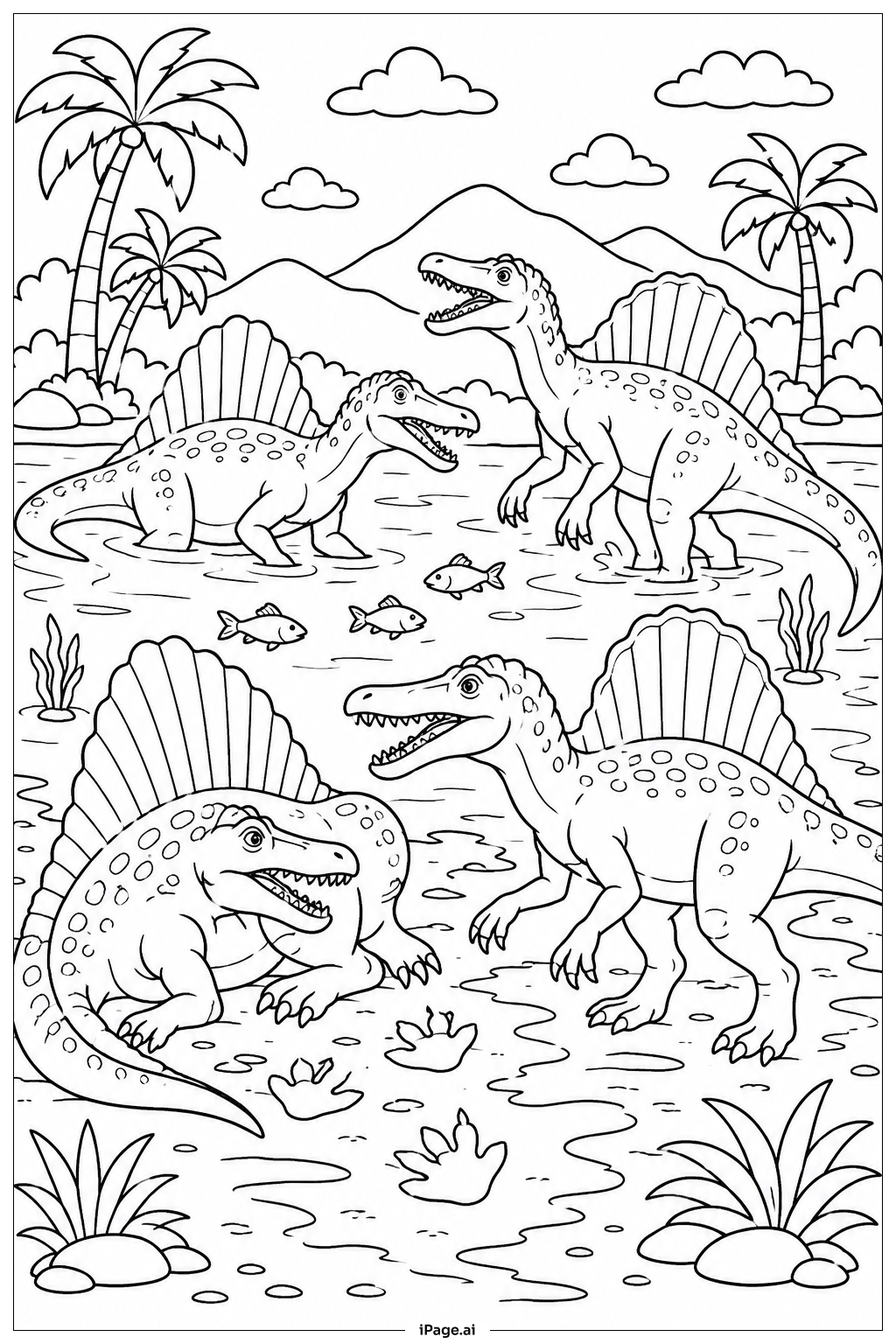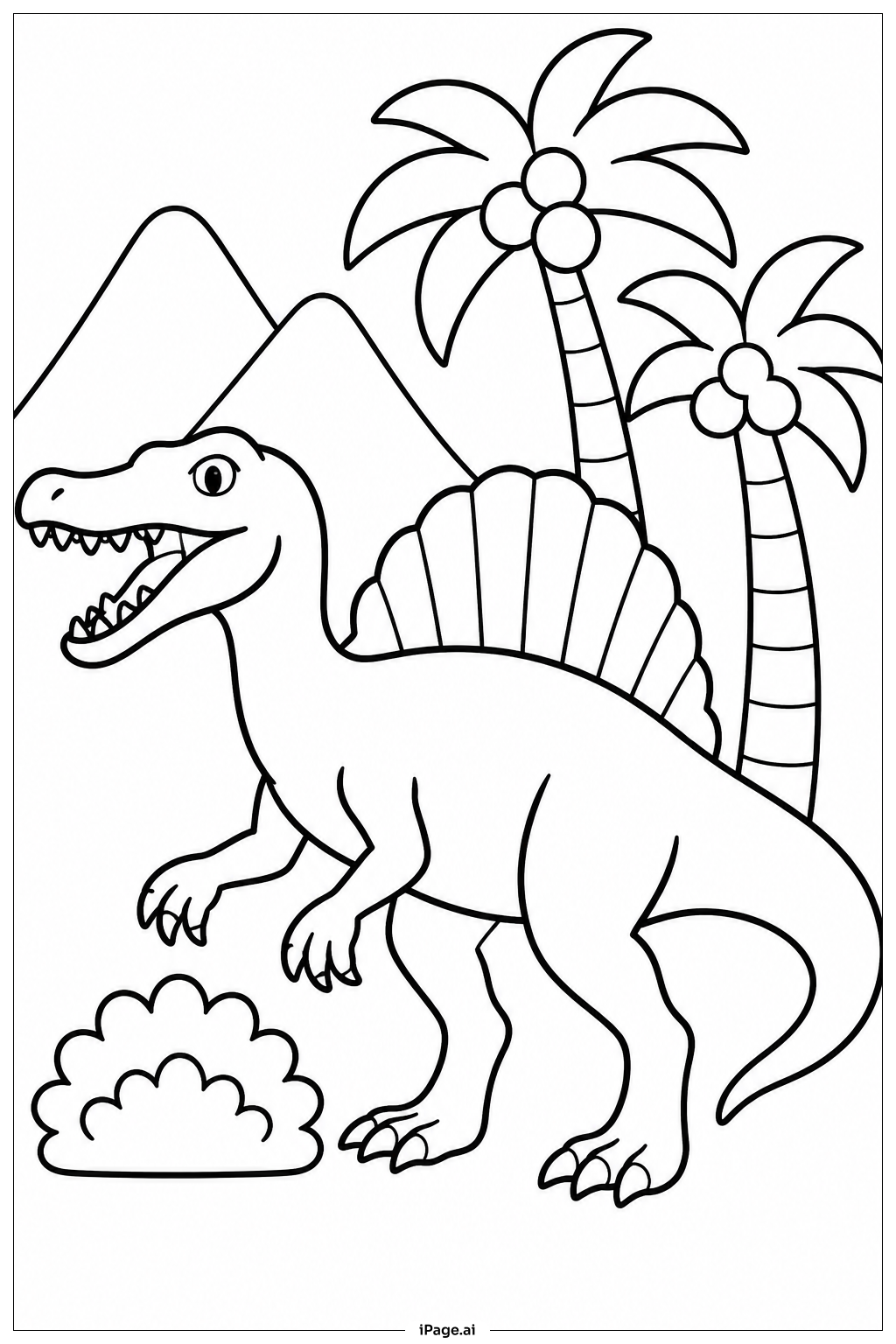
Coloring tips: How to color Spinosaurus And Palm Trees coloring page well?
For the Spinosaurus, consider using earthy tones like olive green, brown, or gray for the body, with a contrasting color for the distinctive sail such as orange, red, or purple to make it stand out. The sail could also feature a gradient or pattern. Use darker shades for shadows under the belly and legs to add dimension. The palm trees can be colored with various shades of green for the fronds, from lime to forest green, and brown or tan for the trunks. Add yellow or golden tones to create sunlight effects on the leaves. The background sky could be light blue with hints of orange or pink for a sunrise or sunset atmosphere. Use sandy yellows and browns for the ground, and add small pops of color for any vegetation or flowers to bring the prehistoric scene to life.
Coloring challenges: Which parts are difficult to color and need attention for Spinosaurus And Palm Trees coloring page?
• Sail Structure Details: The Spinosaurus sail is the most distinctive feature and presents a unique challenge. The sail contains multiple segments or ridges that require careful attention to create depth and dimension. Colorists need to decide whether to use solid colors, gradients, or patterns, and must maintain consistency across the entire sail structure while adding highlights and shadows to make it appear three-dimensional.
• Scale and Texture Variation: Creating realistic dinosaur skin texture requires thoughtful color layering and shading techniques. The body has large areas that can appear flat if colored uniformly. Adding subtle color variations, spots, stripes, or mottled patterns can enhance realism, but requires planning and patience to execute properly without overwhelming the image.
• Palm Frond Complexity: The palm trees feature numerous individual fronds with detailed lines radiating from the center. Each frond section needs coloring while maintaining the overall leaf shape. This repetitive detail work requires concentration and steady hand control, especially when using different green shades to create natural variation and depth within each palm leaf.
• Depth and Background Integration: Balancing the foreground Spinosaurus with the background palm trees and landscape elements requires strategic color choices. Darker, more saturated colors work well for foreground elements, while lighter, less intense colors help background elements recede. Managing this color perspective throughout the entire scene while maintaining visual harmony presents a sophisticated coloring challenge that develops spatial awareness skills.
Benefits of coloring books: Advantages of drawing Spinosaurus And Palm Trees coloring page
Coloring this Spinosaurus scene offers numerous developmental benefits for children. It enhances fine motor skills and hand-eye coordination through detailed work on the dinosaur's scales, claws, and the intricate palm fronds. The image encourages learning about prehistoric life, sparking curiosity about dinosaurs and ancient ecosystems. Children develop color theory understanding by experimenting with complementary colors for the Spinosaurus and its environment. The detailed nature of the sail structure and palm leaves promotes focus, patience, and concentration. This coloring page also supports creative decision-making as children choose whether to use realistic or imaginative color schemes. Working on larger areas like the dinosaur body builds confidence, while smaller details provide satisfying challenges. The tropical prehistoric setting stimulates storytelling and imaginative play, allowing children to envision the Spinosaurus in its natural habitat and create narratives around the scene.