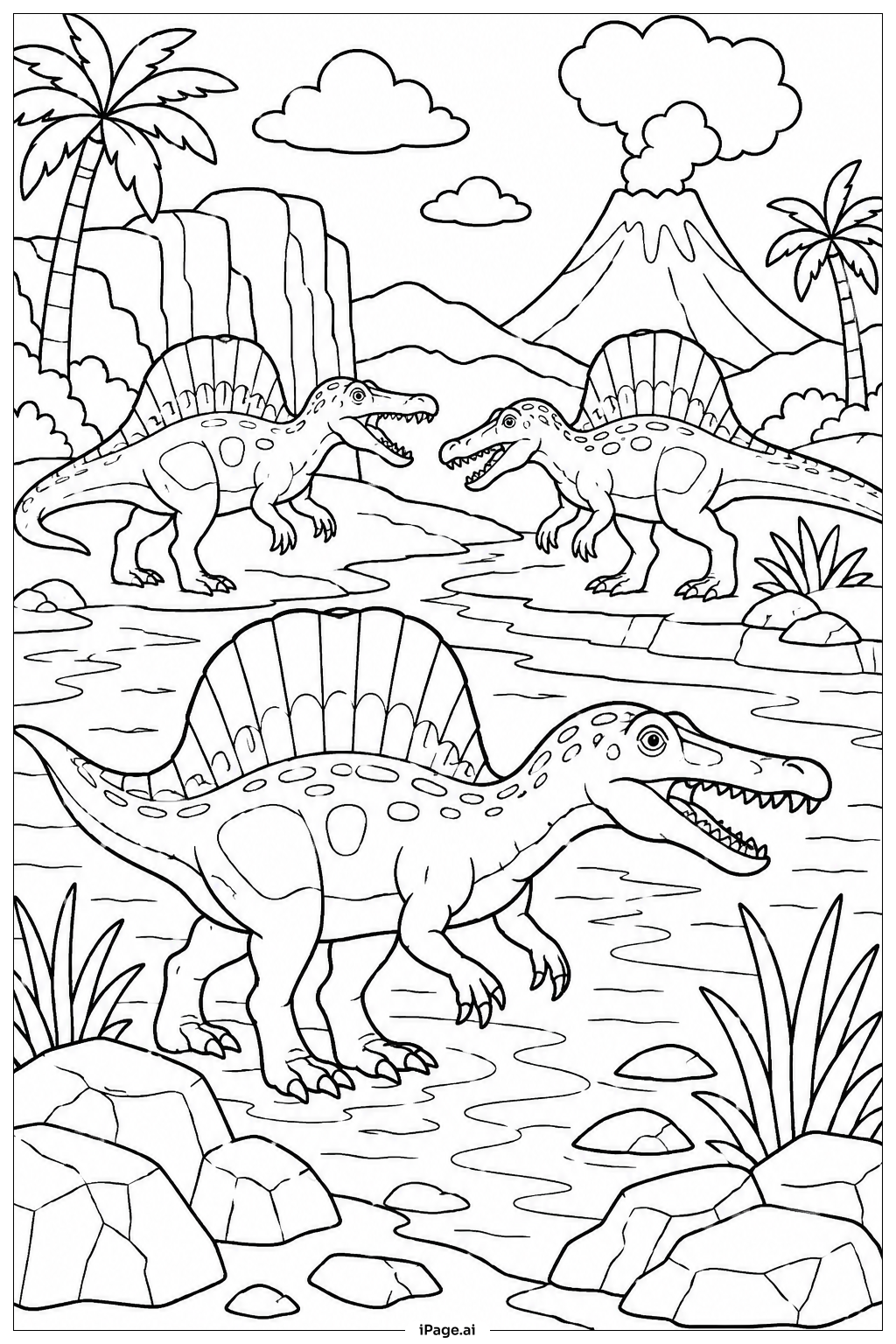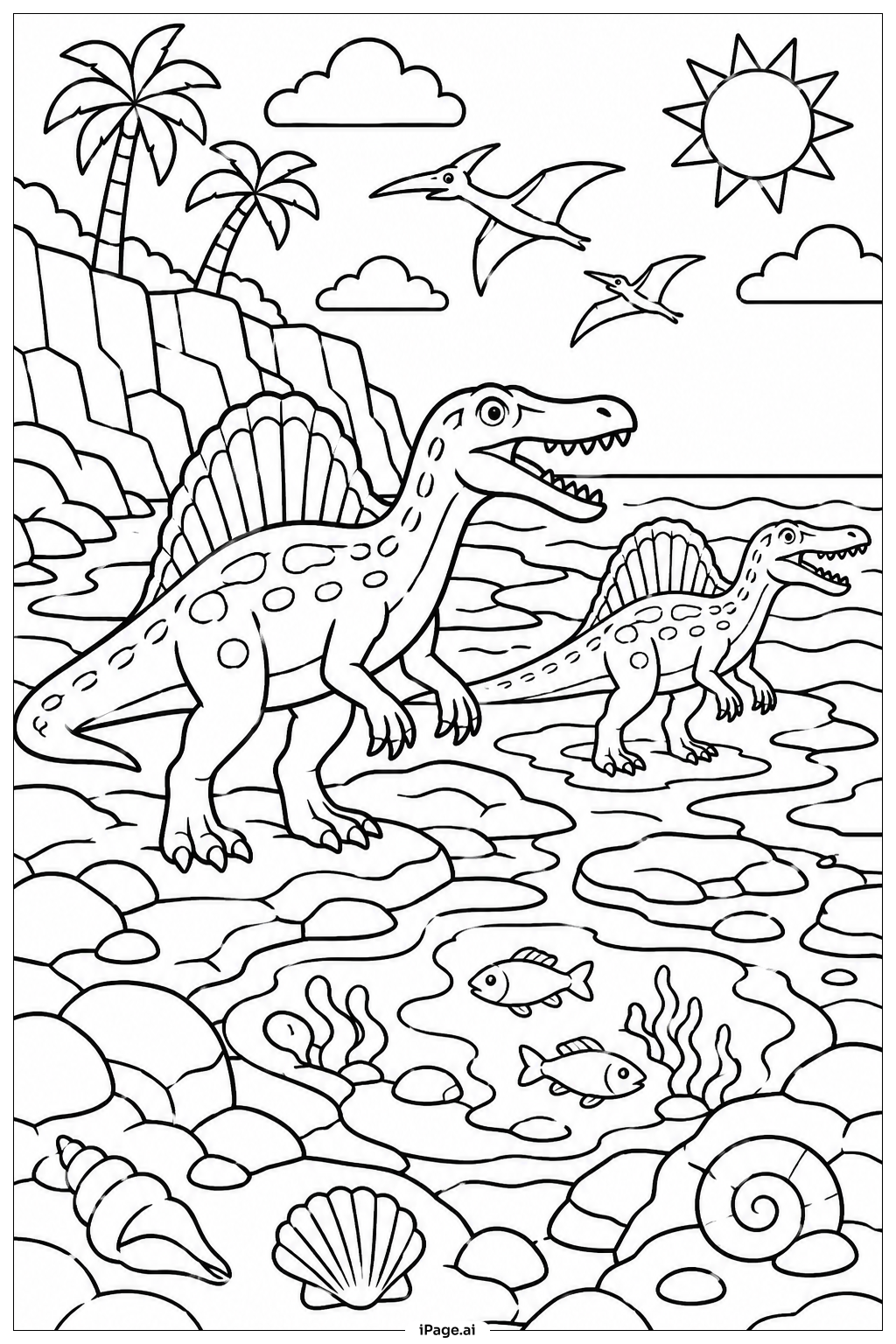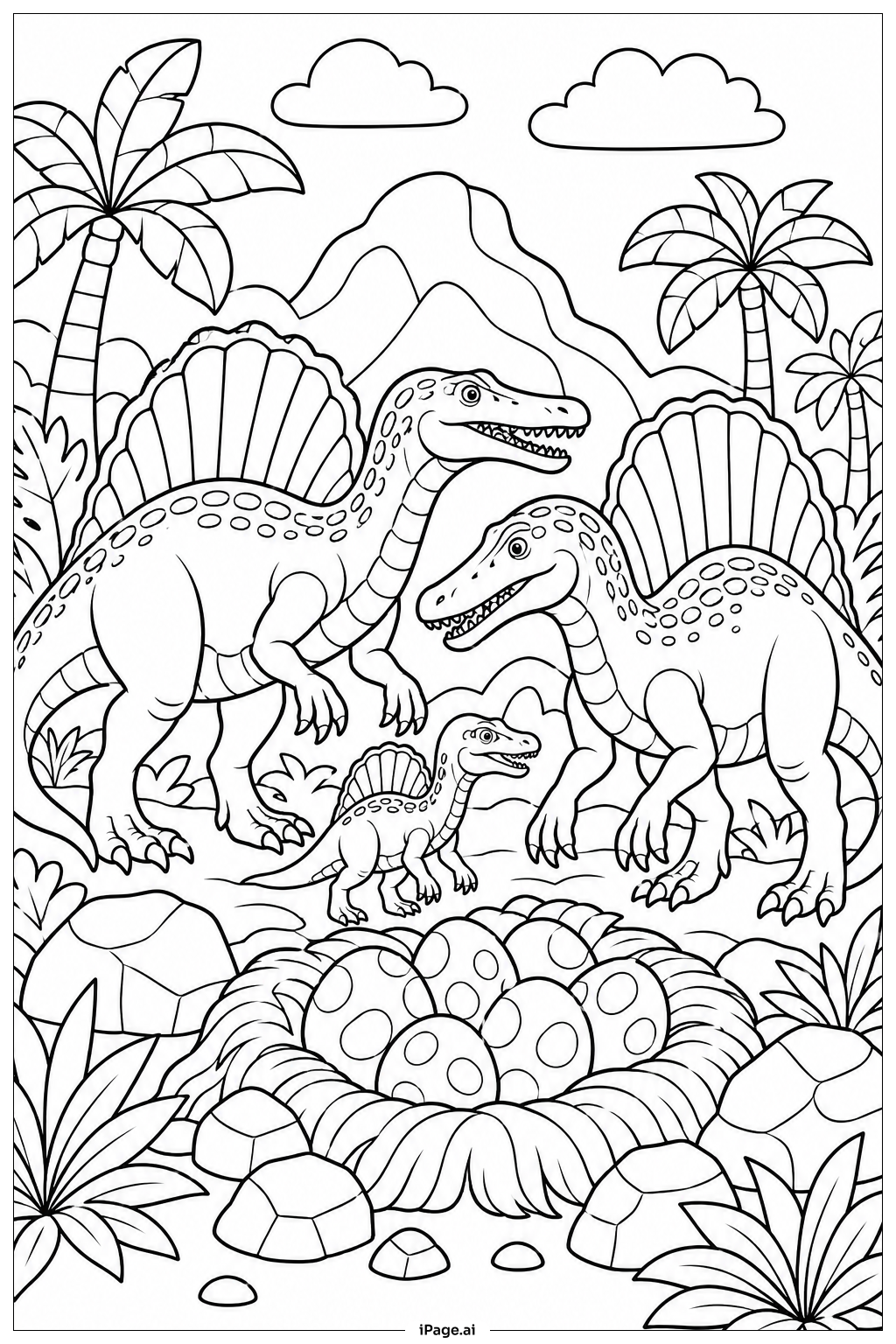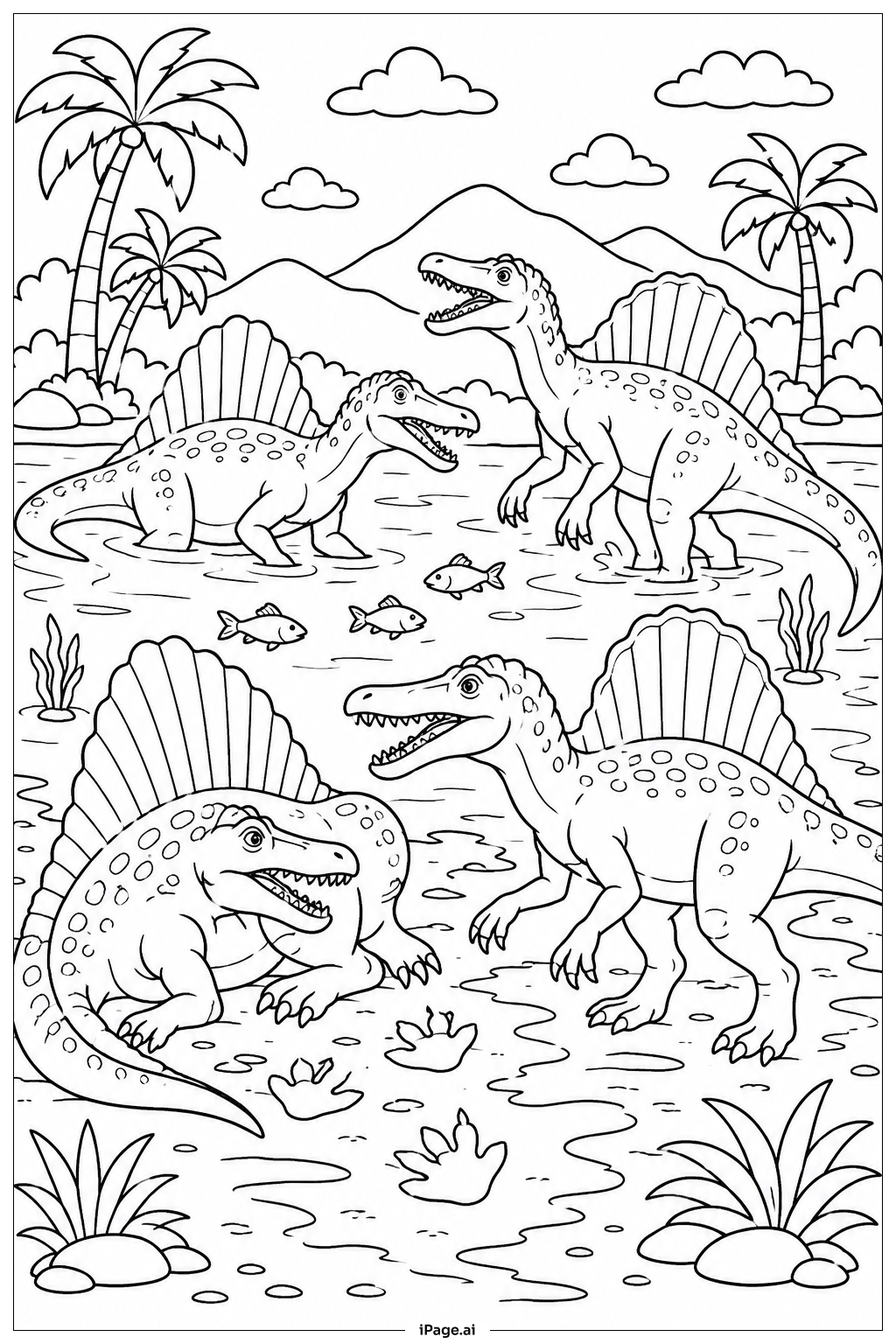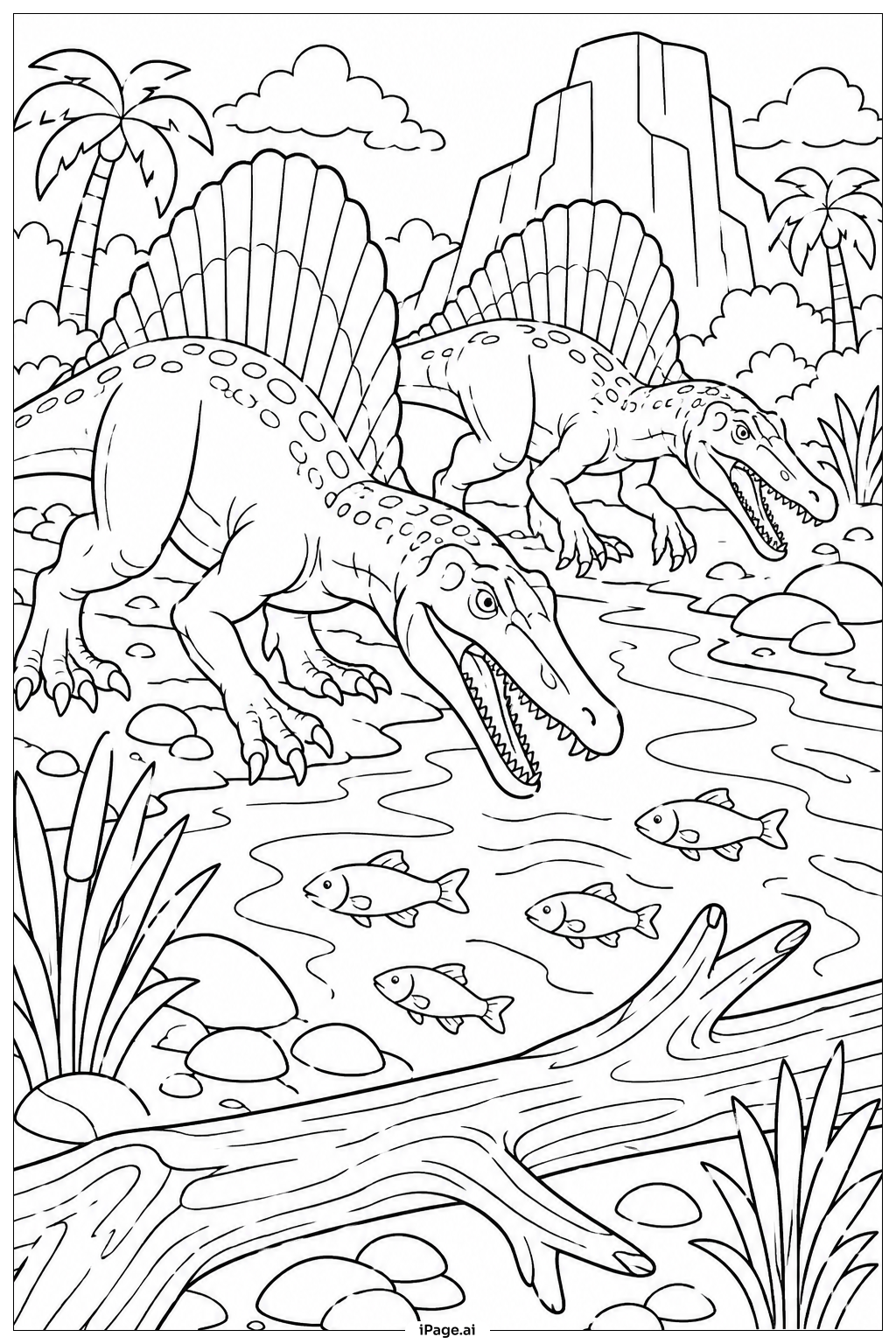
Coloring tips: How to color Spinosaurus Ambush Scene coloring page well?
For this Spinosaurus Ambush Scene, try using earthy colors like dark greens and browns for the swamp plants and muddy ground. The Spinosaurus can be colored with shades of gray, olive green, or rusty orange to make it look realistic. Use lighter colors like yellow or cream for the dinosaur’s teeth and belly. To add depth, shade the sail on its back with dark red or maroon. To create water, use blues and greens with ripples in white or light blue. Don’t forget to color the background trees with different tones of green to make the whole scene feel alive and mysterious.
Coloring challenges: Which parts are difficult to color and need attention for Spinosaurus Ambush Scene coloring page?
• Detailed Texture: The Spinosaurus’s skin has many scales and wrinkles. Coloring these small details evenly can be tricky without smudging colors or going outside the lines.
• Complex Background: The swamp has many overlapping plants, reeds, and trees. Figuring out which parts to color first and blending colors nicely can be hard.
• Water Effects: Creating a realistic water look with ripples and reflections needs careful shading and blending of blues, greens, and whites.
• Contrast Balance: Making the Spinosaurus stand out from the busy background while keeping the scene natural requires attention to color choices and shading.
• Small Teeth and Eyes: Coloring tiny areas like the teeth and the eye demands precision and patience to avoid blurriness or missed spots.
Benefits of coloring books: Advantages of drawing Spinosaurus Ambush Scene coloring page
Coloring this Spinosaurus Ambush Scene helps improve fine motor skills by focusing on detailed areas like scales and plants. It encourages children to observe nature and prehistoric creatures closely, boosting their knowledge and curiosity about dinosaurs. Selecting colors and shading enhances creativity and decision-making. Working on the watery environment promotes the understanding of textures and reflections. Overall, this coloring exercise develops concentration, patience, and artistic skills in a fun and engaging way for children aged 4–16.