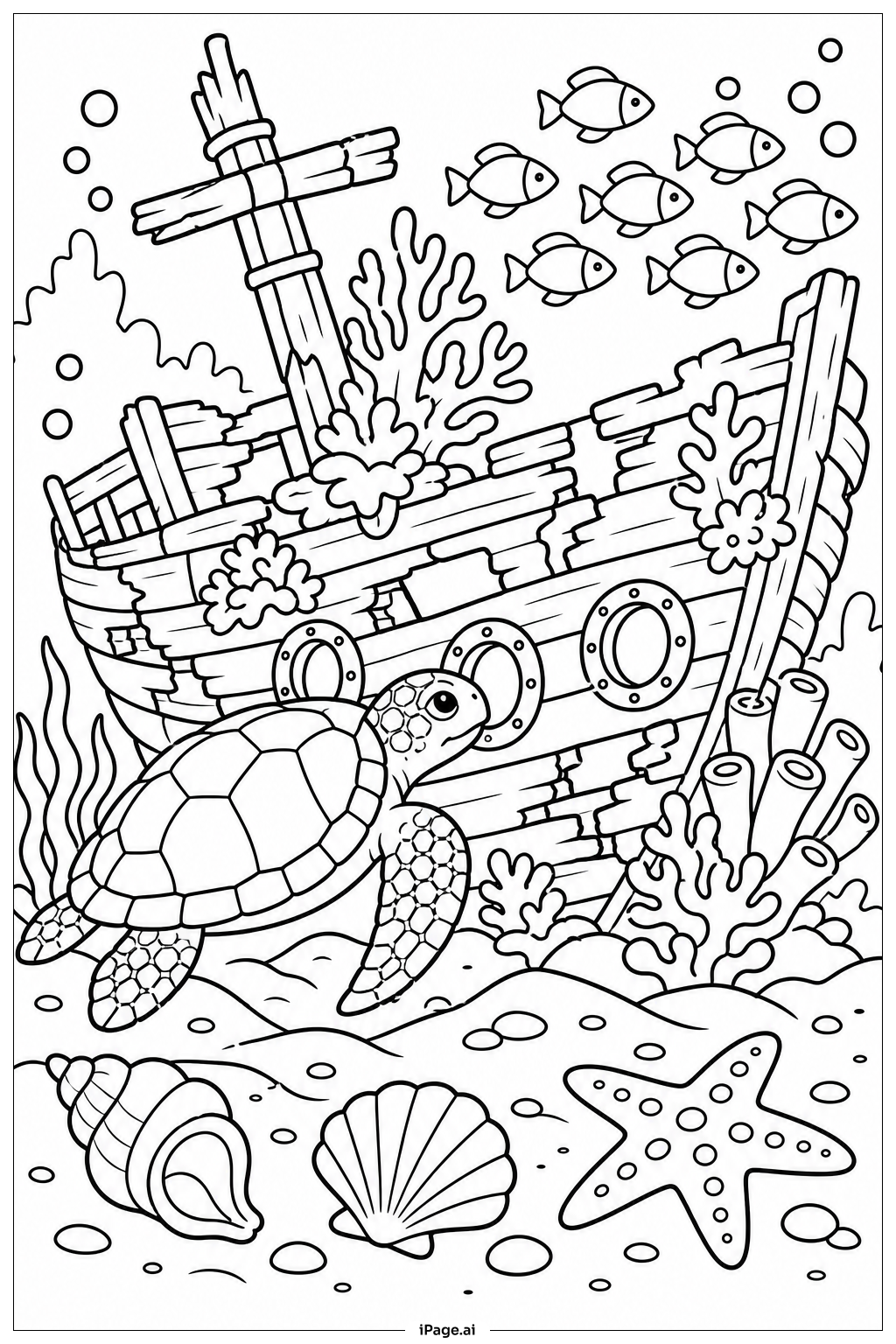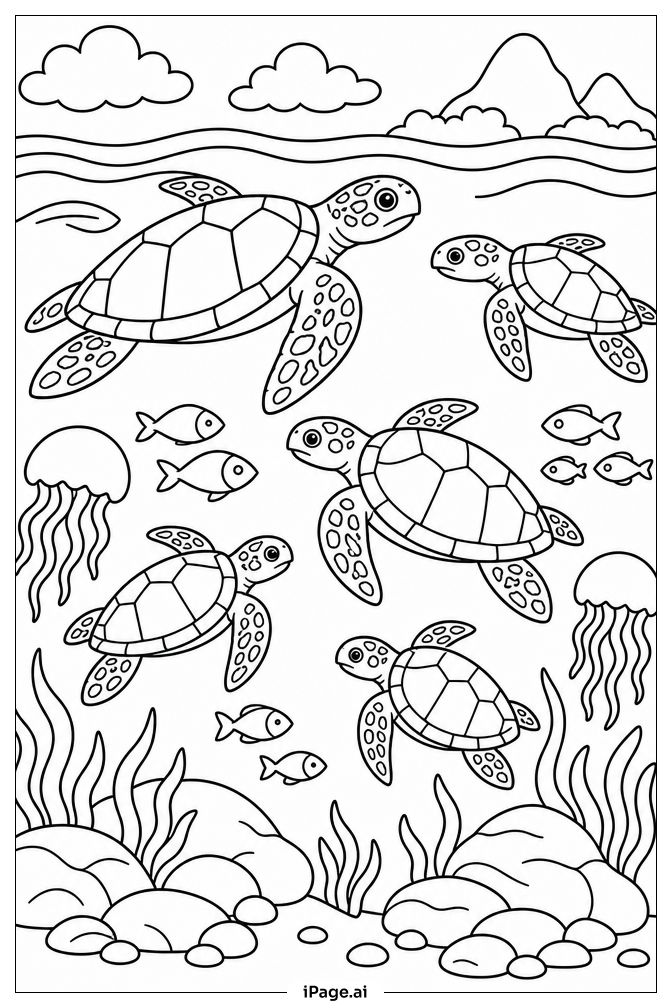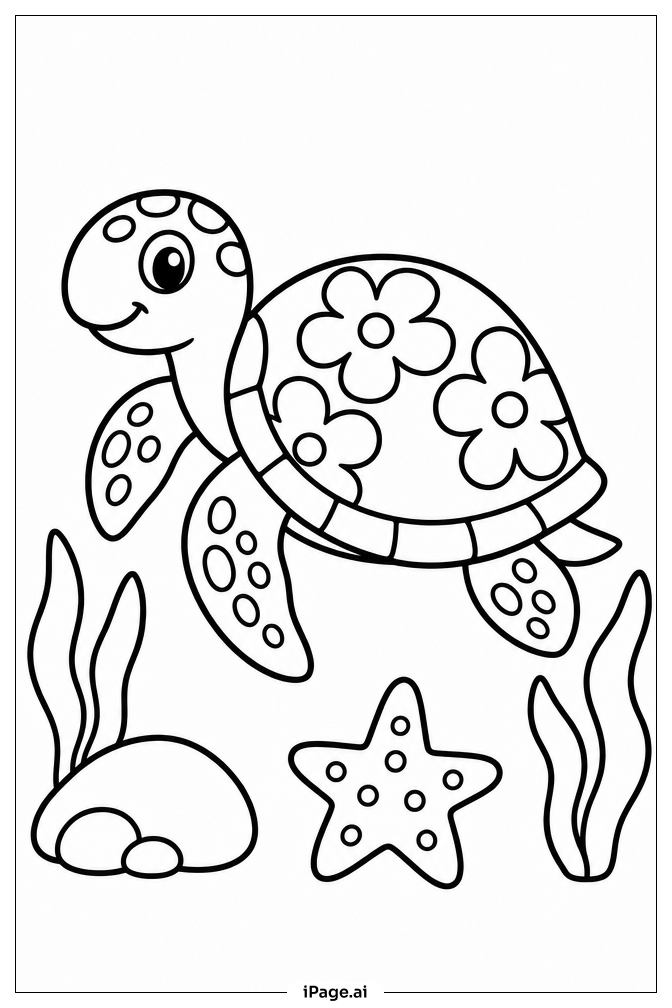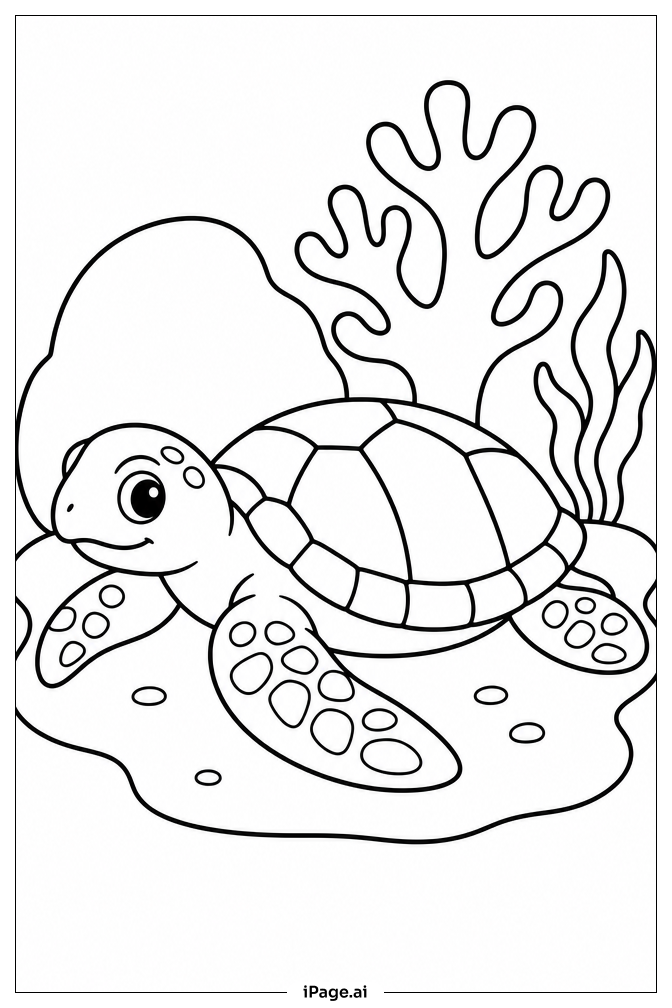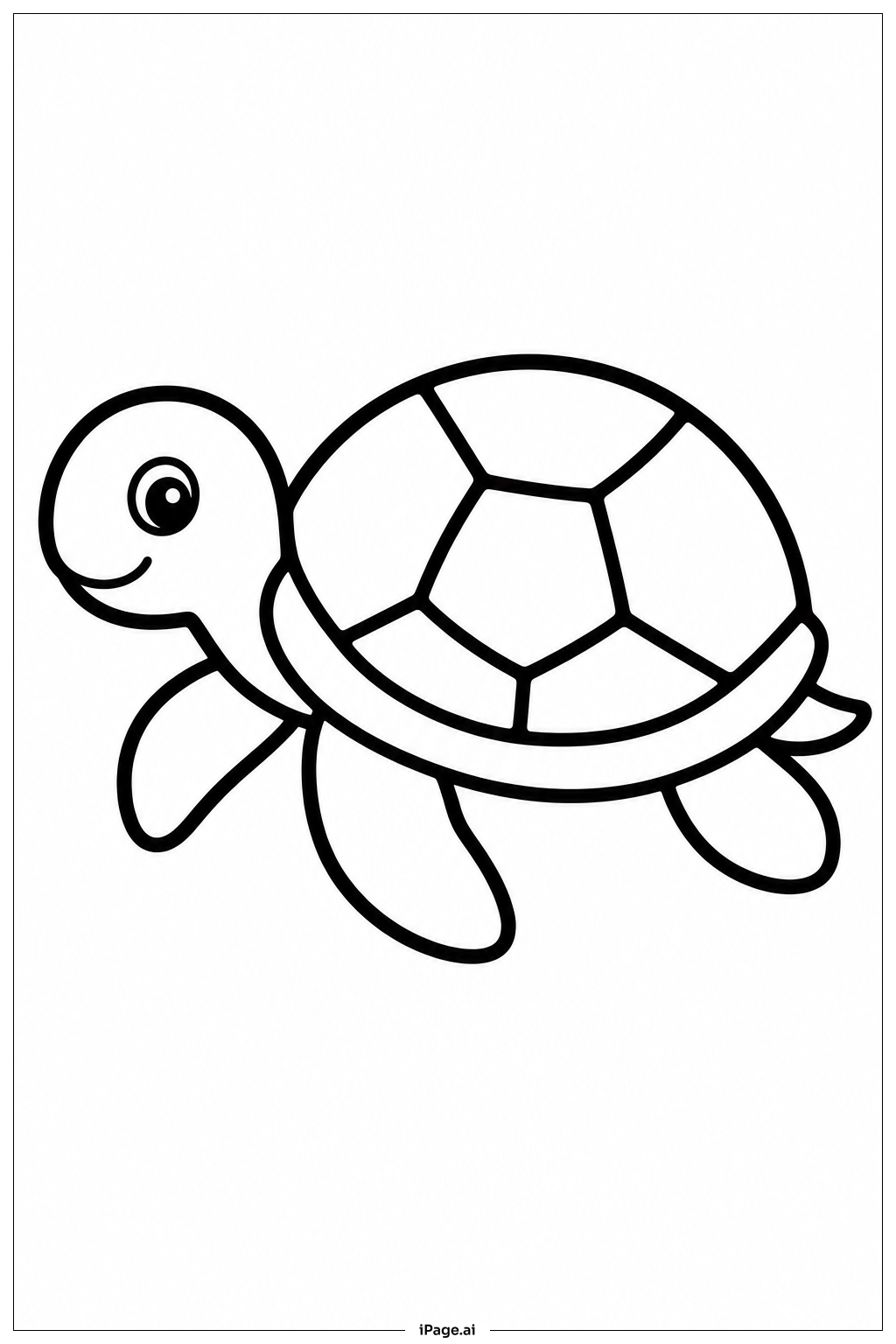
Coloring tips: How to color Sea Turtle With Simple Shell coloring page well?
Start with the shell. Use different shades of green or brown for each shell section to make the pattern stand out. You can also try a mix of dark green and olive for a natural look. Color the body and flippers a lighter shade of green or teal to contrast with the shell. For the face, use a warm tan or soft green, and make the eyes dark brown or black with a tiny white highlight to bring them to life. The ocean background can be colored in light blue or aqua. Add some darker blue for the waves and white for the bubbles. If you want to be creative, try a fantasy look with bright colors like turquoise, purple, or coral for a fun, imaginative sea turtle. Younger kids can stick to three or four colors, while older children can experiment with shading and blending to add depth and texture to the shell sections and flippers.
Coloring challenges: Which parts are difficult to color and need attention for Sea Turtle With Simple Shell coloring page?
• Shell Section Boundaries: The shell is divided into multiple geometric sections. Staying neatly within the lines of each section can be tricky, especially where several sections meet at a single point. Take your time with each section and use a fine-tipped tool near the edges before filling in the center.
• Consistent Color Shading: If you want to add depth to the shell, applying even shading across all sections without making any one area look too dark or too light is a challenge. Try shading from the outer edge toward the center of each section for a natural curved effect.
• Flipper Details: The flippers have smooth, curved outlines. Coloring along curved lines without going outside the boundary requires a steady hand. Work slowly along the edges and use lighter pressure near the outline.
• Small Facial Features: The turtle's eyes and mouth are small compared to the rest of the body. Filling in tiny areas neatly without smudging surrounding colors takes patience. Use a very fine pencil or thin marker tip for these small details.
• Background and Foreground Contrast: Keeping the turtle visually separate from the ocean background requires choosing colors that contrast well. If the turtle and water are too similar in tone, the image can look flat. Pick clearly different shades for the body versus the water to make the turtle pop.
Benefits of coloring books: Advantages of drawing Sea Turtle With Simple Shell coloring page
Coloring this Sea Turtle With Simple Shell page offers a wide range of fun and meaningful benefits for children. The large, clearly defined sections of the shell make it easy for younger kids to practice staying within the lines, which helps build fine motor skills and hand-eye coordination. As children choose colors for the shell, body, and ocean background, they develop color recognition and creative thinking. Deciding which colors go well together encourages artistic decision-making at an early age. The calm, flowing nature of the image, featuring gentle curves and a friendly turtle face, creates a soothing activity that can help children unwind and reduce stress. Focusing on a single image from start to finish also builds concentration and patience, skills that carry over into school and daily life. For older children, experimenting with shading and blending across the shell sections adds a more advanced artistic challenge that strengthens technique and attention to detail. Sharing the finished artwork with family and friends also boosts confidence and a sense of pride in their work. Overall, this coloring page is a simple, joyful way to nurture creativity and focus in children of all ages.