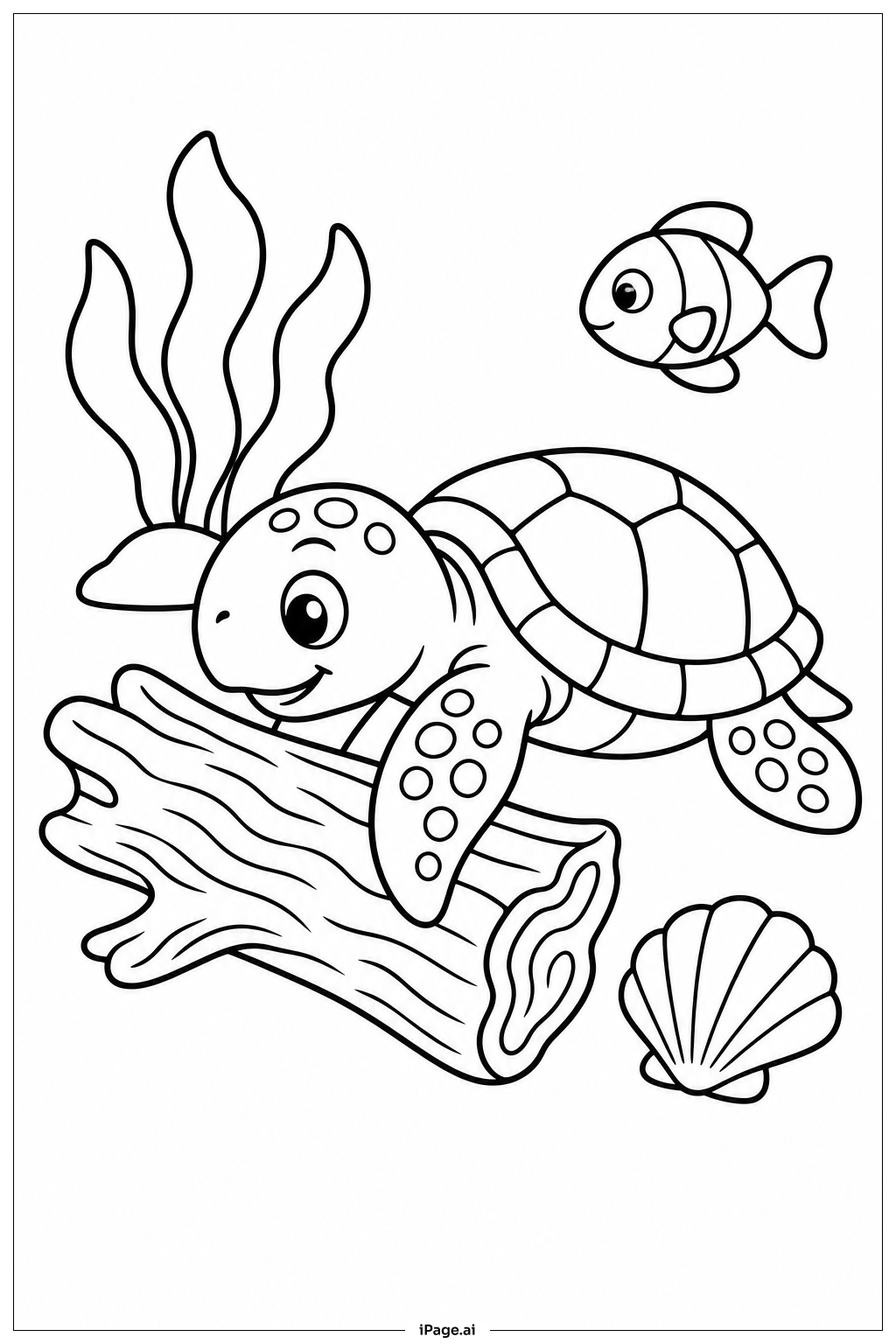
Coloring tips: How to color Sea Turtle With Driftwood coloring page well?
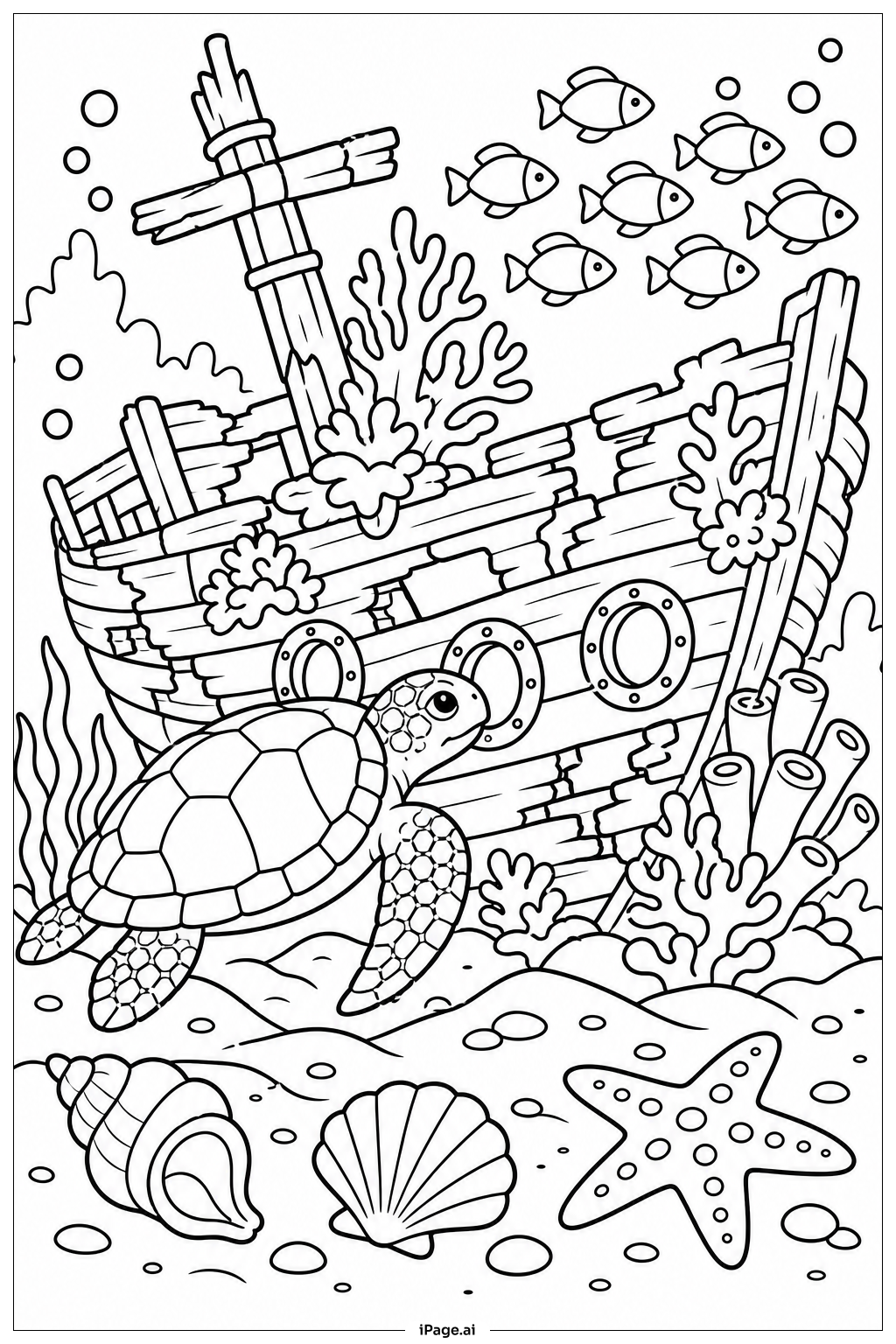
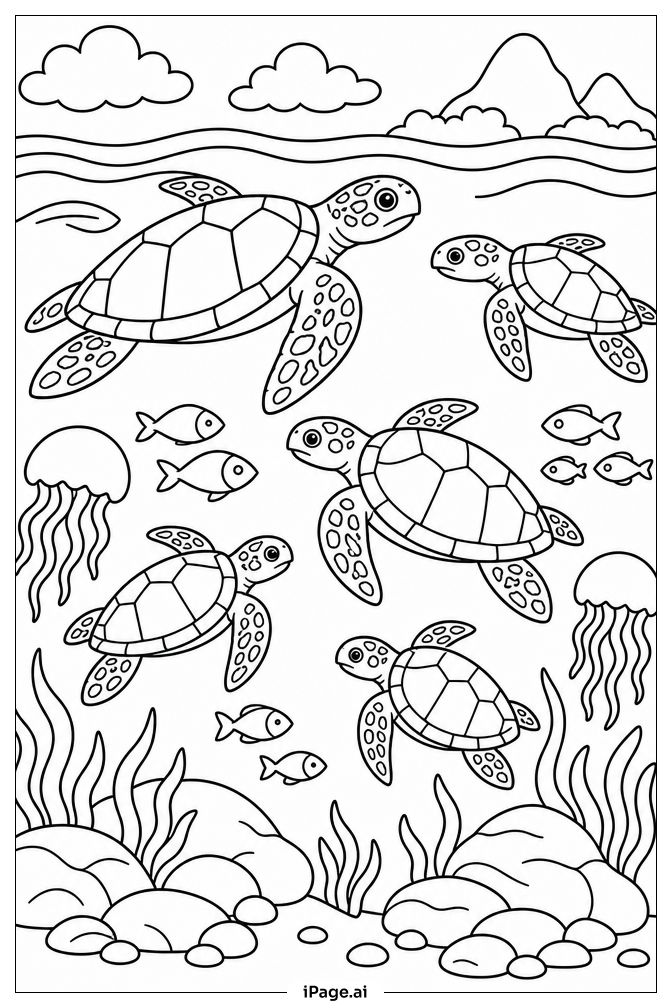
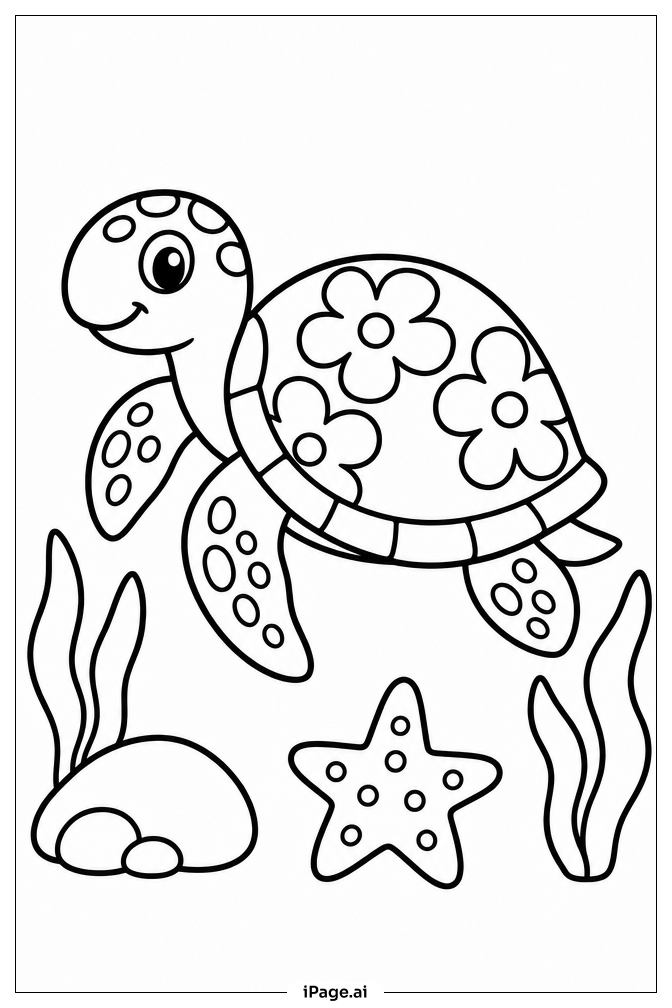
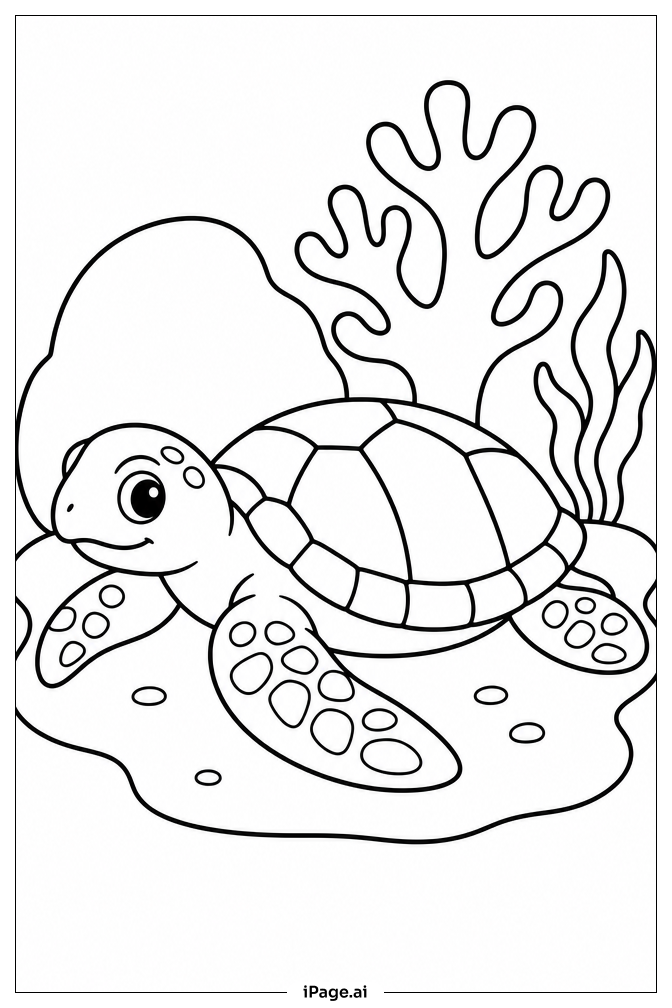
Start with the sea turtle's shell. Use shades of olive green, dark brown, or teal for the large scute sections. Add lighter yellow-green tones to the edges to create depth. For the flippers and head, try a medium green with hints of brown or gray. Use pale yellow or cream for the underside of the turtle. The driftwood looks great in warm tones like tan, beige, sandy brown, or soft gray. Add darker brown lines along the wood grain to make it look real. For the background, use soft blues and aqua tones to suggest calm ocean water. Sandy yellow works well for the ocean floor. Keep your colors gentle and natural to match the peaceful feeling of the scene. Kids can also get creative and use bright, fun colors to make their turtle unique and colorful.
Coloring challenges: Which parts are difficult to color and need attention for Sea Turtle With Driftwood coloring page?
• Shell Scute Patterns: The turtle's shell is divided into many individual scute sections, each with its own shape and size. Coloring each section neatly without going over the border lines takes patience and careful control. You may want to use a fine-tipped coloring tool for the smaller sections near the edges of the shell.
• Skin Texture and Scales: The flippers and neck of the sea turtle are covered with small, overlapping scale-like shapes. Filling each tiny scale while keeping the overall color consistent is tricky. Using short, controlled strokes and gradually blending two close shades of green or brown can help bring the texture to life.
• Driftwood Wood Grain Lines: The driftwood features many flowing, curved grain lines running along its surface. These lines guide the natural look of the wood, and coloring along them rather than across them is important. Switching between light tan and darker brown tones along each grain line will create a realistic, three-dimensional appearance.
• Depth and Shadow: Creating a sense of depth in the scene requires shading. Darker tones should be placed under the turtle's body, along the edges of the shell, and in the crevices of the driftwood. Lighter tones go on top surfaces where light would hit. For beginners, this balance between light and dark can be challenging to achieve smoothly.
• Background Water or Sand: The surrounding ocean elements need soft, blended color. Achieving smooth transitions from deep blue to lighter aqua in the water, or from golden yellow to pale beige in the sand, can be difficult without blending tools or layered coloring techniques.
Benefits of coloring books: Advantages of drawing Sea Turtle With Driftwood coloring page
Coloring this Sea Turtle With Driftwood page offers a wide range of wonderful benefits for children and adults alike. First, it helps improve fine motor skills. Carefully staying within the small scute sections of the shell and the tiny scale details on the flippers trains hand steadiness and pencil control. This is especially helpful for younger children developing their grip and coordination. Second, it encourages focus and concentration. The detailed patterns require sustained attention, helping kids and adults practice mindfulness and stay present in the moment. Third, it sparks creativity. Choosing colors for the turtle, the driftwood, and the ocean background gives colorists the freedom to express themselves and explore color combinations. There is no single right answer, which builds confidence. Fourth, it introduces children to the natural world. Learning about sea turtles while coloring makes the activity educational as well as fun. Kids may become curious about ocean life and feel inspired to protect marine animals. Finally, coloring is a calming, stress-relieving activity for all ages. The quiet, repetitive motion of filling in shapes soothes the mind and makes this a great way to relax after a busy day.